Most of my working life as a commercial photographer in London is shot to brief — shot lists, mood boards, art directors, deliverables, the gentle pressure of a day rate ticking away. Personal trips are where I remember how to see without any of that in the way. So I booked a solo forty-eight hours in Copenhagen in the second week of November, packed a single camera and a single prime lens, and left London with no brief, no itinerary and absolutely nothing to deliver at the end of it. Just walk, look, make pictures. The city obliged beautifully.
Alone, with a Camera, in Flow
There is a particular kind of attention that only switches on when it’s just me, a camera, and an unfamiliar city. No one to wait for, no one to catch up with, no small decisions about where we’re eating next. The whole brain narrows down to one channel — light, line, moment — and the day stops being a sequence of things you do and starts being one continuous act of looking. It’s the closest I get, in my working life, to proper flow state; it’s why I periodically throw myself at a city with a single lens and no plan, and it’s almost always the trips I come back from with the strongest personal work.
Copenhagen is almost perfectly built for it. The core of the city is small, flat and endlessly walkable; the architecture repays attention at every scale, from a single tile to a whole quarter; and the cycling-first infrastructure means the streets are genuinely quiet in a way London streets are not. My phone said 25,000 steps on Thursday and just over 40,000 on Friday. I didn’t mean to walk that far either day — it’s just that the next corner kept being more interesting than sitting down.
Why Copenhagen in November
Mid-November is possibly the best photographic window Copenhagen gives you. The daylight is short — proper dusk by 3:45pm — which sounds restrictive until you realise it means the whole day is golden hour or blue hour, with almost nothing in between. The crowds have thinned out of Nyhavn. The Christmas markets have just opened on Strøget and along the canal. The parks are still holding onto the last brass-and-copper colour of autumn before winter sets in properly. And the light, on a clear day, is the kind of low, slanting northern light you can’t fake in grading. For a two-day trip with a stills camera, you want all of those things at once.
Day One — Towers, Churches, the Black Diamond
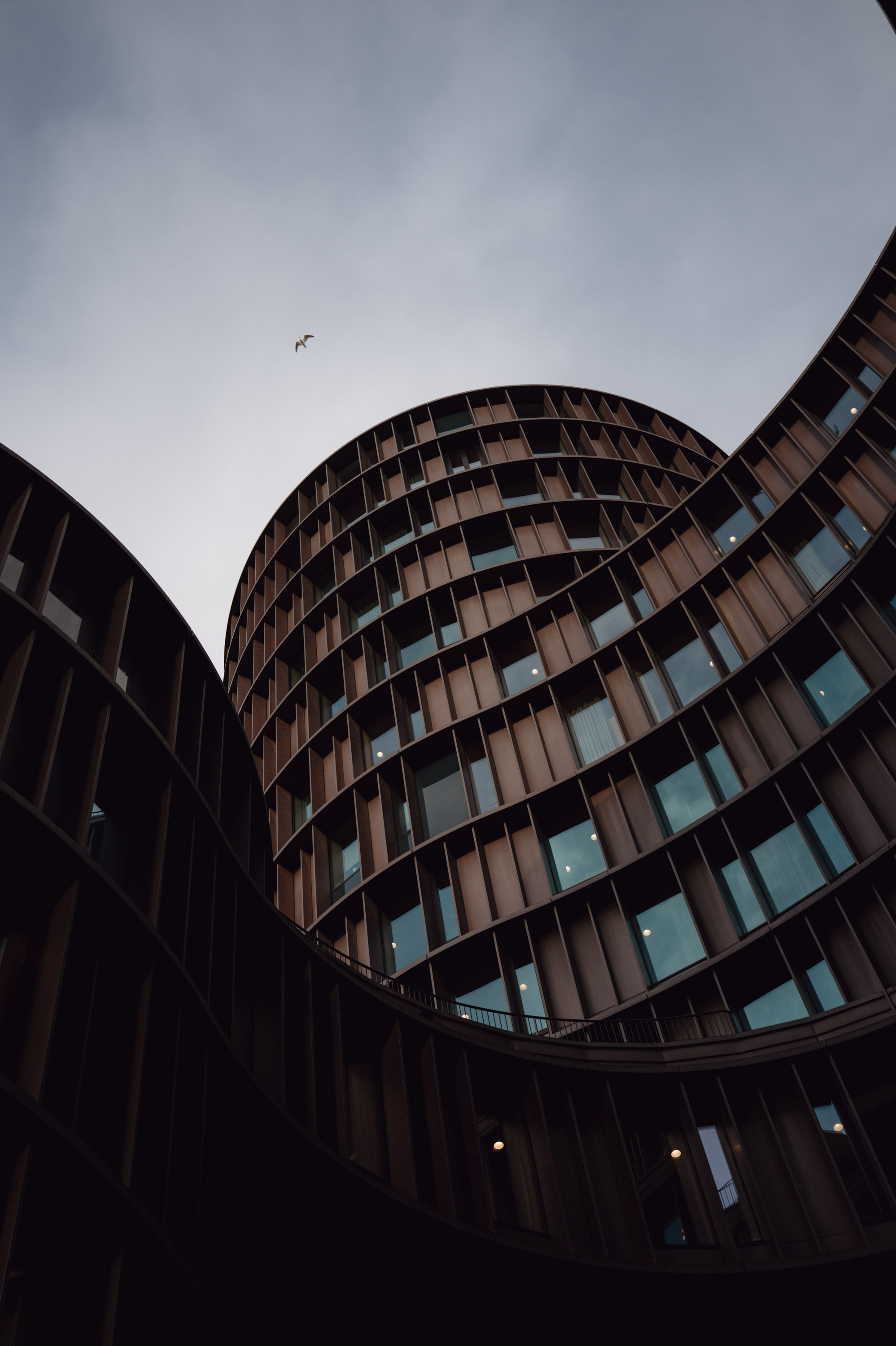
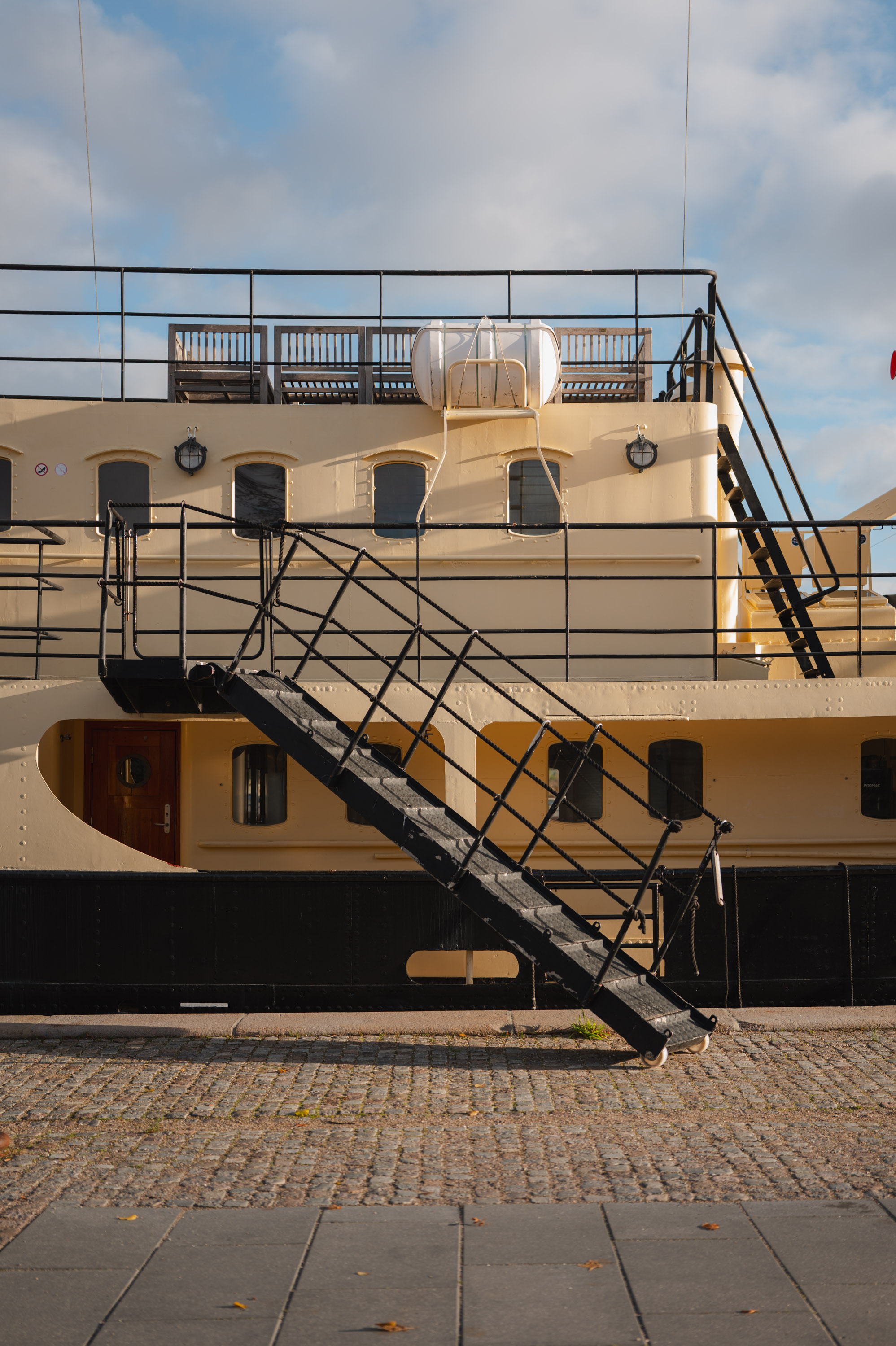
Thursday was, without planning it this way, the architecture day. Axel Towers first thing — Lundgaard & Tranberg’s five interlocking brass-and-brick cylinders beside Tivoli, which turn into something else entirely when you shoot them straight up with a seagull passing through the frame. Then into the old centre: up the spiral brick ramp of the Rundetårn (Round Tower), under the Neoclassical dome of Vor Frue Kirke, past the Christiansborg Palace tower and the Royal Library garden, out onto the Black Diamond on the water. By the time I’d made it back across the harbour bridges, the light was already going warm, and the city was doing its best impression of a painting.
The Rundetårn is the kind of building no modern city would ever be allowed to build again — a 17th-century observatory with a wide spiral brick ramp wrapping its hollow core, built flat enough that Peter the Great reportedly rode a horse up it. From the top you get a quiet, gull’s-eye reading of the historic centre; on the way up, the ramp itself is the photograph.
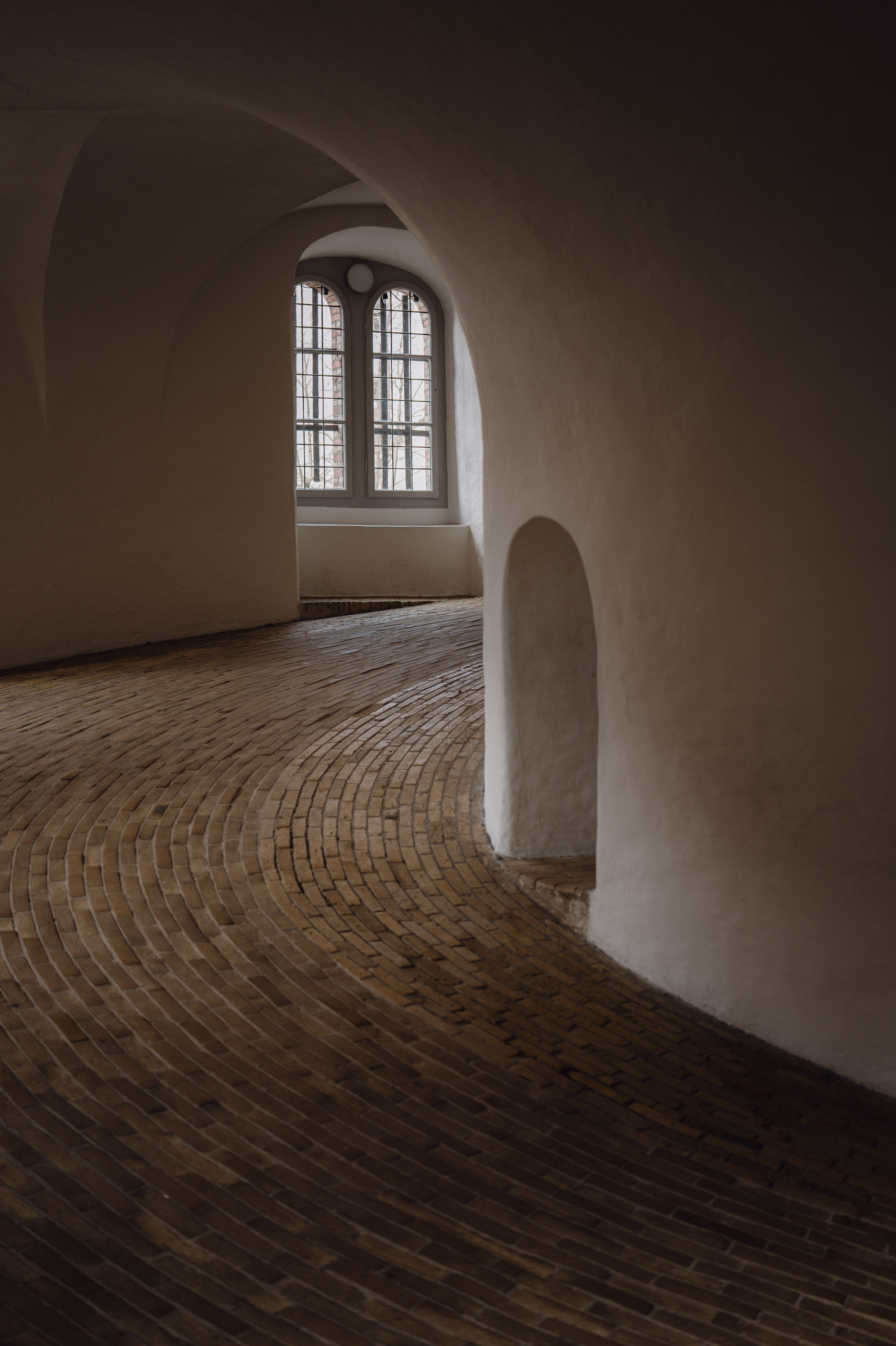
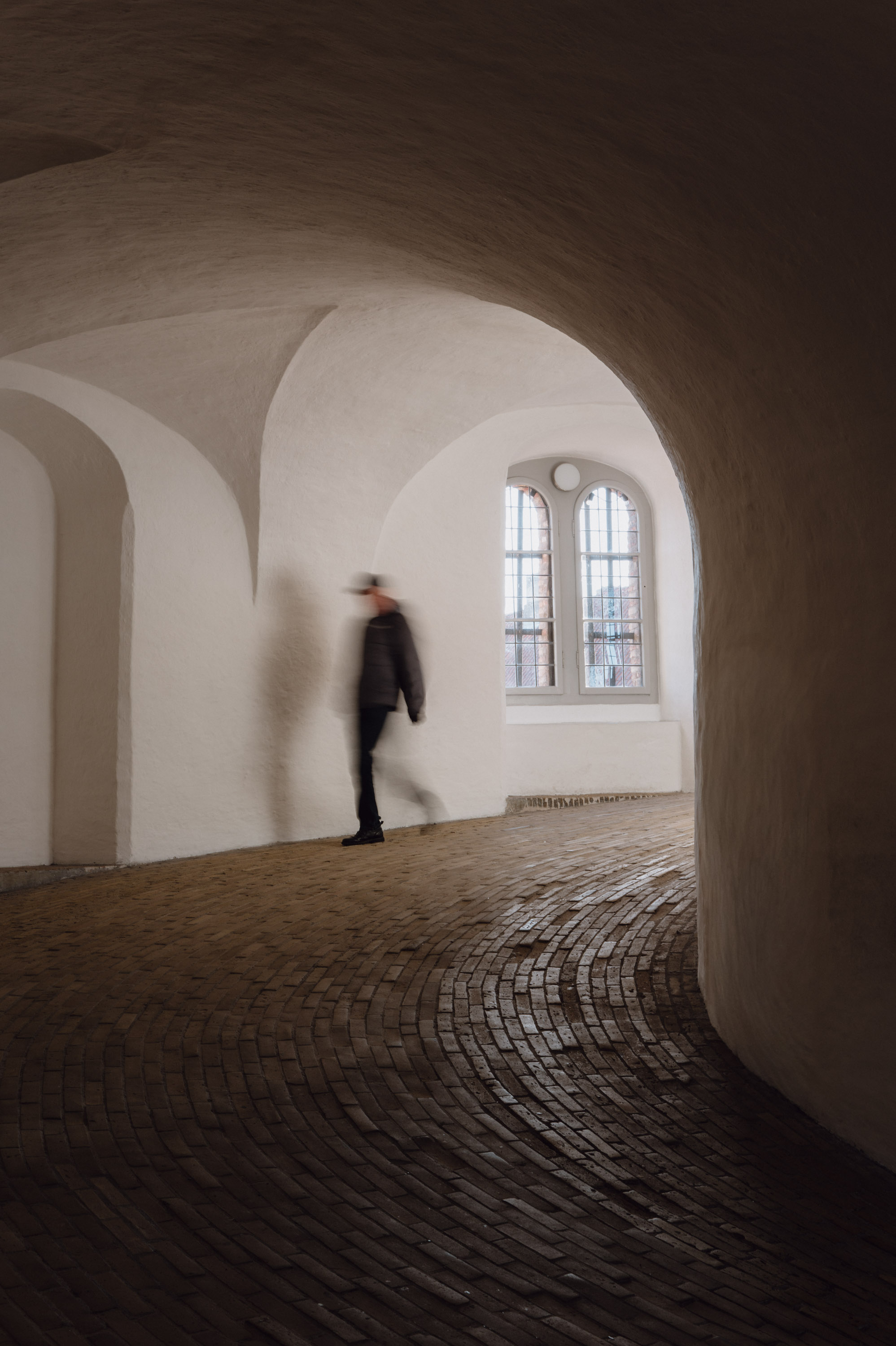
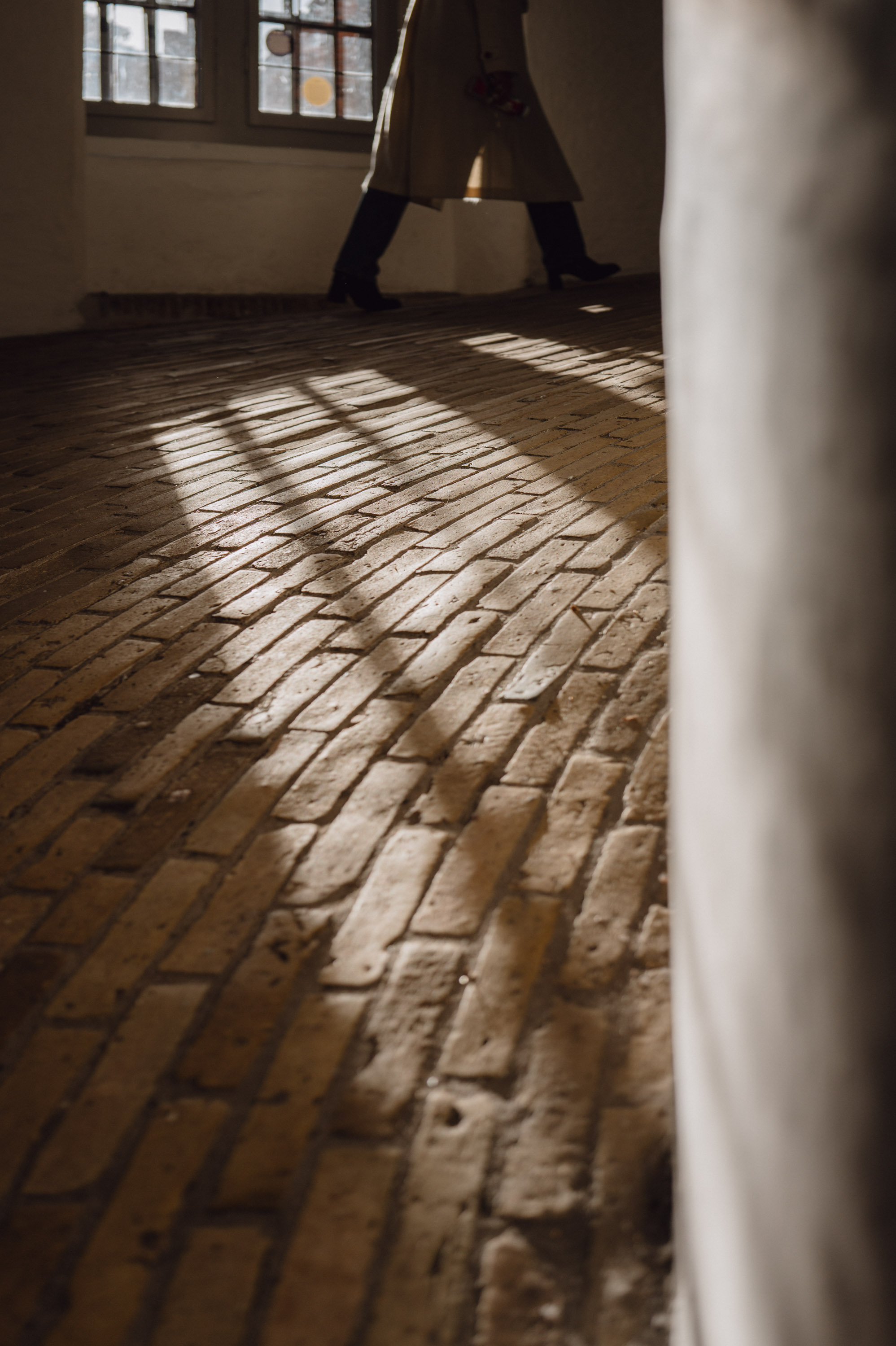
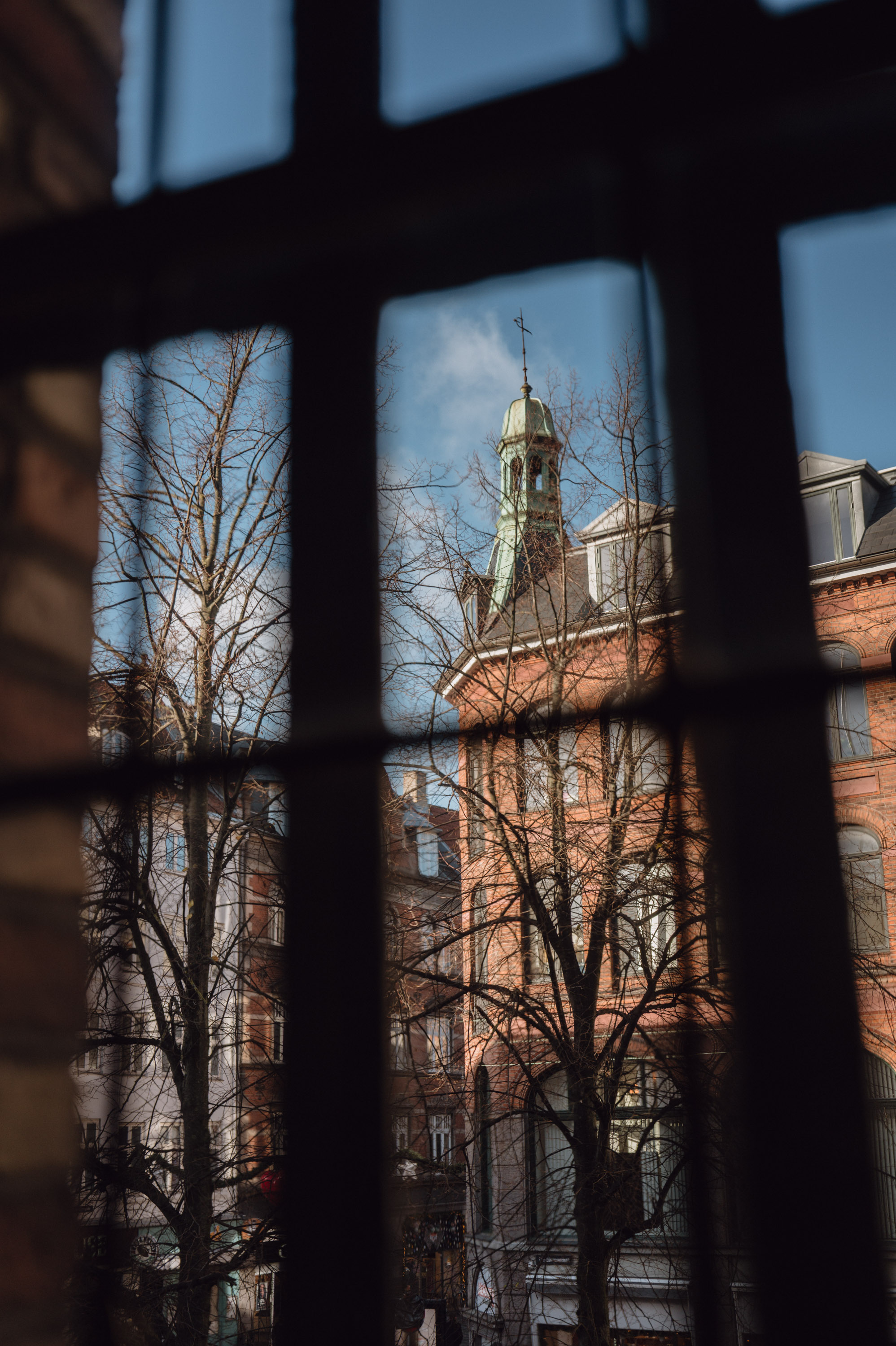
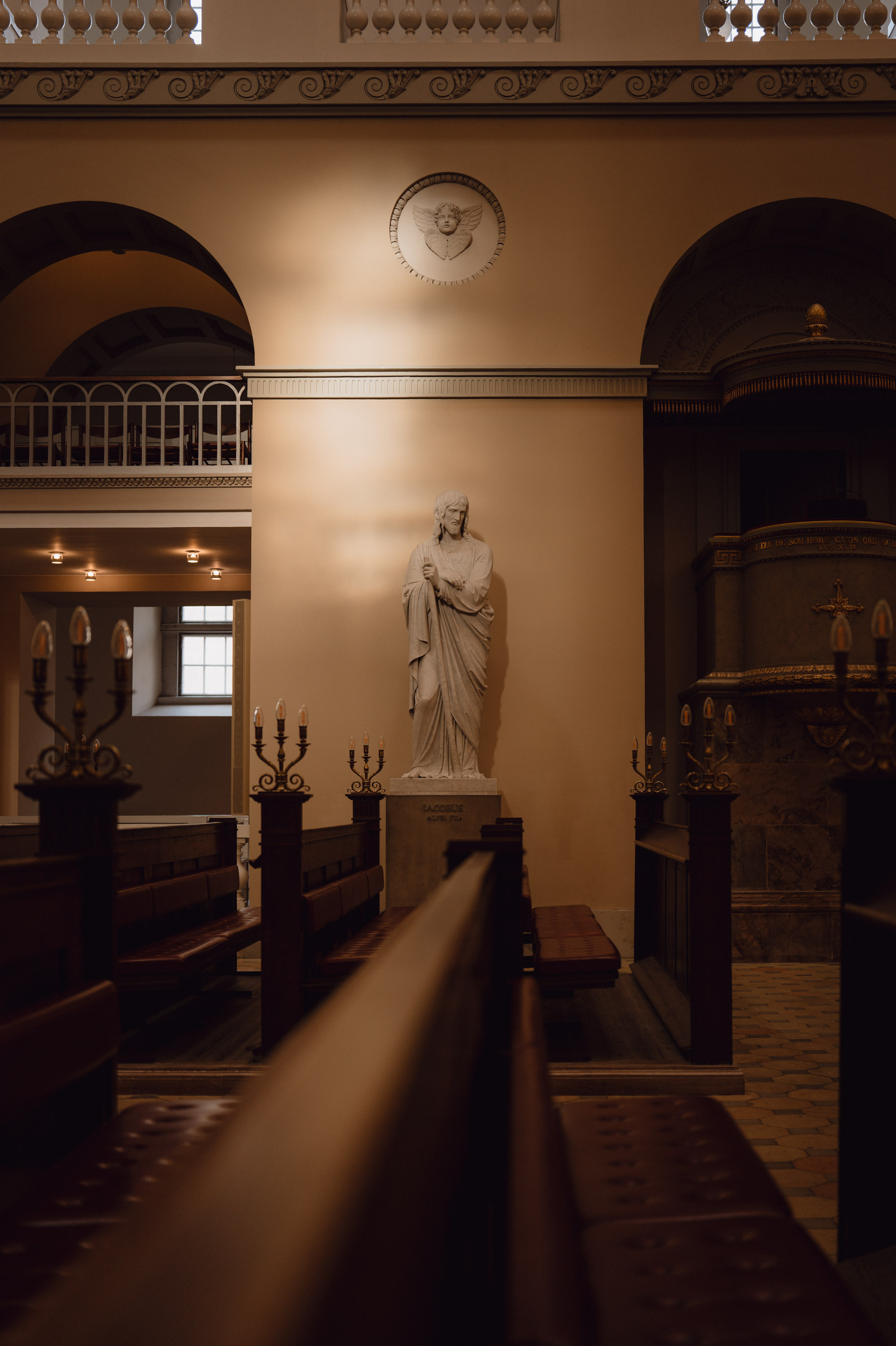
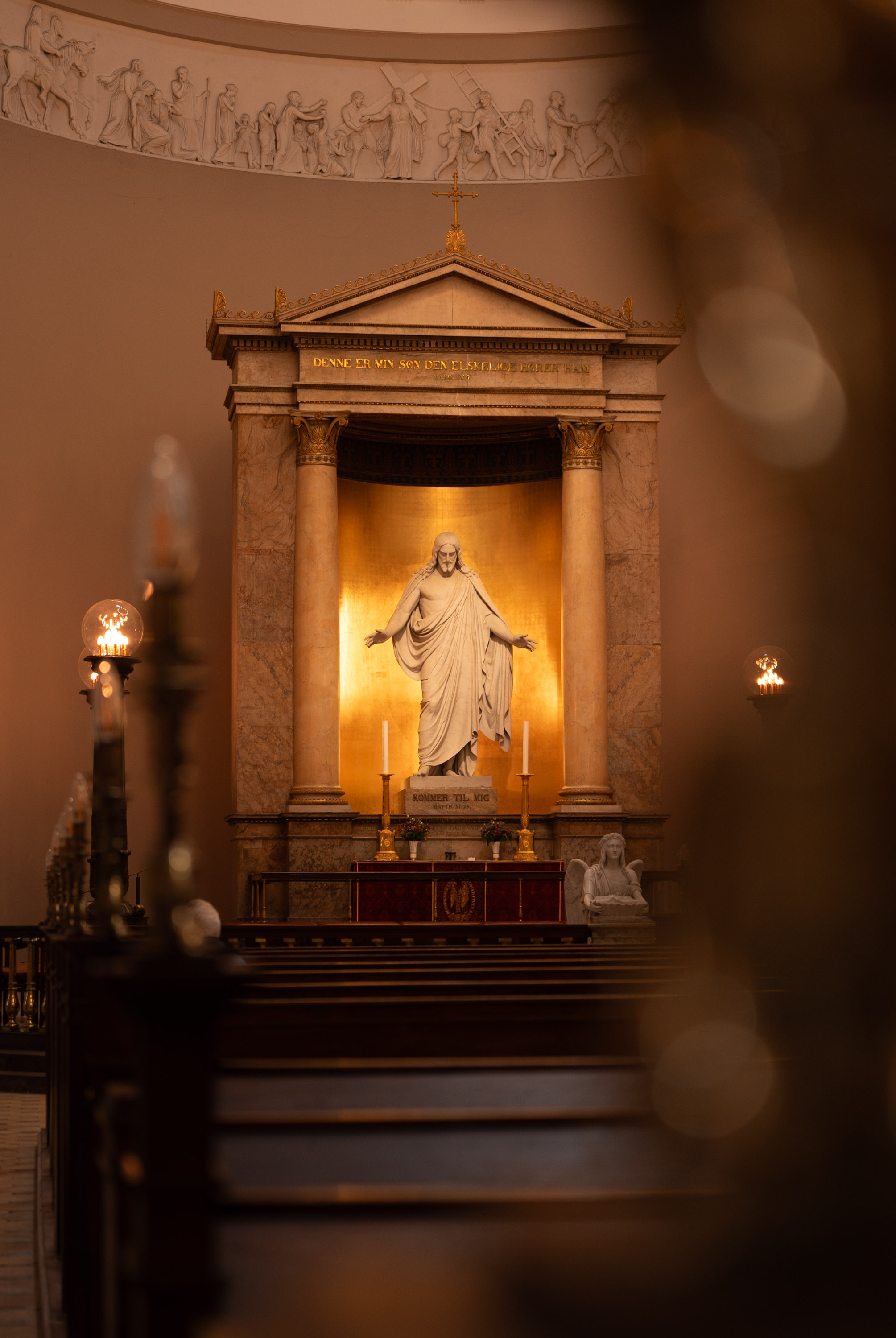
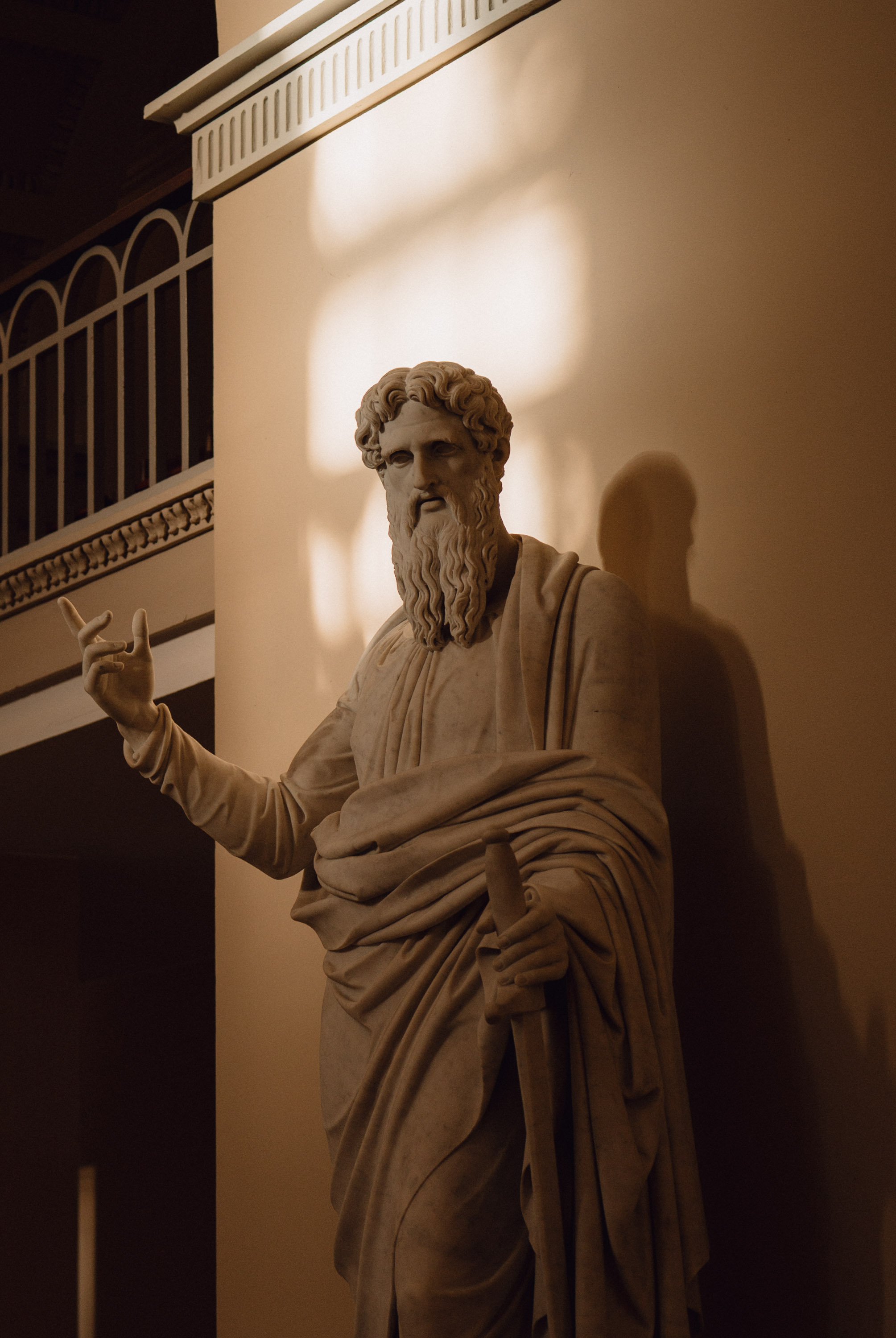
Vor Frue Kirke, Copenhagen’s neoclassical cathedral, is tucked behind a dense warren of Latin Quarter streets a short walk south. The interior is almost monastic in its restraint — cold grey light, white columns, and Bertel Thorvaldsen’s twelve marble apostles arranged down the nave toward a Christ figure that is, frankly, one of the most photographed statues in Scandinavia for a reason. It is a building that rewards sitting down and letting it settle, with a camera in your lap and a long exposure in mind.
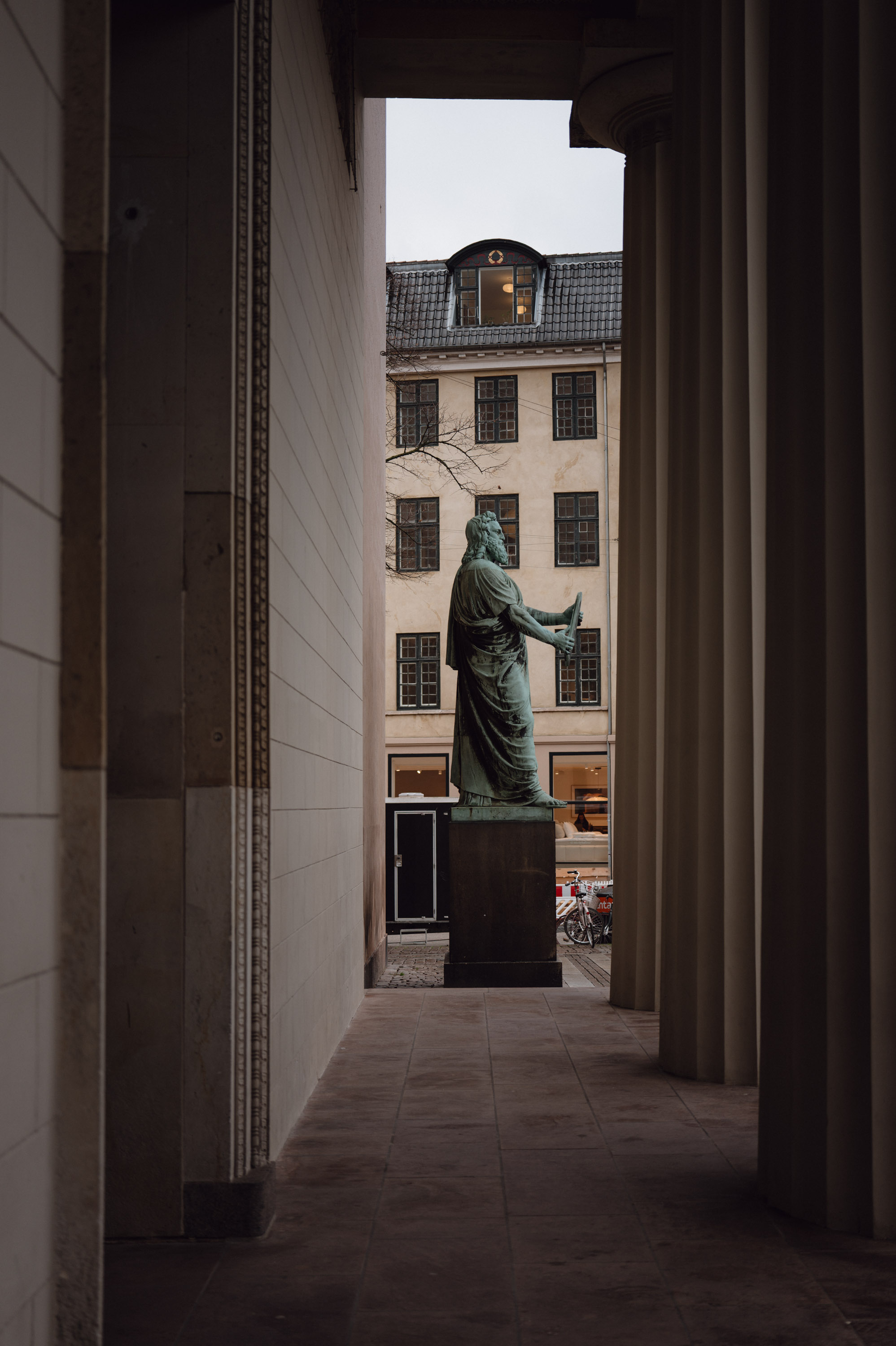
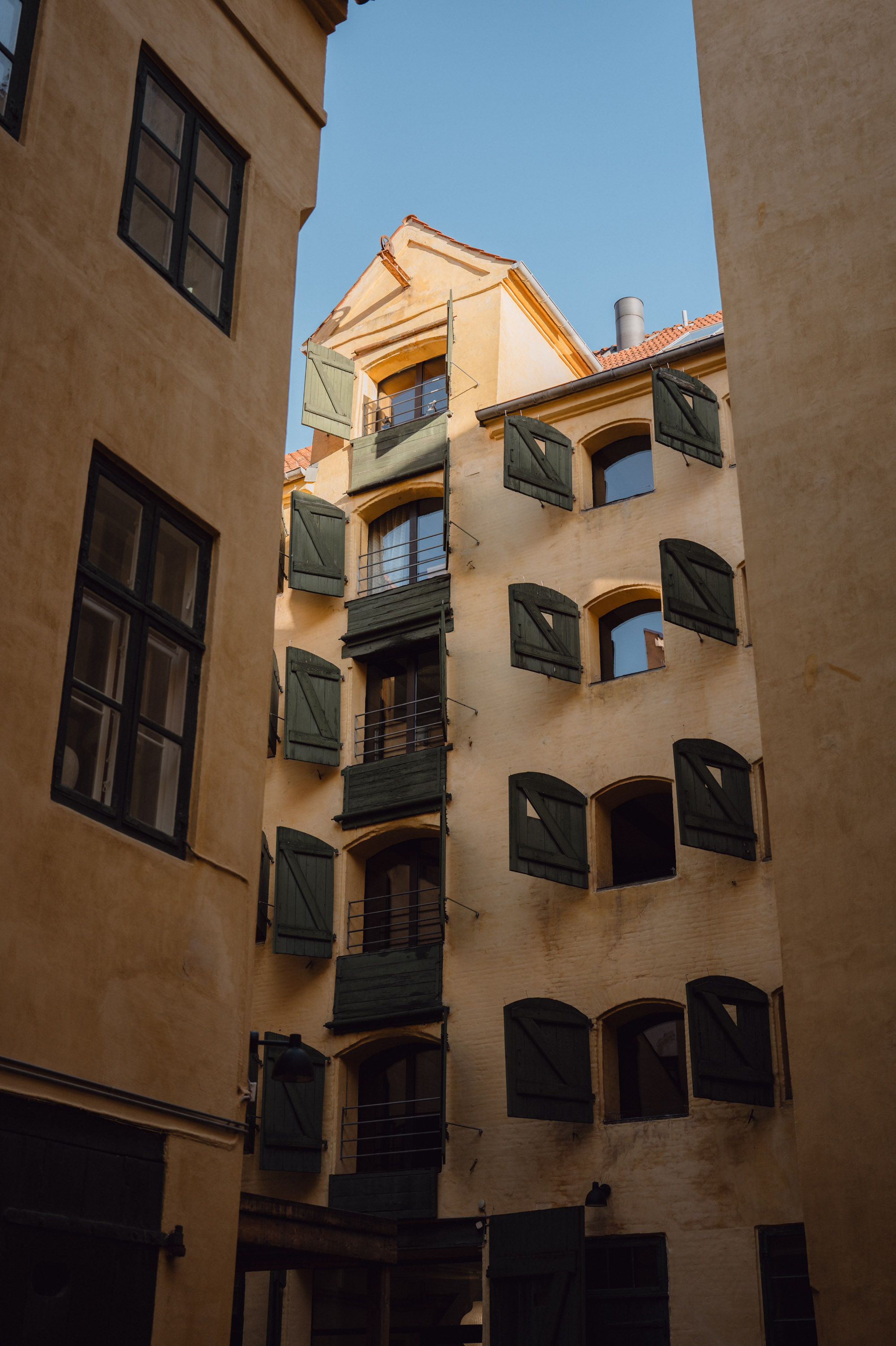
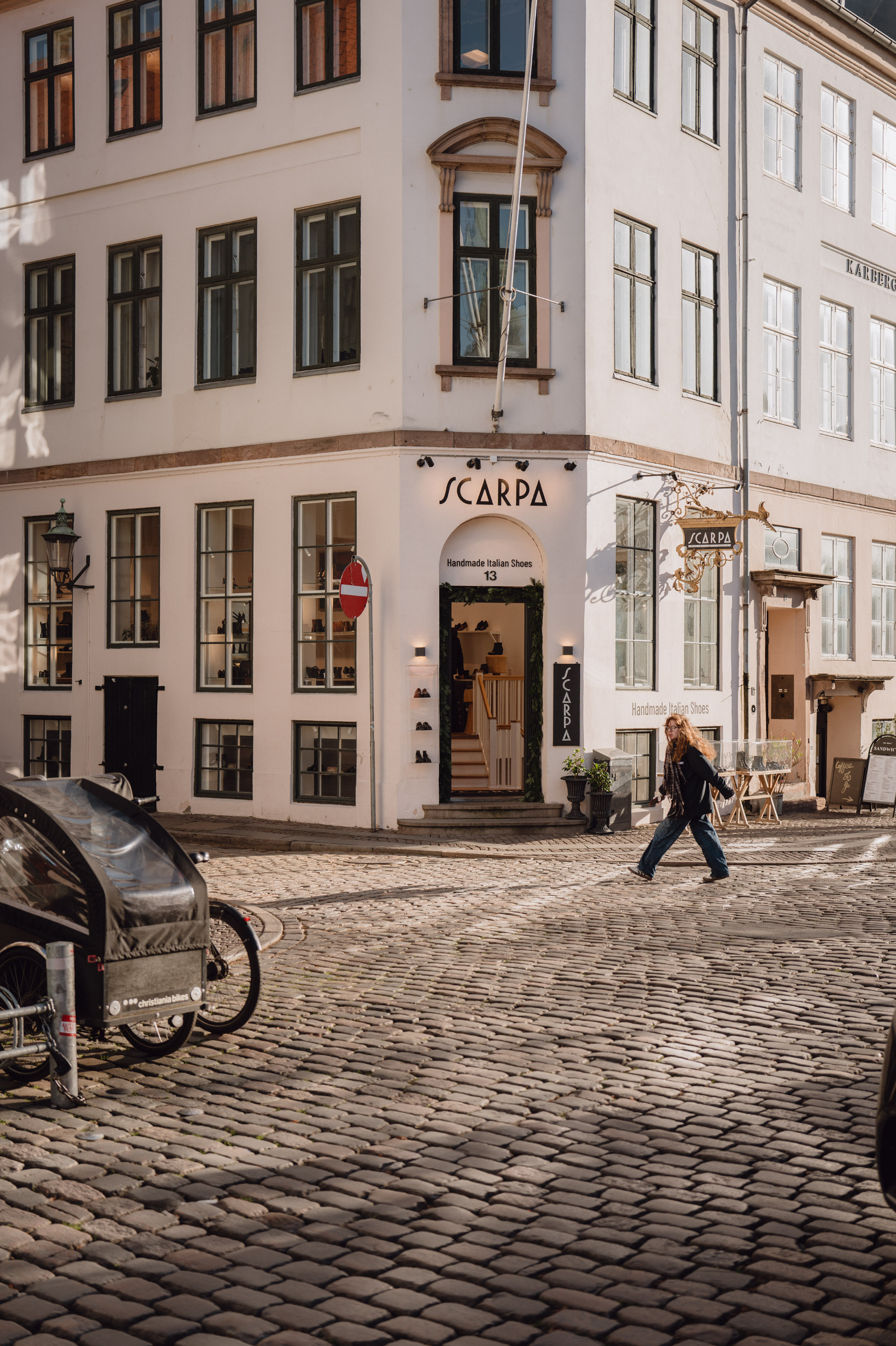
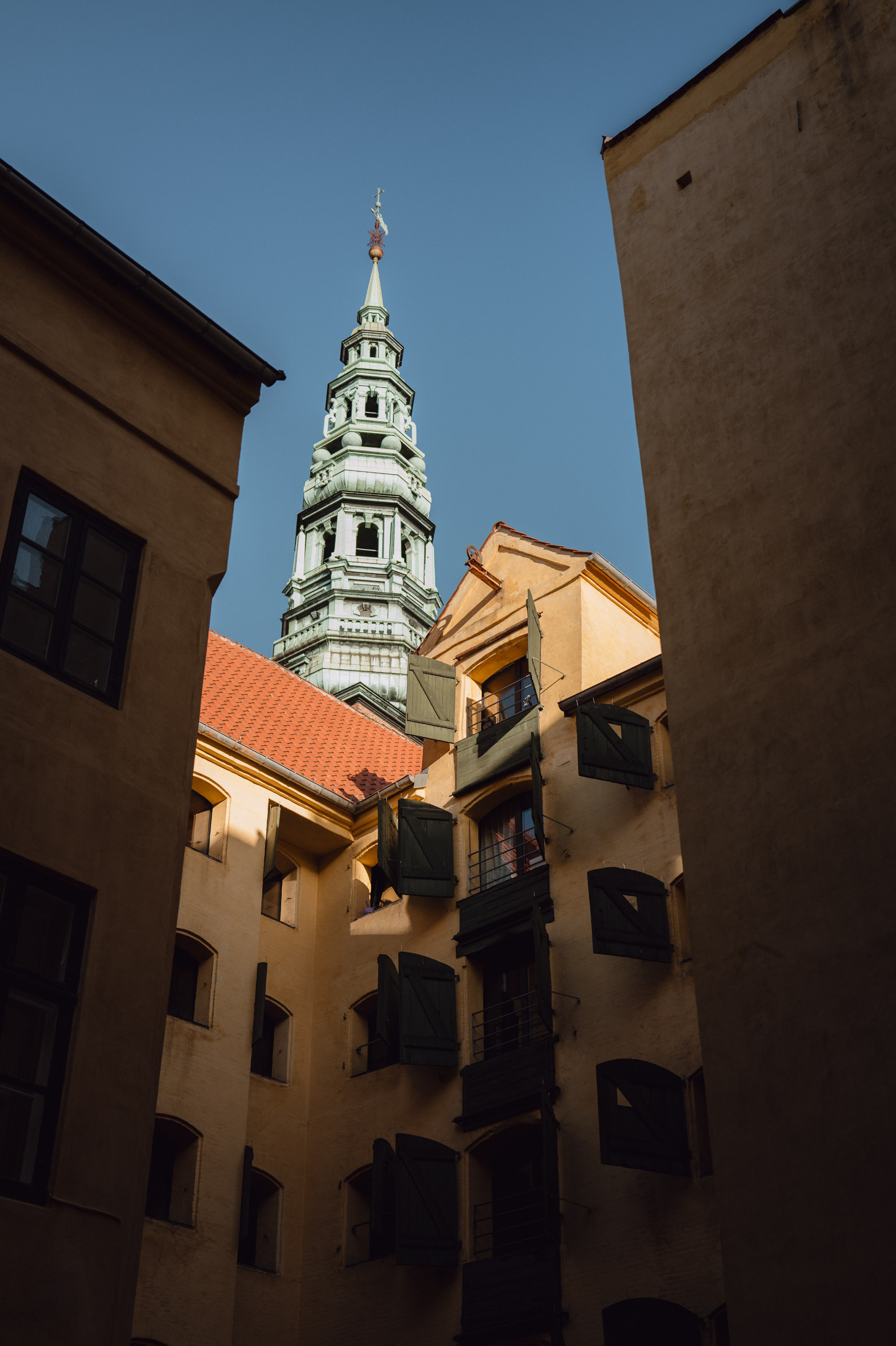
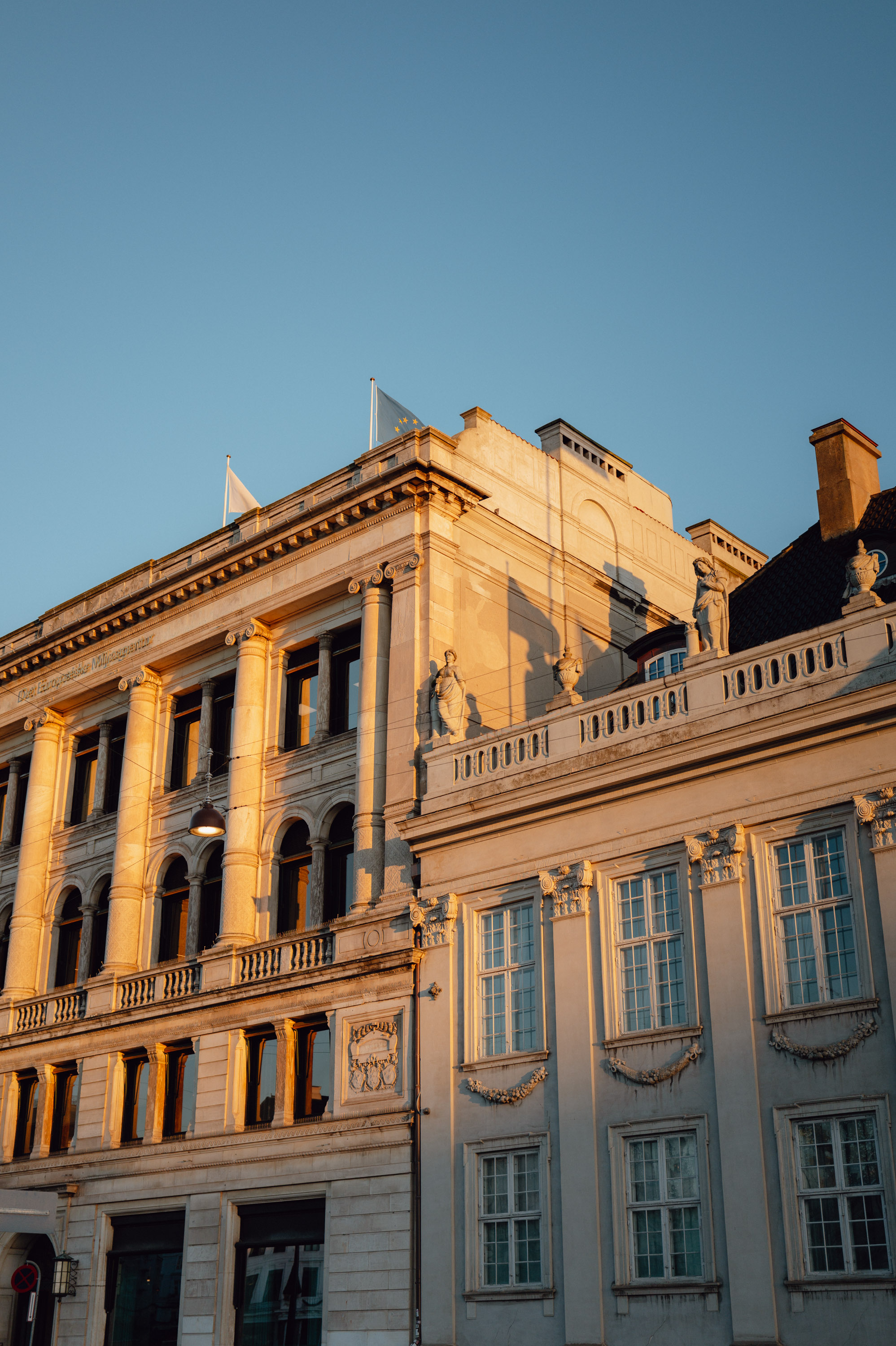
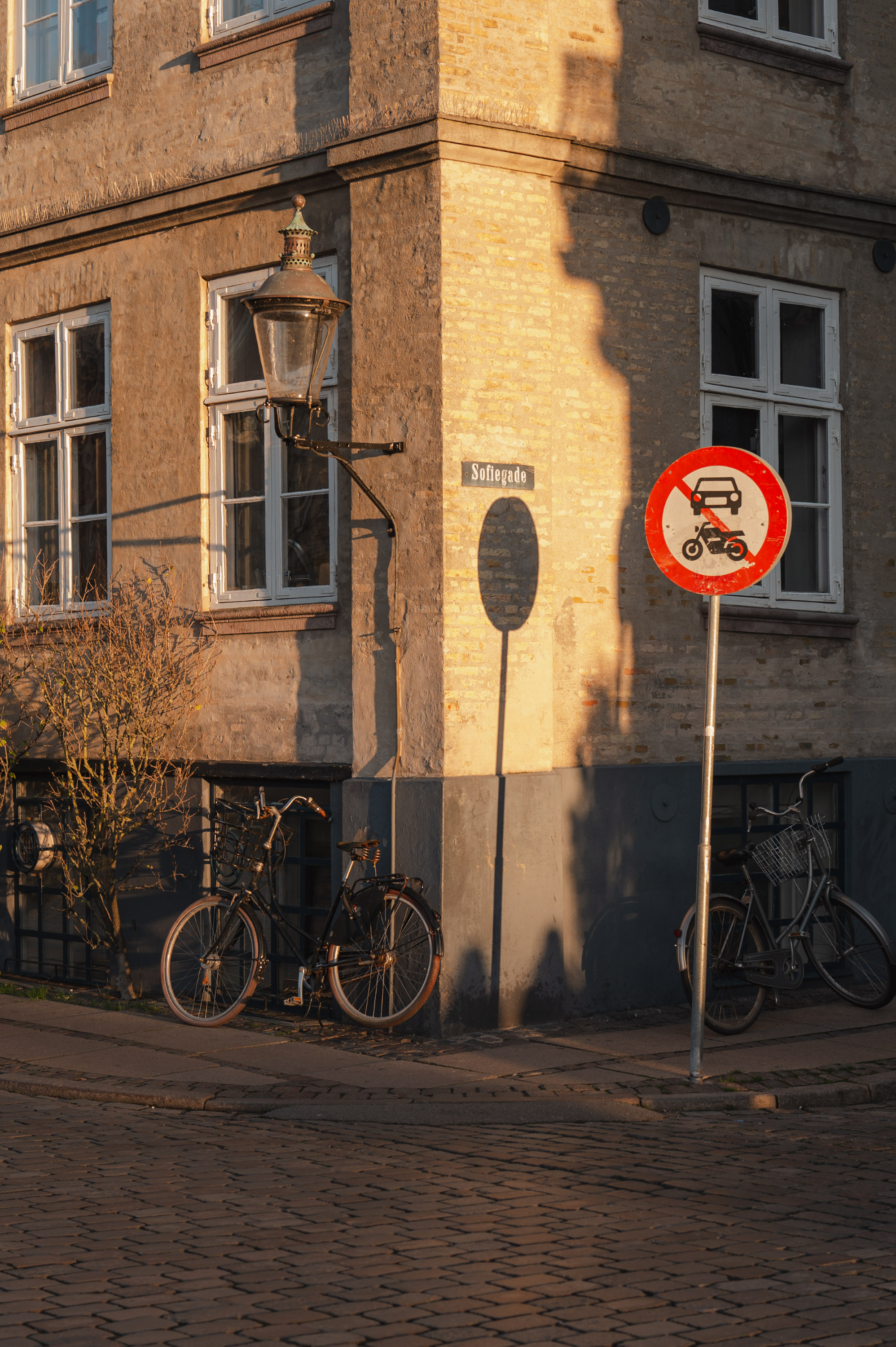
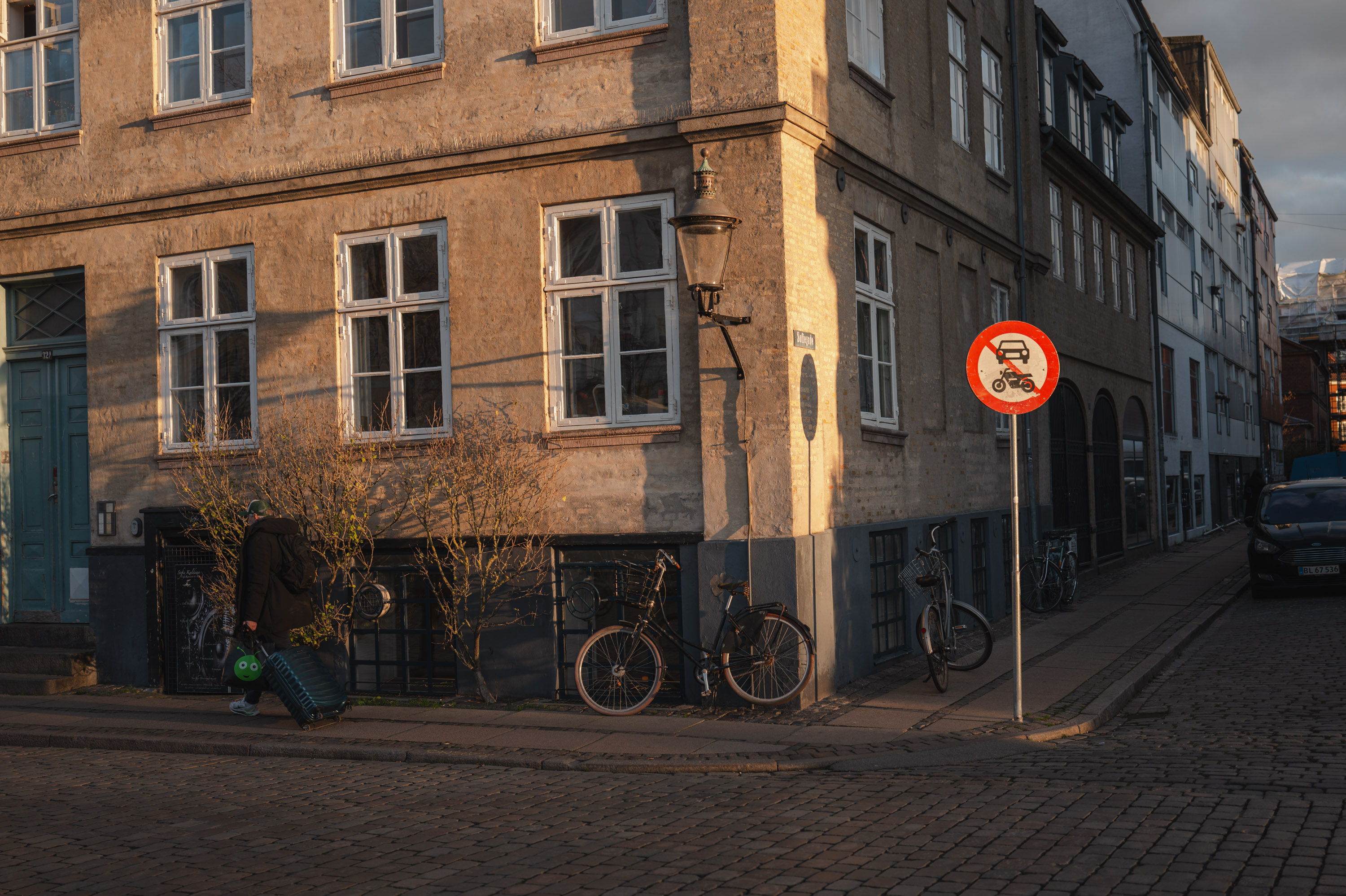
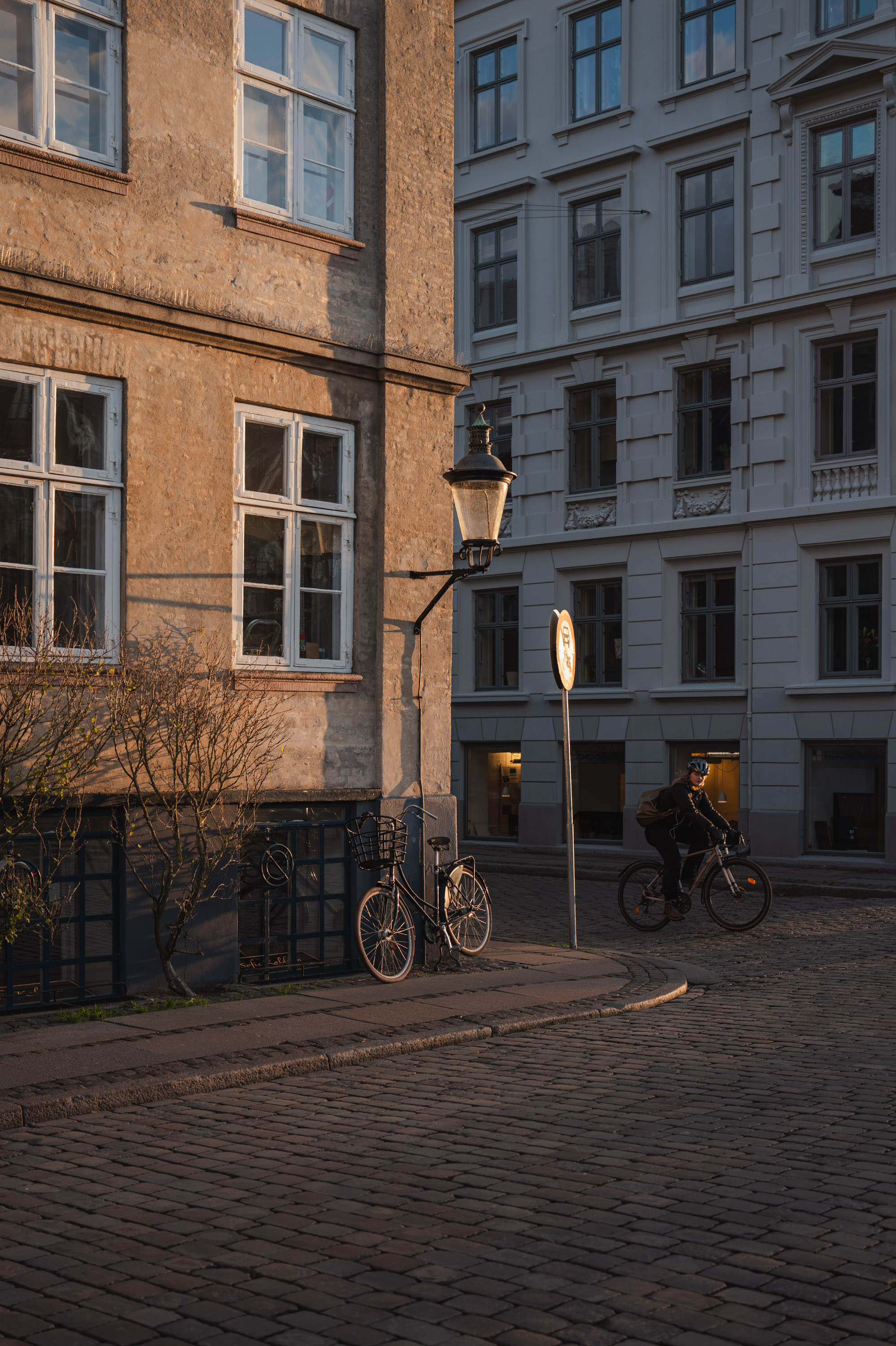
Copenhagen is one of those cities that rewards looking up, down, sideways and at the edges — it’s a city of small, well-made details rather than one giant monument that demands you photograph it a certain way. Walking from the cathedral out toward the harbour, the old centre is really a sequence of very small, carefully composed moments — a mustard-yellow courtyard, an ivy-wrapped red-brick arcade, a corner shop with a Scarpa-ish green-and-cream frontage, a church spire framed by an inner yard. I spent a long time on the small frames.
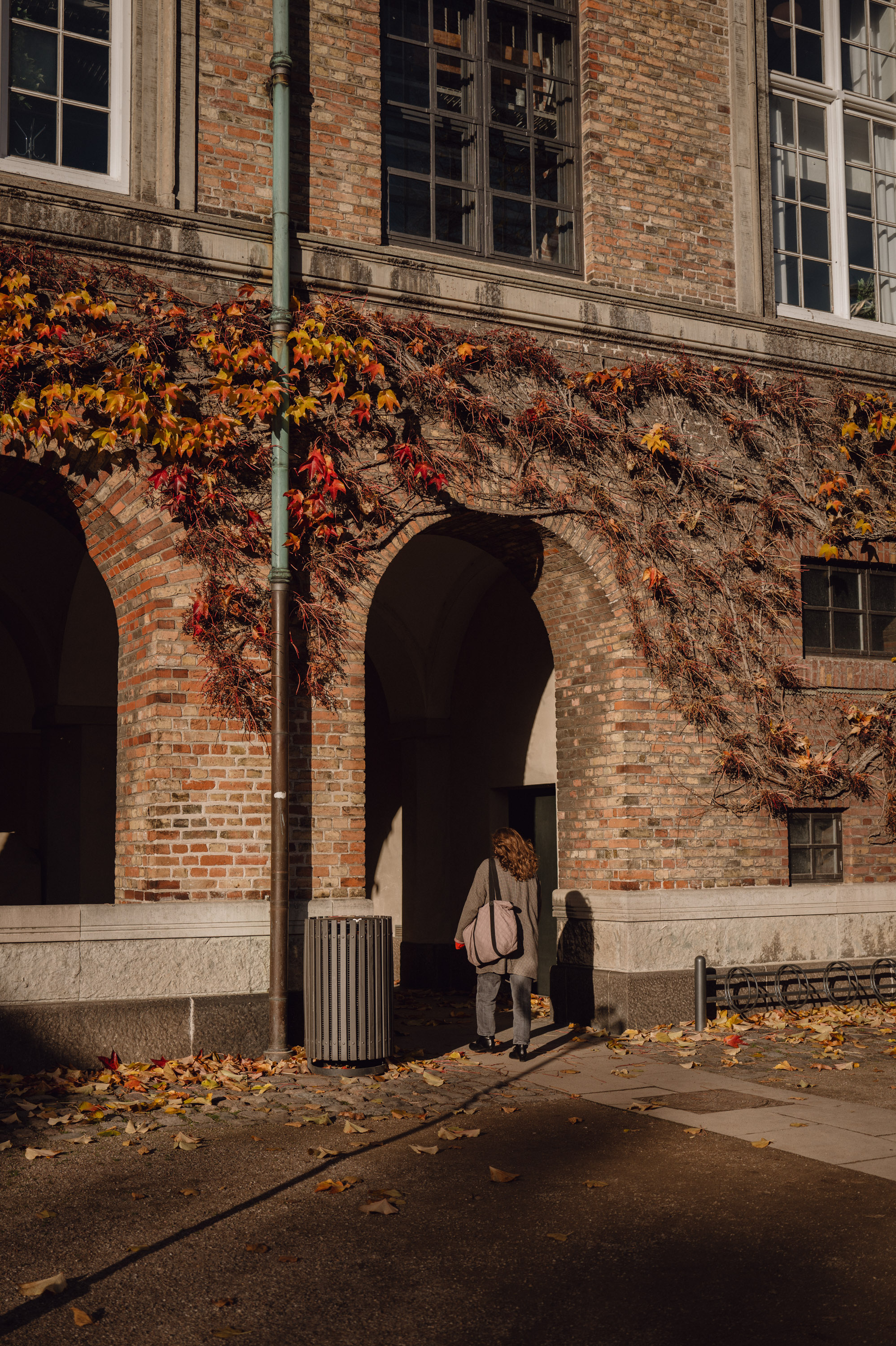
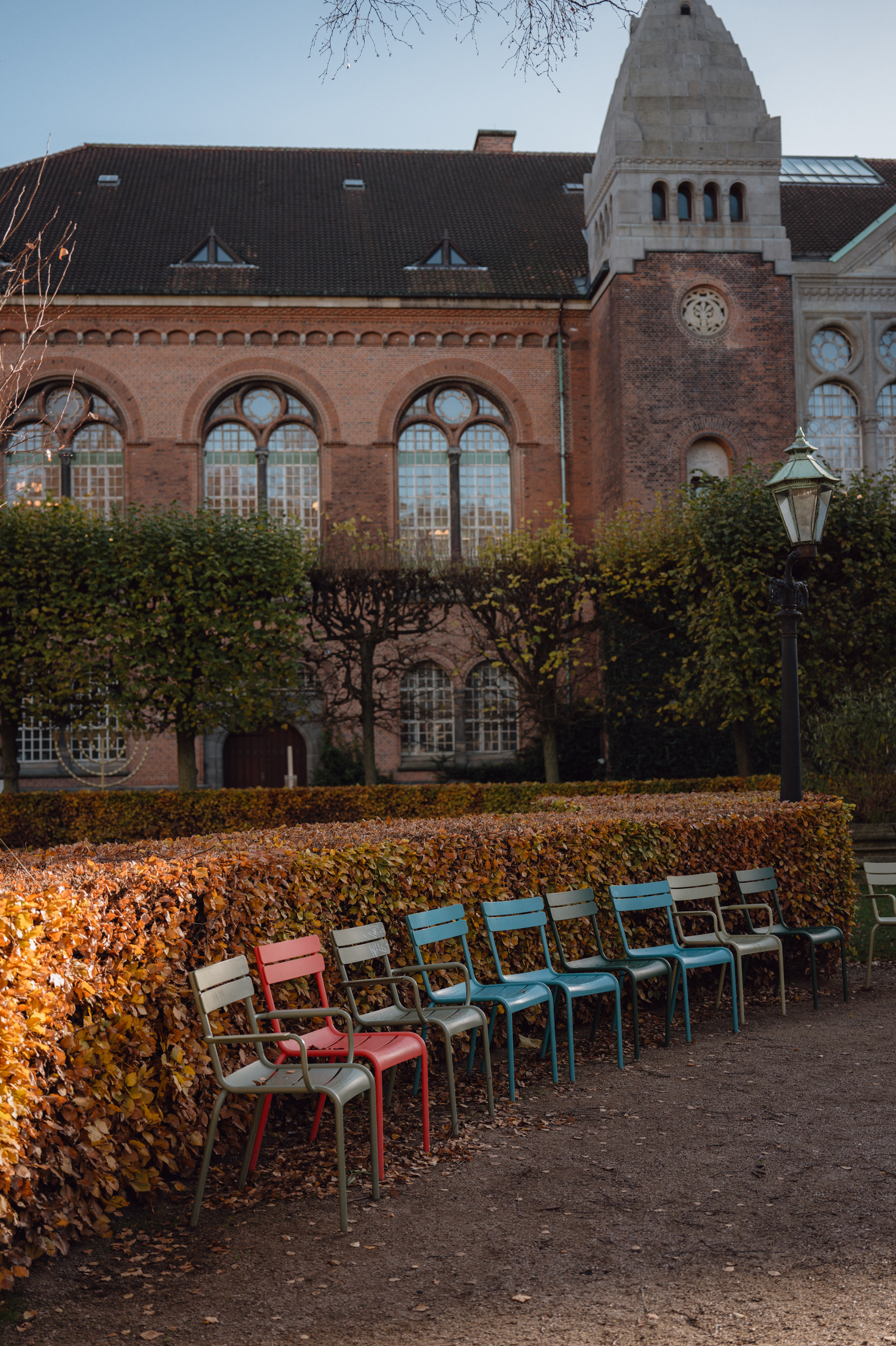
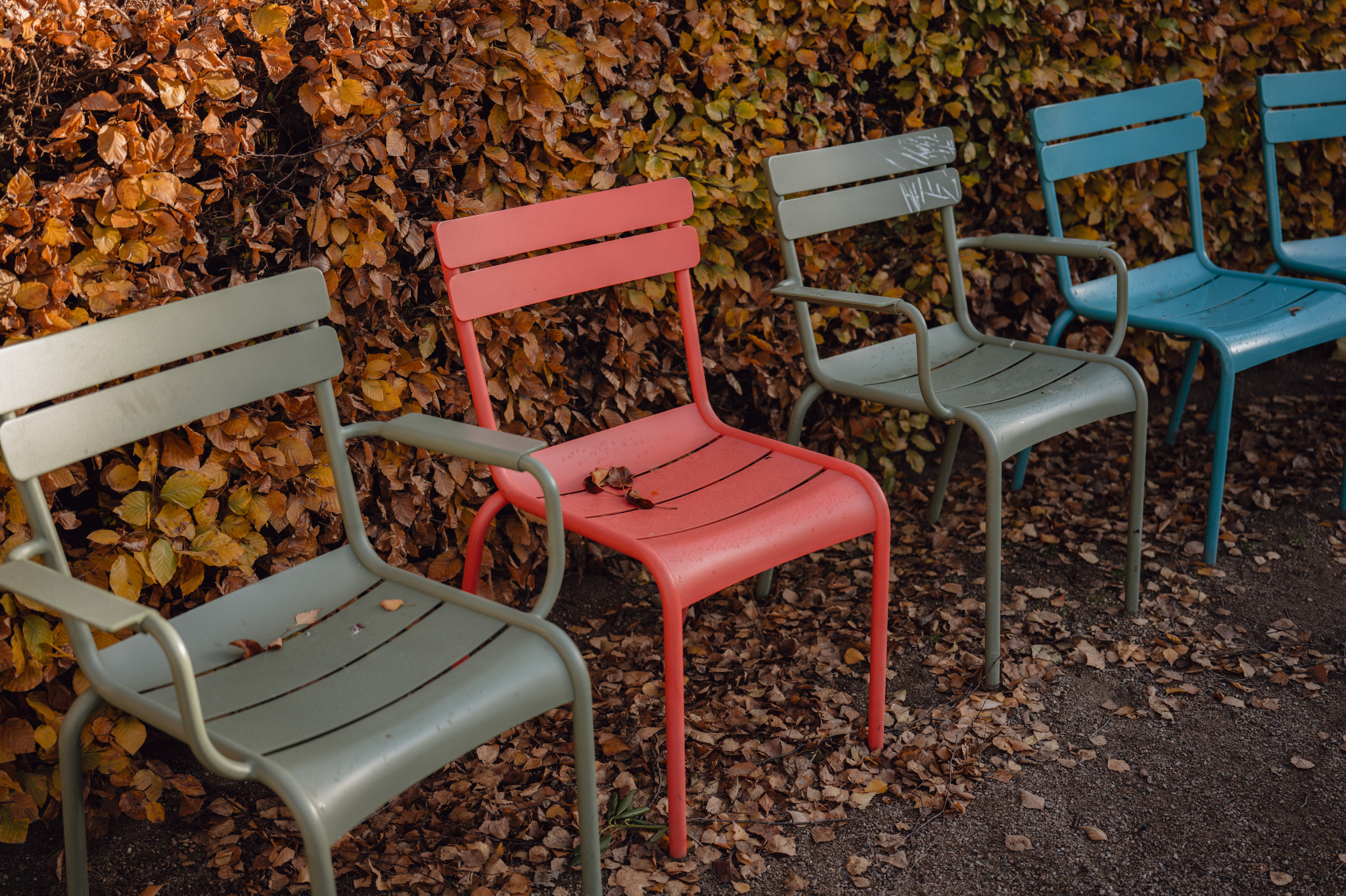
The Royal Library garden behind Christiansborg is a quiet example: coloured Fermob chairs, a wedge of red-brick arcade still holding autumn ivy, gravel paths that nobody else seems to use in November. I spent the best part of an hour in there before I remembered I was supposed to be on my way to somewhere else.
An Hour Inside the Black Diamond
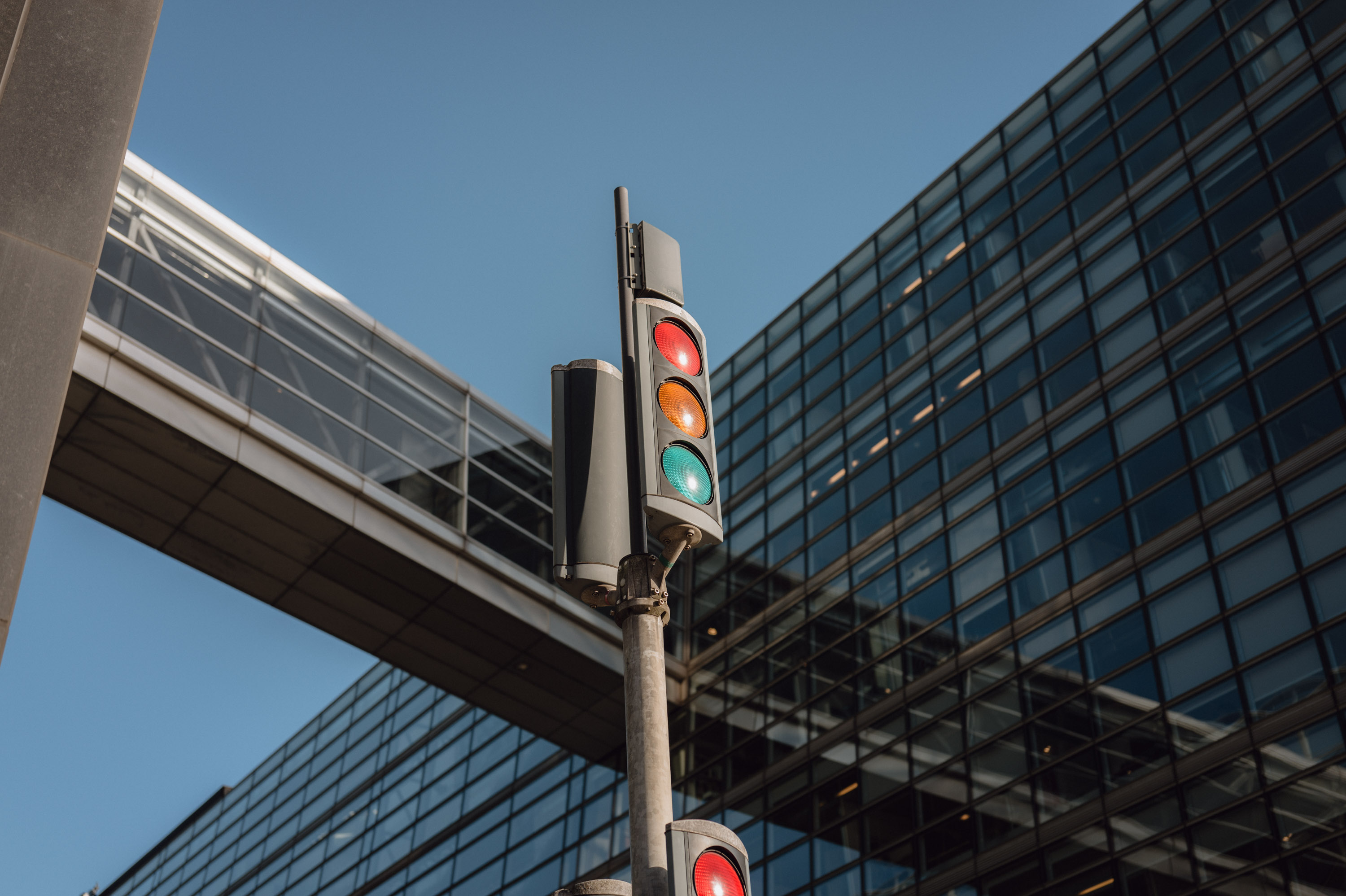
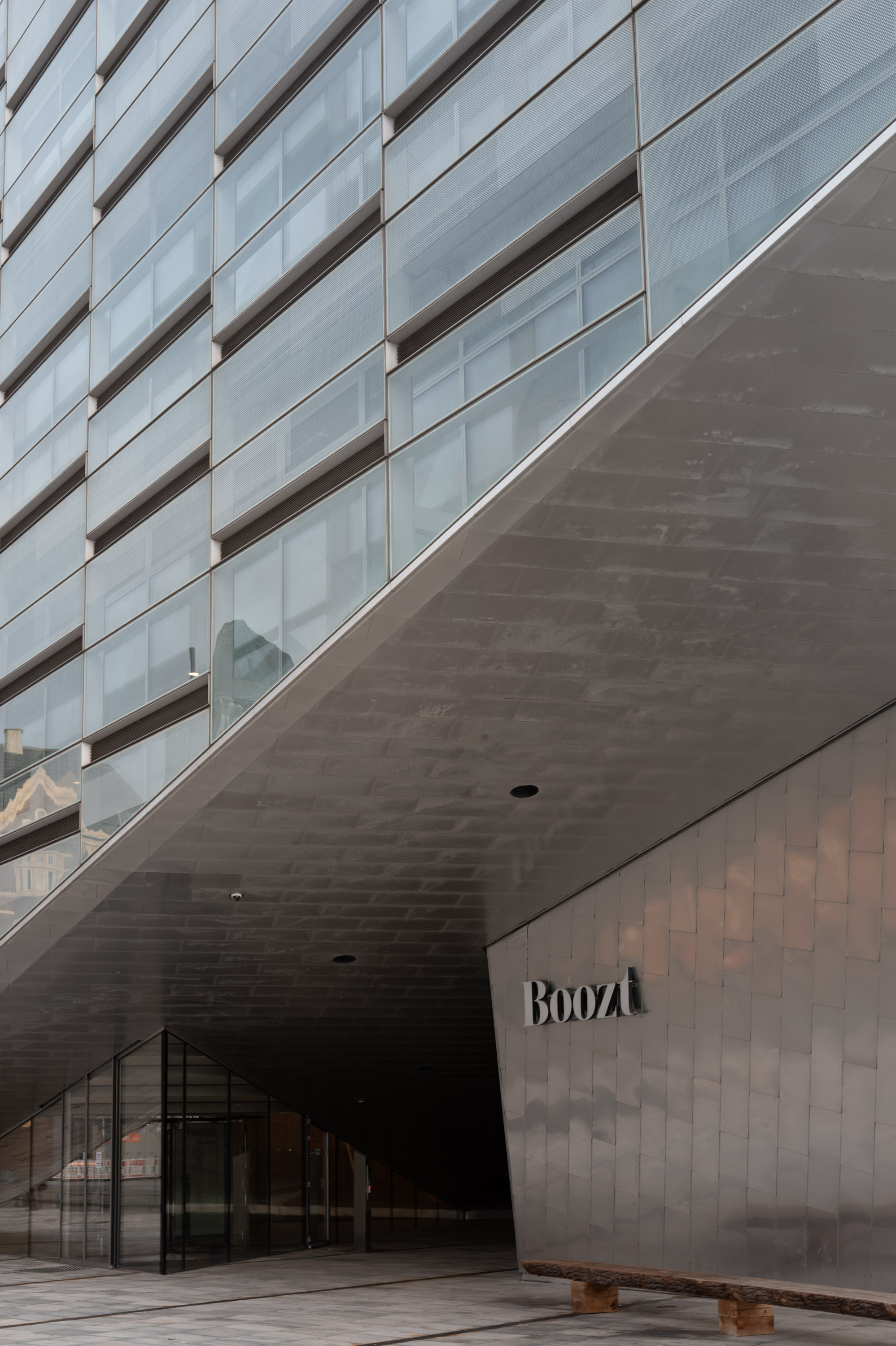
Of all the buildings I photographed in Copenhagen, the one I spent longest inside was the Black Diamond — schmidt hammer lassen’s 1999 extension to the Royal Danish Library on the harbour front. The big black polished granite cube is what everybody shoots from outside; what I kept noticing, over about an hour of slowly walking its stairs and mezzanines, was the inside — raw concrete, oak, glass, sunken outdoor plazas, and silhouettes of other visitors threaded through a vast atrium. It’s one of the best buildings in the world for the kind of documentary architectural photography the Q3 43 is almost purpose-built for.
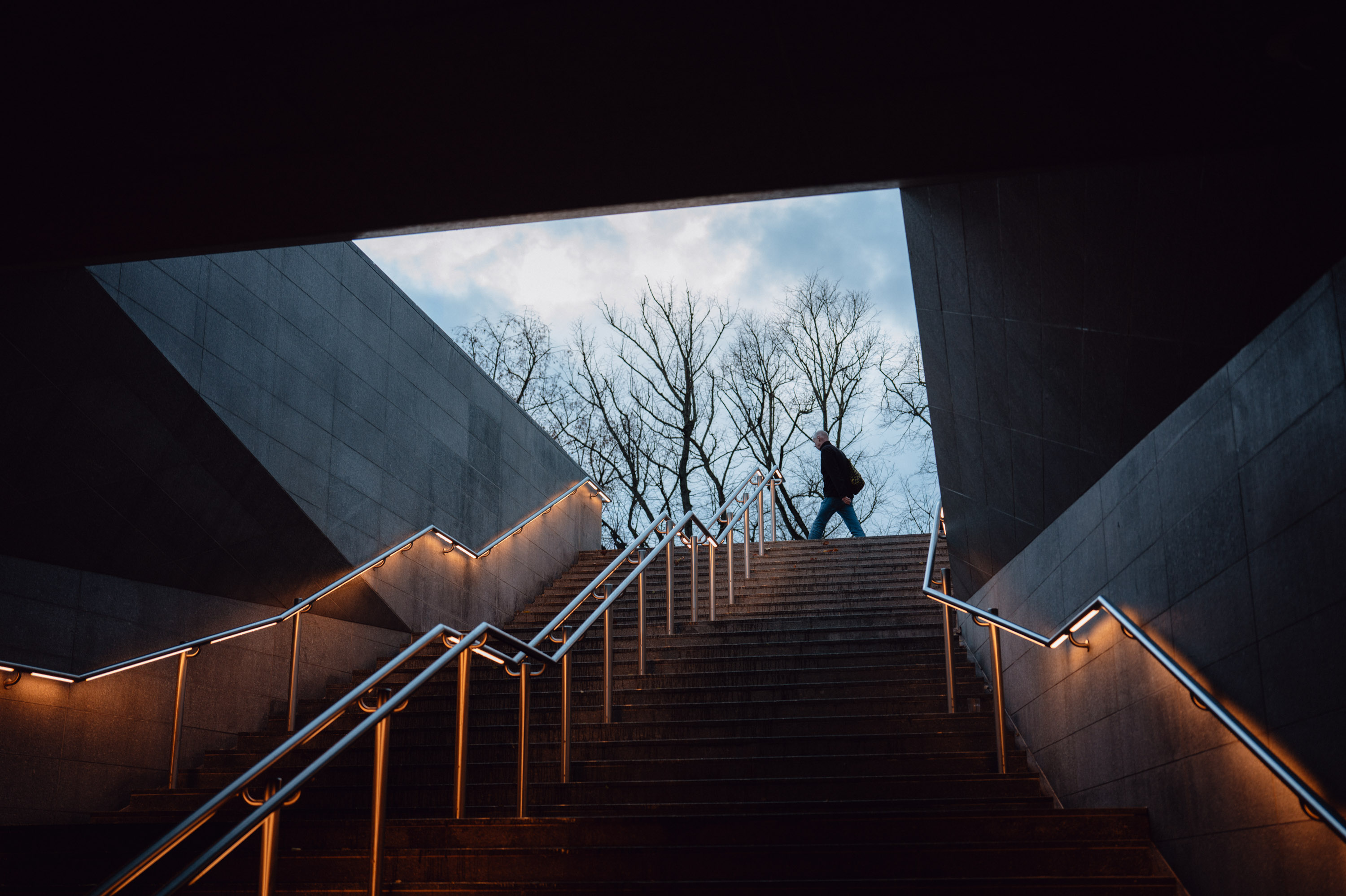
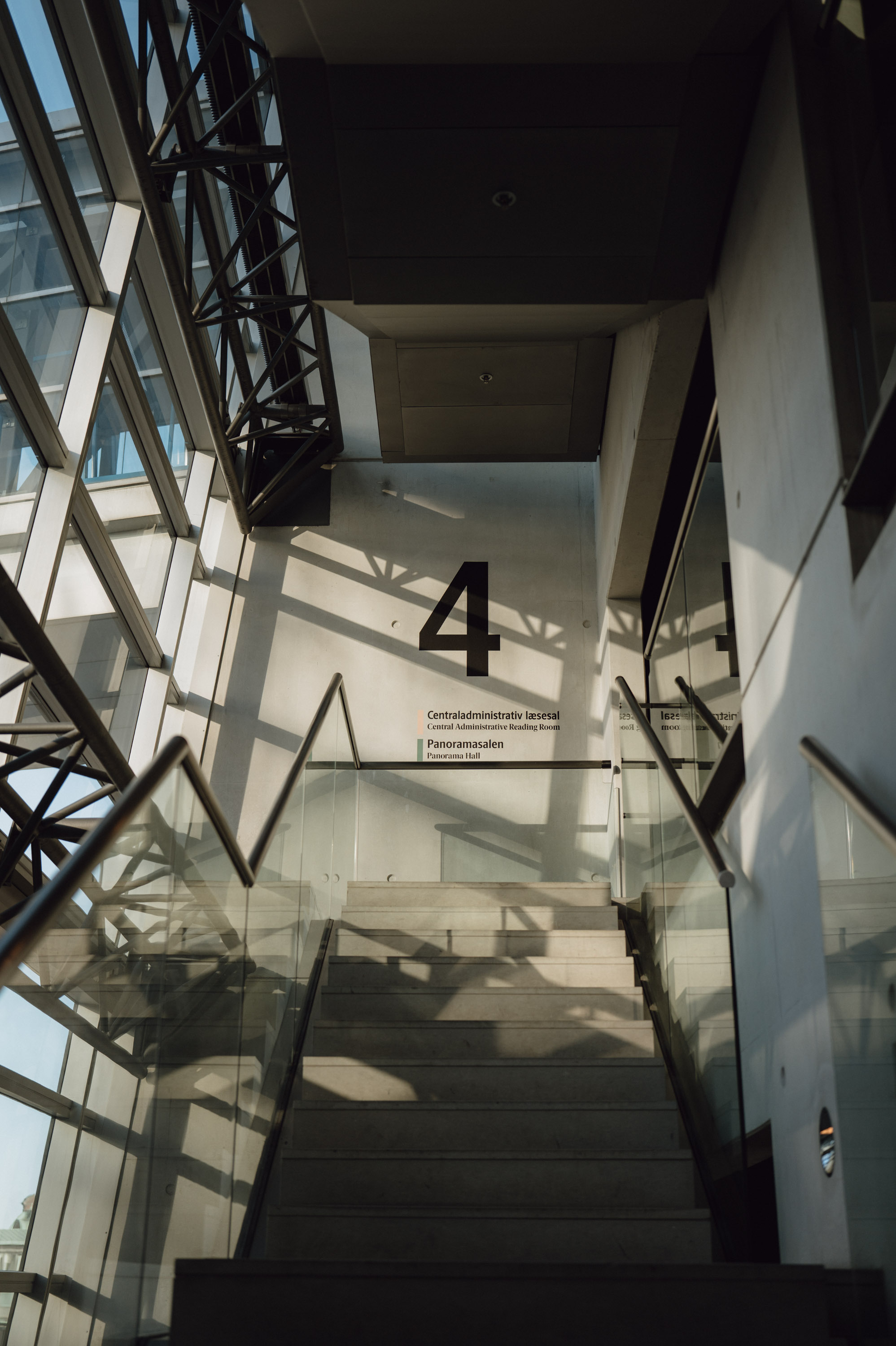
The approach from Søren Kierkegaards Plads is a long sunken stair cut between two leaning slabs of dark concrete, with the handrails lit from inside. Walking up it toward street level is one of those small architectural moments that most people pass through without noticing; stop halfway down with a camera and it turns into a graphic exercise in light and silhouette. A single figure walked across the top of the frame, and that was the shot.
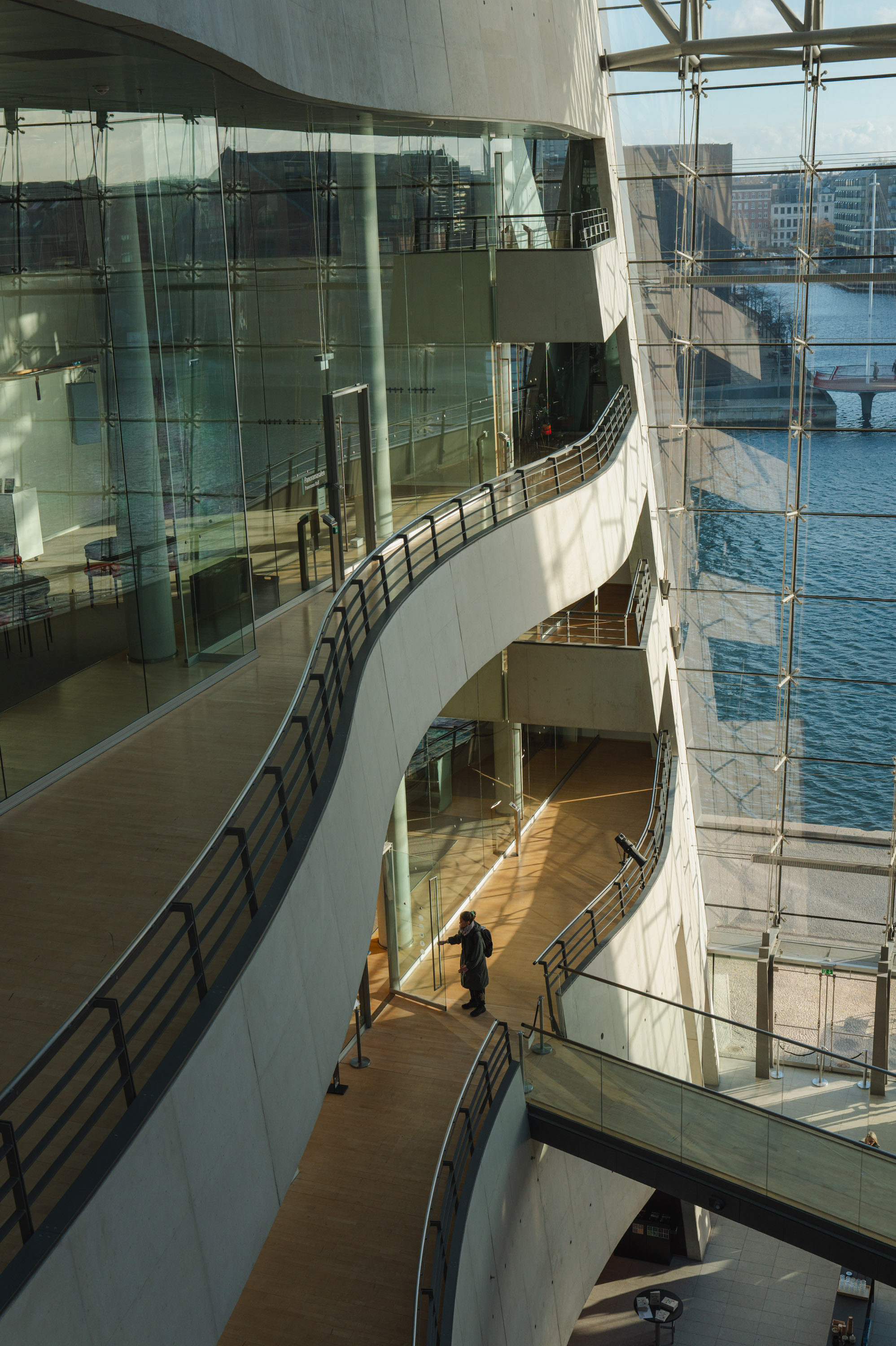
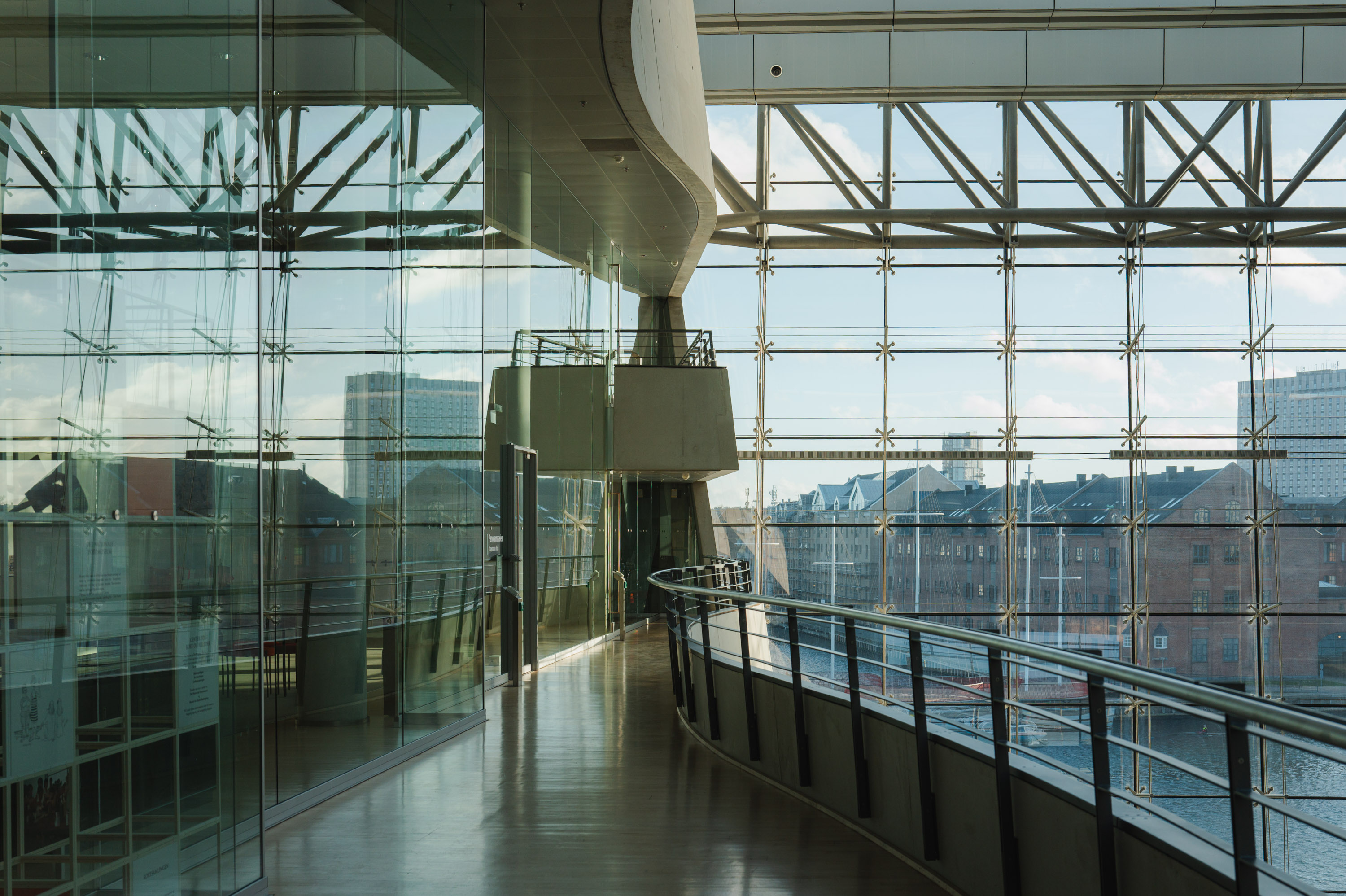
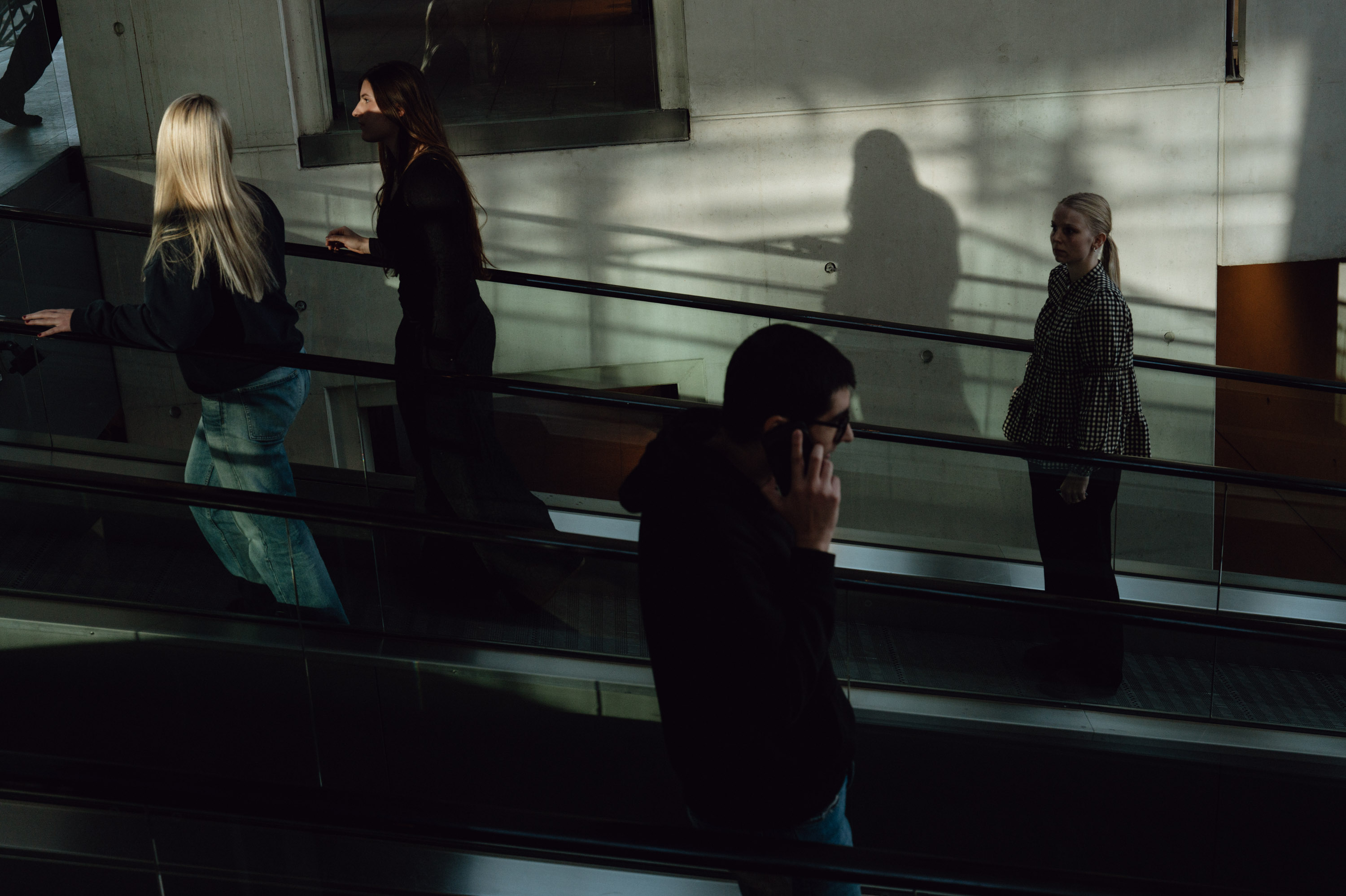
Inside the atrium, the whole building folds back on itself. The curved white reading-room balconies cantilever out over the harbour; the escalators cross each other at long diagonals; and the very soft, even northern light pours in through the full-height glass facade. The 43mm field of view is almost exactly right for this — wider than a 50mm portrait lens, tighter than a reportage 35mm, close to what the eye actually settles on. One of the strongest frames of the whole trip is the long view down the escalator run, with a solitary figure at the top crossing the mezzanine.
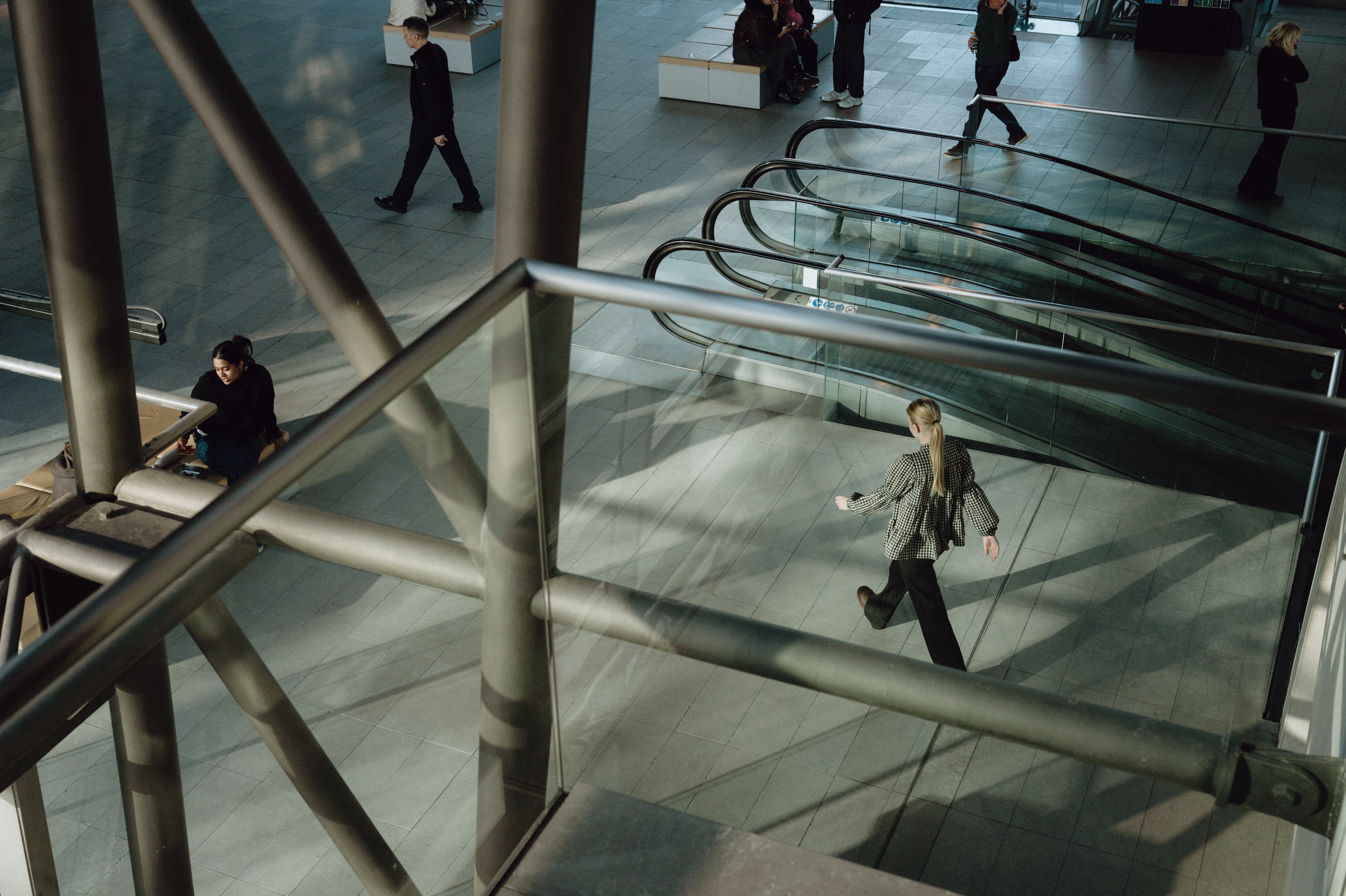
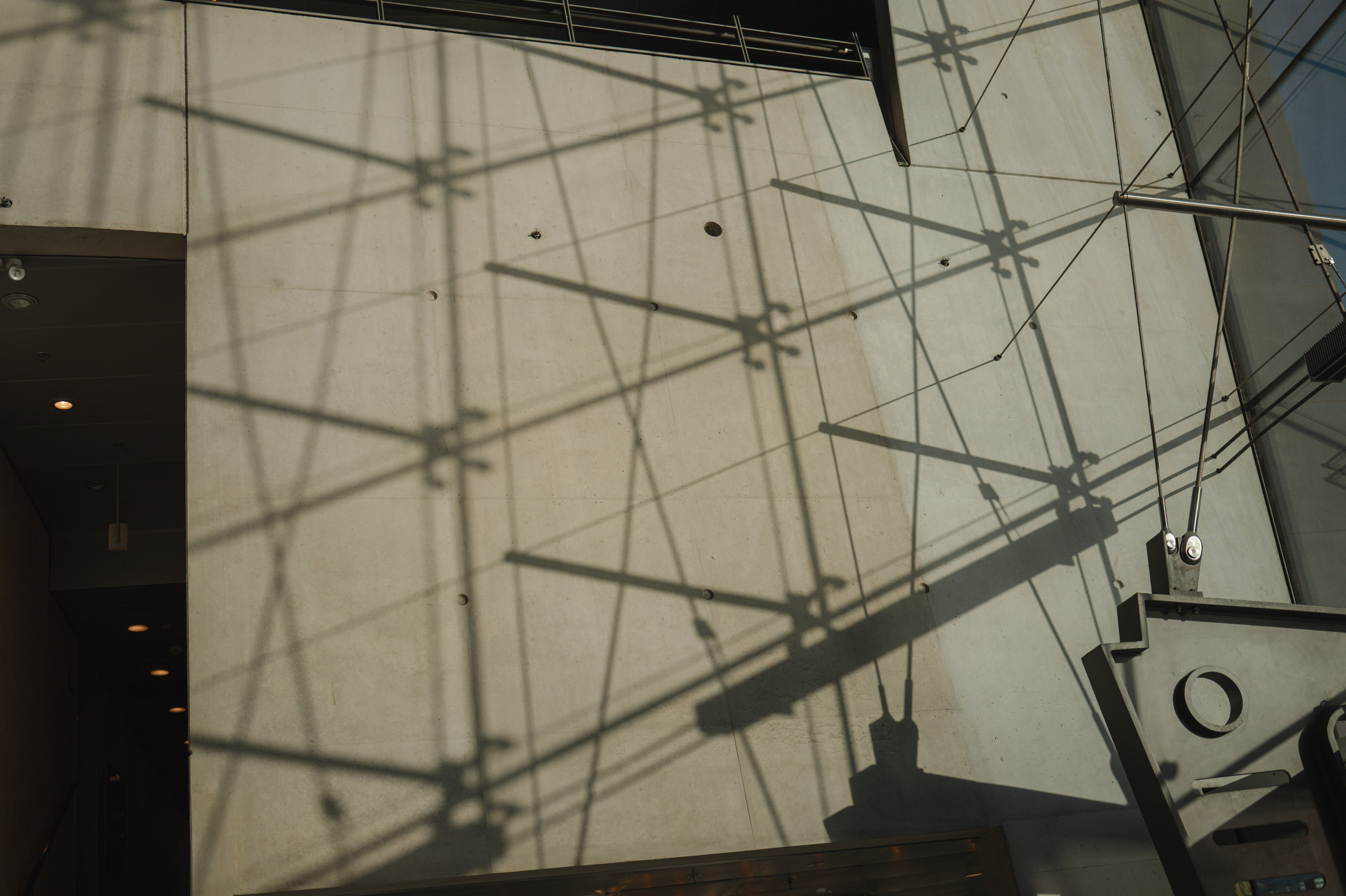
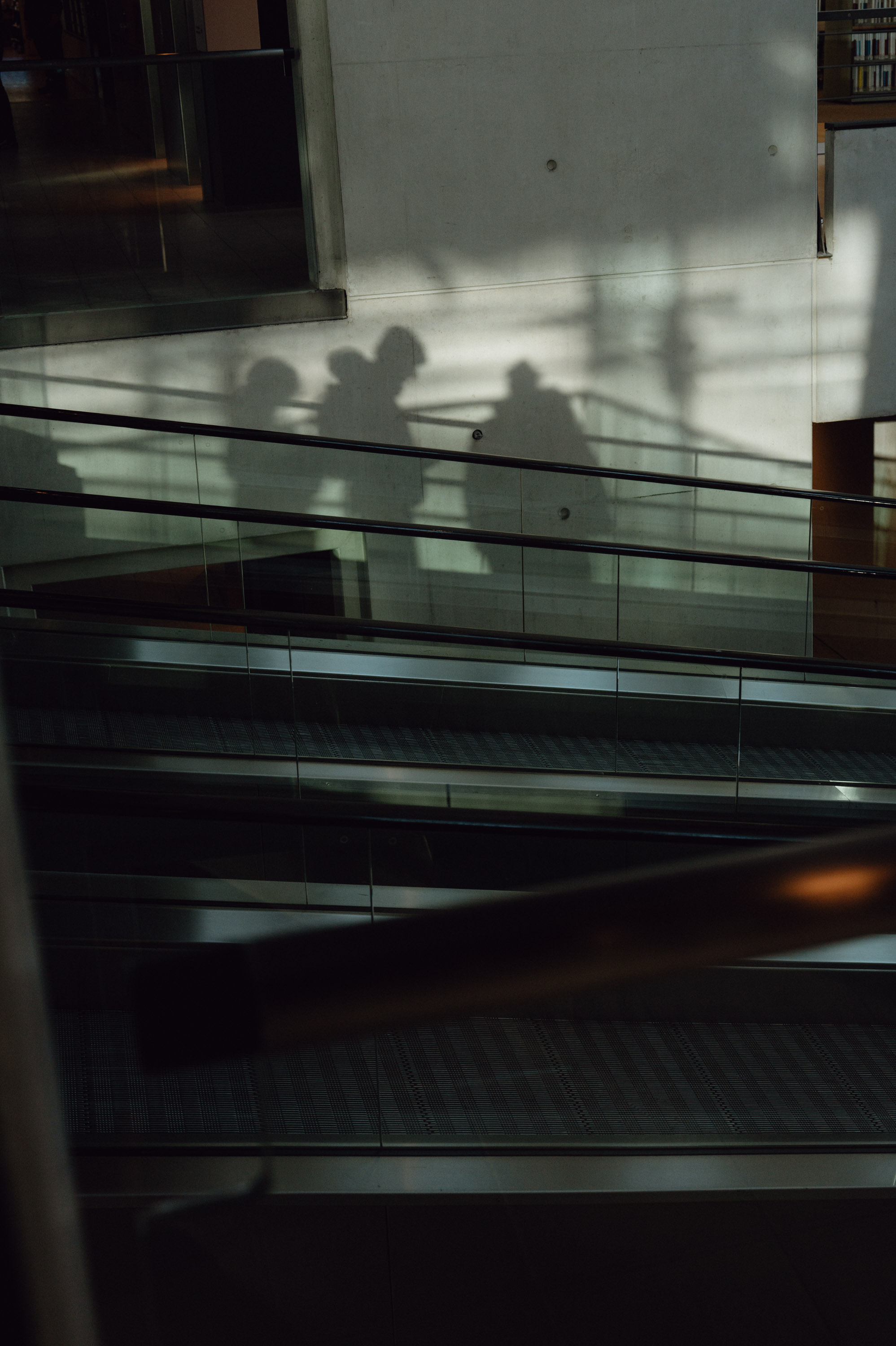
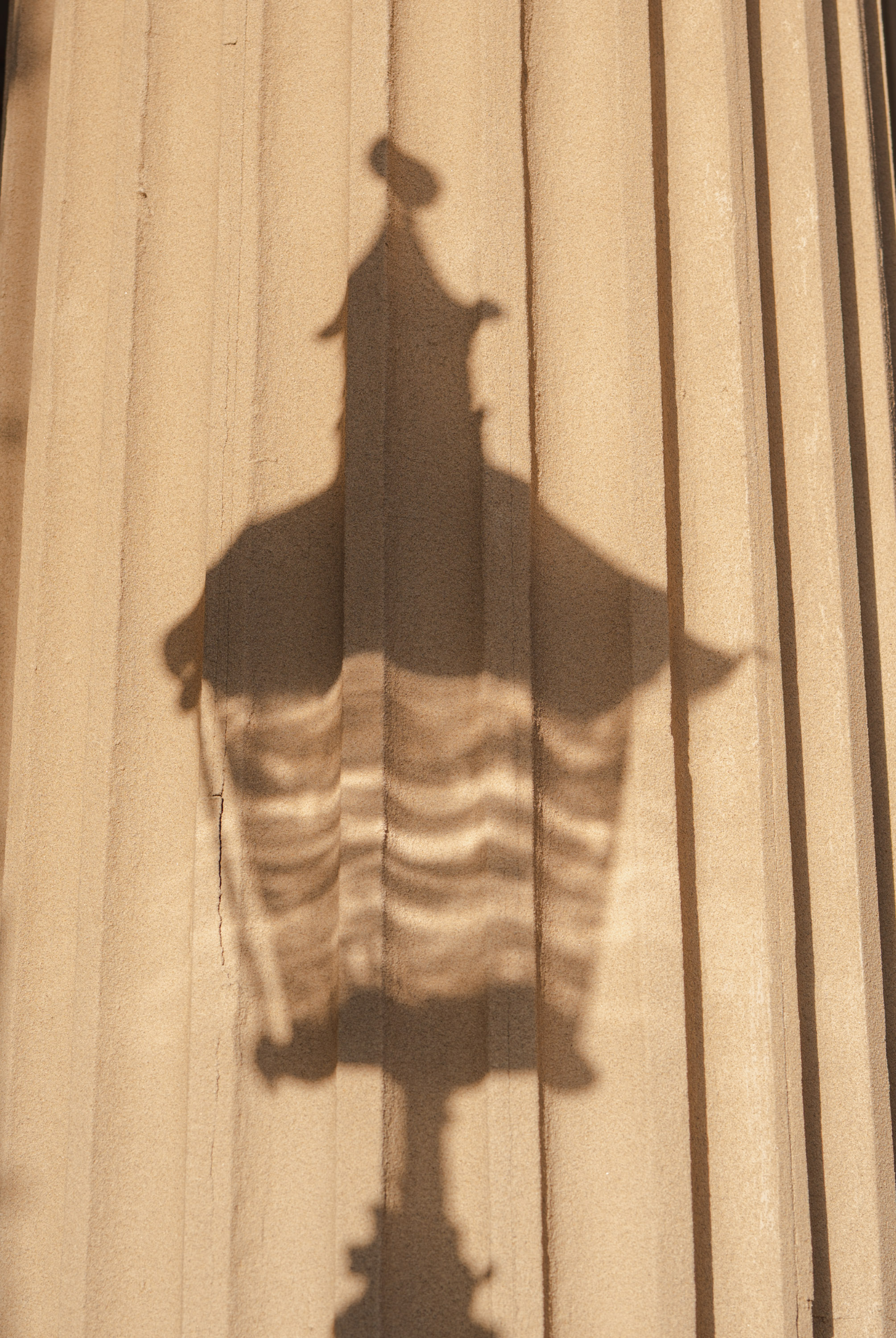
The shadows the building throws onto its own concrete walls are its other great gift to a photographer. The glass balustrades, the diagonal handrails and the figures moving through the space all project onto raw concrete piers in a way that turns the architecture into a kind of ambient light instrument. I spent twenty minutes photographing nothing but shadows.
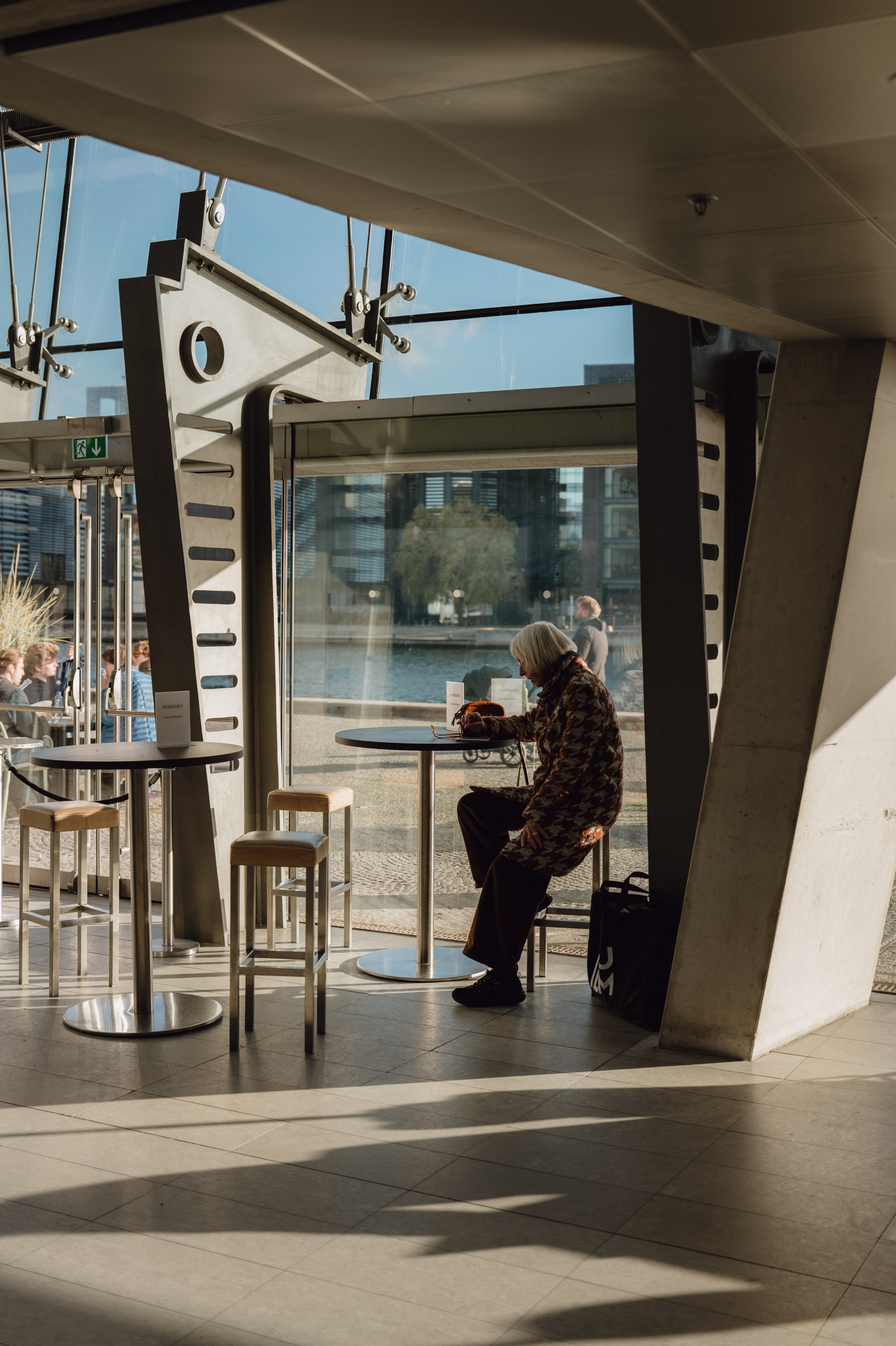
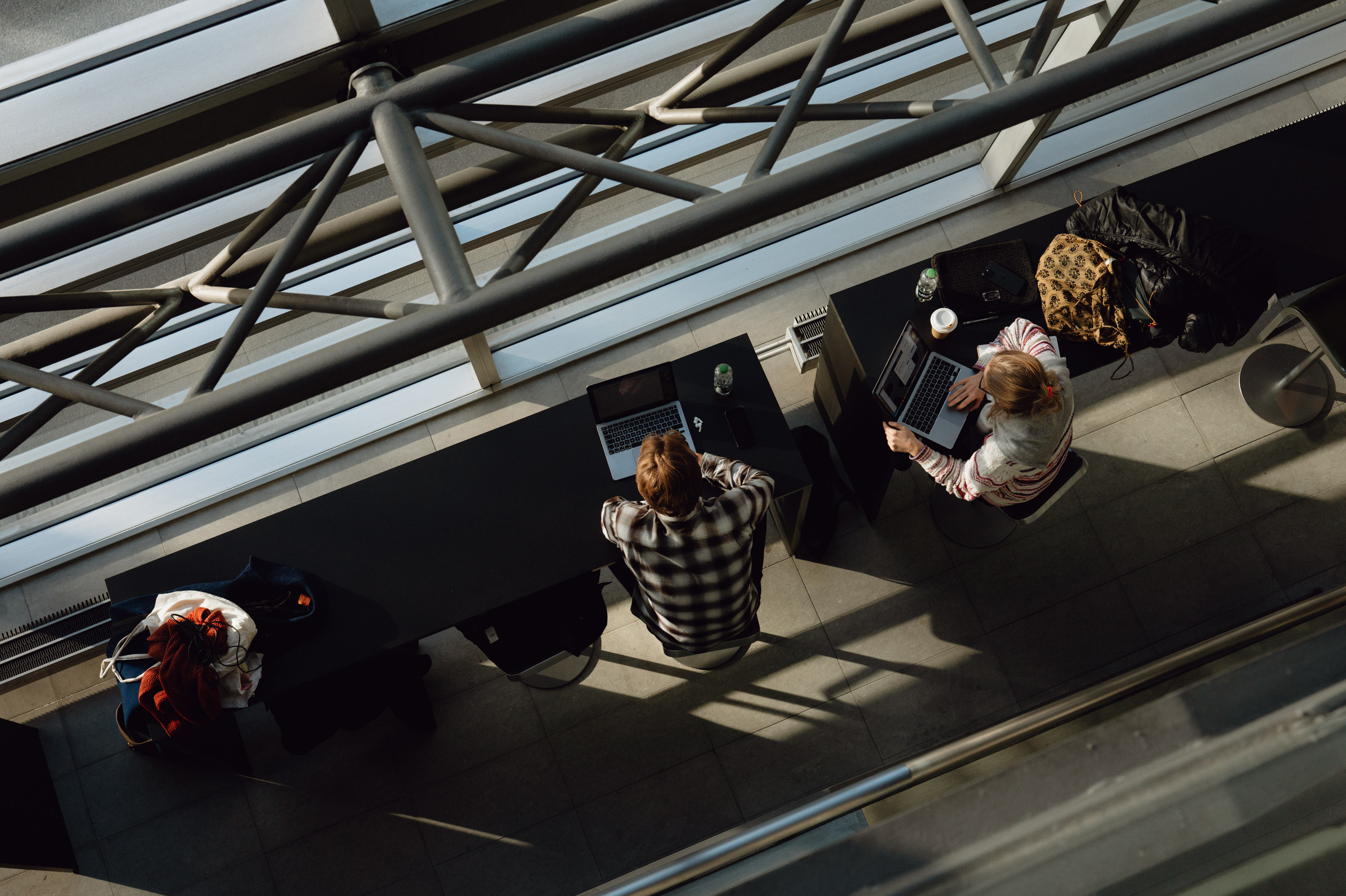
The reading rooms themselves are open to anyone — students at long oak tables, people on laptops, a quiet upper-level cafe looking out over the water. It’s the public building Copenhagen gives itself, and the sort of place I could happily spend a weekday morning photographing an editorial piece about Danish public architecture.
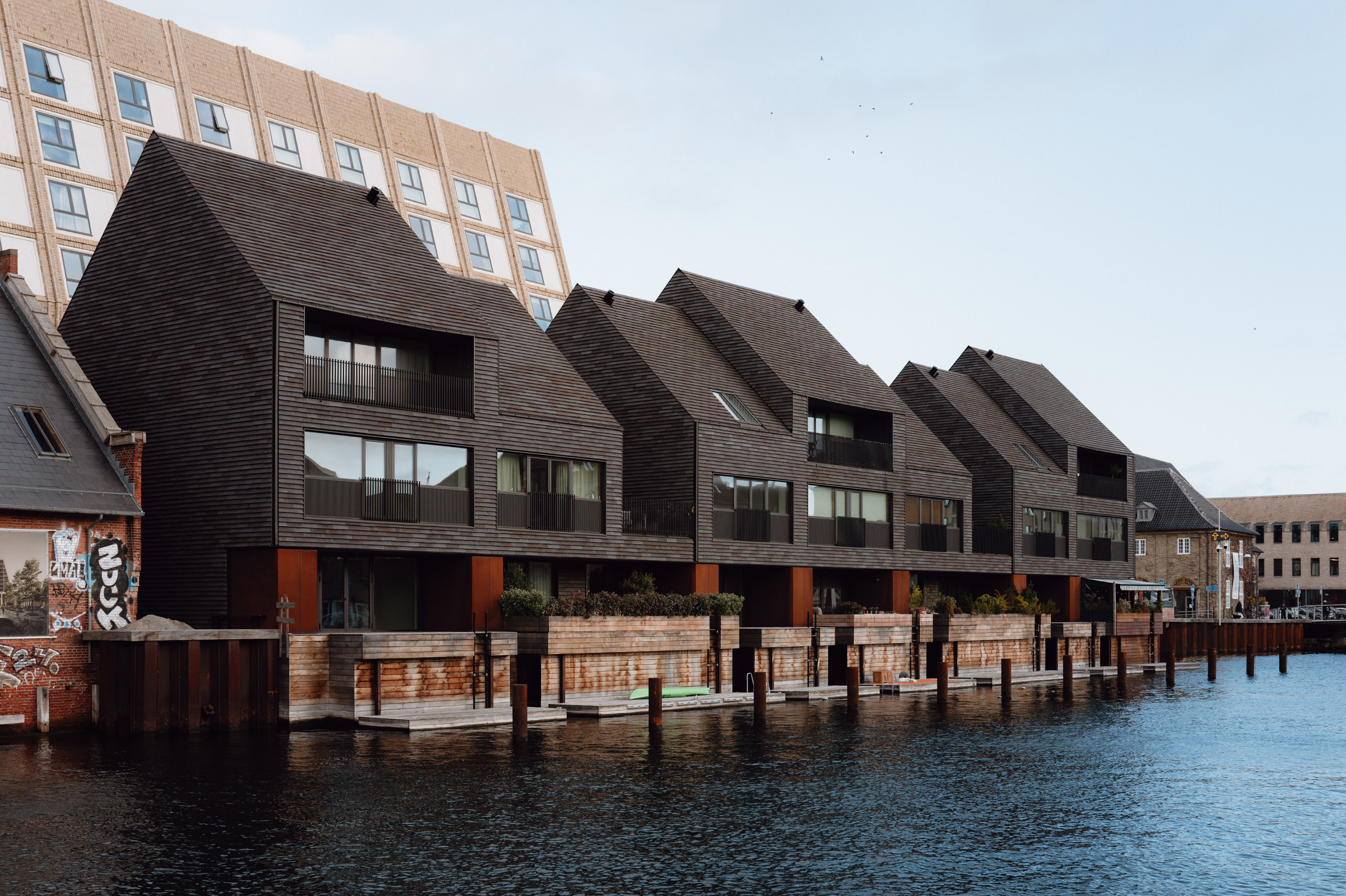
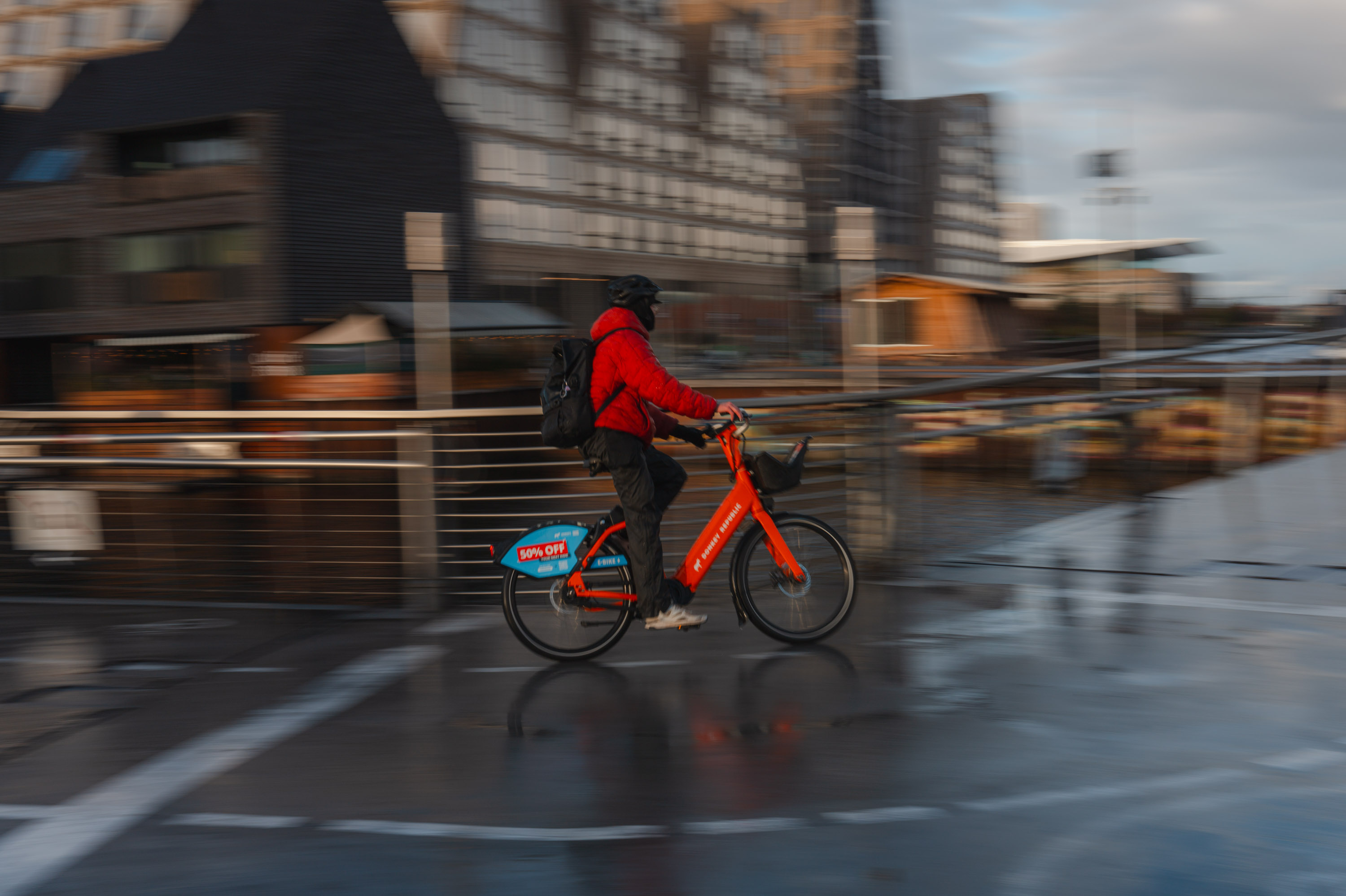
From the Black Diamond I crossed the inner harbour on foot to the Christianshavn side — past Papirøen (Paper Island), down to COBE’s wooden-gabled Krøyers Plads townhouses. It is one of the most satisfying contemporary reinterpretations of a historic typology I’ve seen in a while — new buildings that feel absolutely of their place without ever pretending to be old. Then back across the water to Nyhavn, which looked, as always, like it had been painted onto the end of the day.
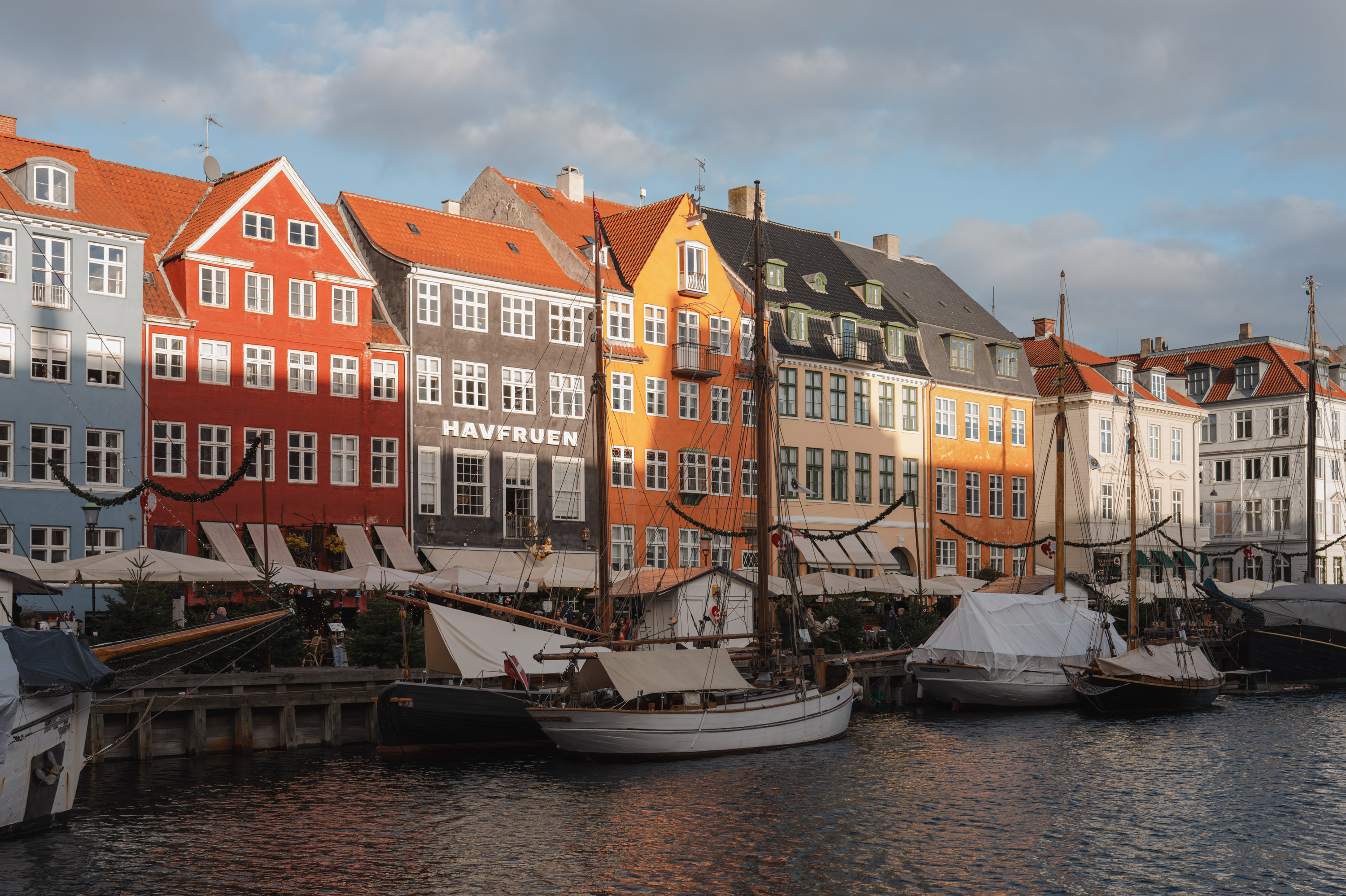
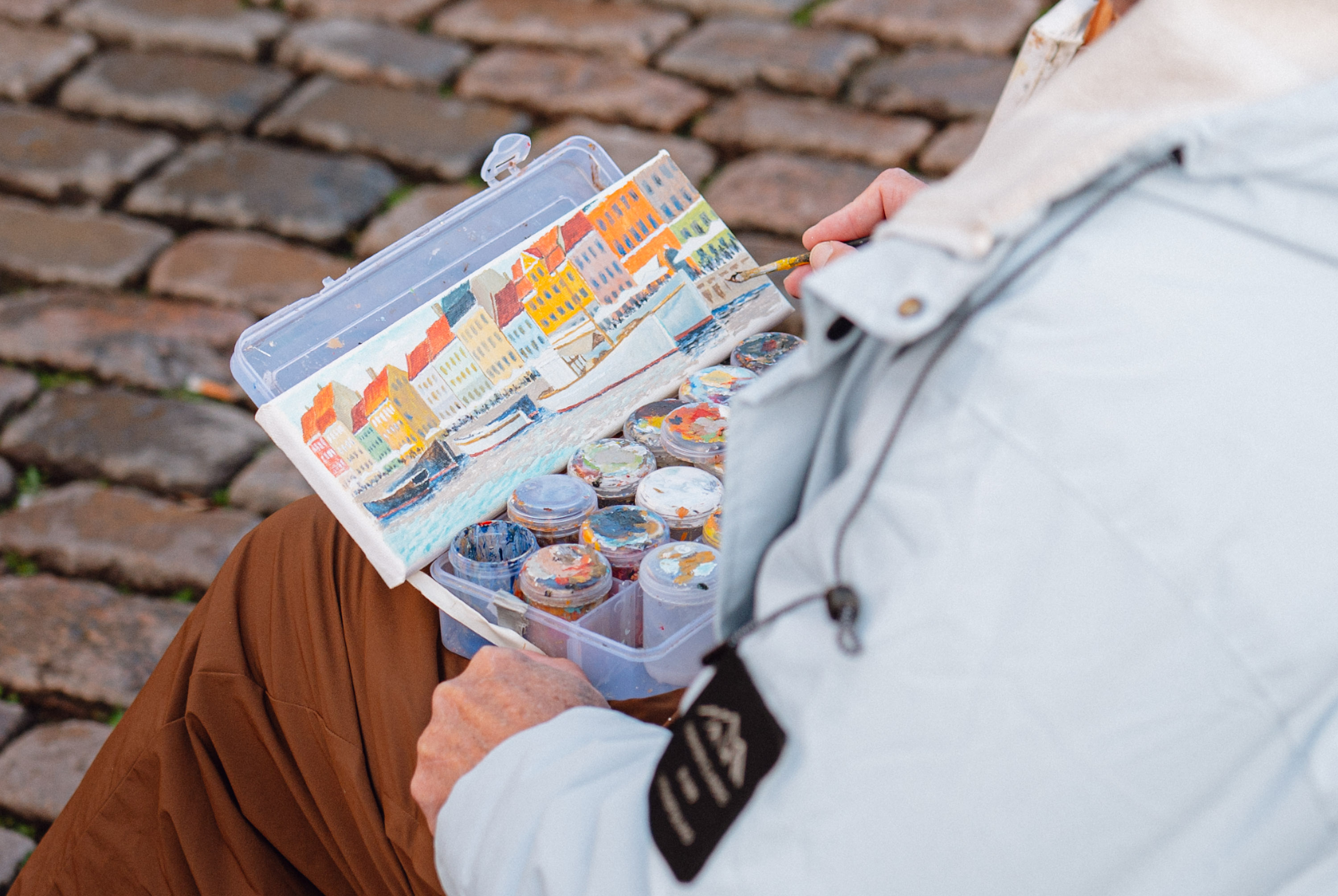
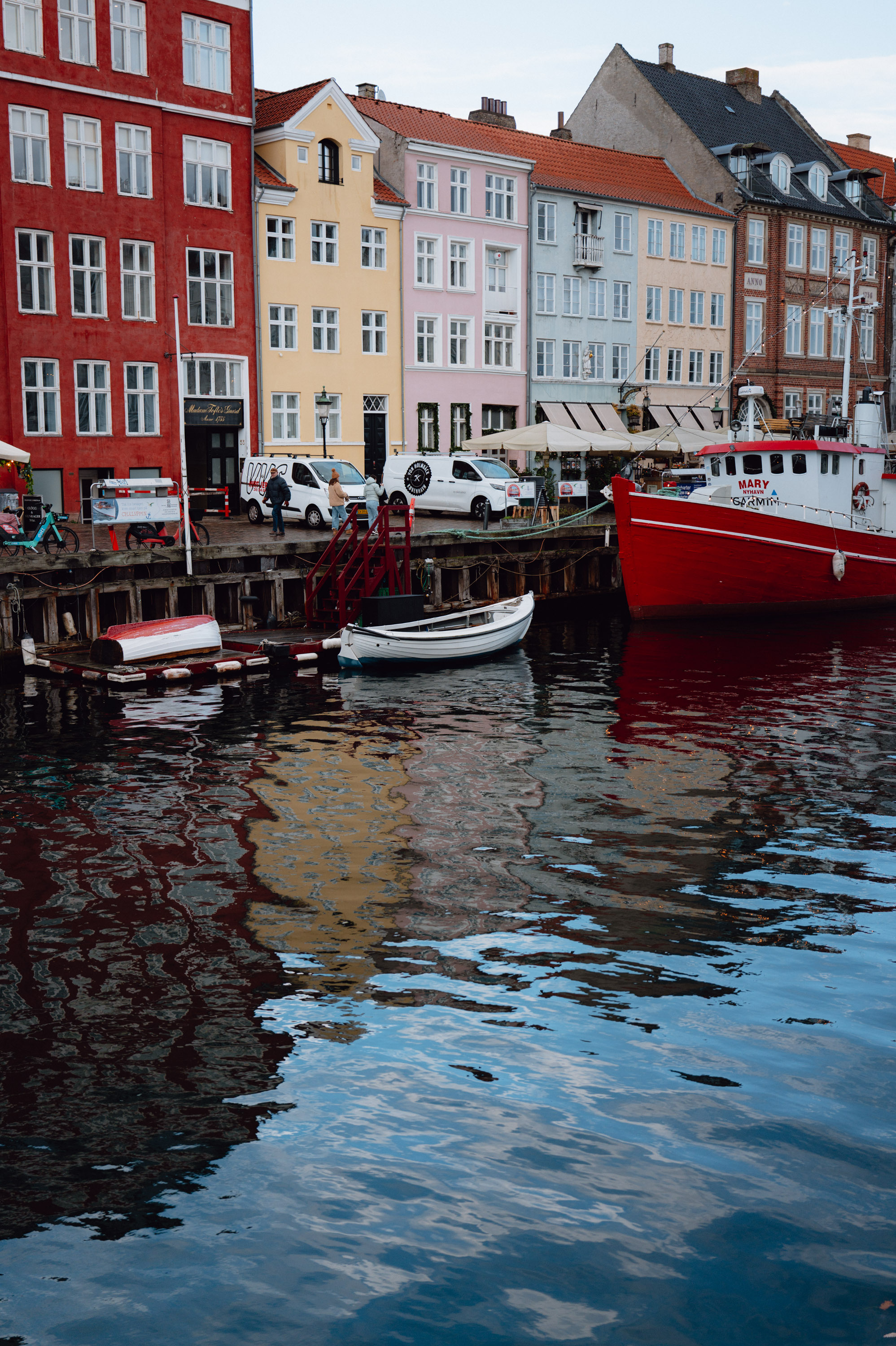
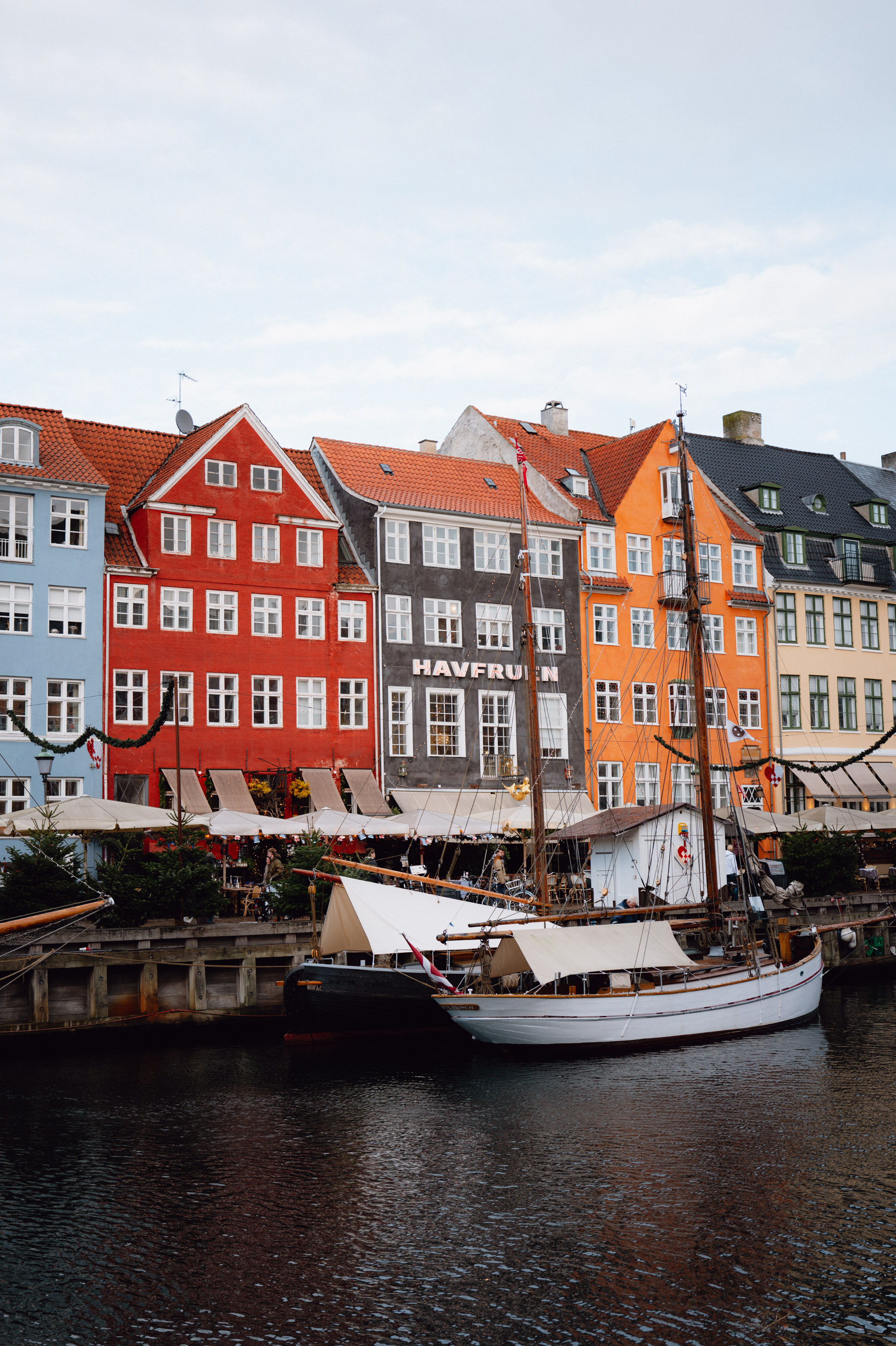
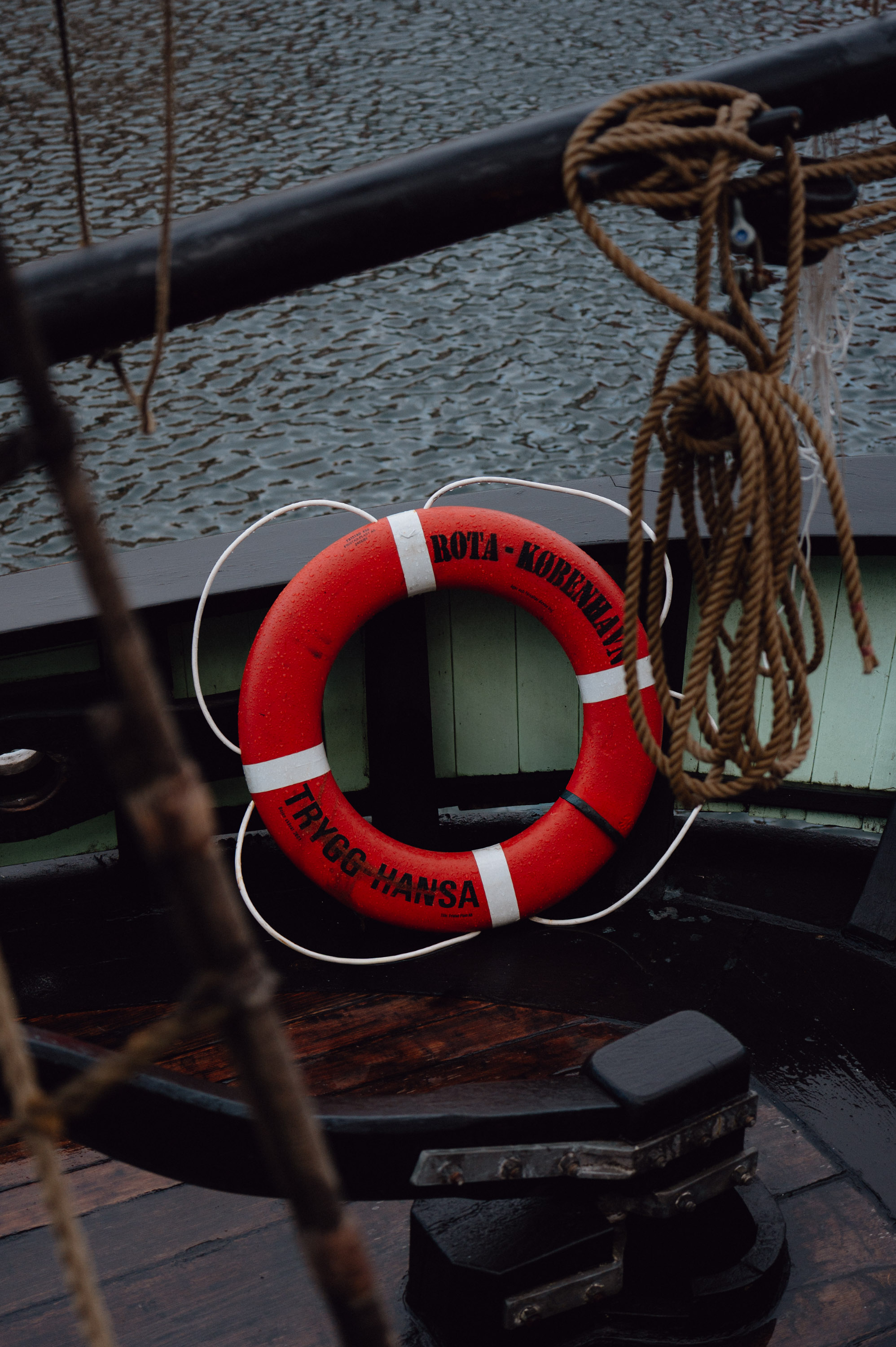
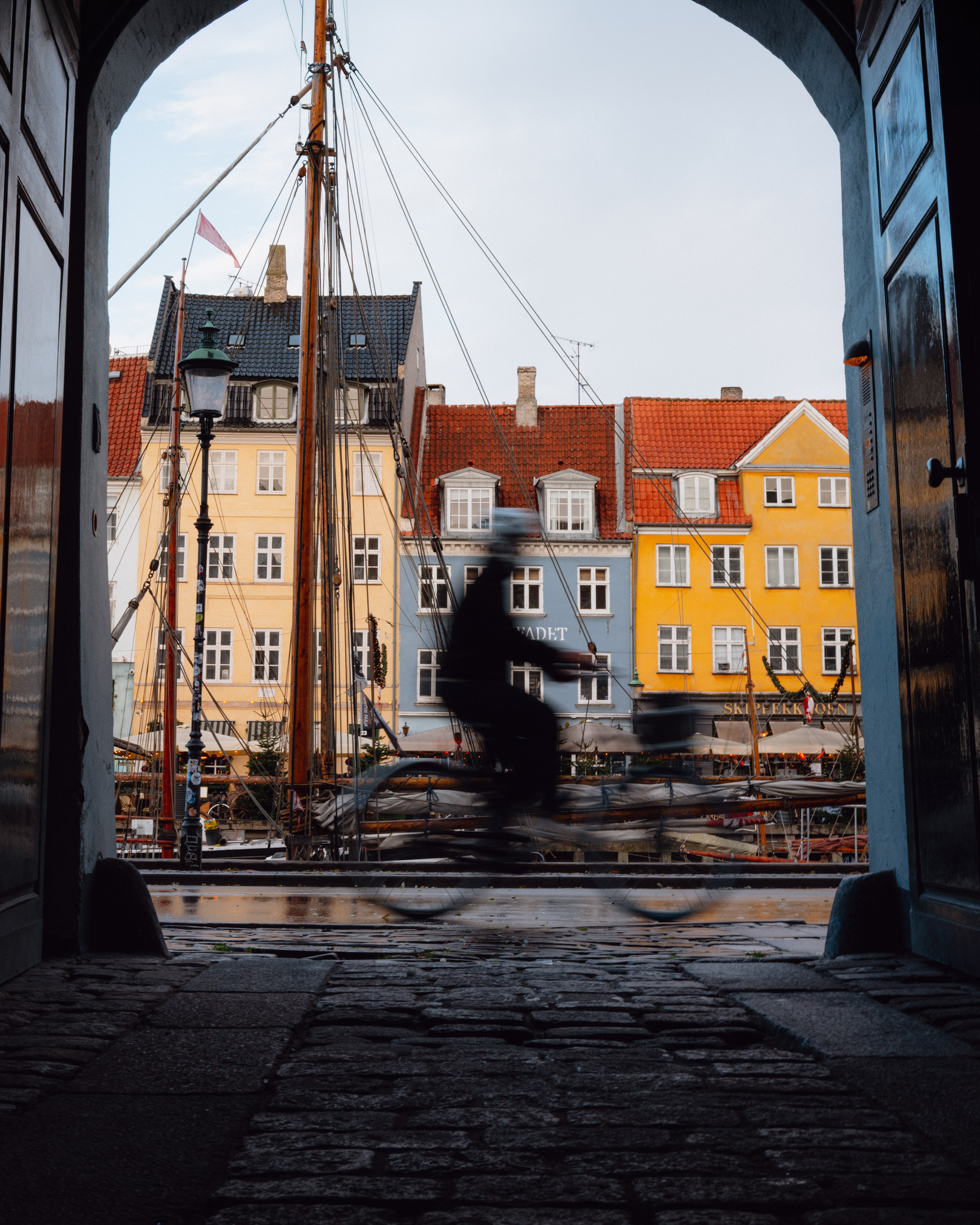
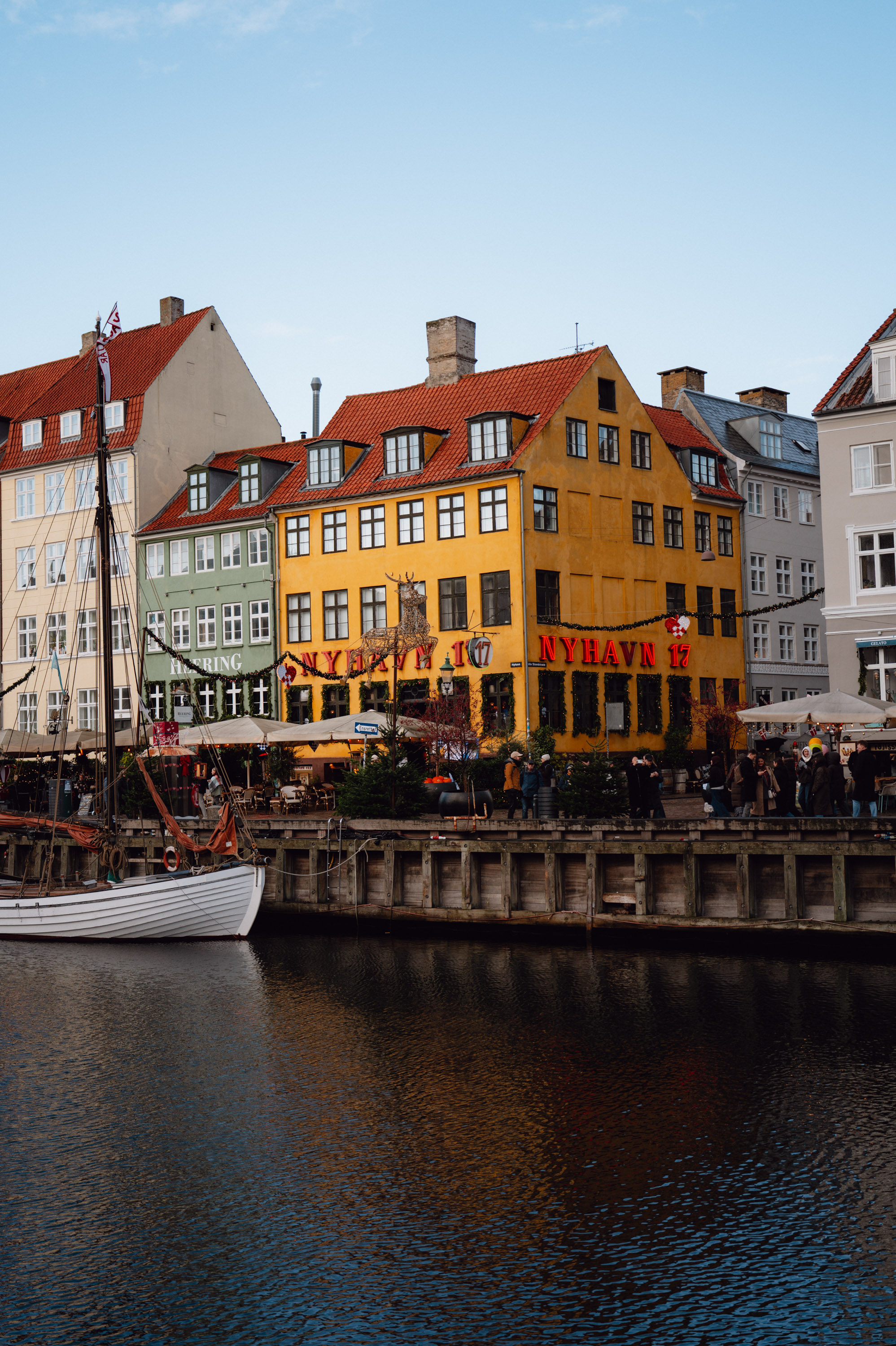
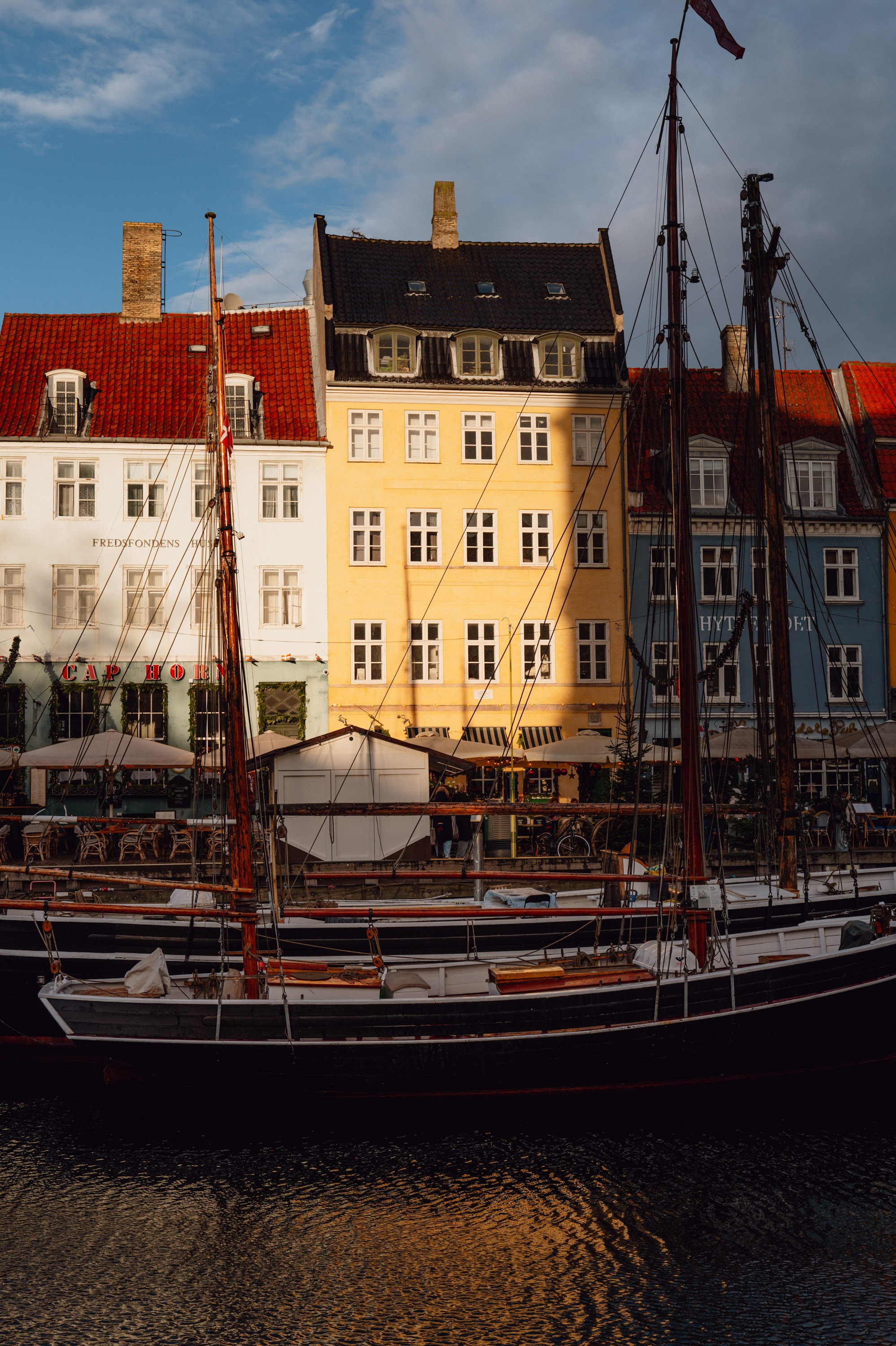
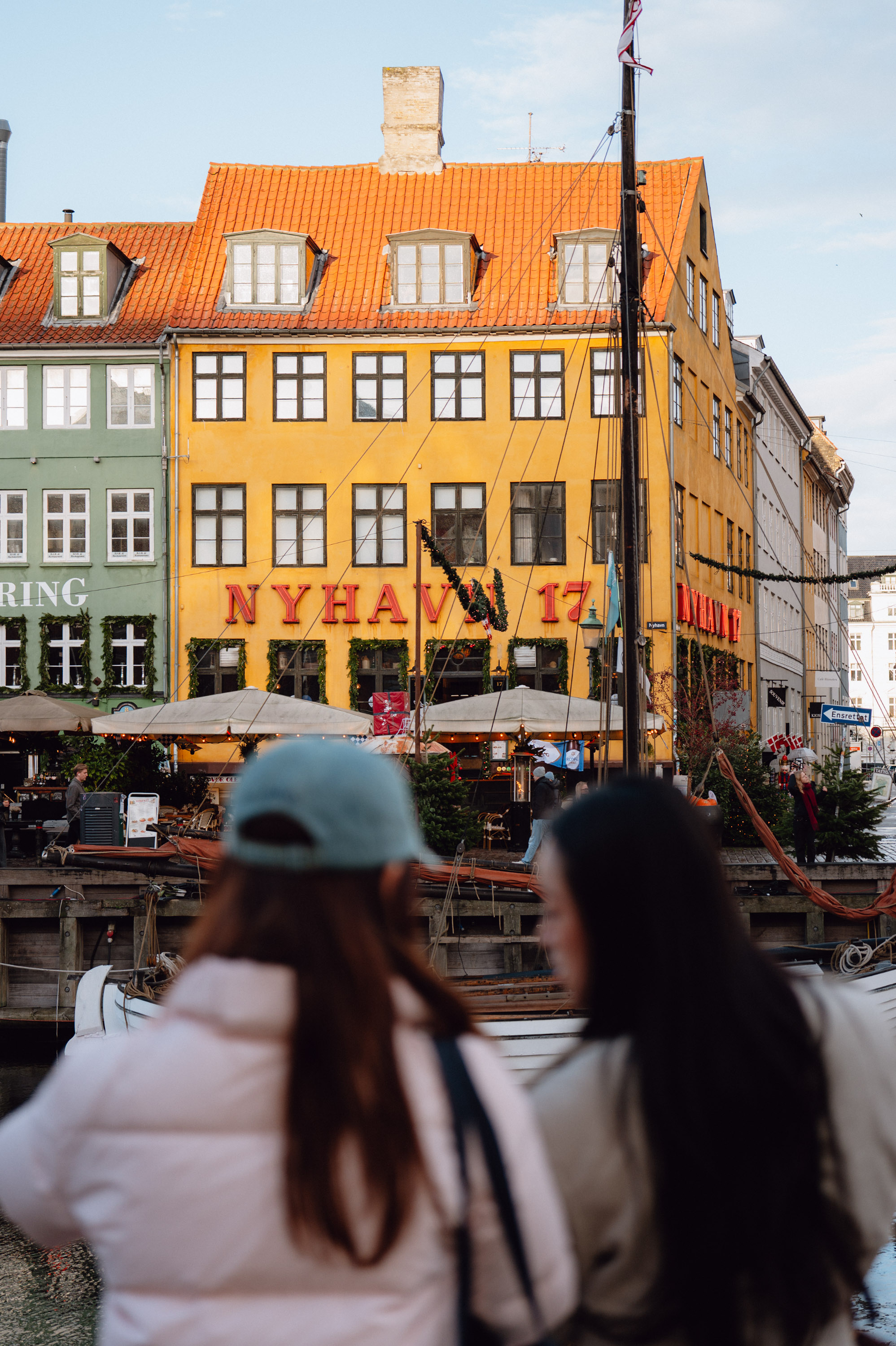
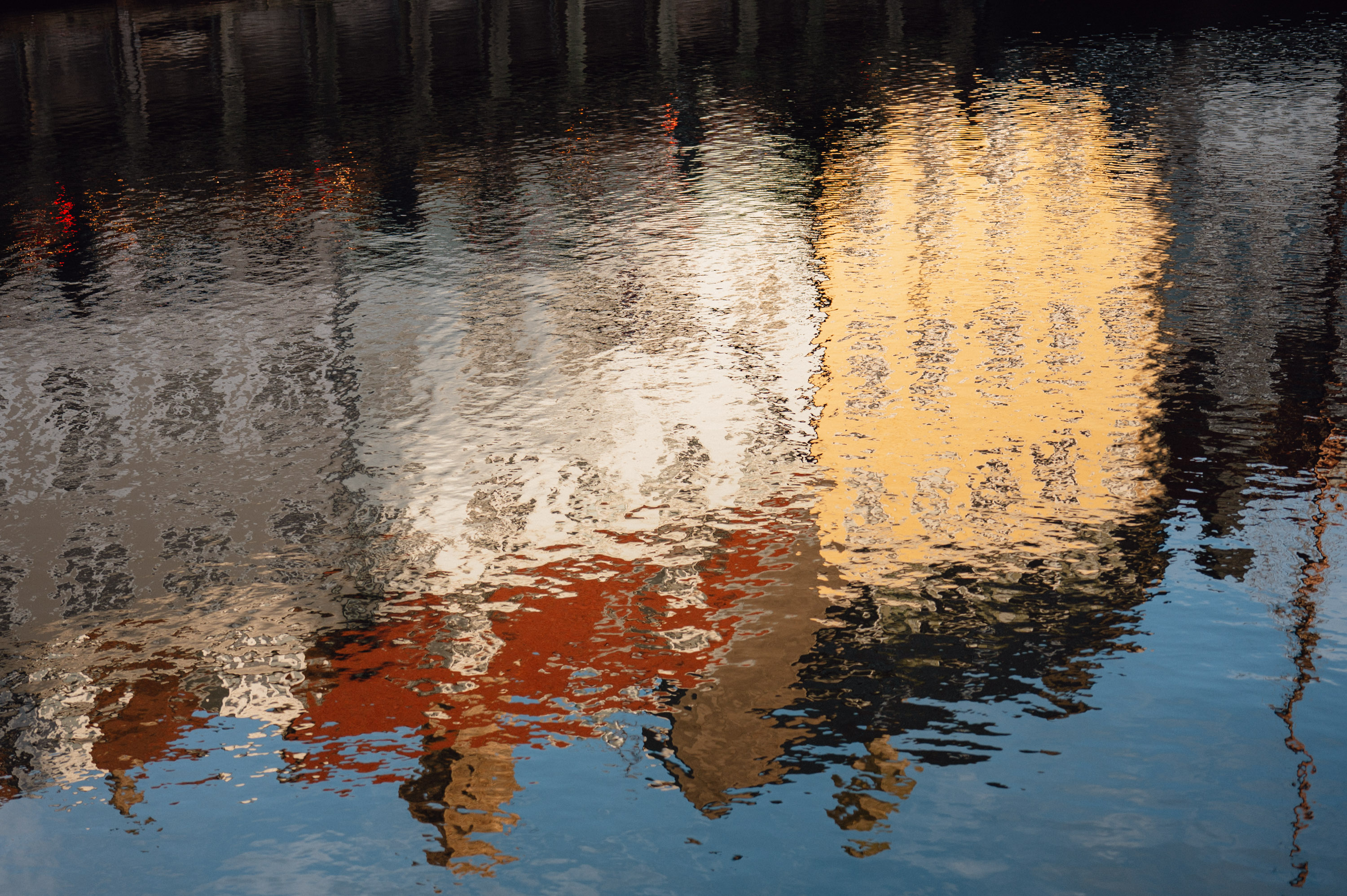
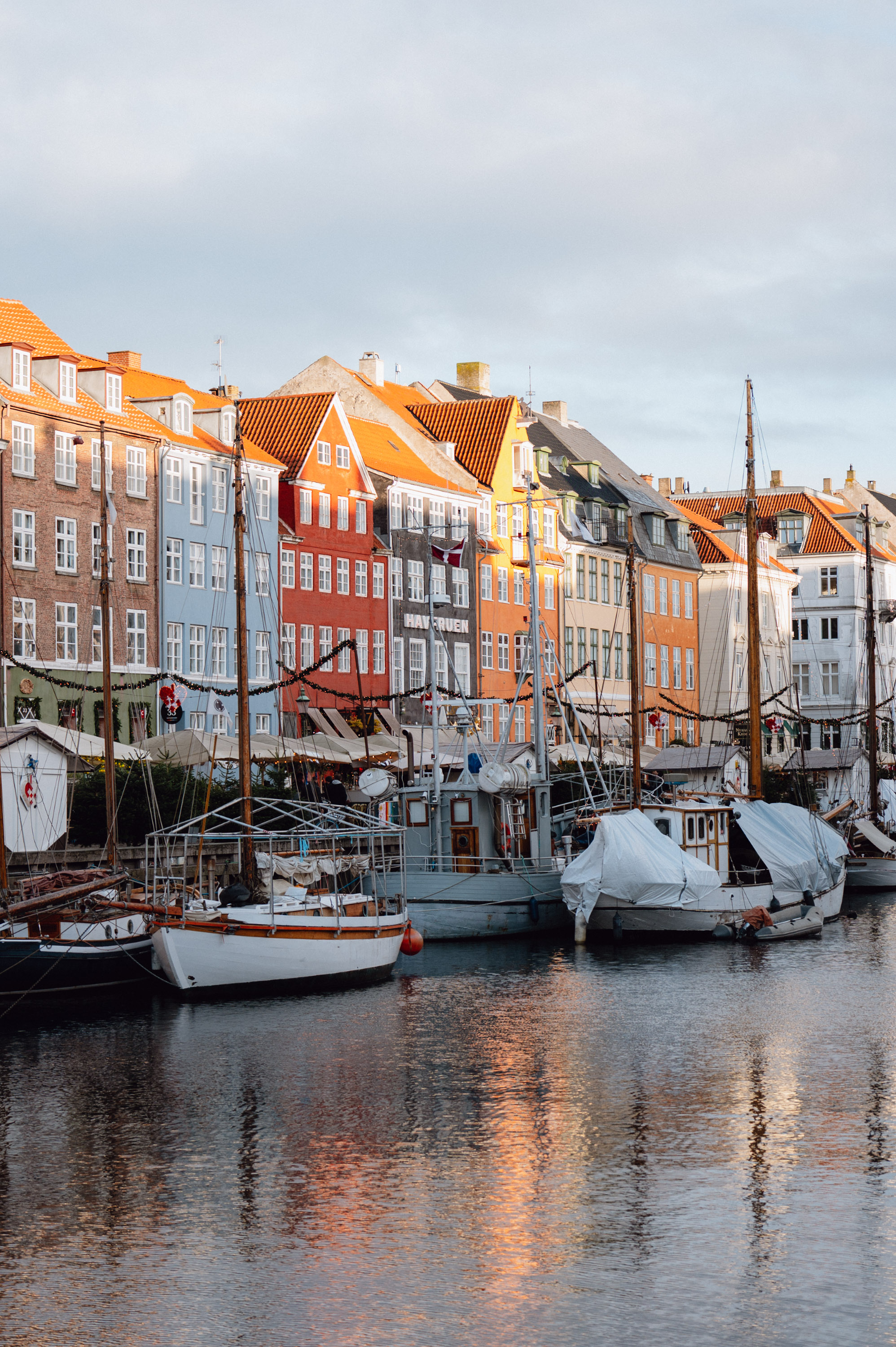
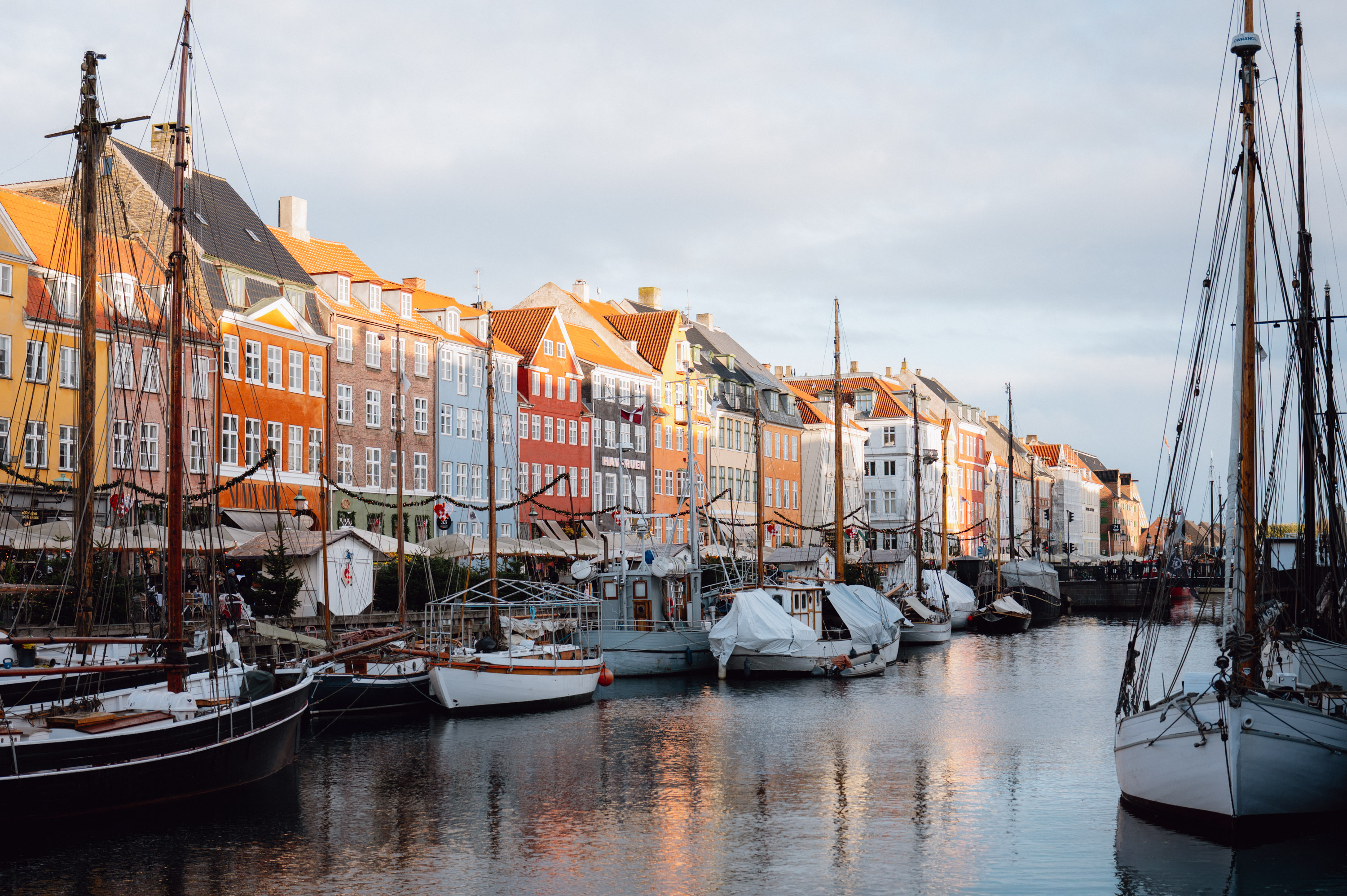
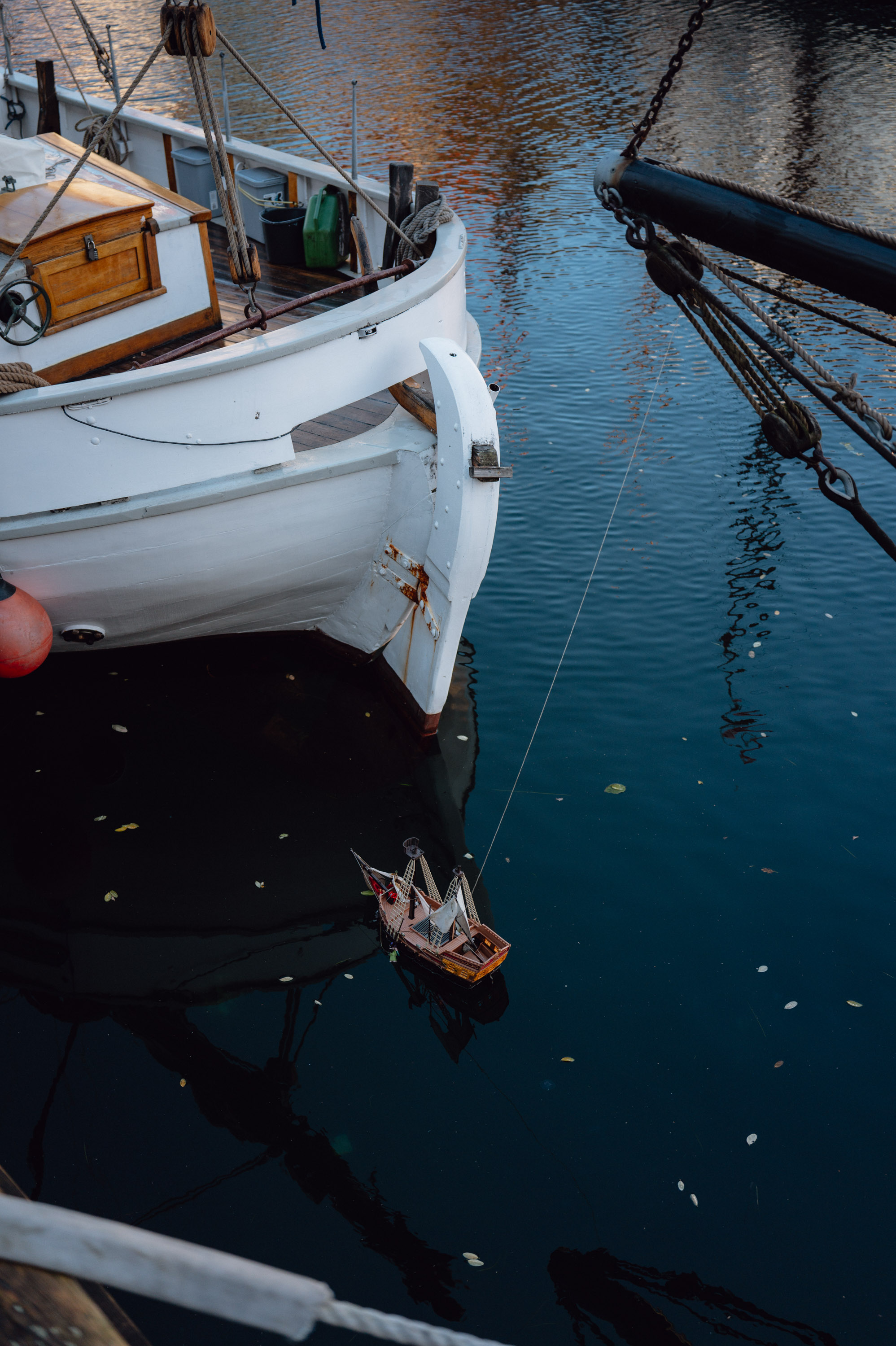
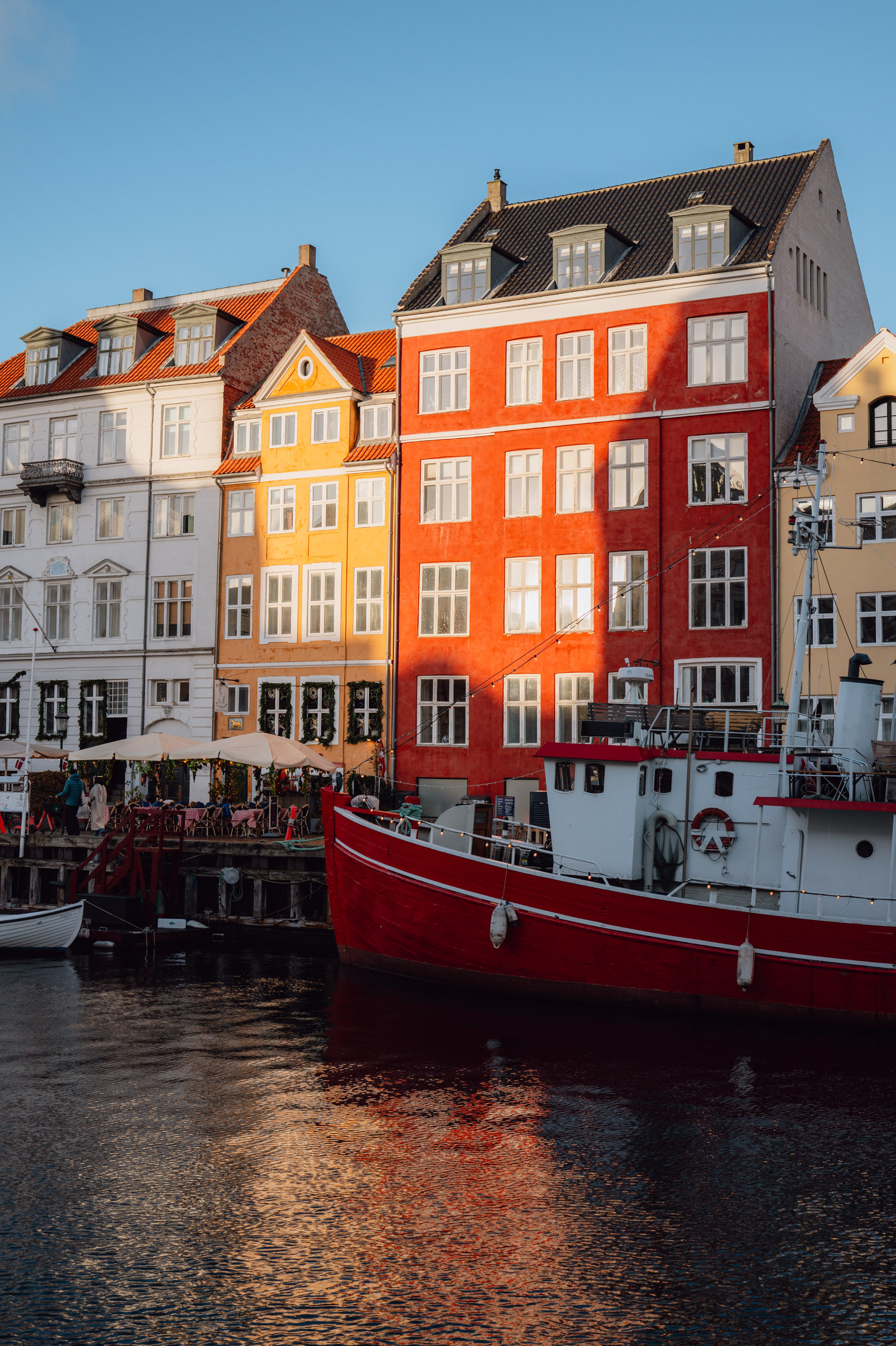
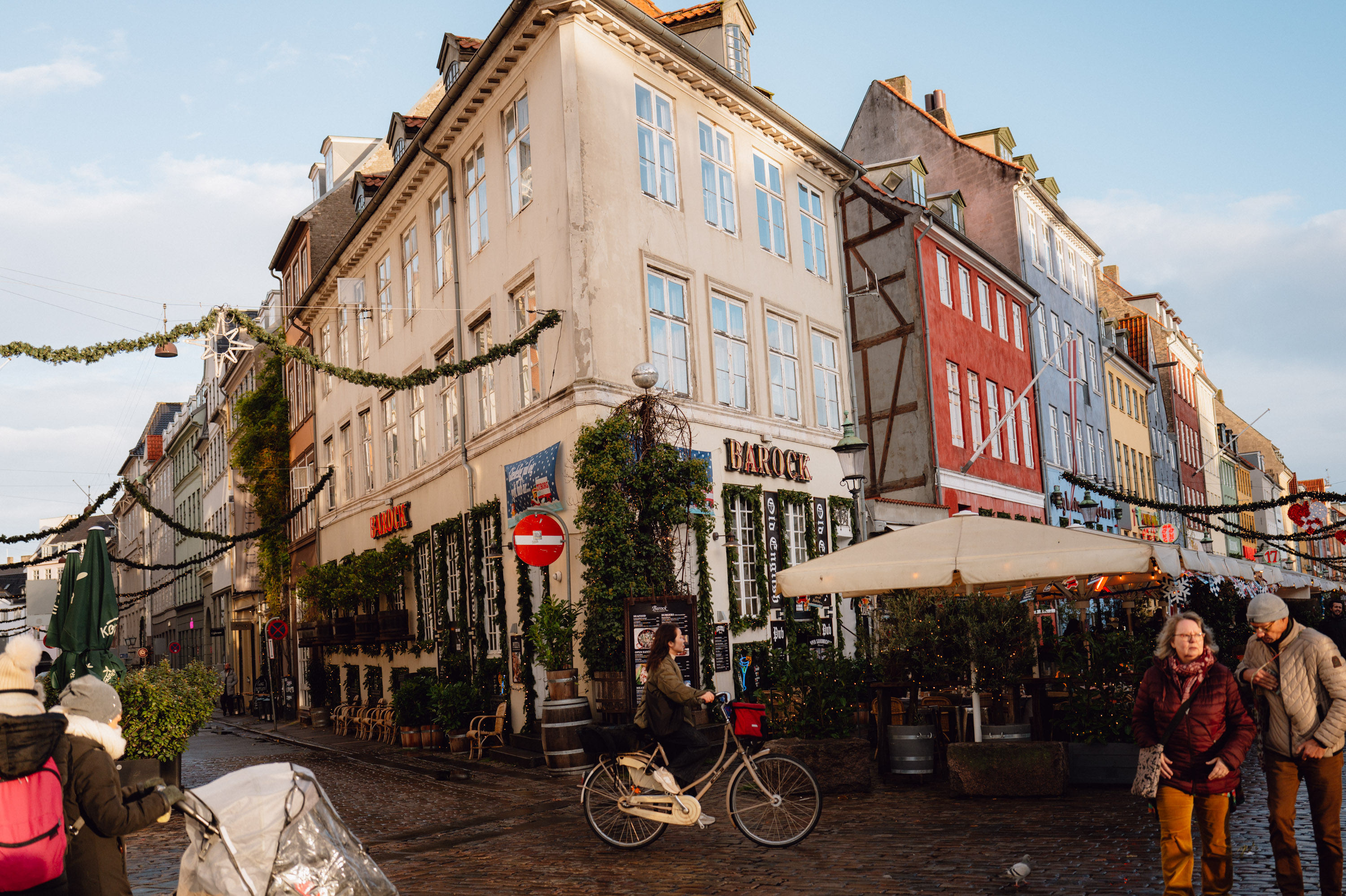
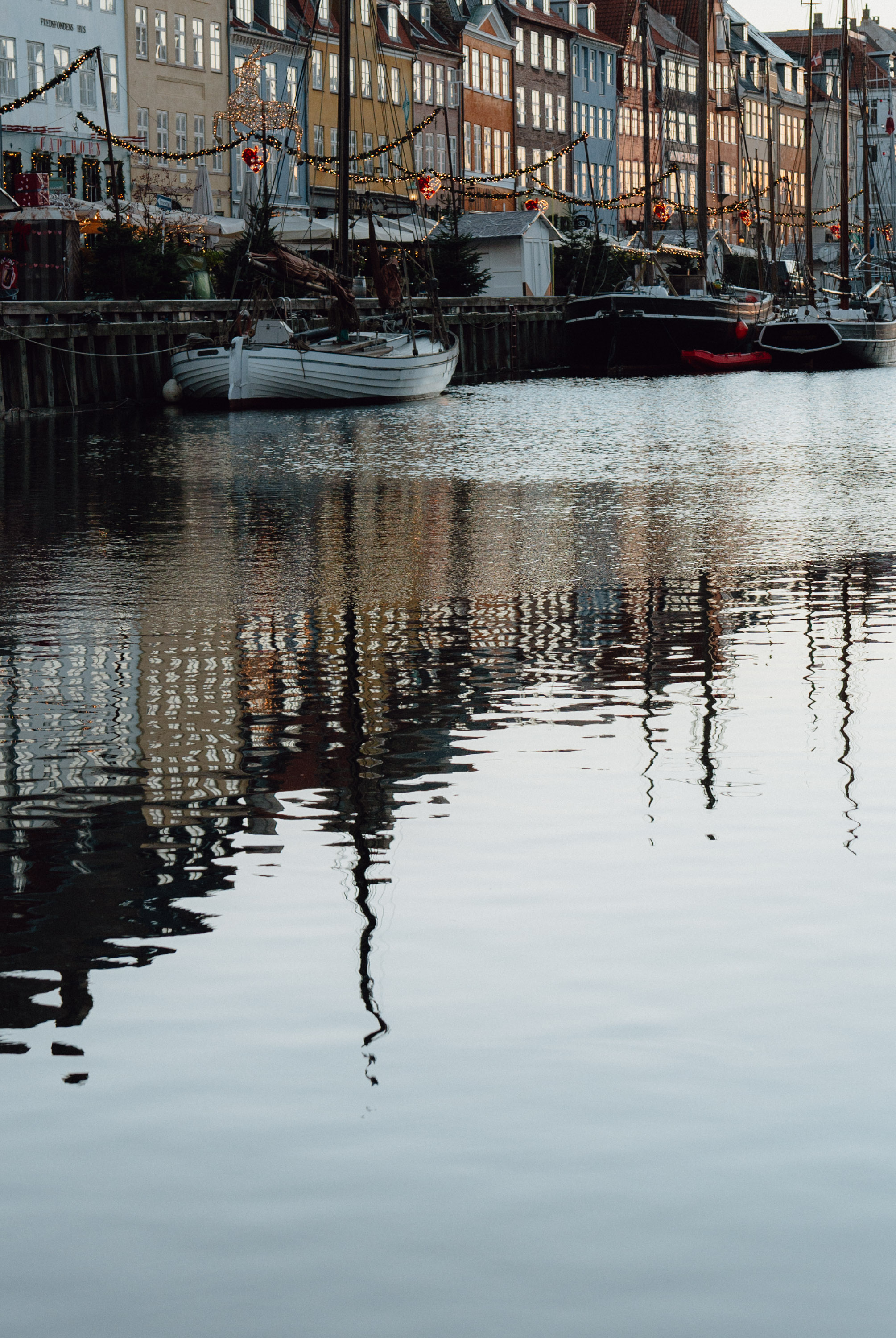
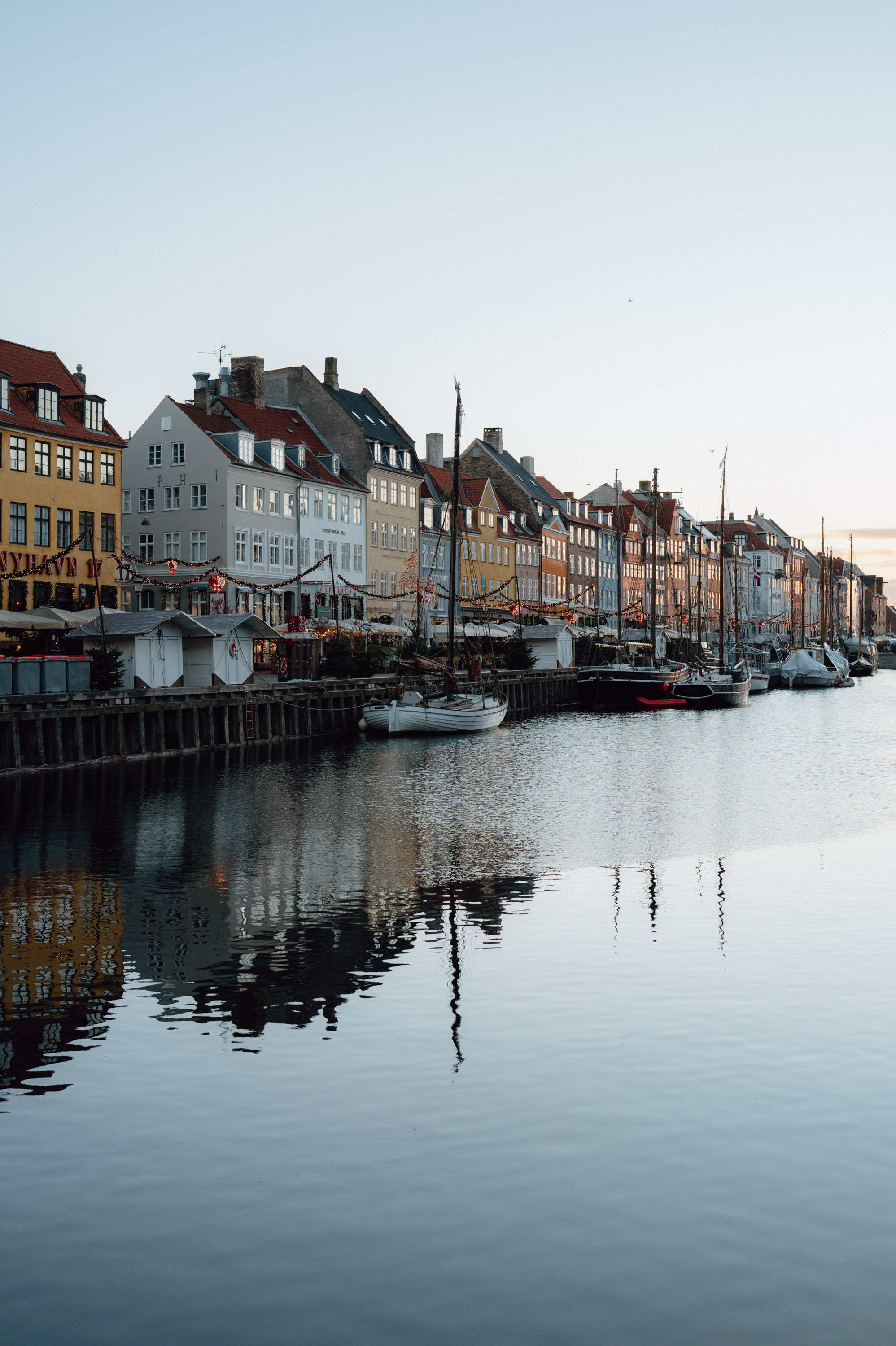
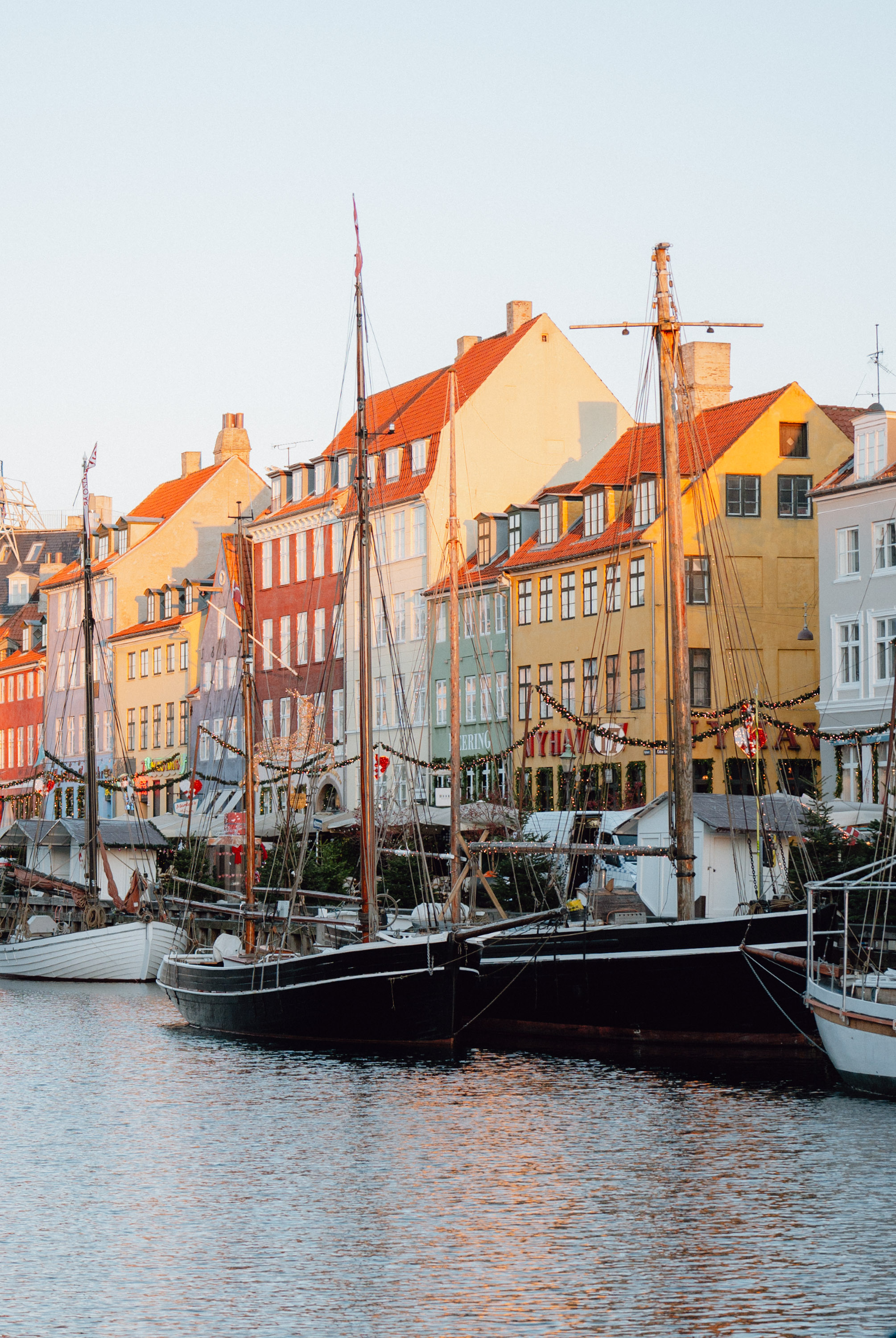
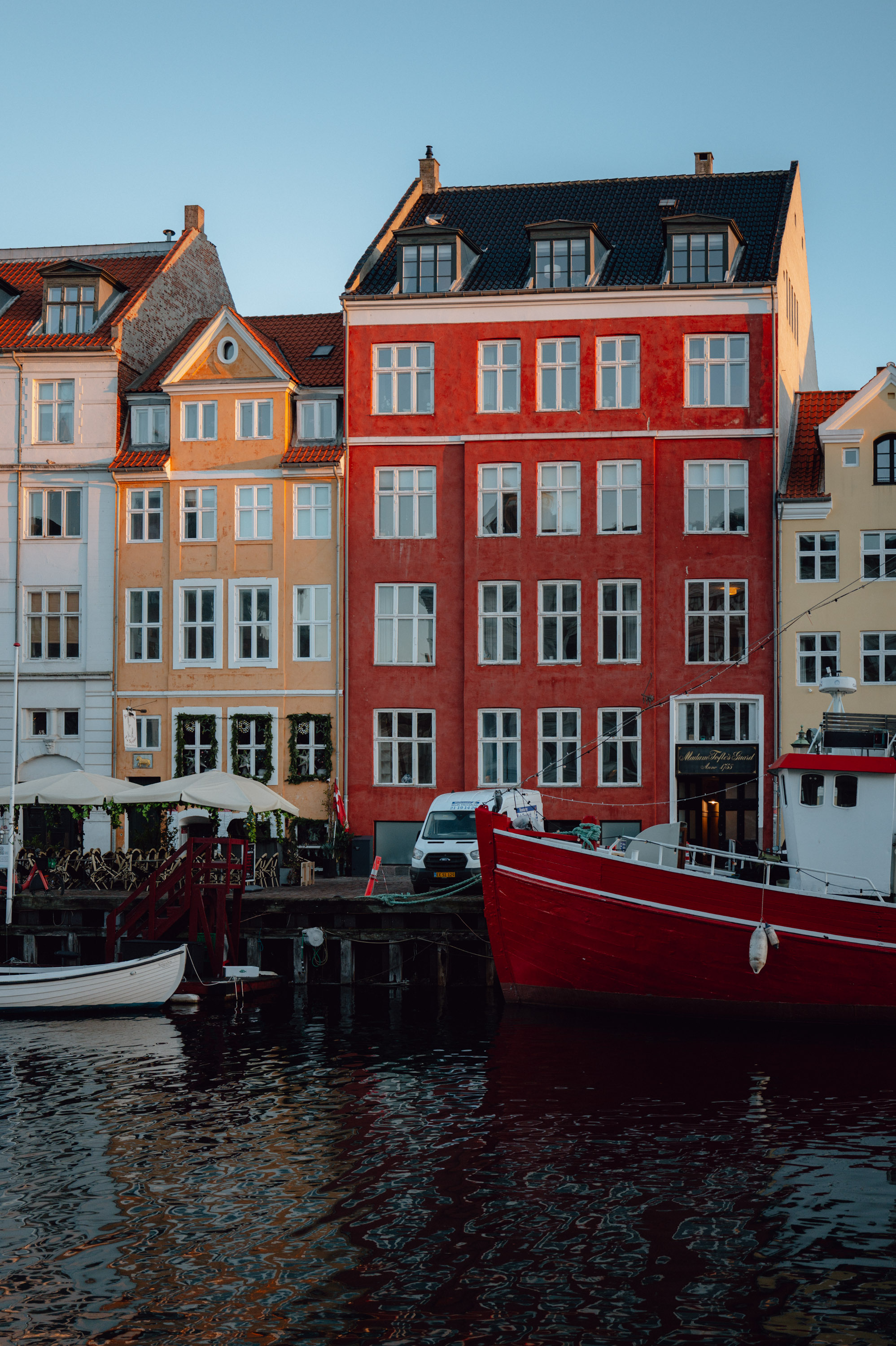
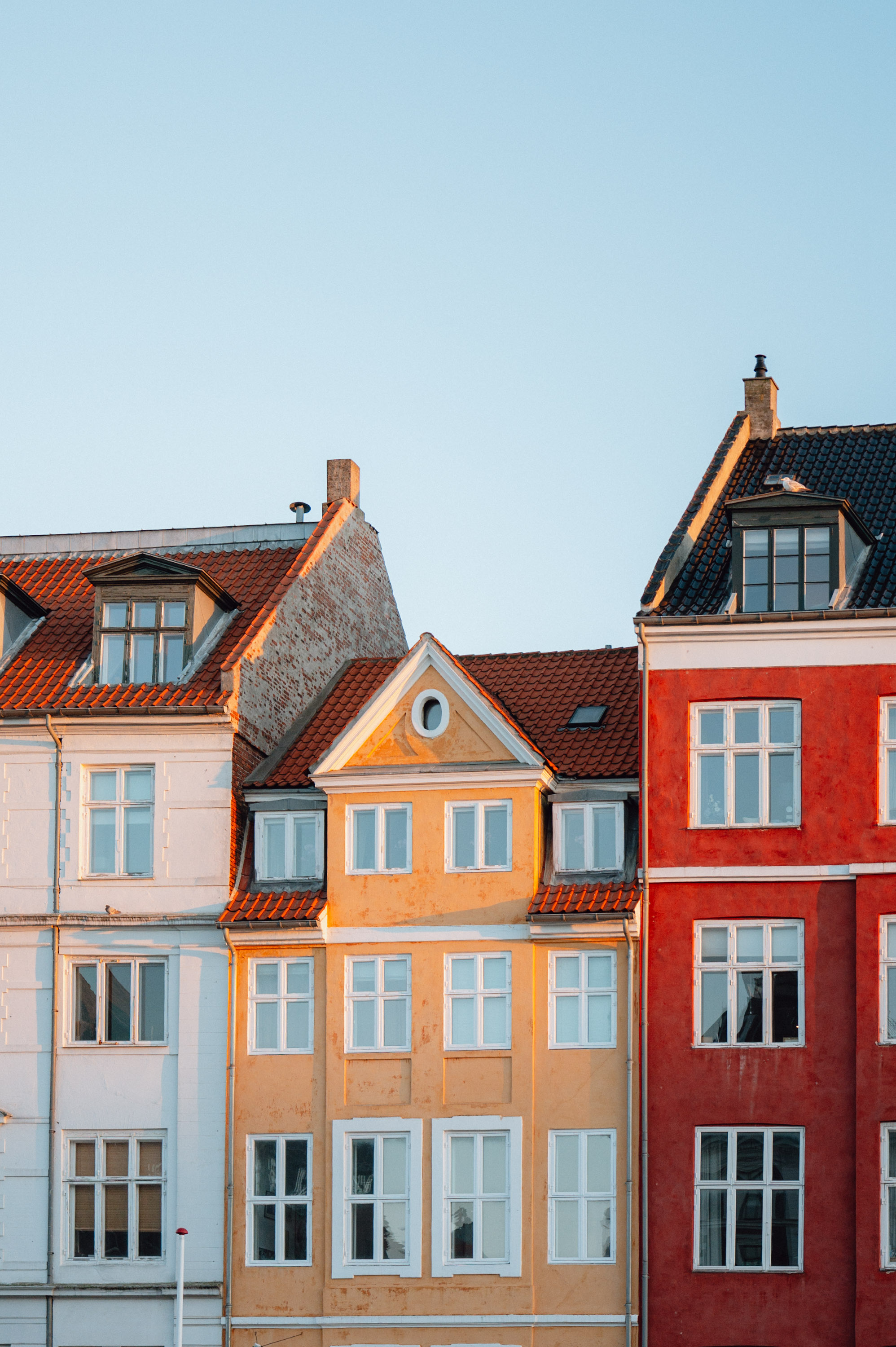
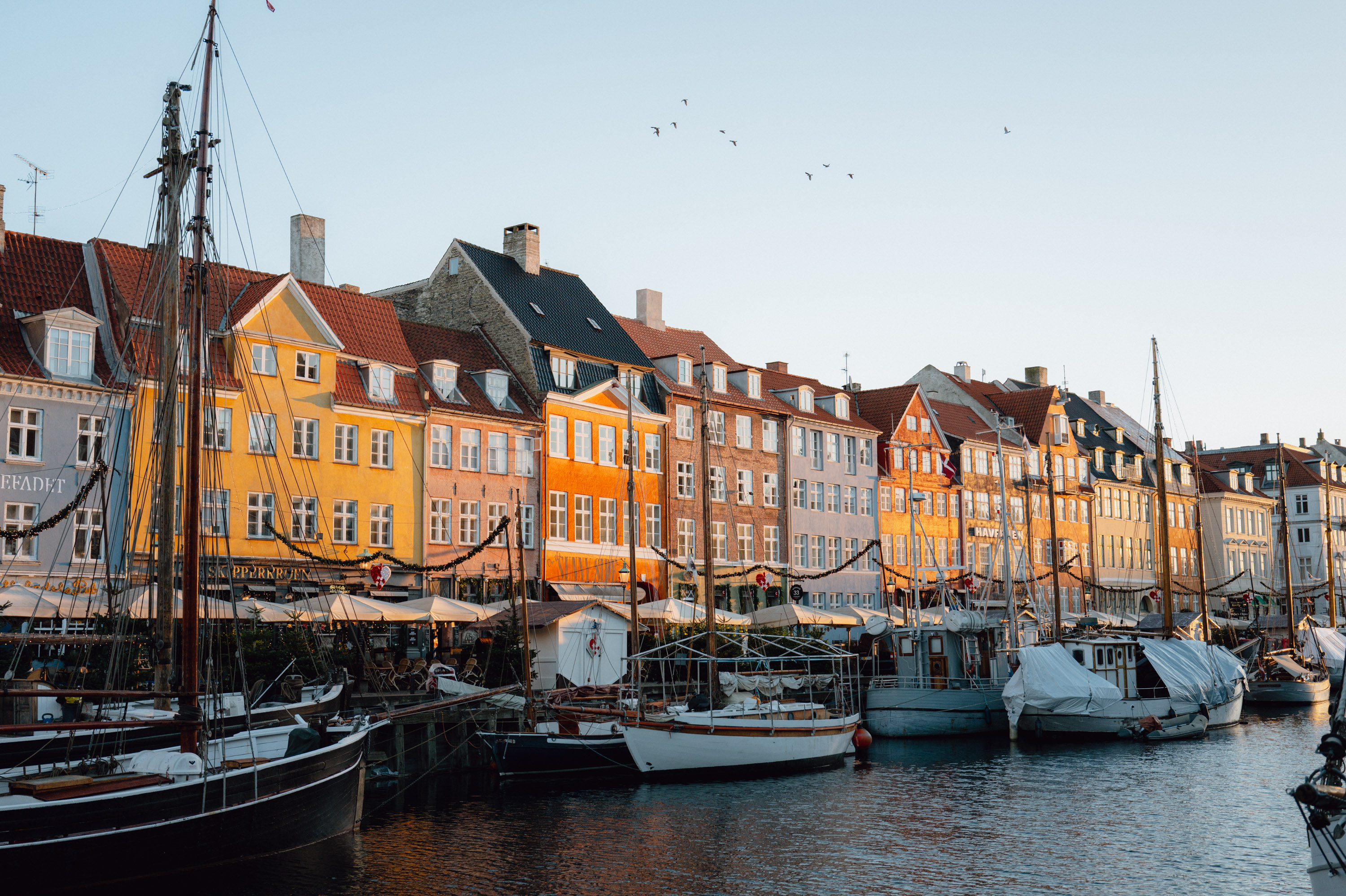
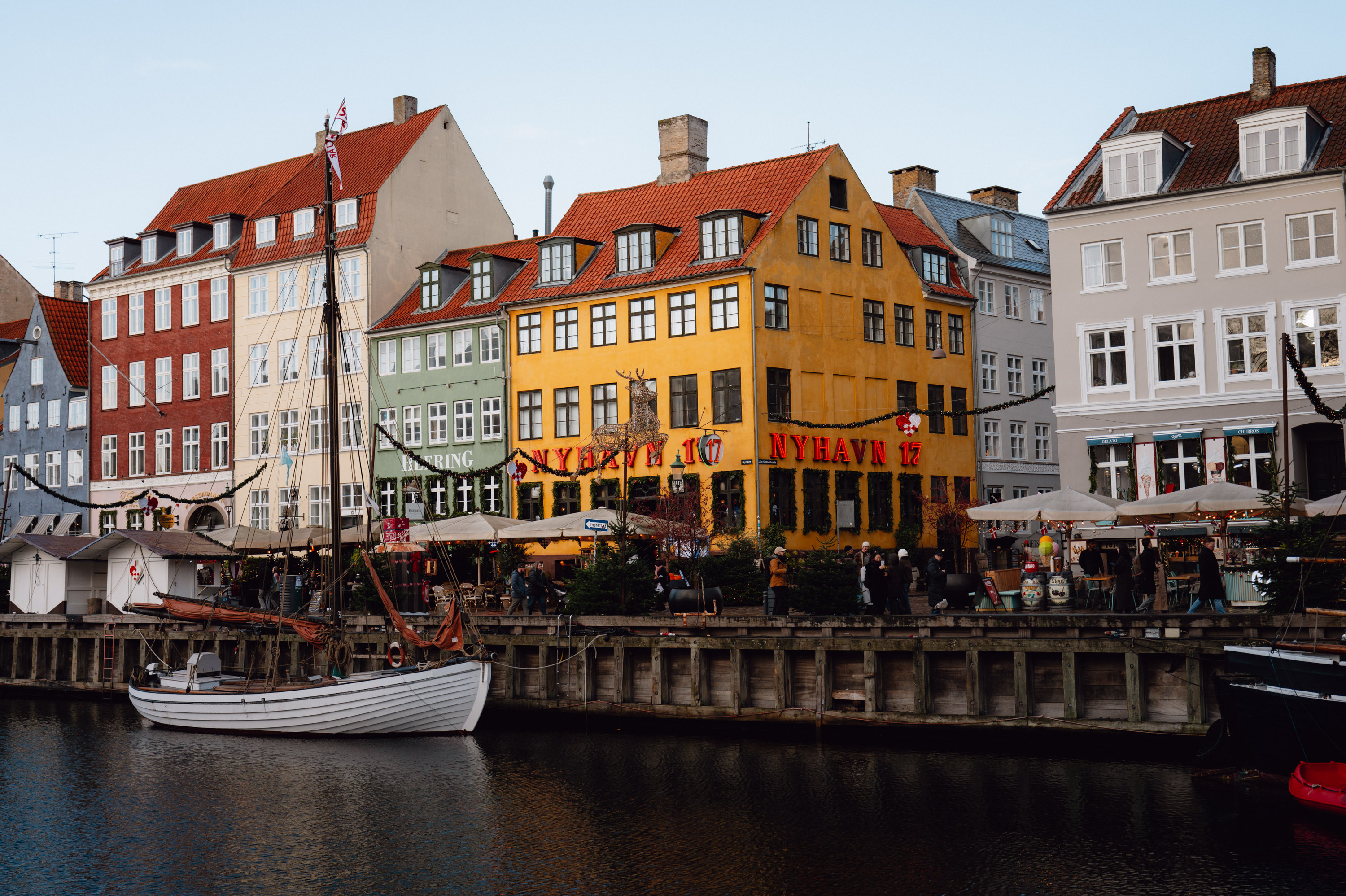
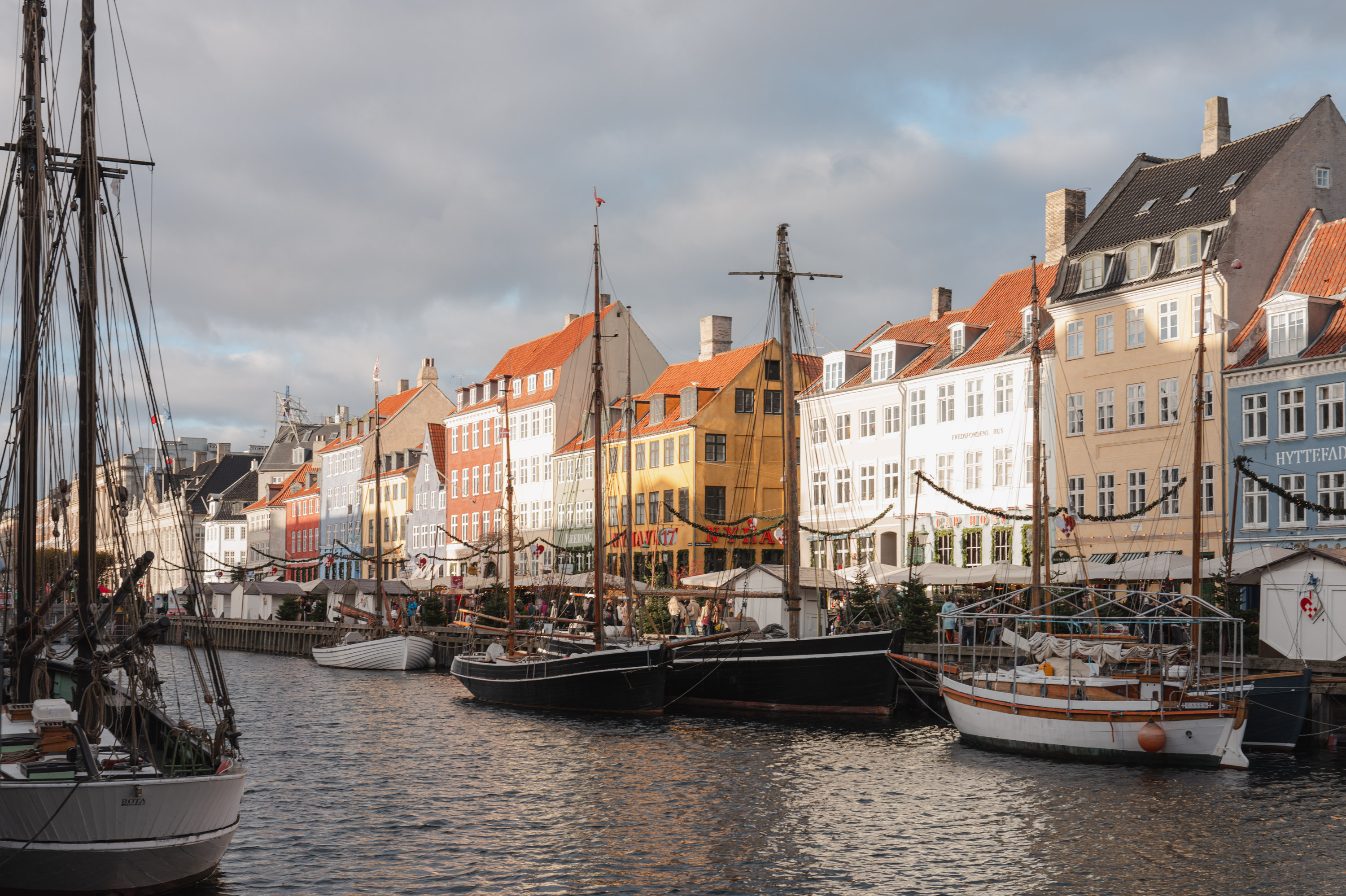
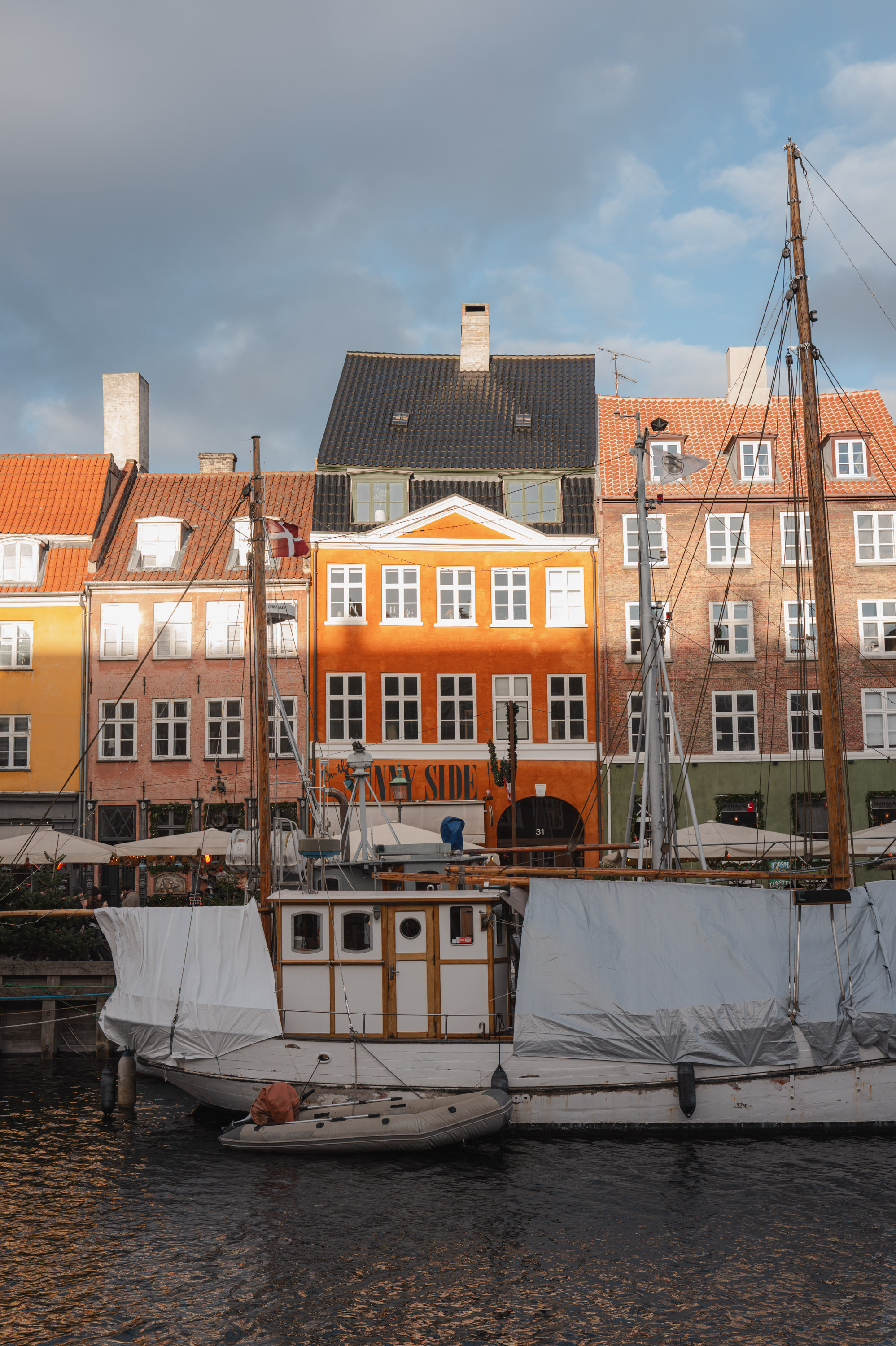
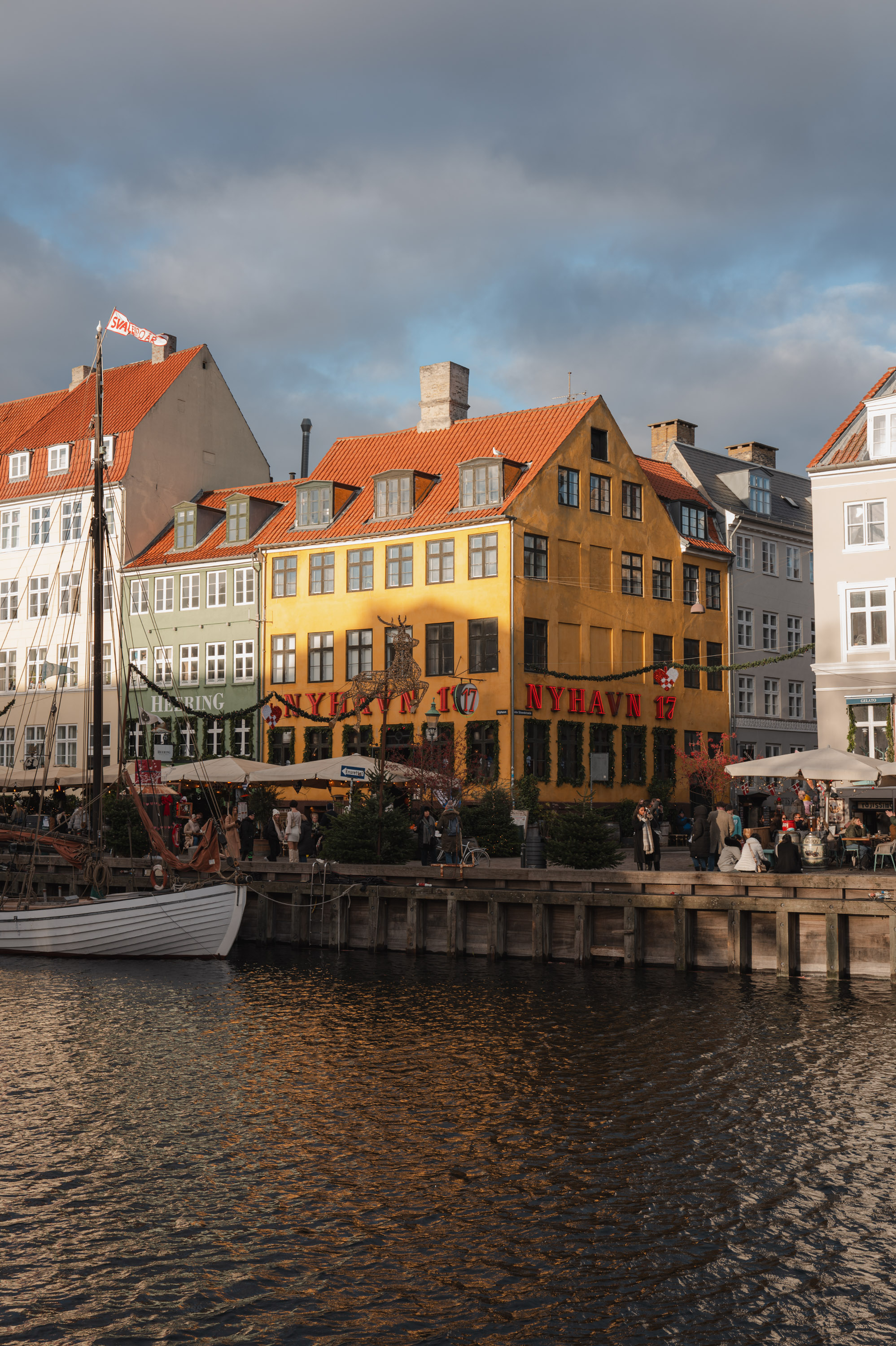
Nyhavn in late afternoon in November is a strange and lovely thing. The crowds have thinned out, the Christmas-market stalls have just gone up, and the low November sun lights one side of the canal in that very specific warm, directional way that a wide July sun never does. I spent an hour and a half there without really intending to. At one point a plein-air painter sat down on the cobbles with a small oil set, started painting the colourful row of facades from memory, and never once looked up at the view he was painting; his frame of reference was already inside the canvas. There’s a whole essay in that image for me.
Dusk West — Kaktus, Dybbølsbro, Kødbyen
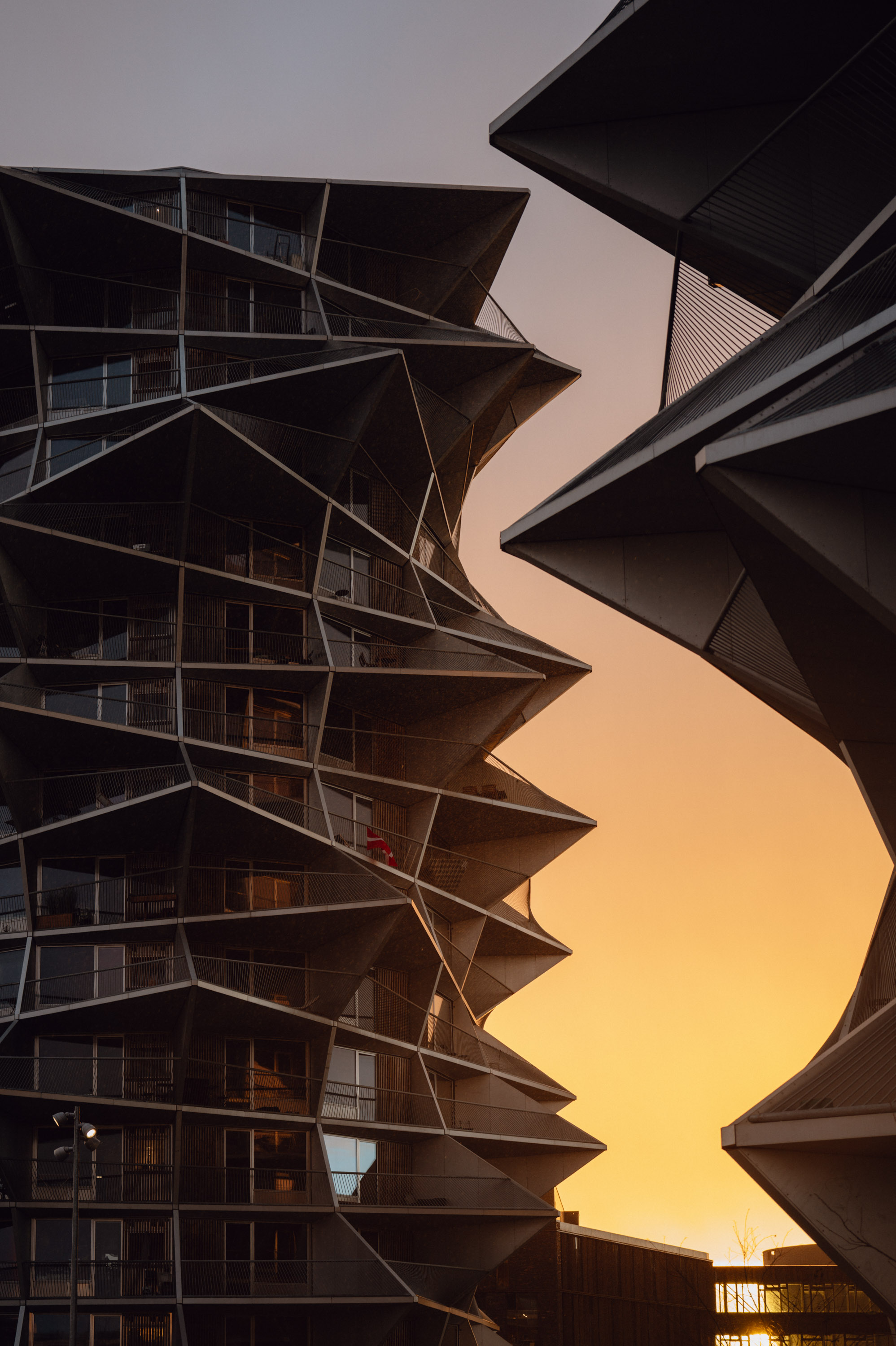
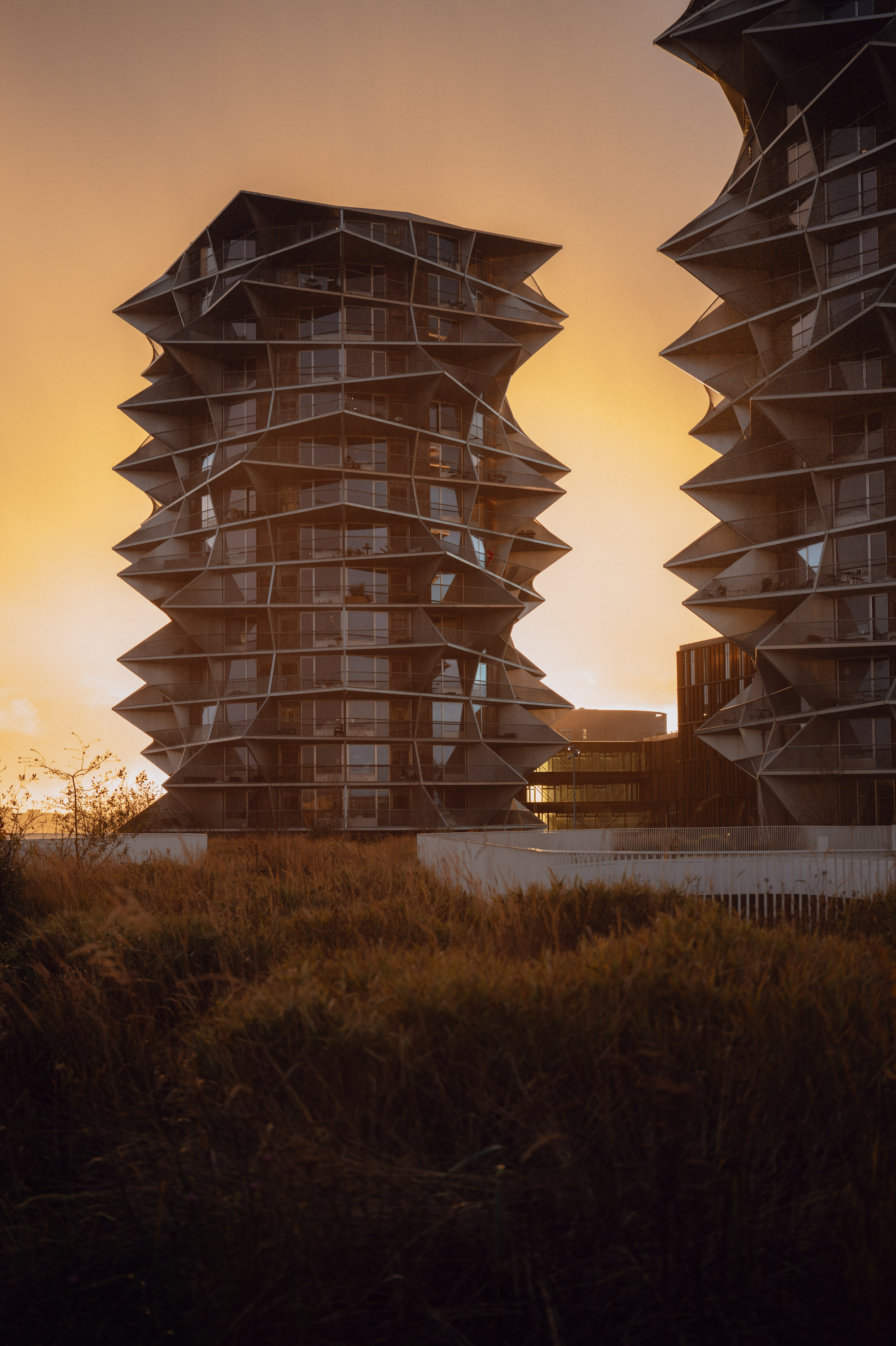
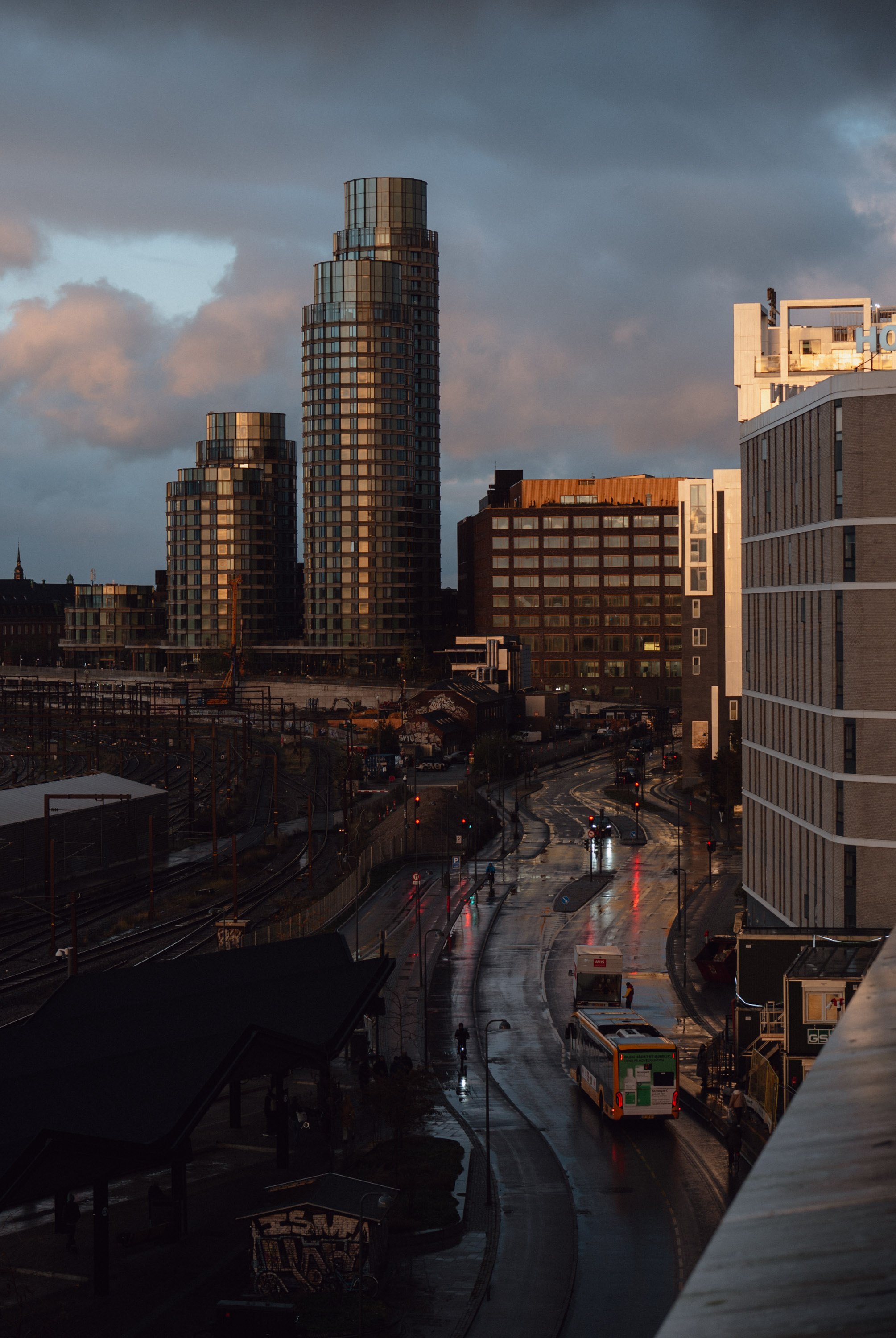
From Nyhavn I crossed back through the city on foot and headed west — past the glass drums of Axel Towers again, over Dybbølsbro and out to Kalvebod Brygge for the Kaktus Towers. BIG’s two zig-zag residential pineapples are my favourite single piece of Copenhagen contemporary architecture; they’re also almost impossible to shoot badly when they’re lit with a proper pink-and-gold Scandinavian sunset behind them.
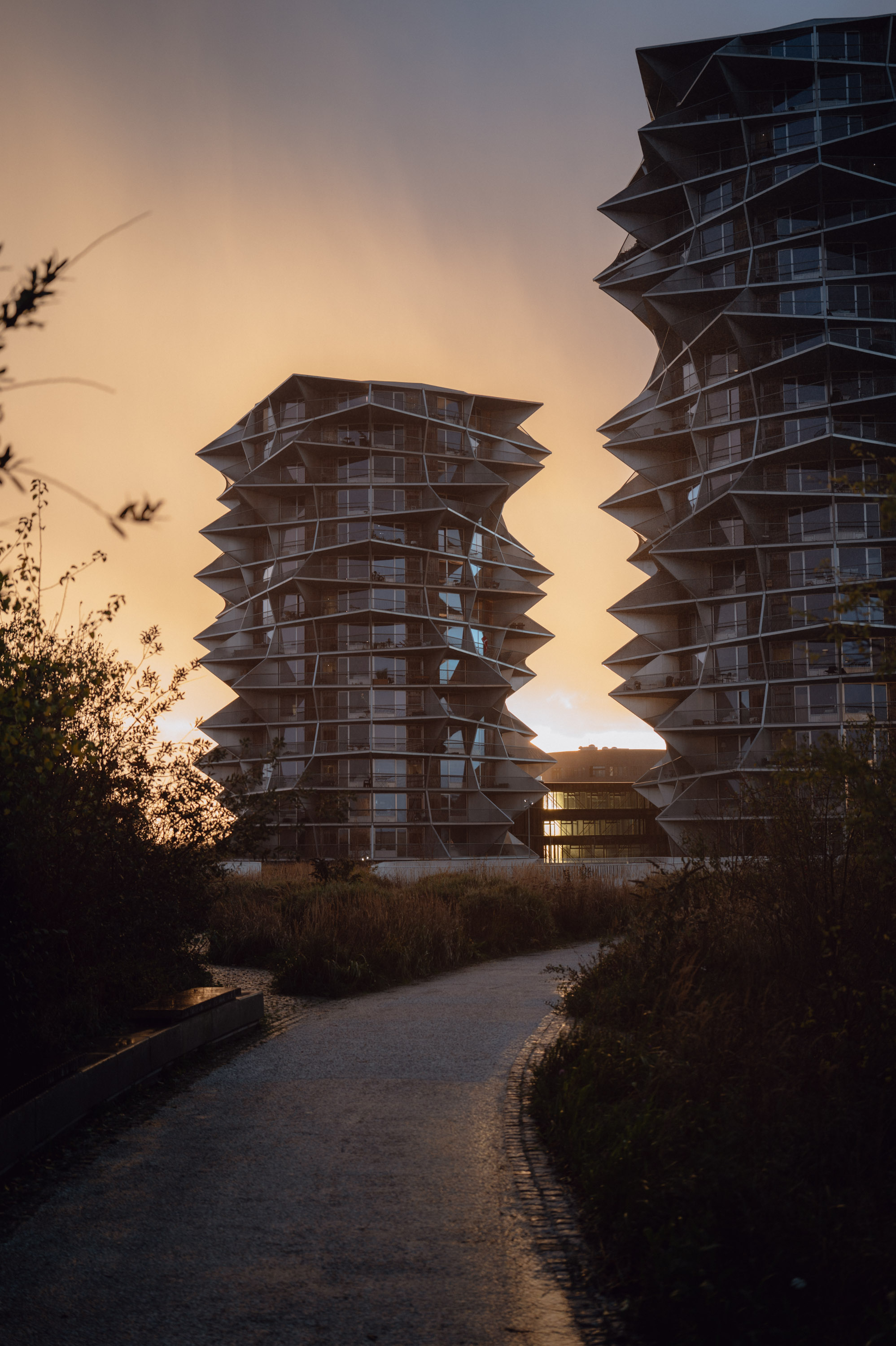
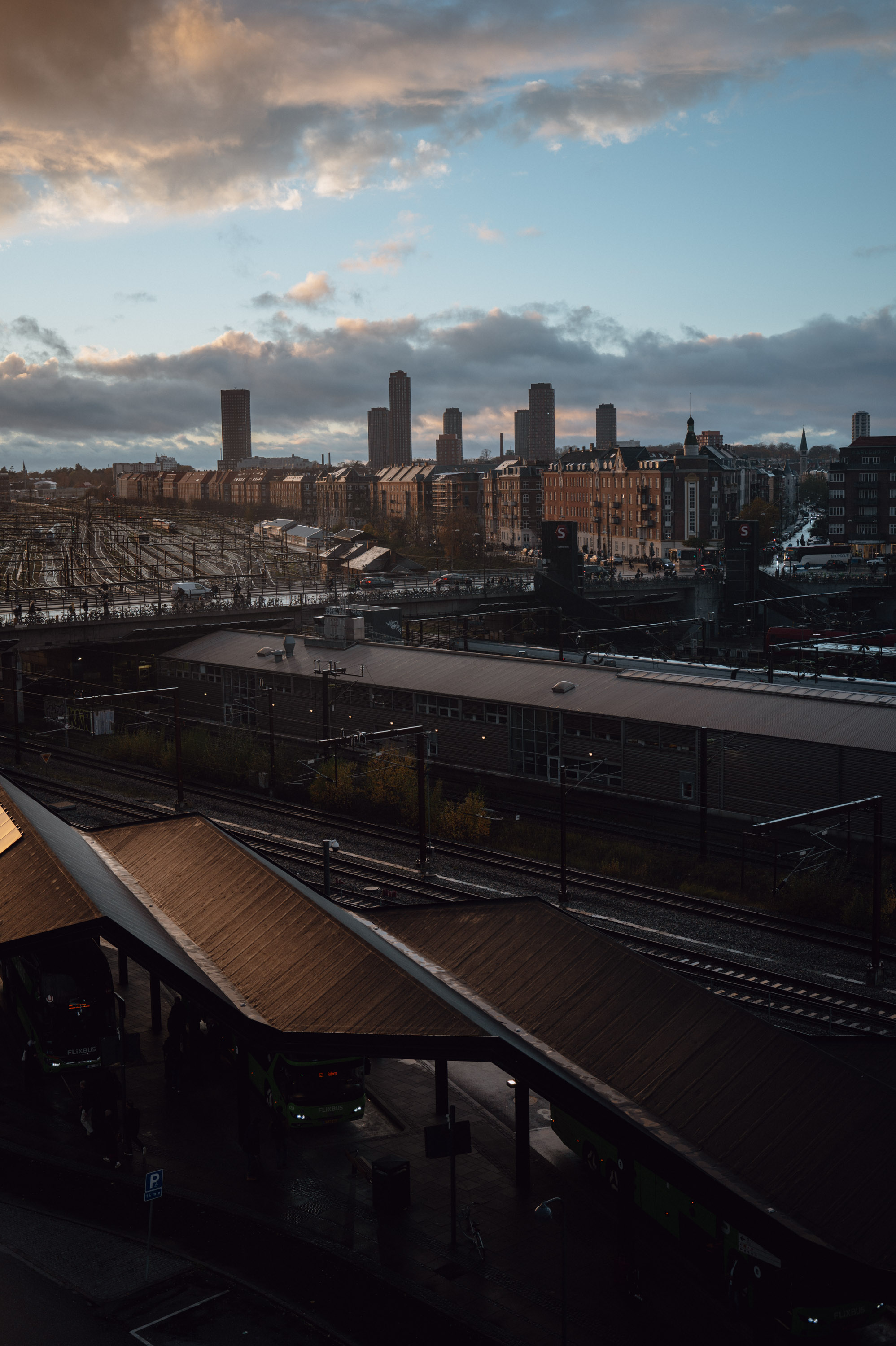
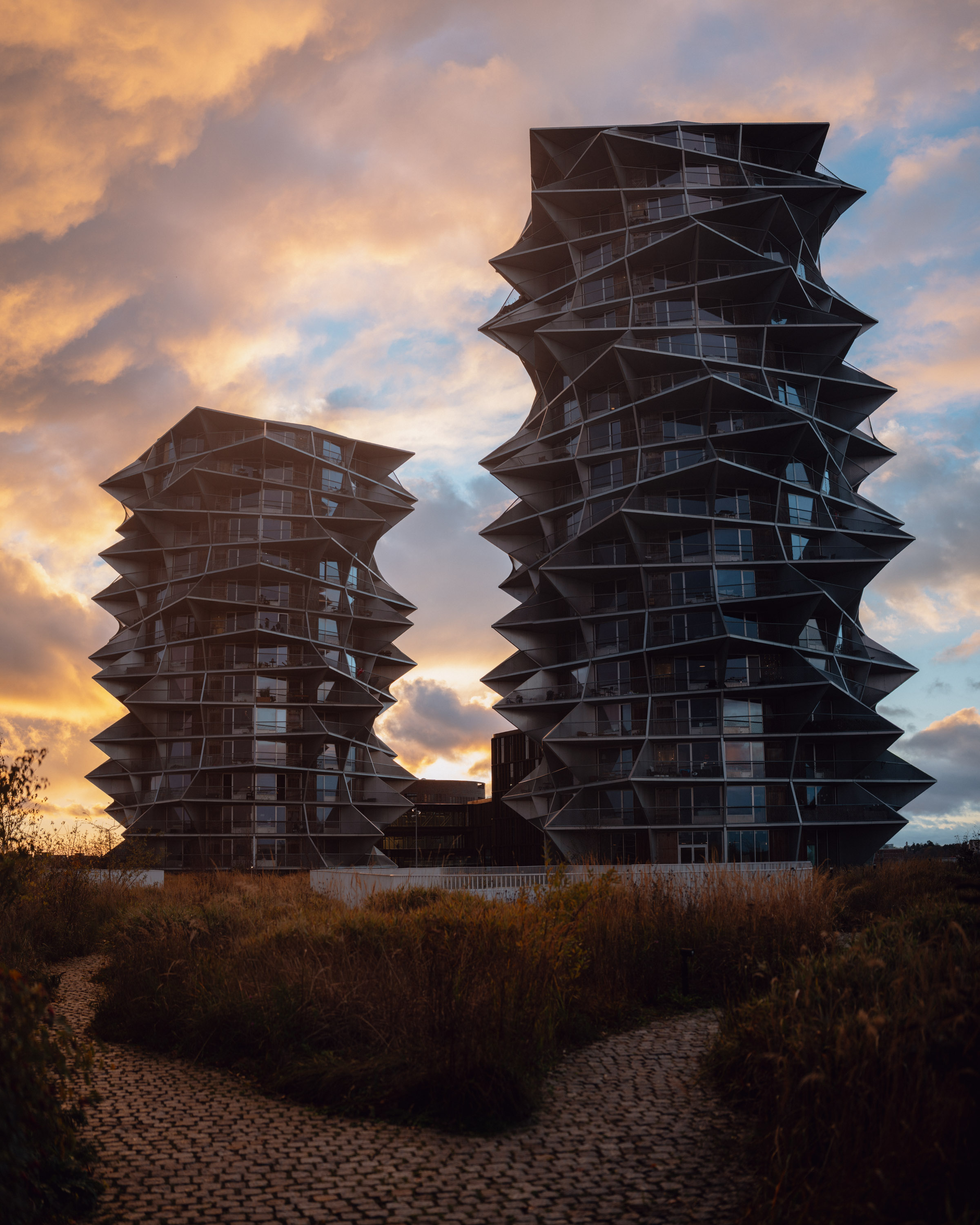
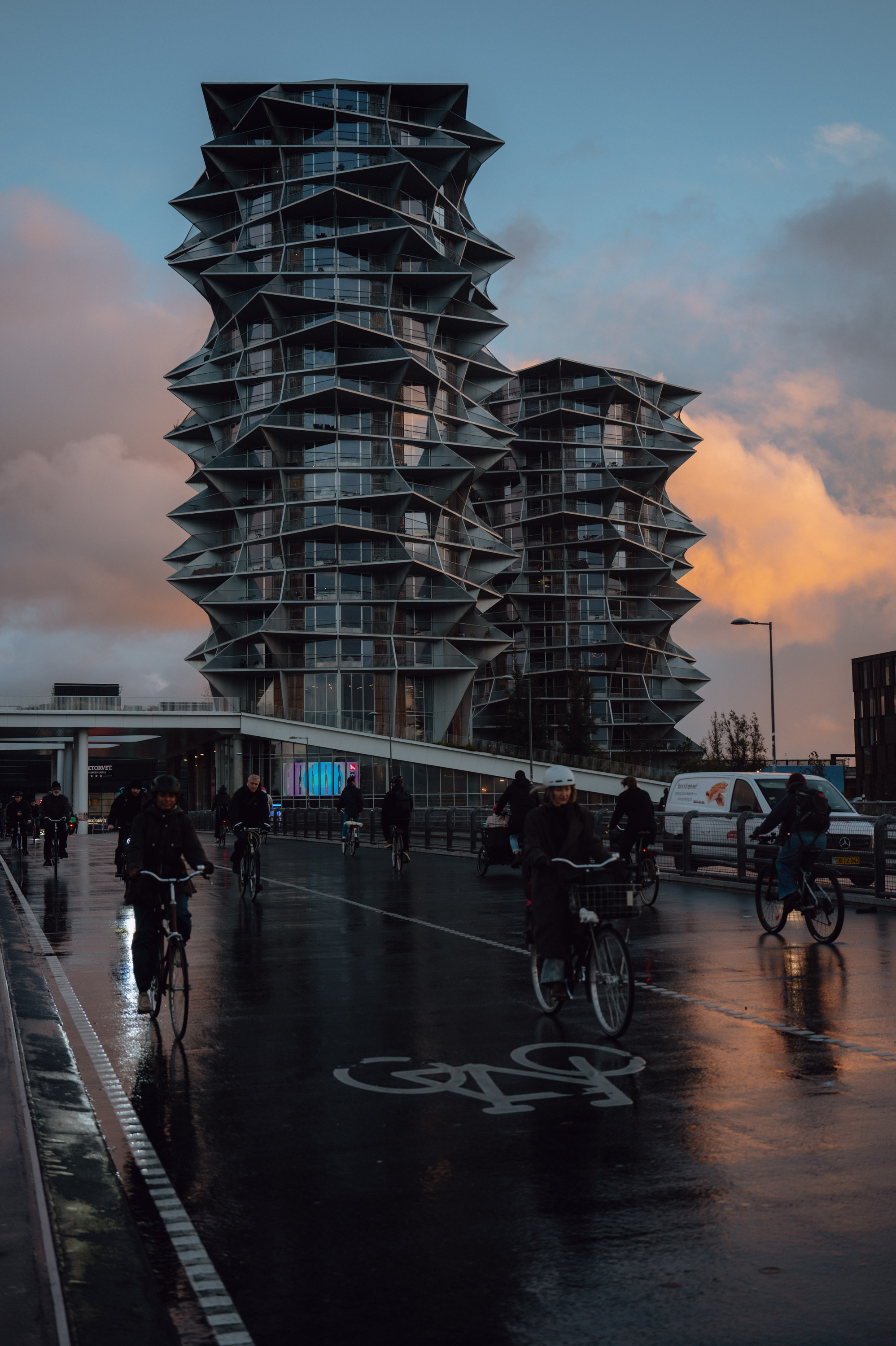
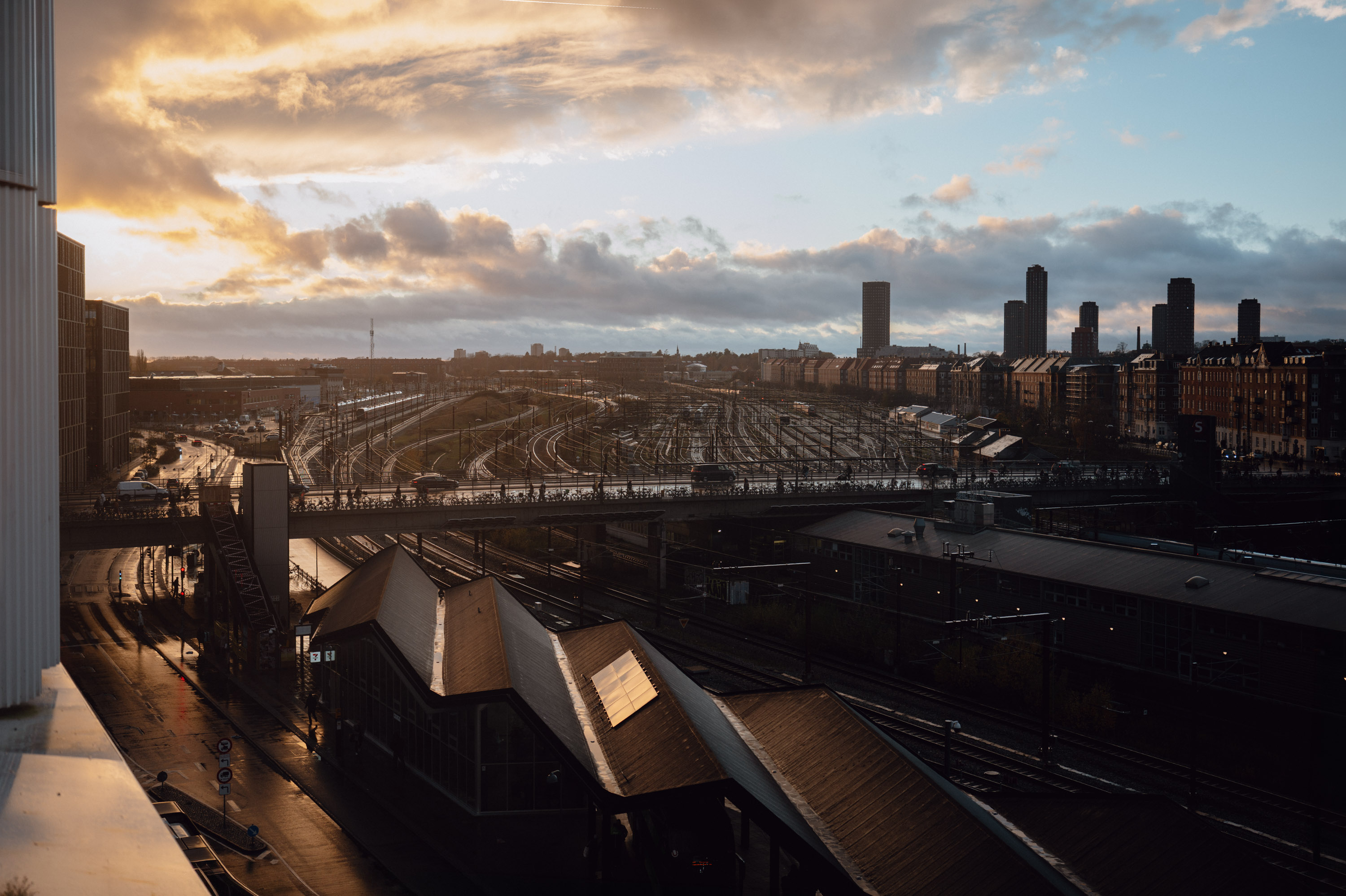
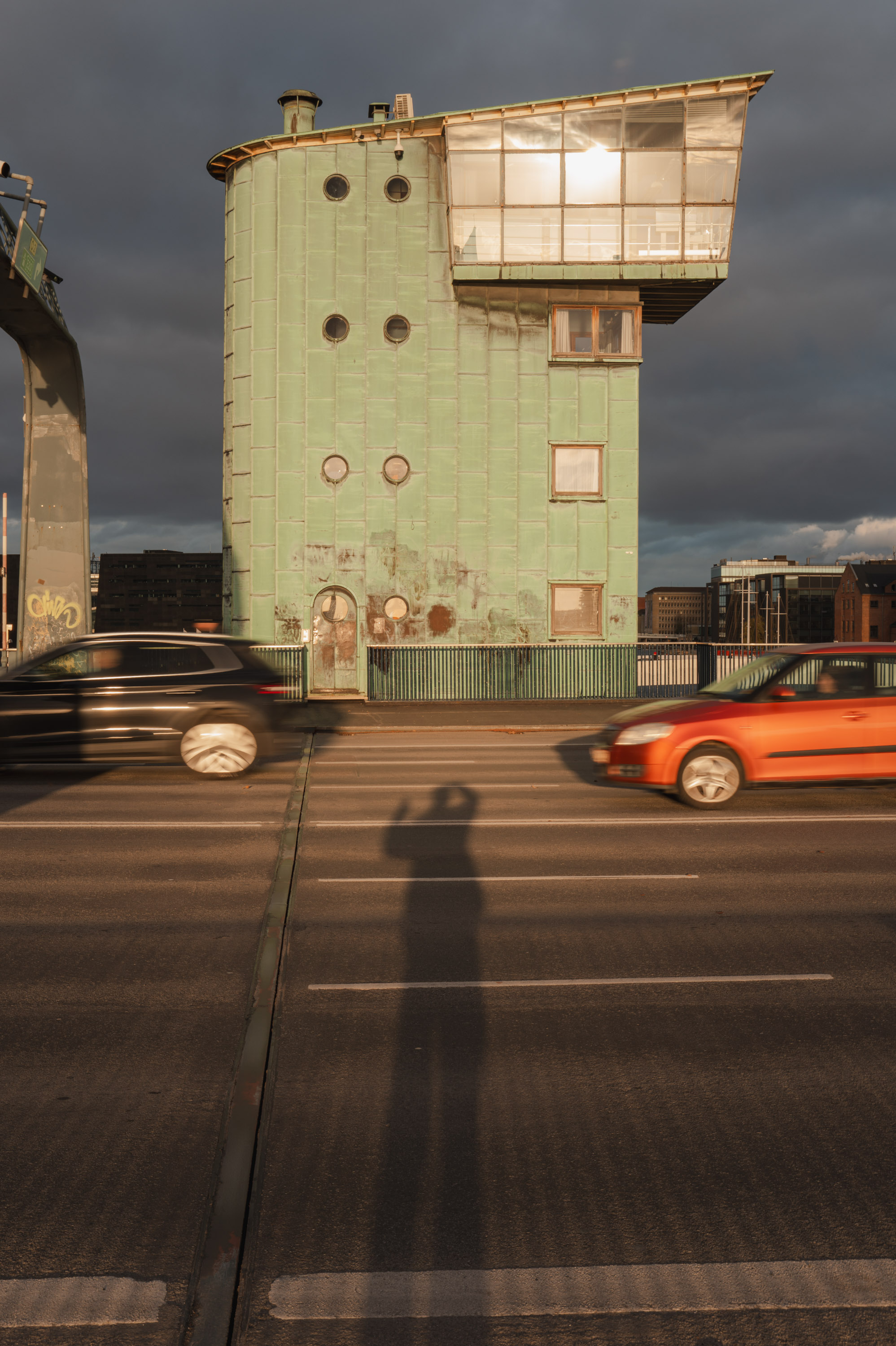
The walk back took me over the railway cut by Copenhagen Central Station at exactly the moment the low sun turned the rails into molten metal, and then down into Kødbyen — the old Meatpacking District, which the city has let turn into a low-slung, slightly scrappy constellation of wine bars, dumpling counters and neon signage without over-polishing any of it. It was proper dusk by that point — a dark blue sky over the flat white Functionalist buildings, lights just starting to switch on inside the cafés, almost no one on the street yet. That particular hour, in that particular neighbourhood, is a street photographer’s dream.
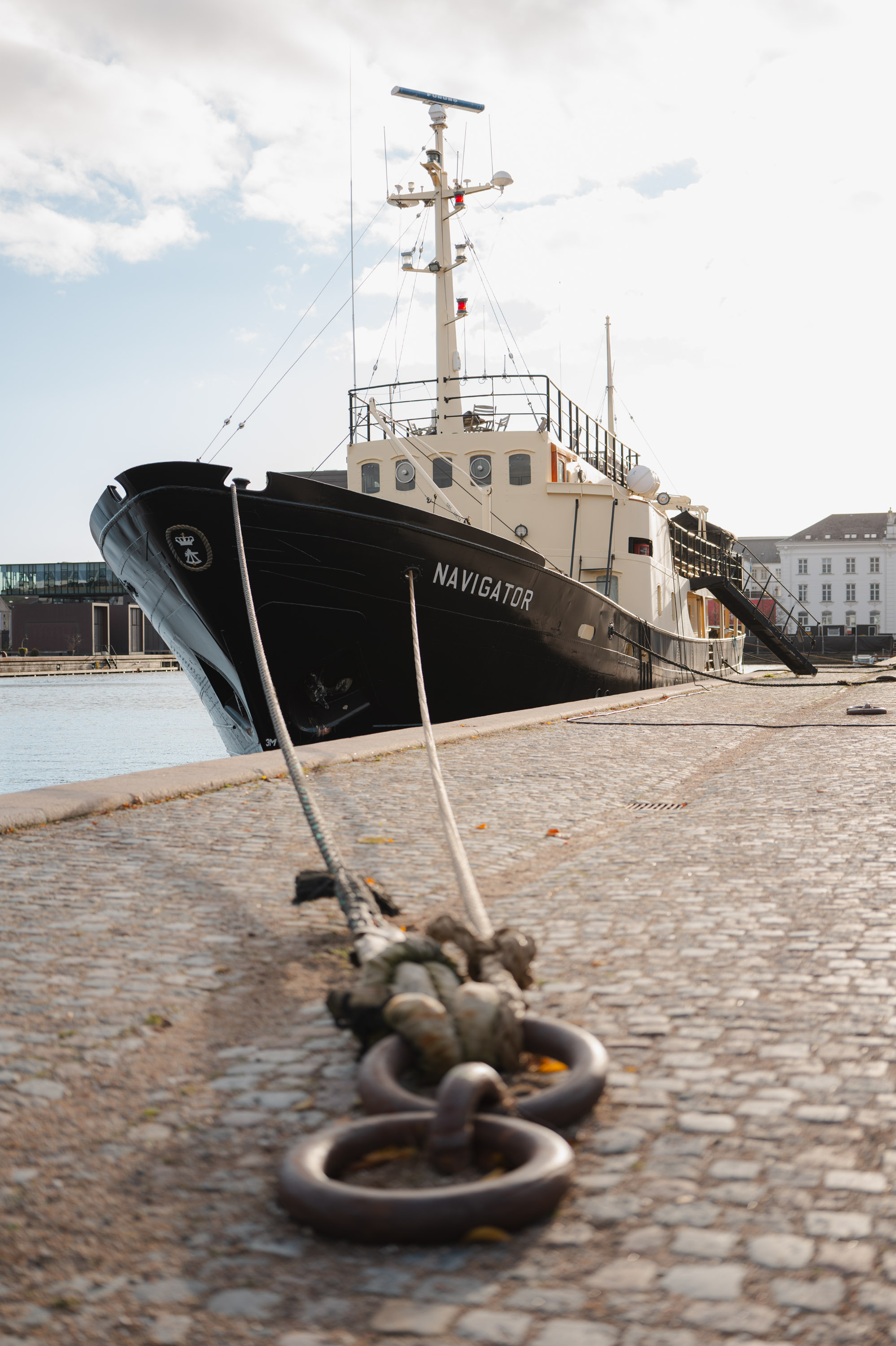
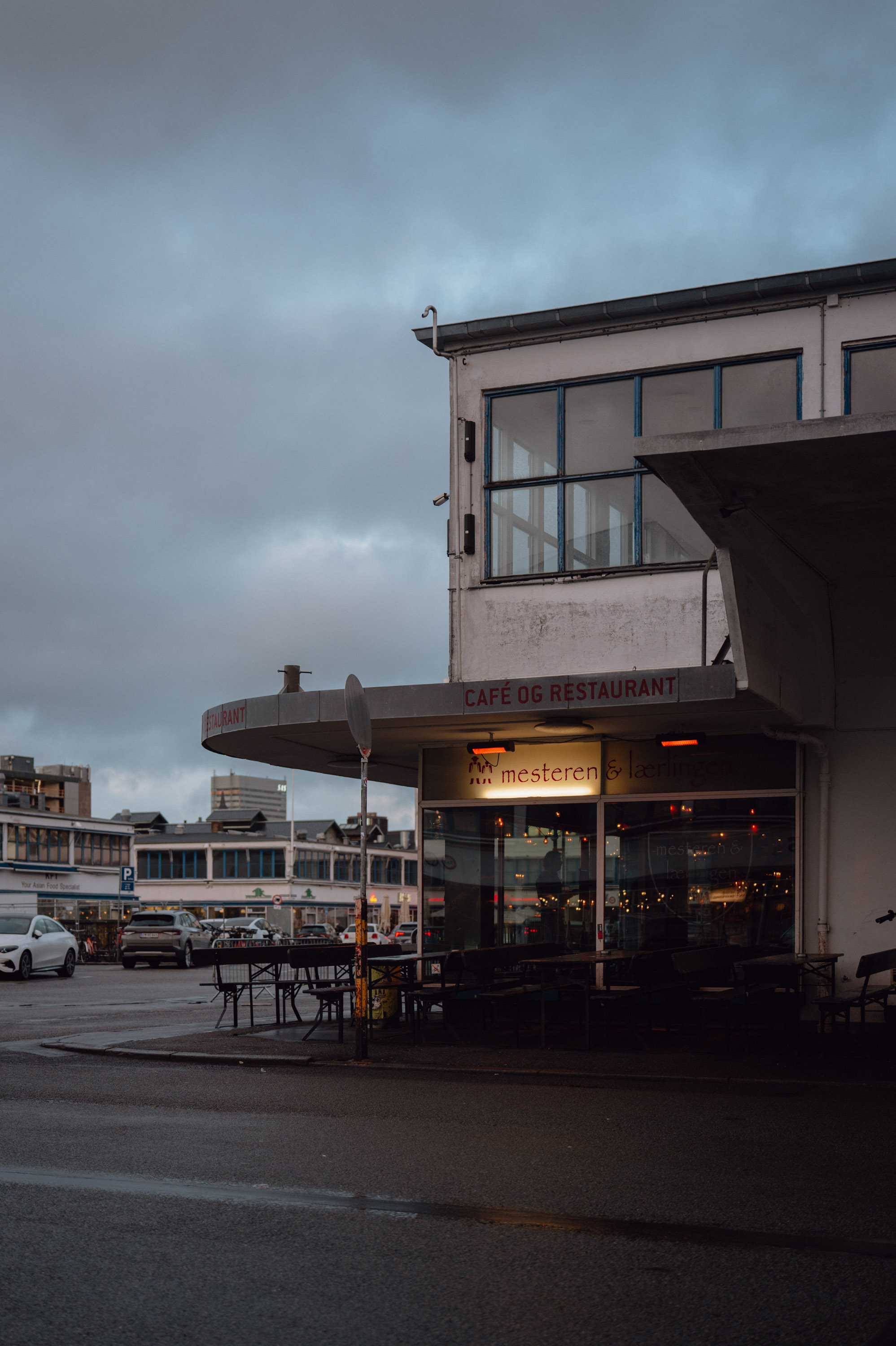
Thursday’s step count rolled past twenty-five thousand somewhere between Kødbyen and the walk back to the hotel. I am slightly ashamed to admit I checked.
Day Two — Nyhavn, Nørrebro, Rosenborg
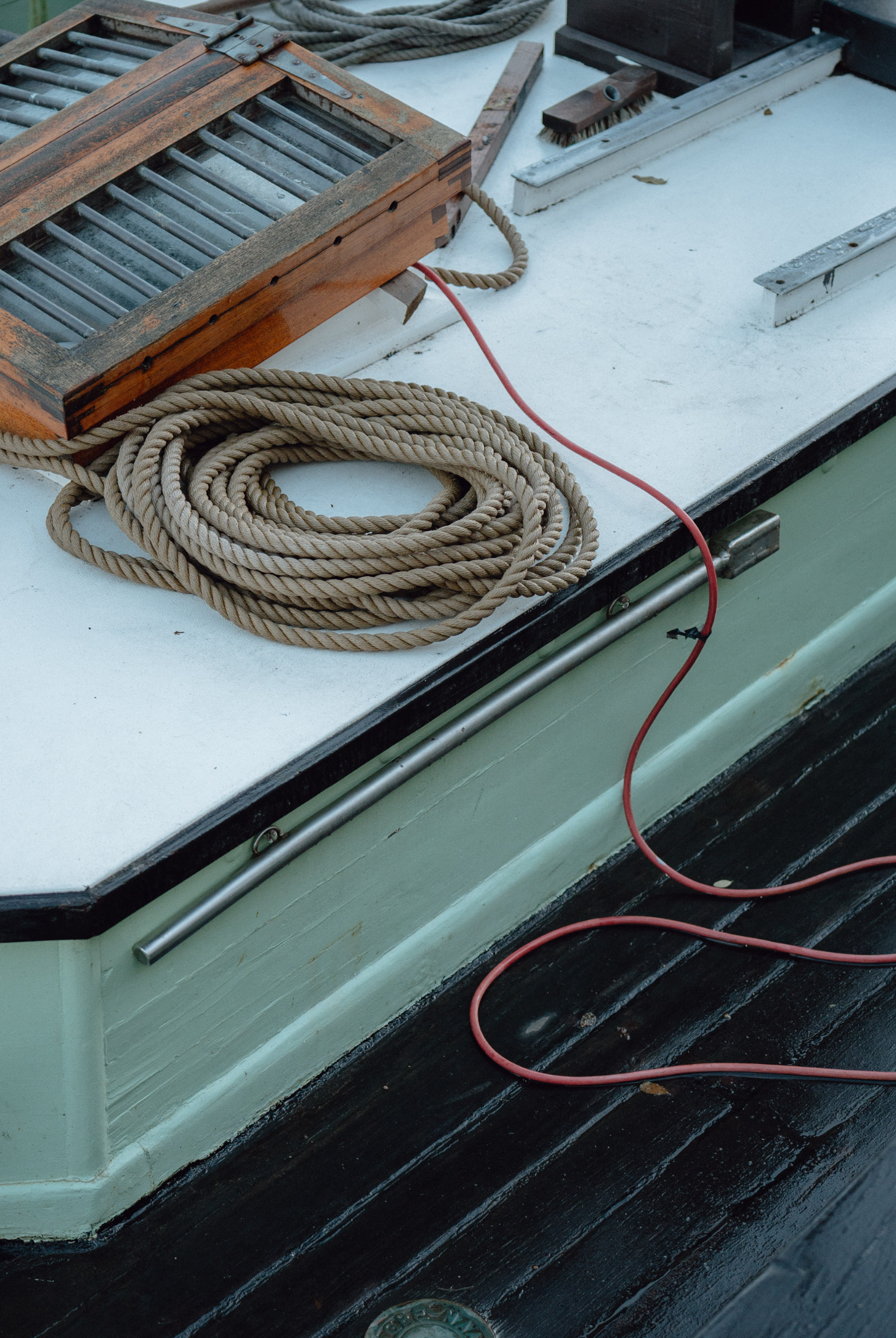
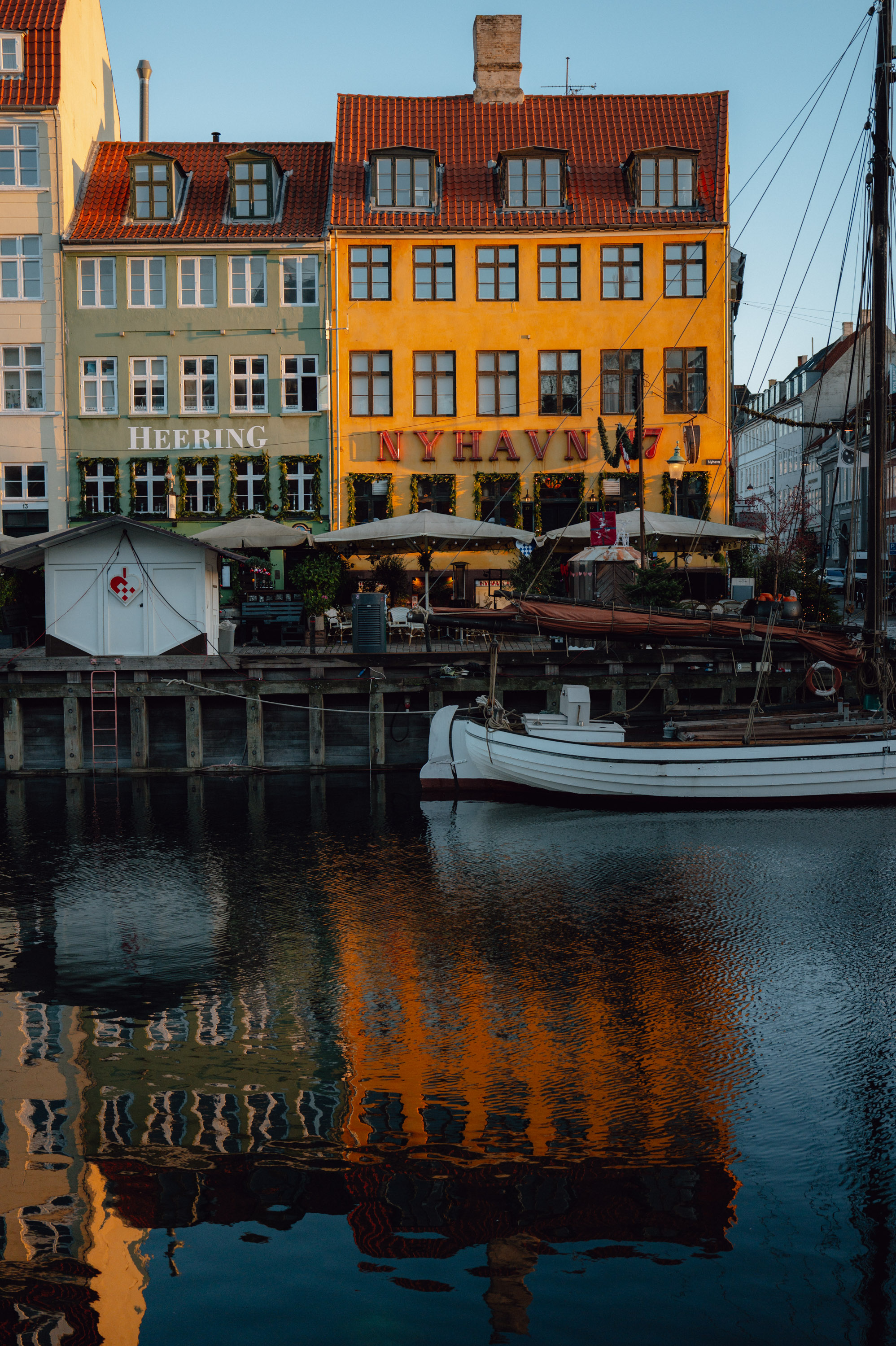
Friday started properly early, with Nyhavn at dawn. It’s the most photographed stretch of water in Scandinavia for good reason — but it’s also an entirely different place at seven in the morning than it is at any other time of day. No tour groups, no boat tours, just two locals walking dogs along the quay, the Christmas lights on the boats still on, and the first light of the day coming in sideways across the canal. I had the whole stretch of quay to myself for about forty minutes. The hero image at the top of this post comes from that stretch.
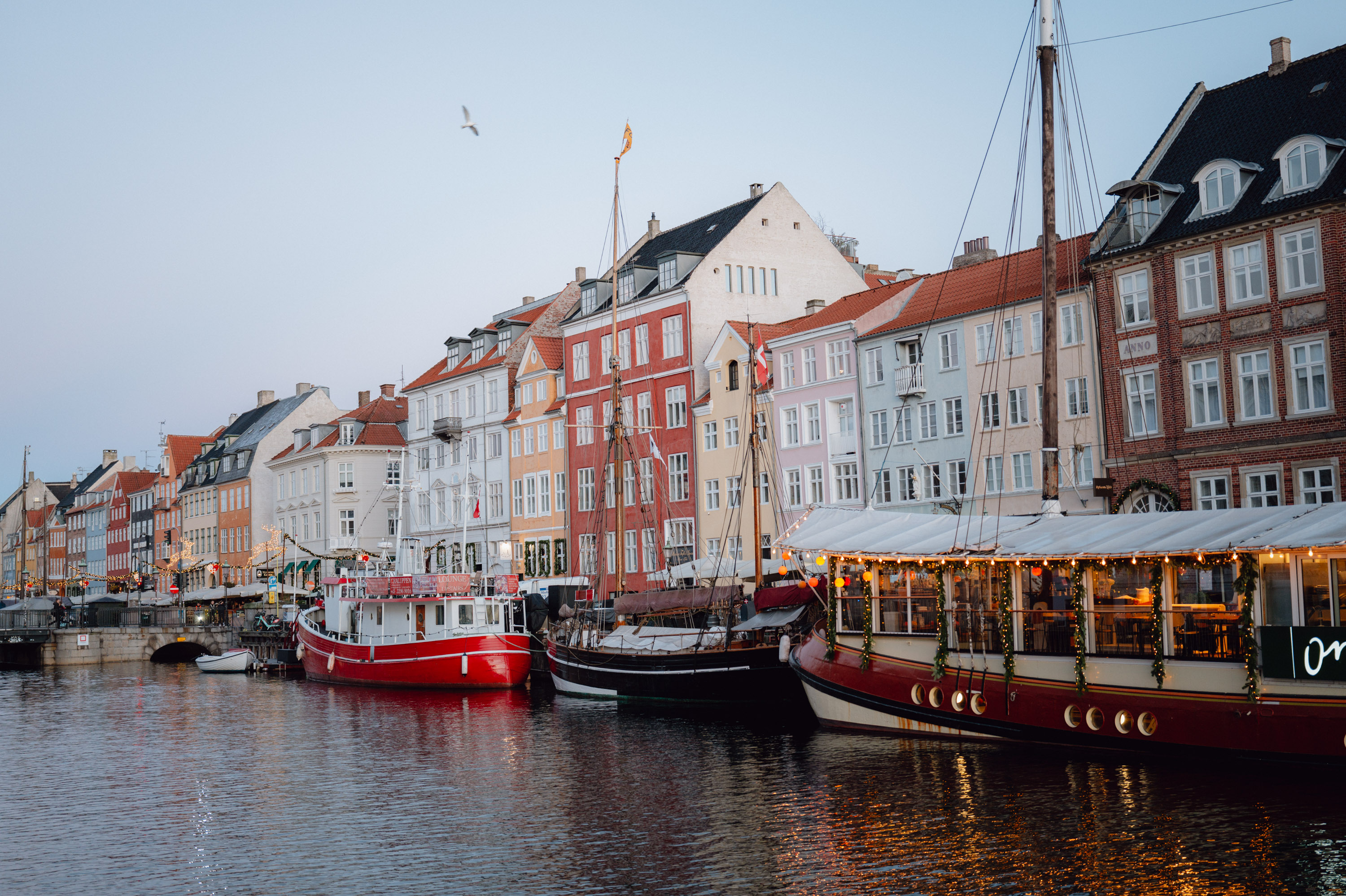
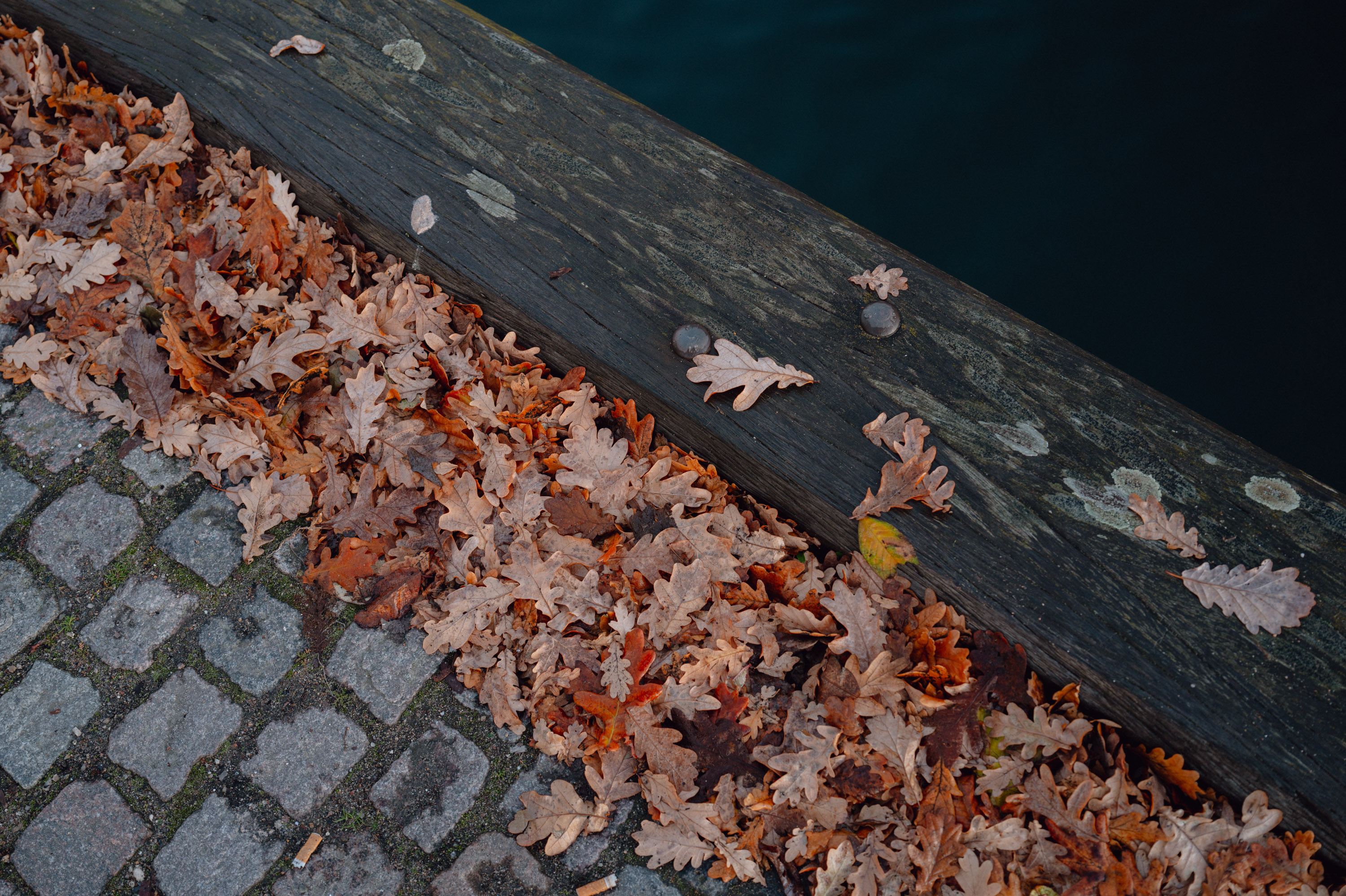
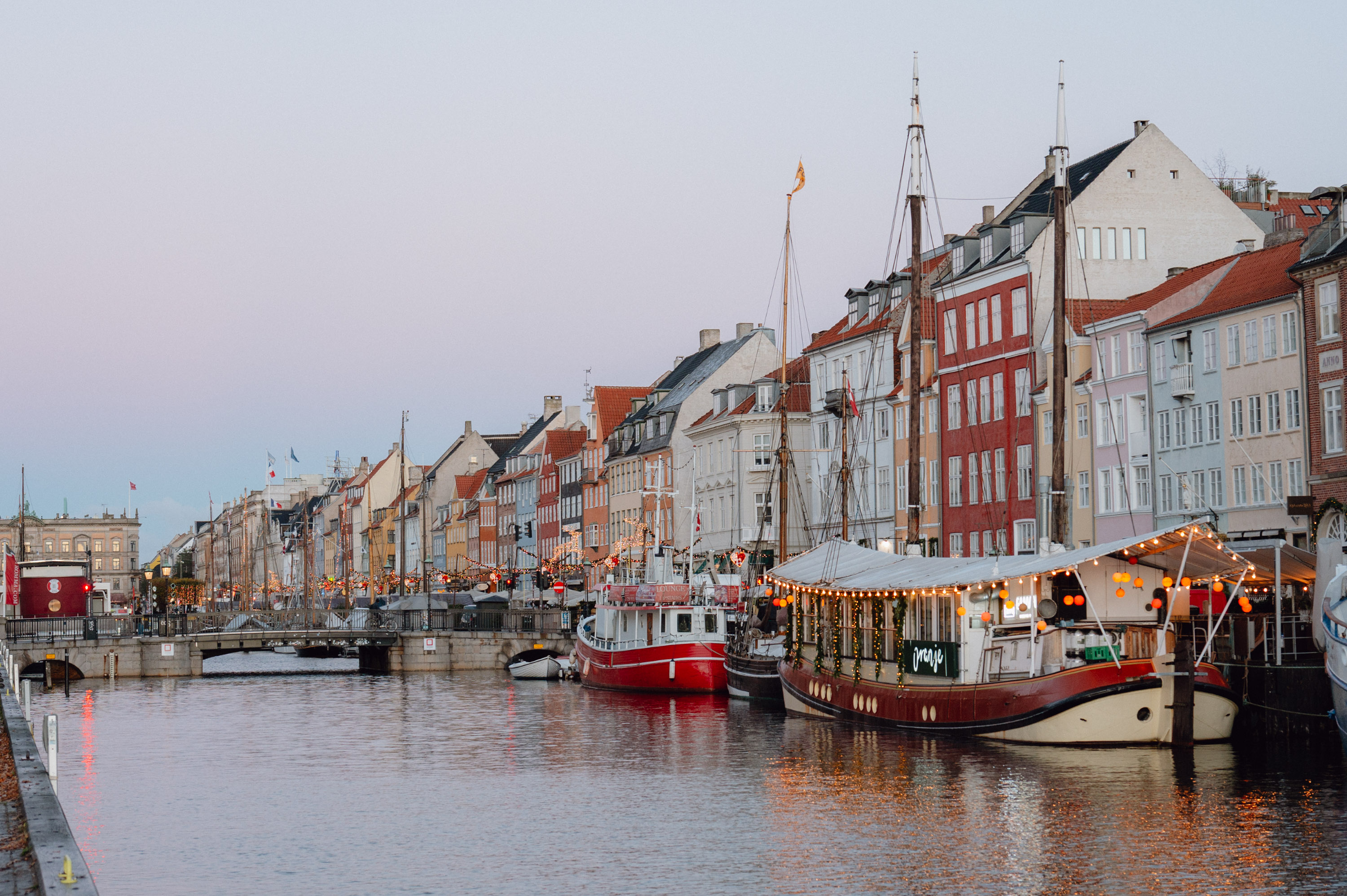
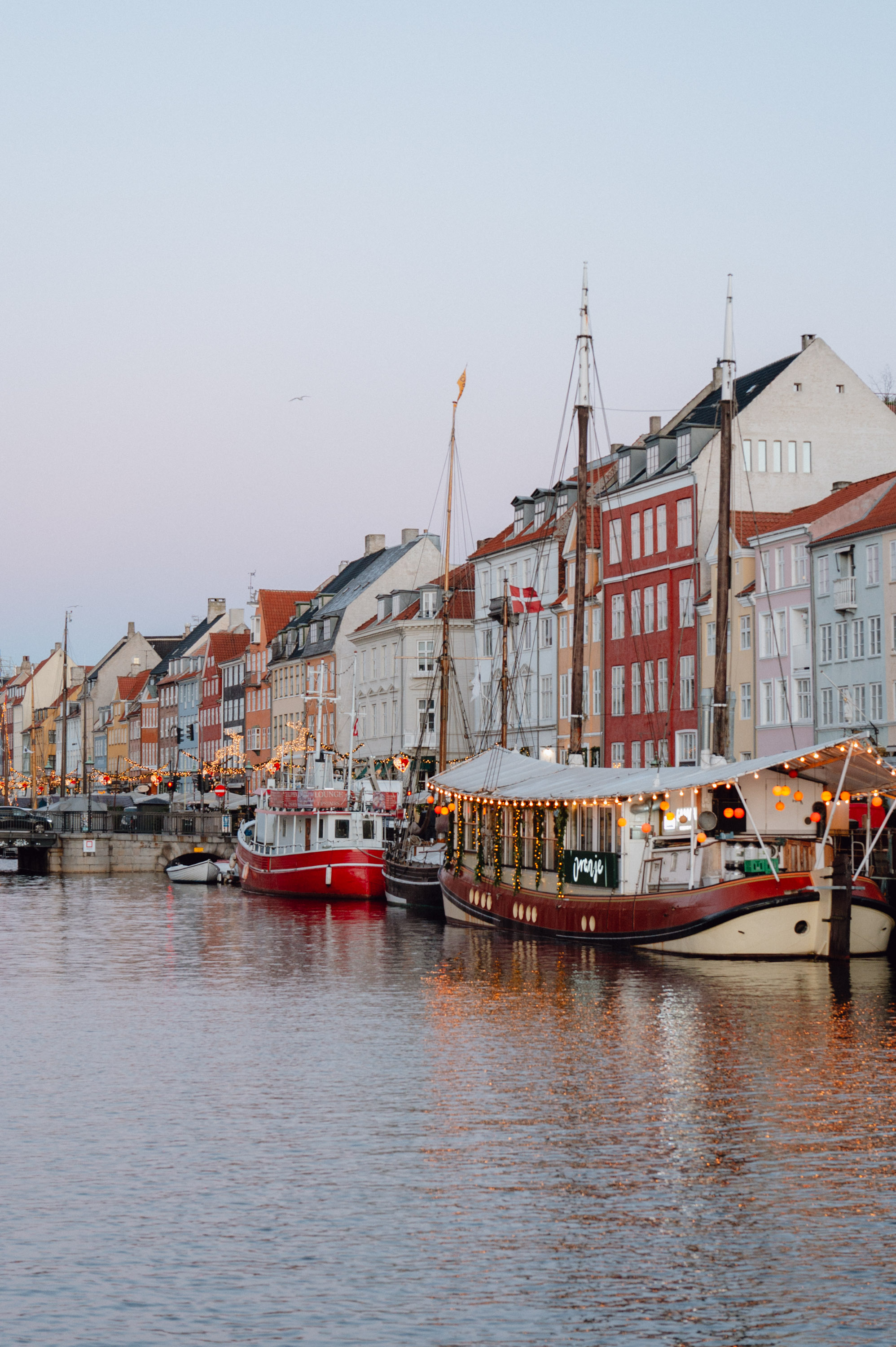
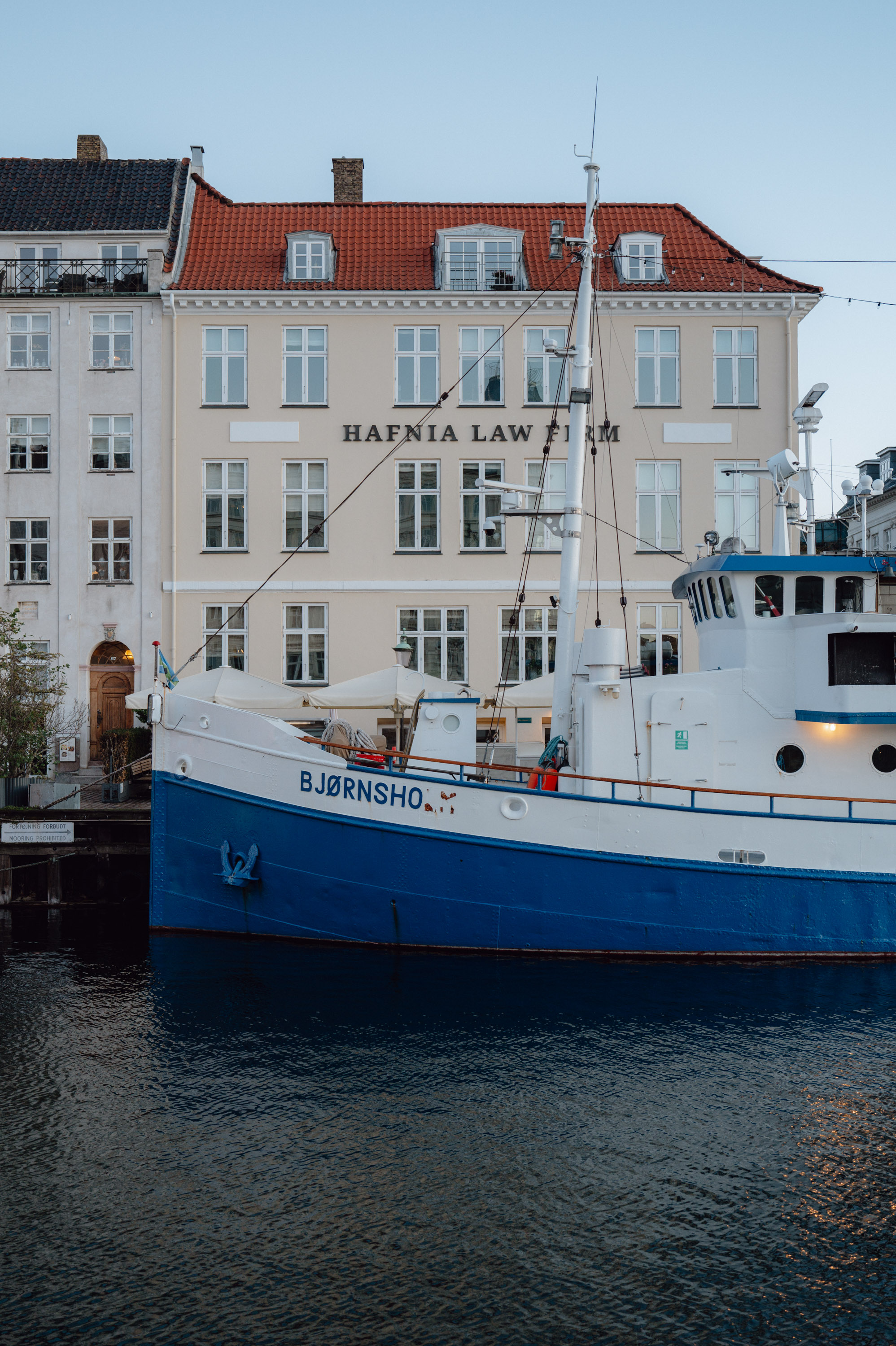
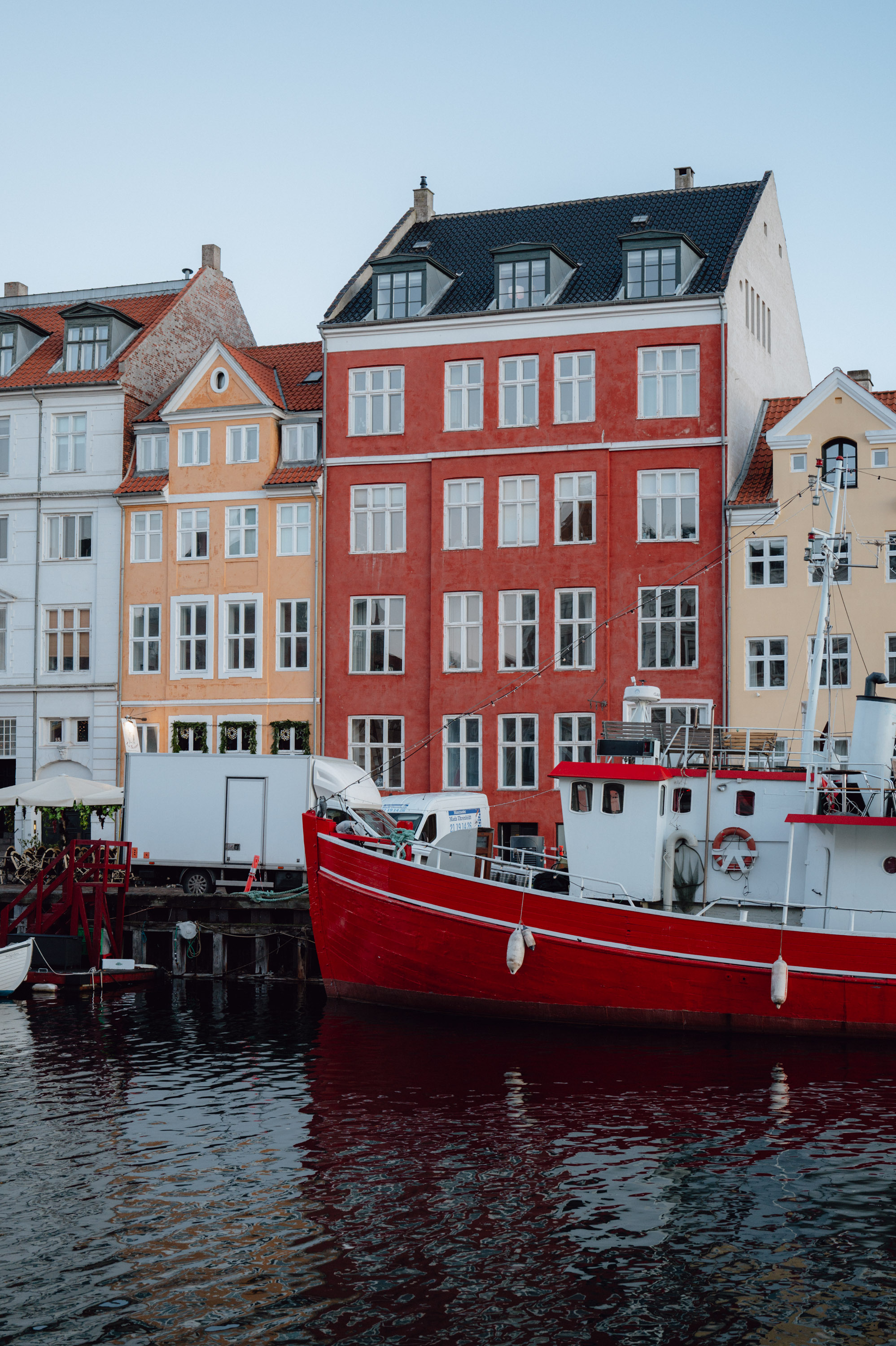
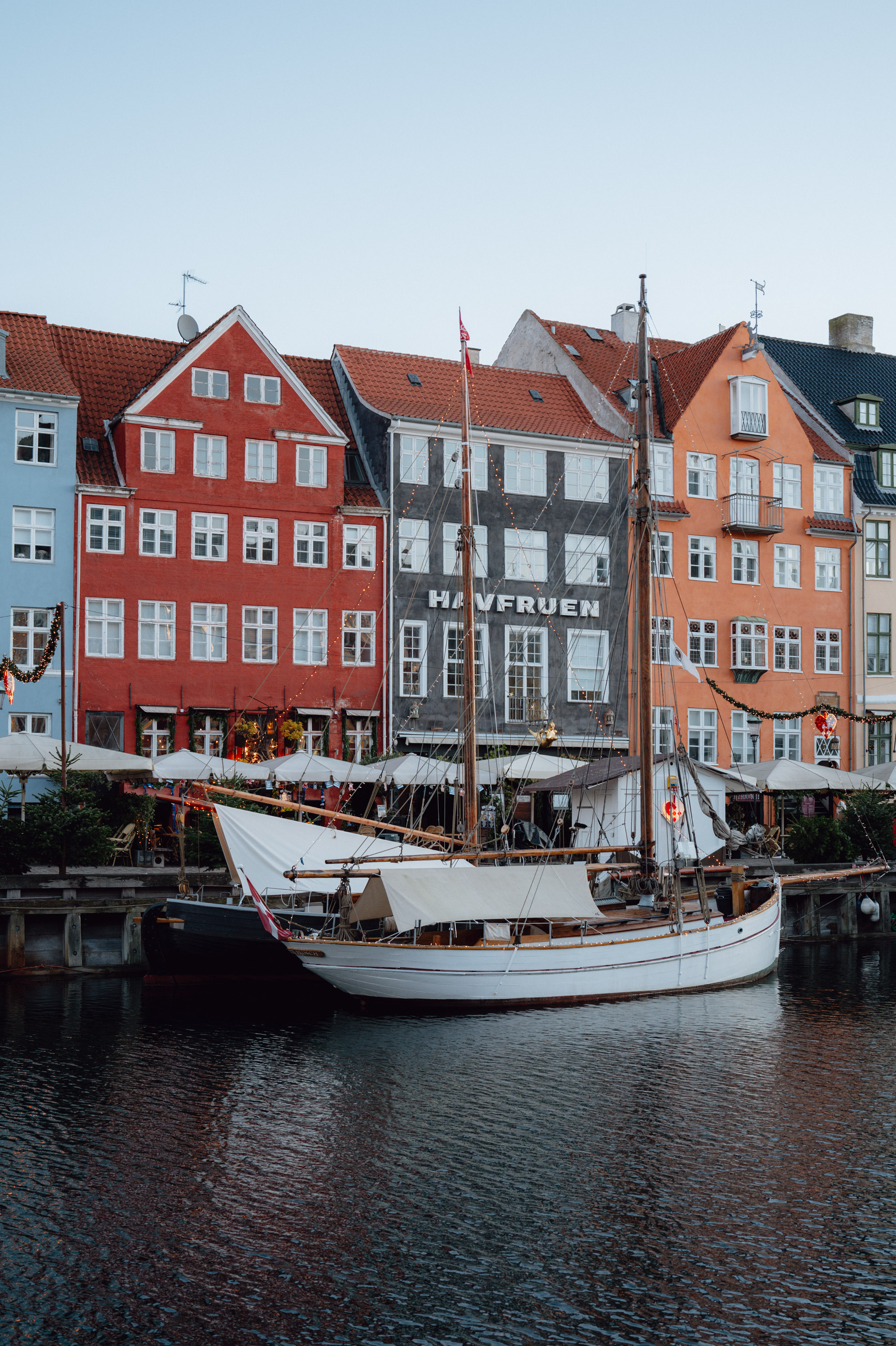
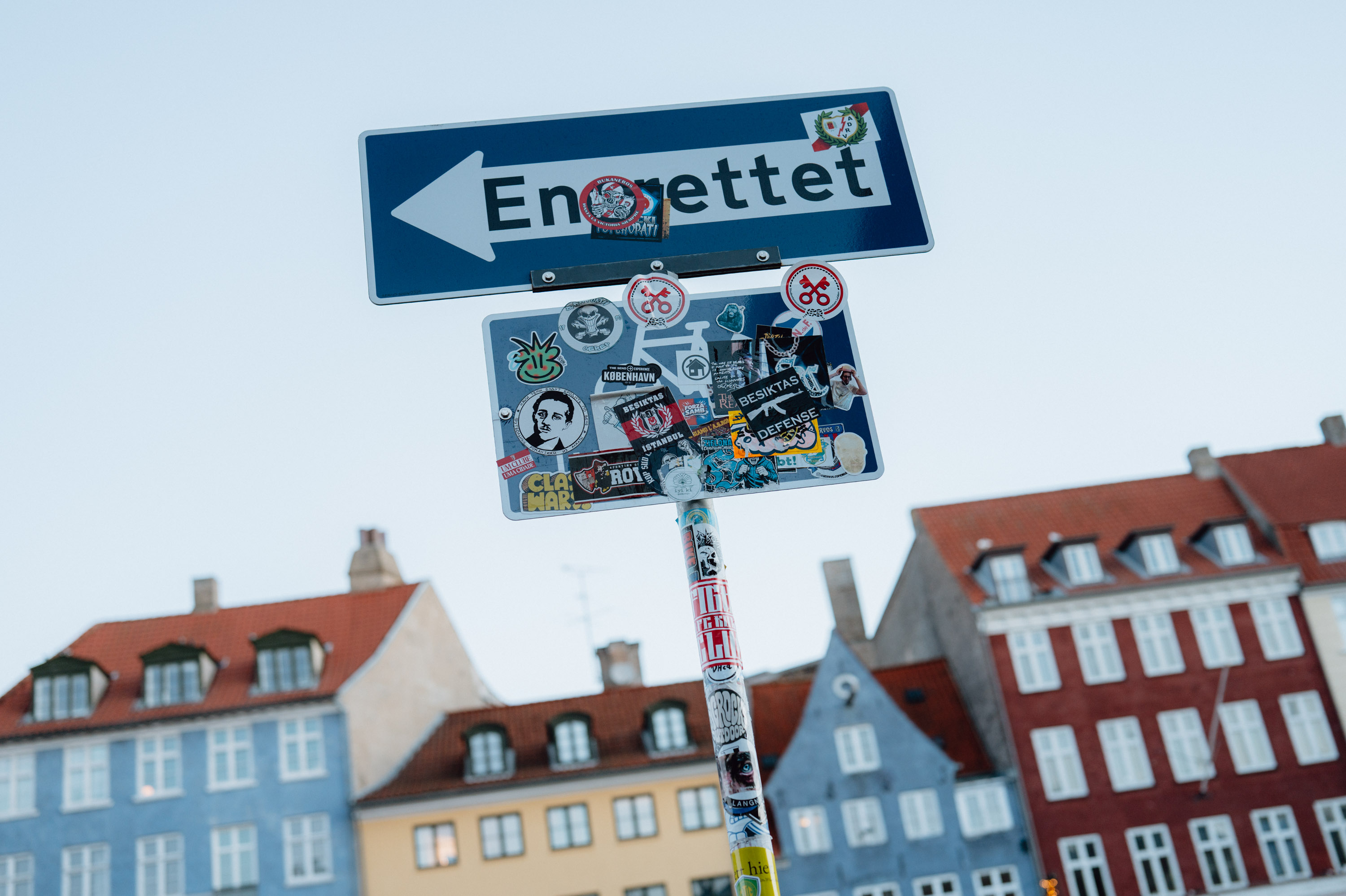
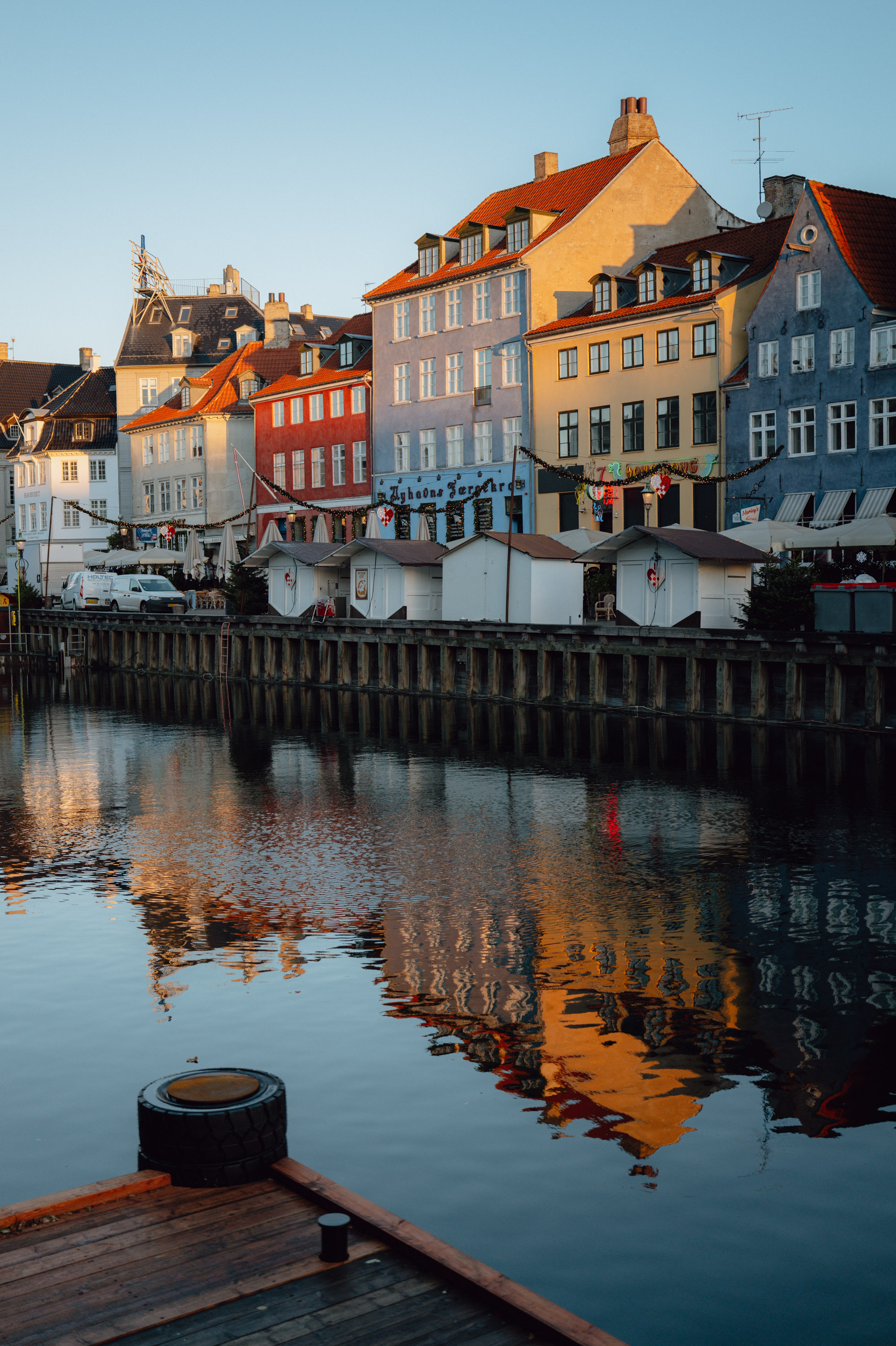
The Christmas market stalls had been set up but the stallholders hadn’t arrived yet — little huts with their shutters closed, a decorated reindeer sign, the light growing minute by minute. There is a particular quality to Scandinavian dawn light in late November where everything stays pink for about half an hour and then, as if someone has slowly turned a dimmer, the whole canal switches into warm gold. It is extraordinary to be alone in Nyhavn watching it happen.
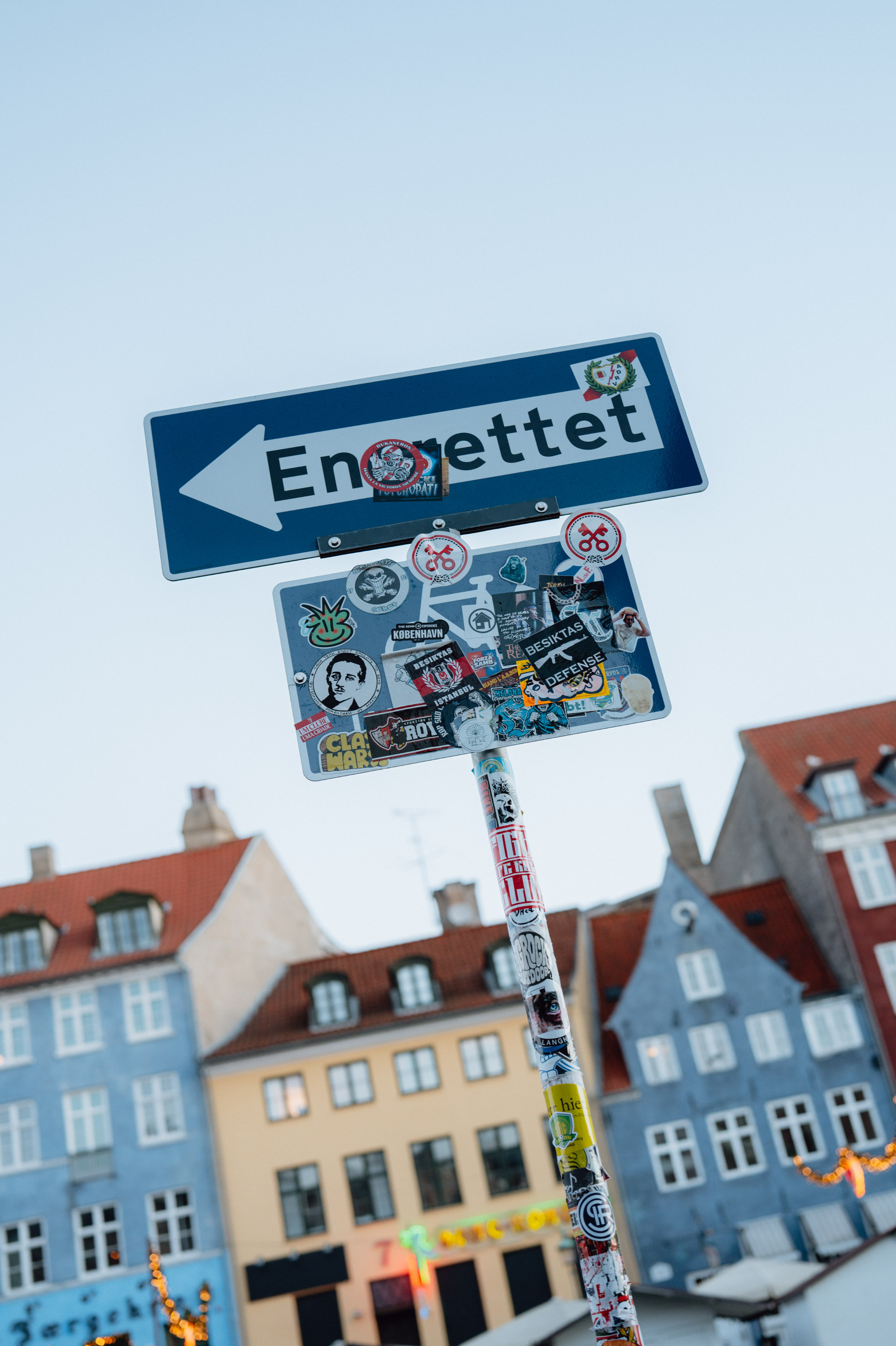
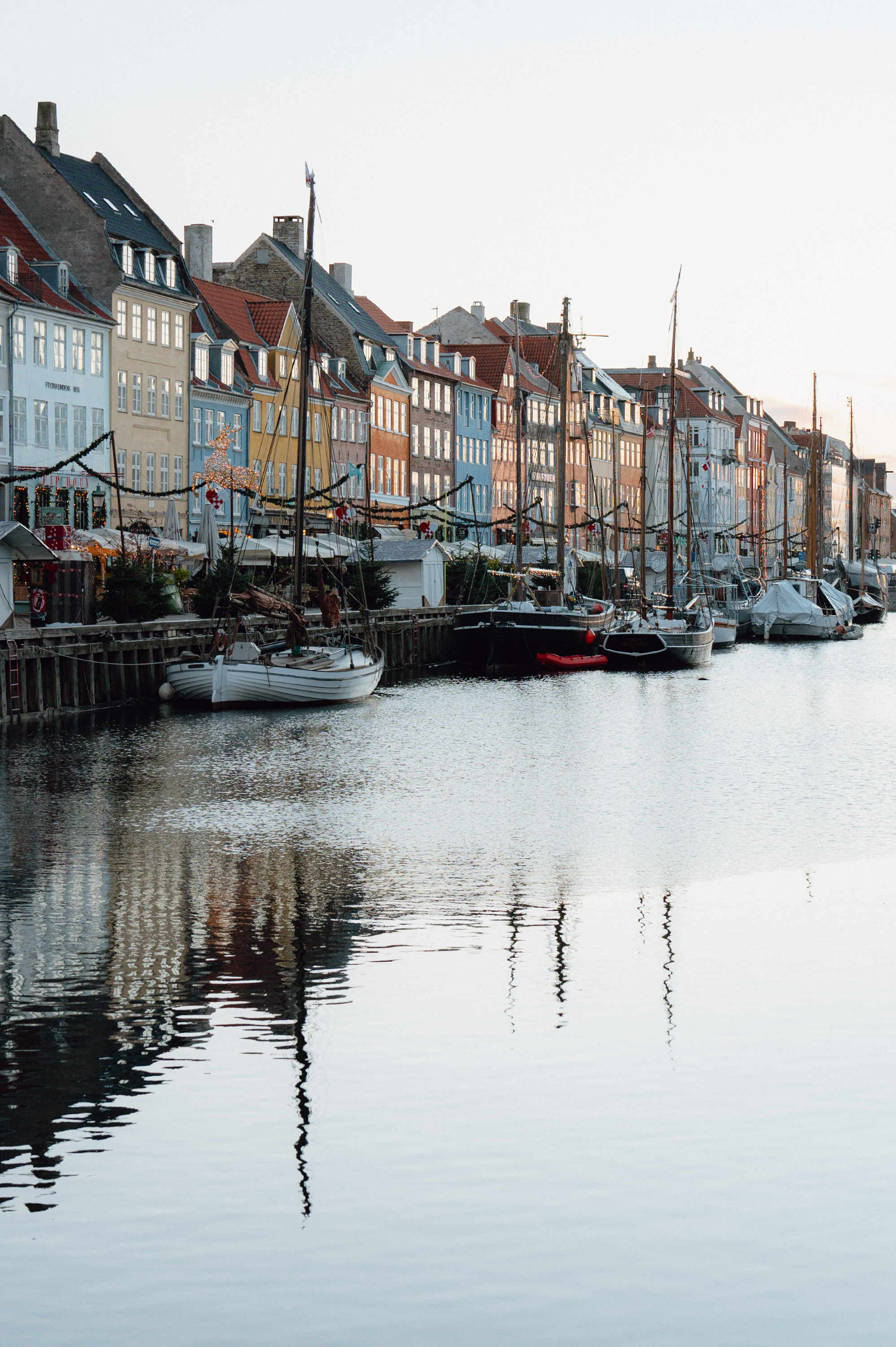
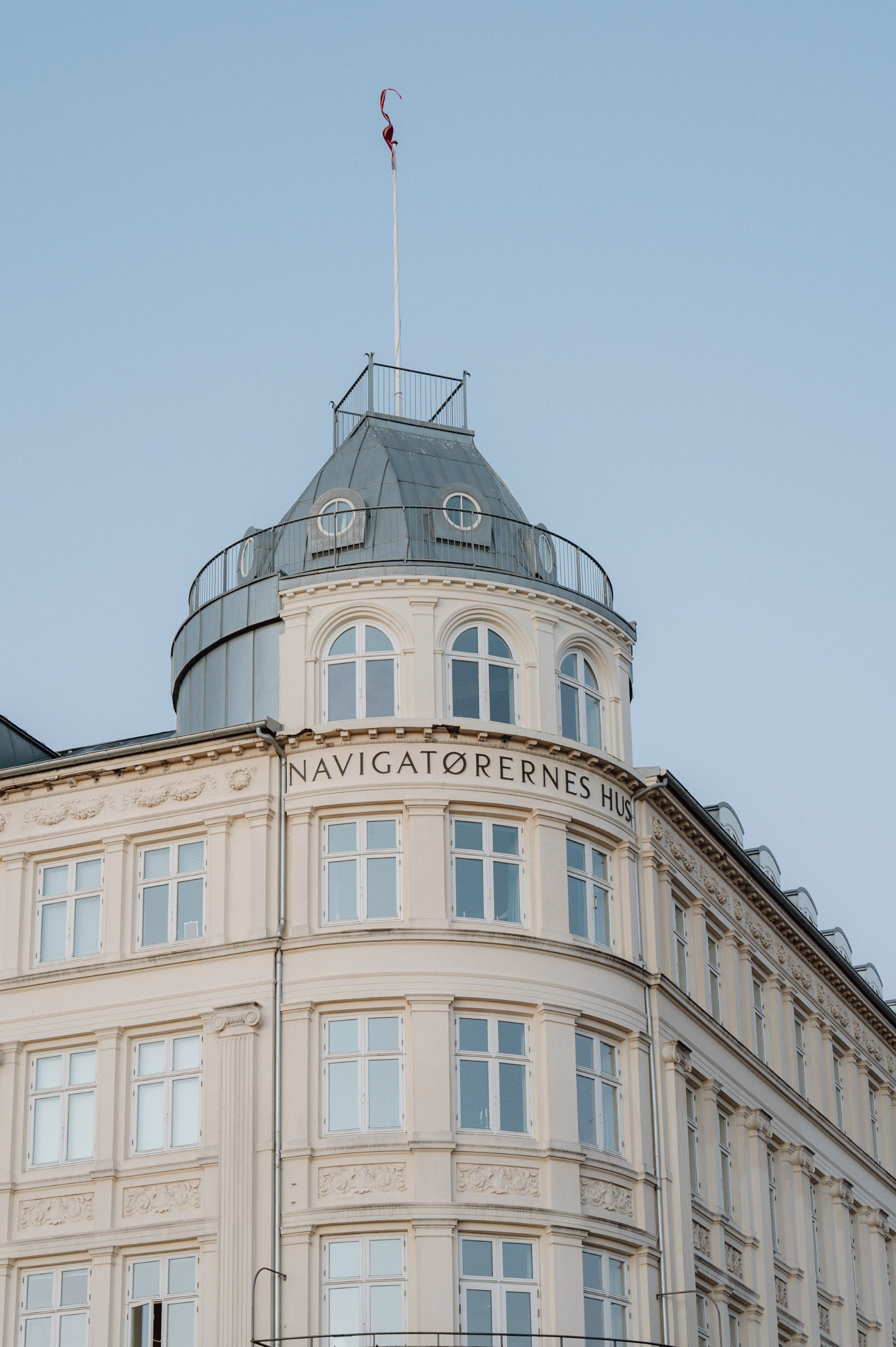
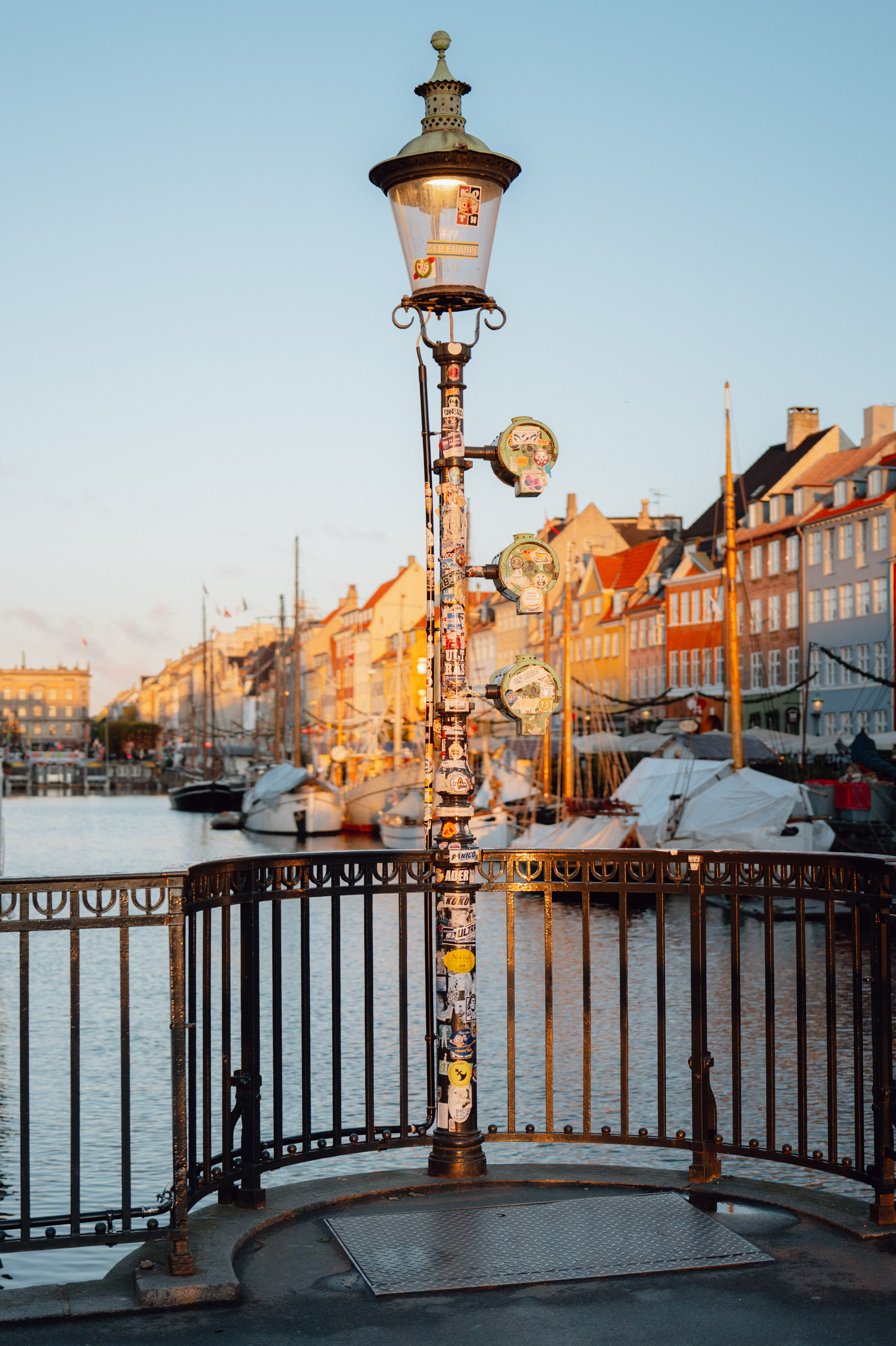
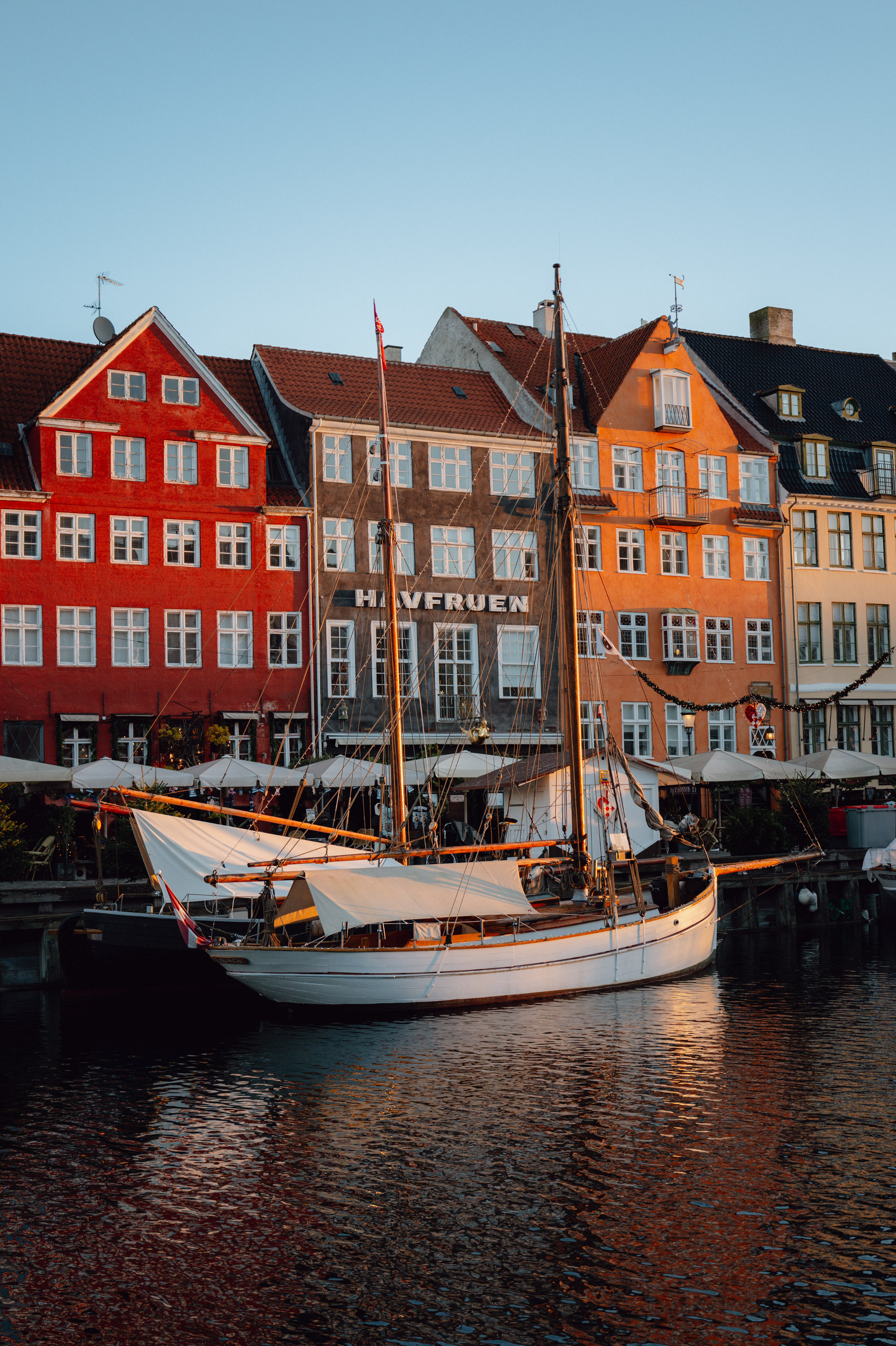
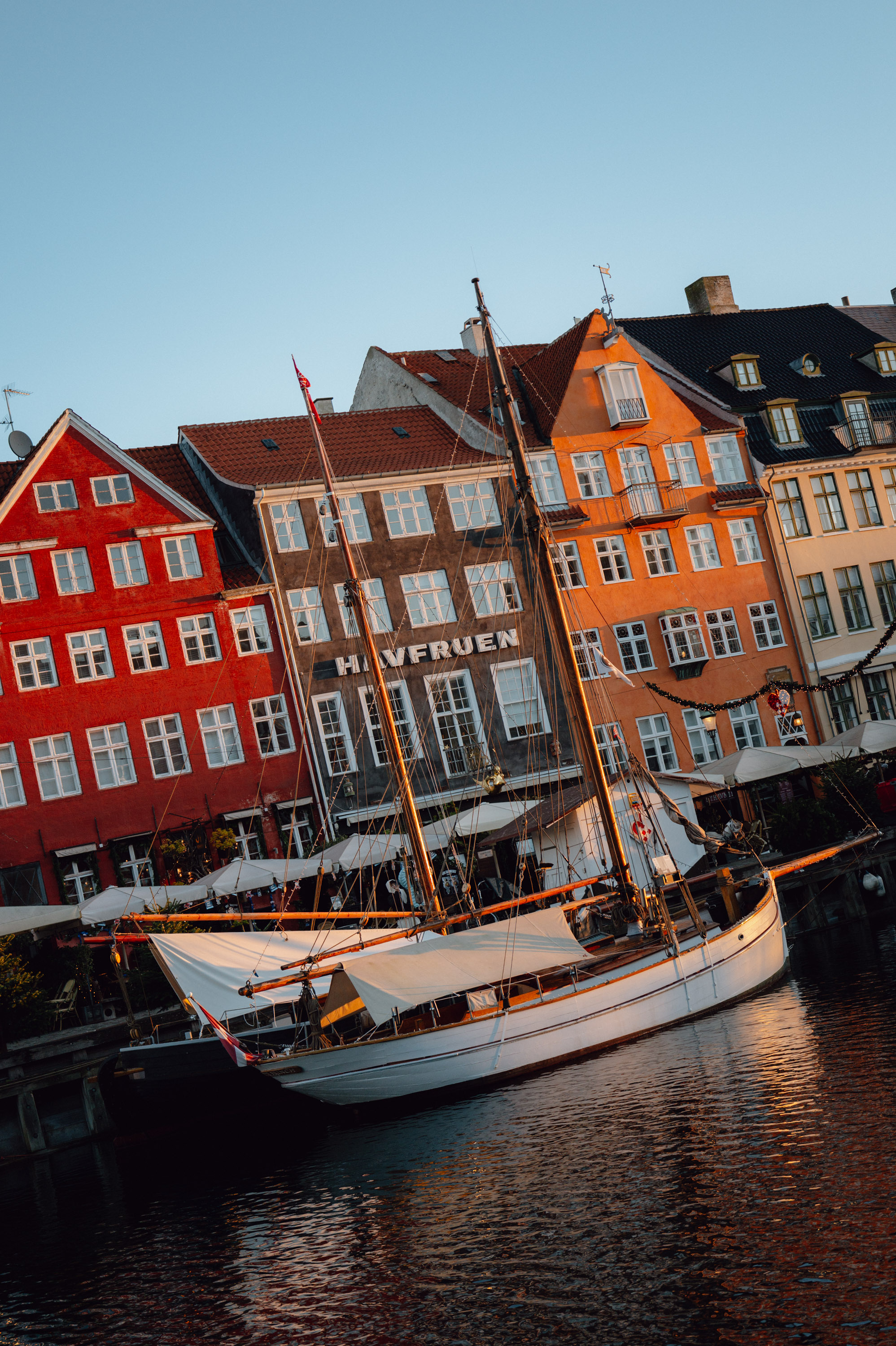
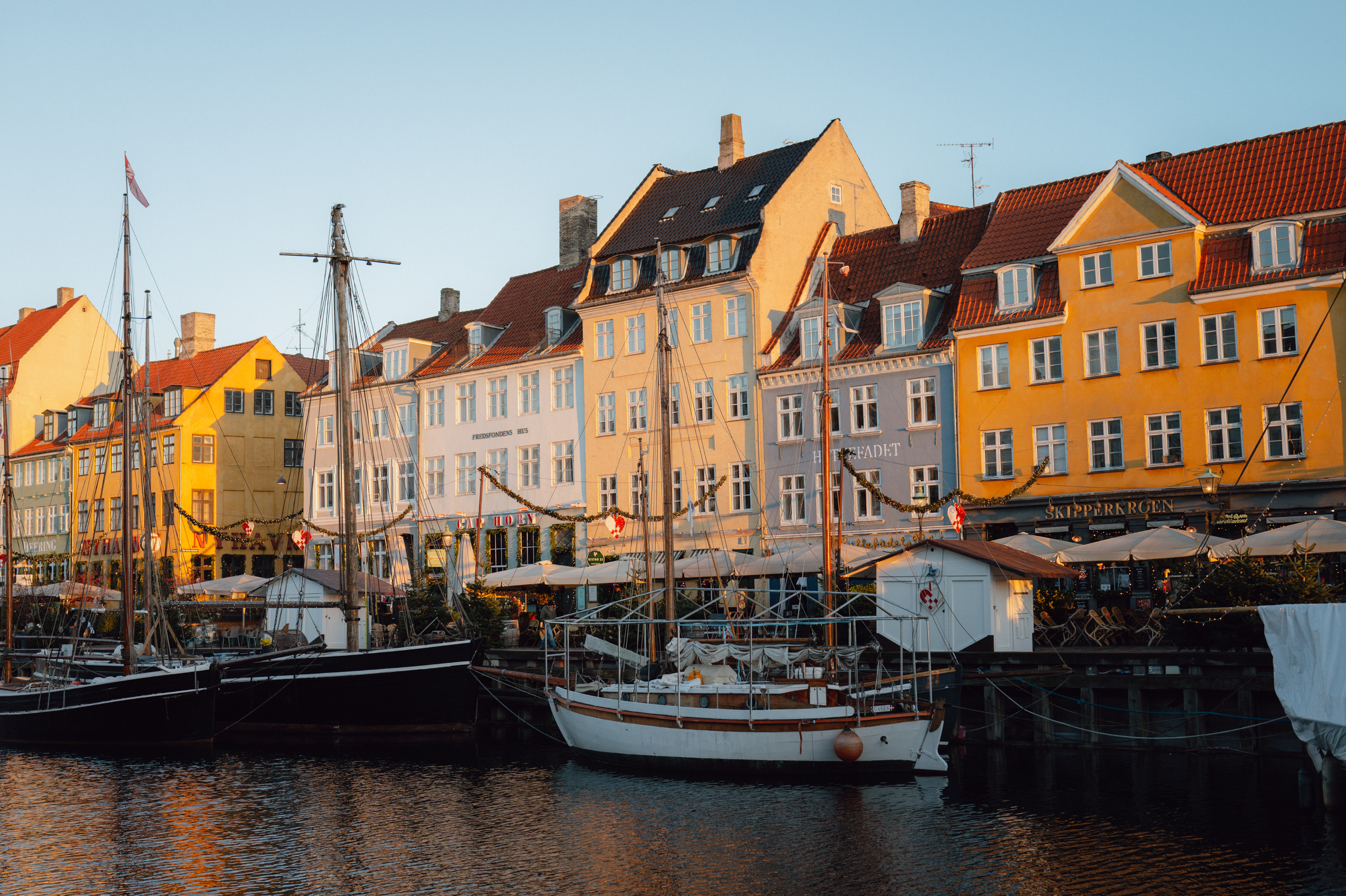
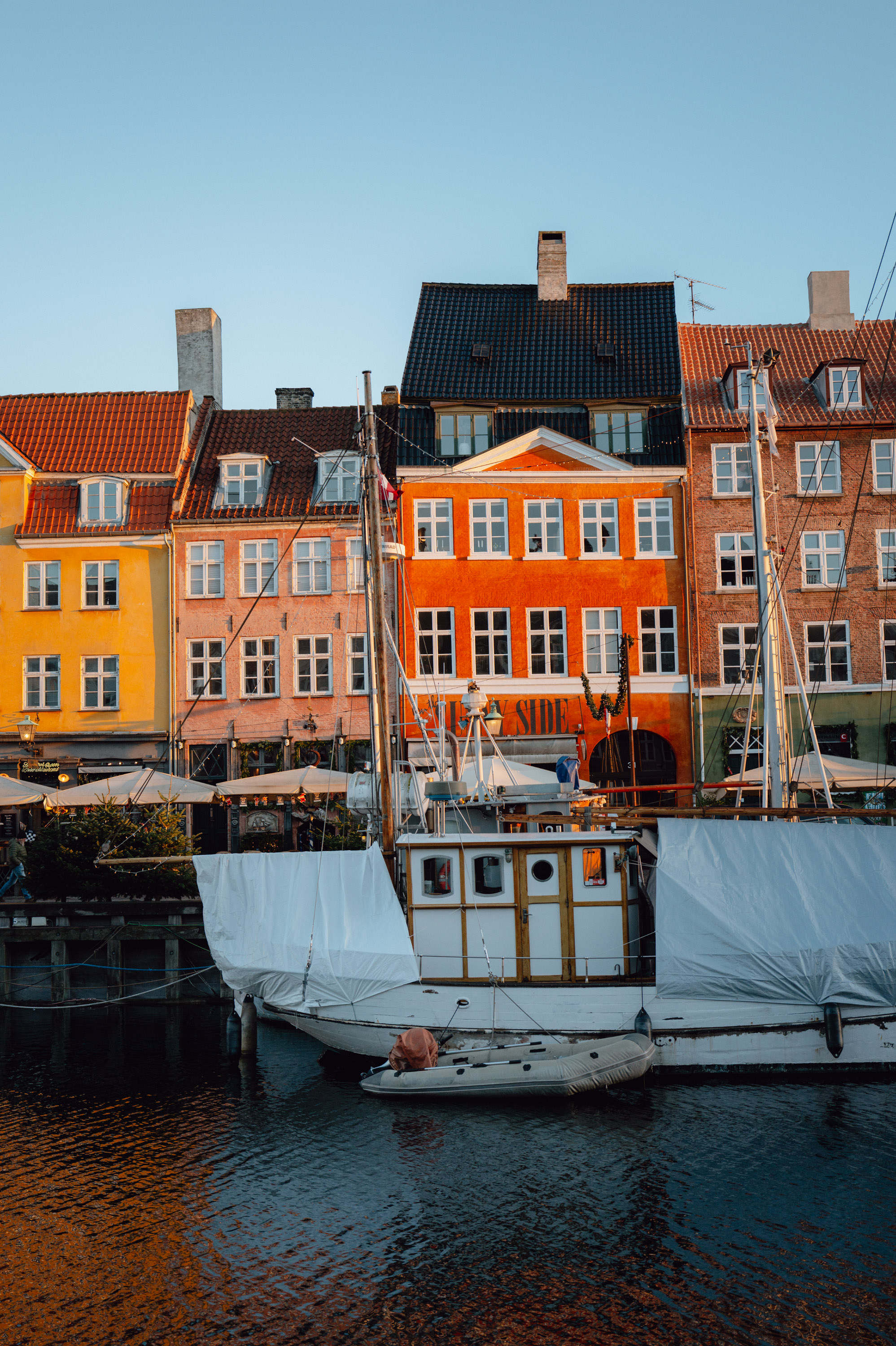
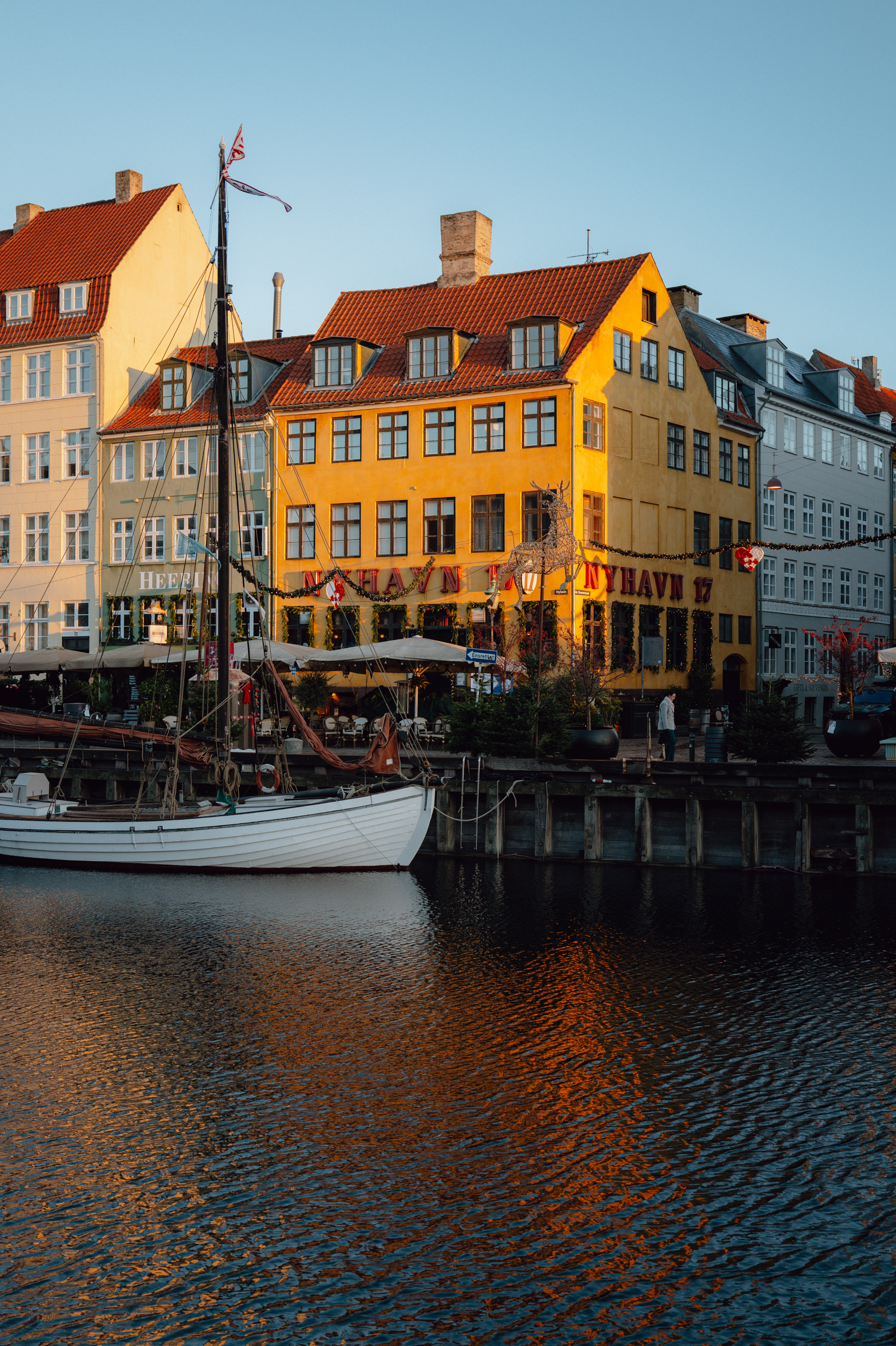
After a cardamom bun at Lagkagehuset on Kongens Nytorv, I walked north up Gothersgade, crossed Dronning Louises Bro at cyclist rush hour — which is its own spectator sport in Copenhagen — and out into Nørrebro. Along the way I stopped at Torvehallerne, the glass-and-steel food halls where every Copenhagen food trend of the last fifteen years seems to have a stall, and wandered Strøget a little before it woke up properly — the long pedestrian street with its Christmas garlands and painted shop facades just waiting for the morning rush to start.
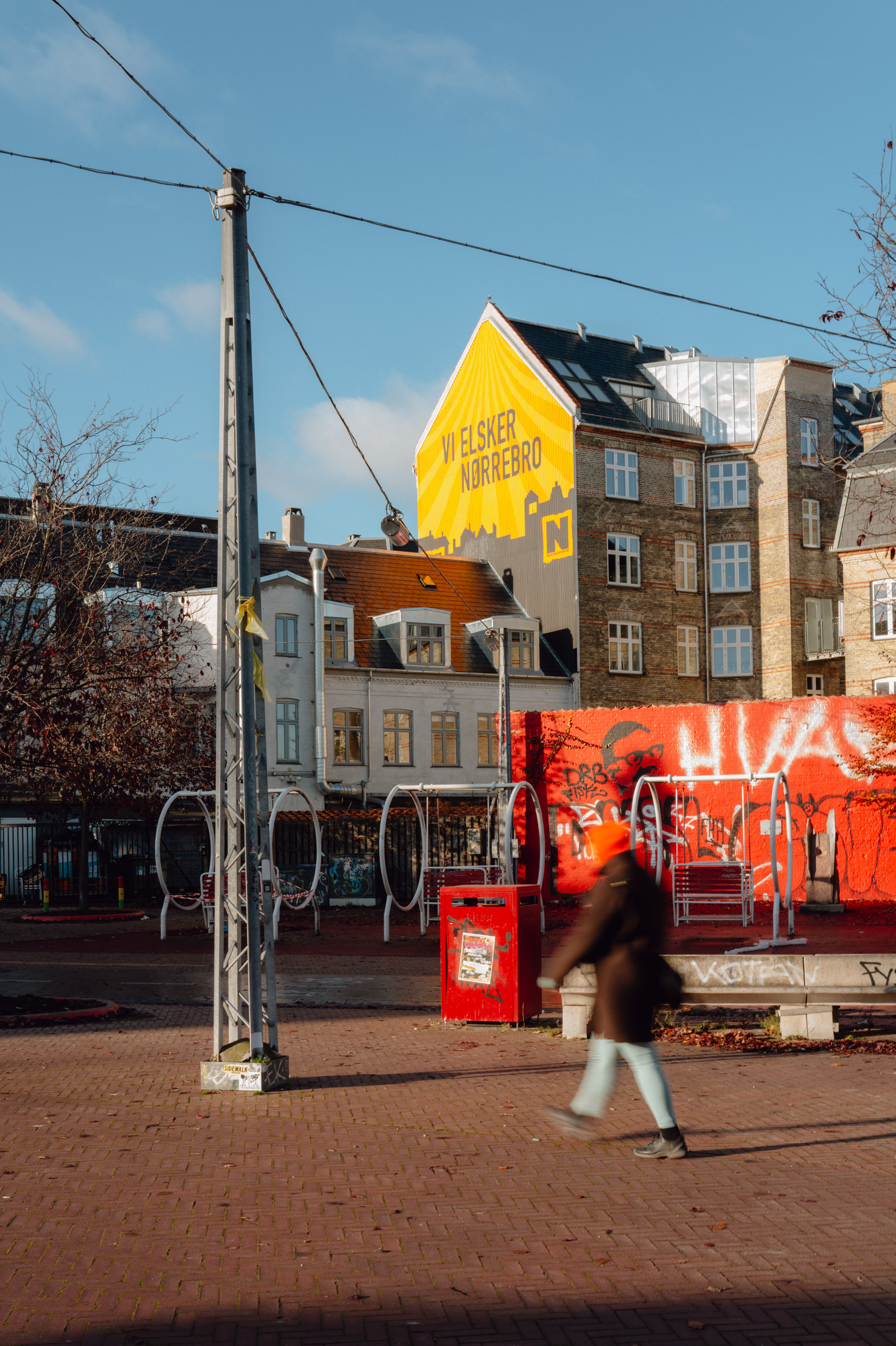
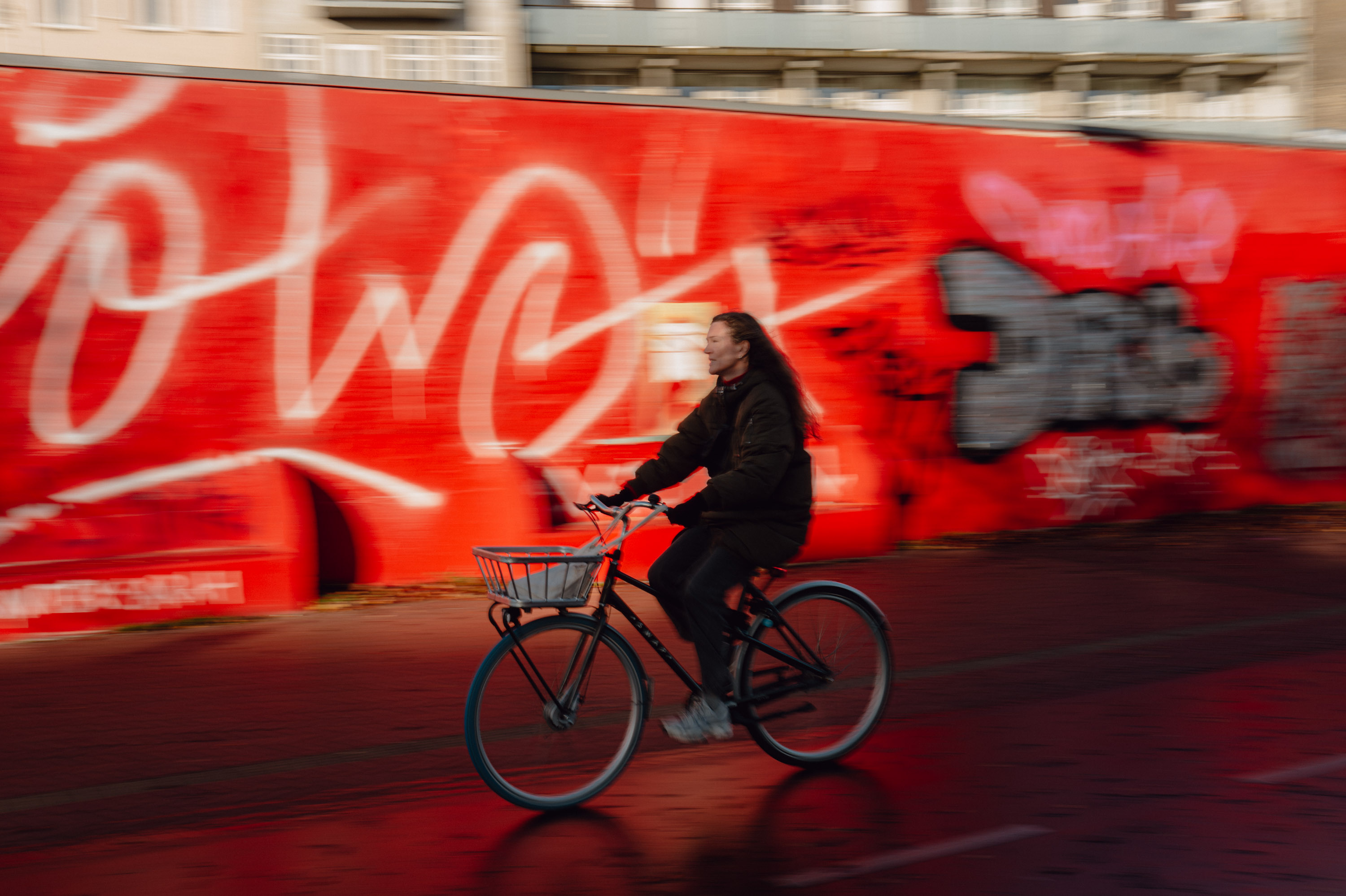
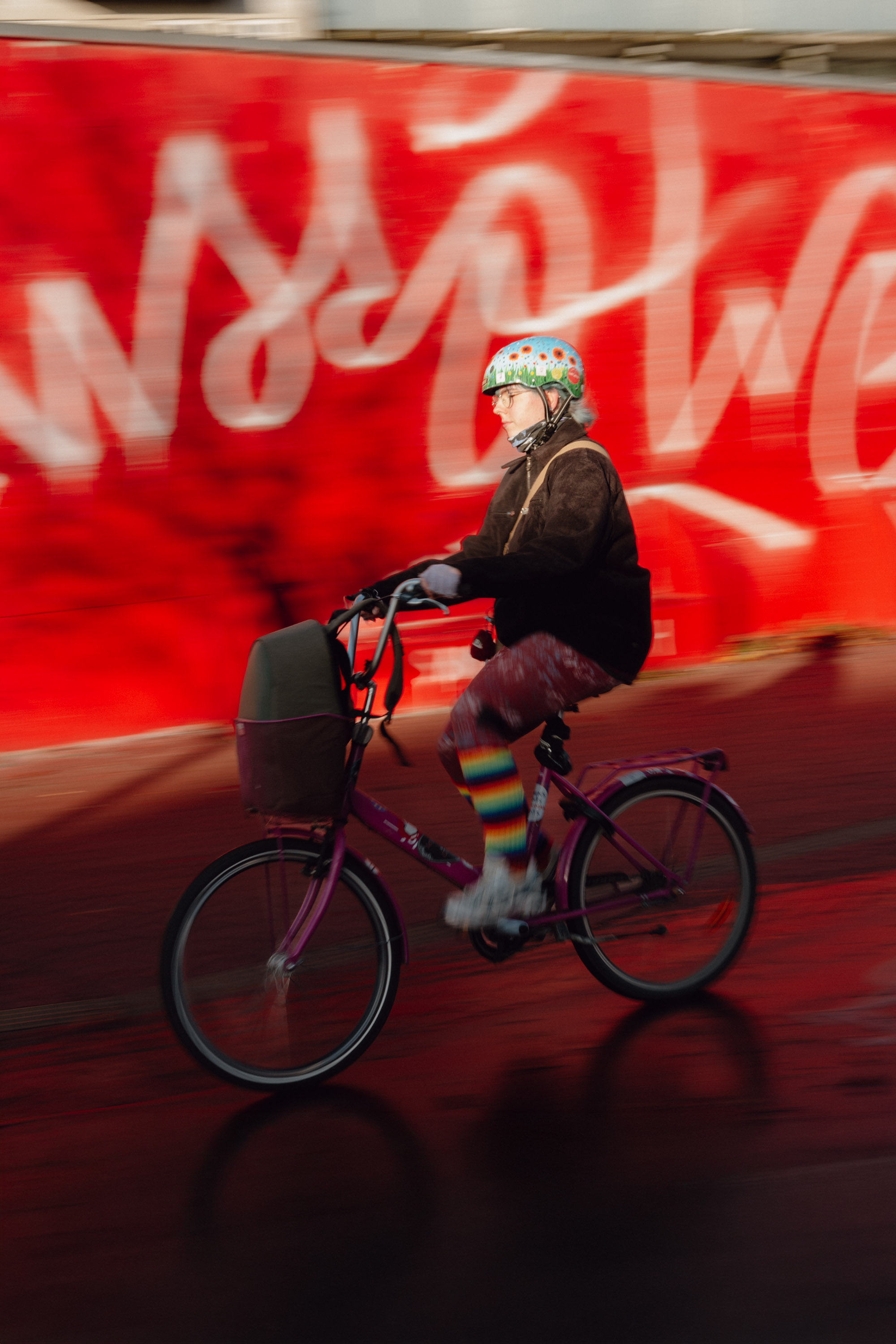
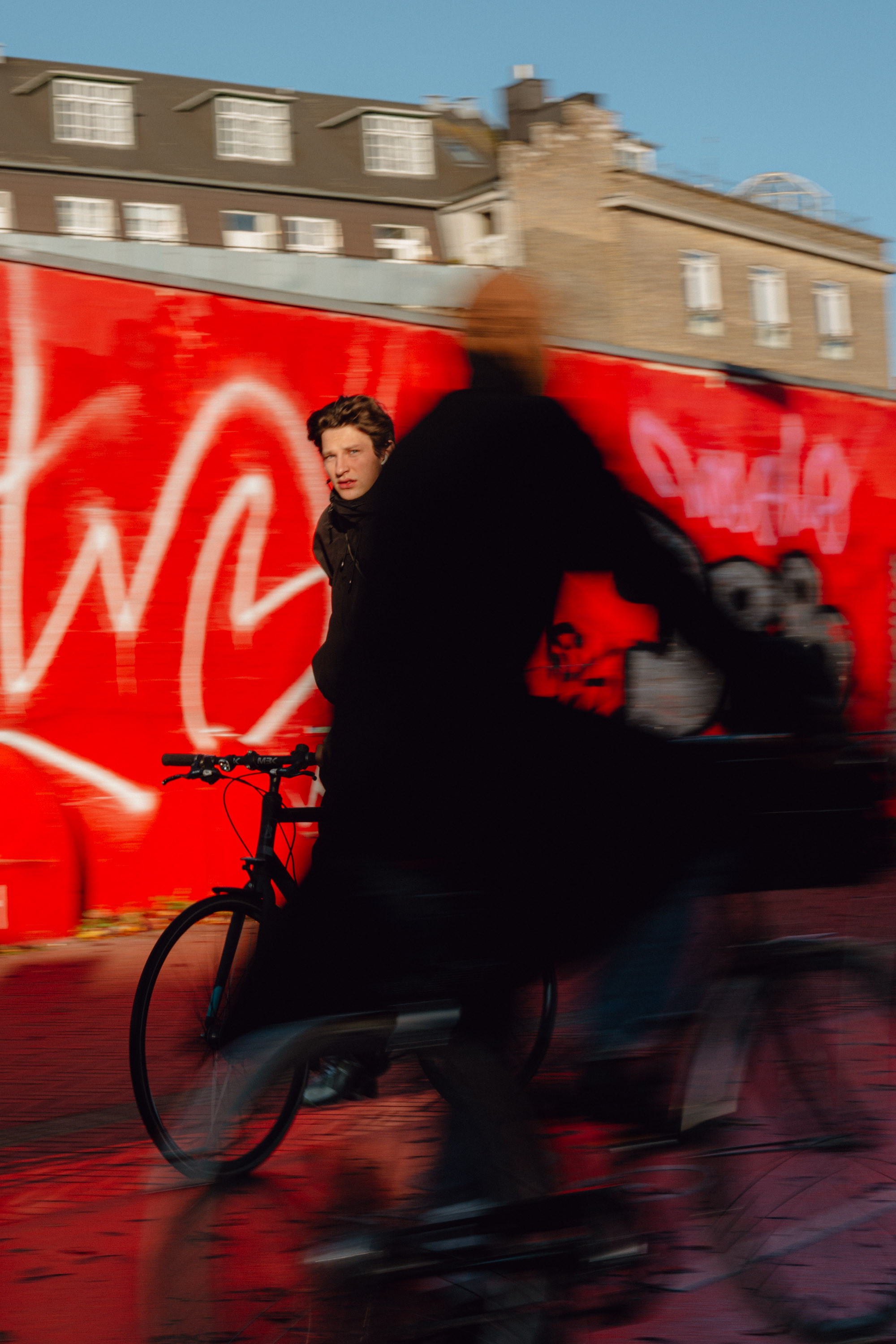
If the Indre By is Copenhagen’s postcard, Nørrebro is Copenhagen’s street photography. Superkilen, BIG + Topotek 1’s wildly colourful urban park, is the obvious photographic draw, and the famous “Vi Elsker Nørrebro” mural is still there, but the whole neighbourhood is thick with graphic, slightly imperfect compositions if you’re willing to wander around and look for them — rainbow crossings, murals, cycle-infrastructure details, and those slightly moody corners that make up the character of the place.
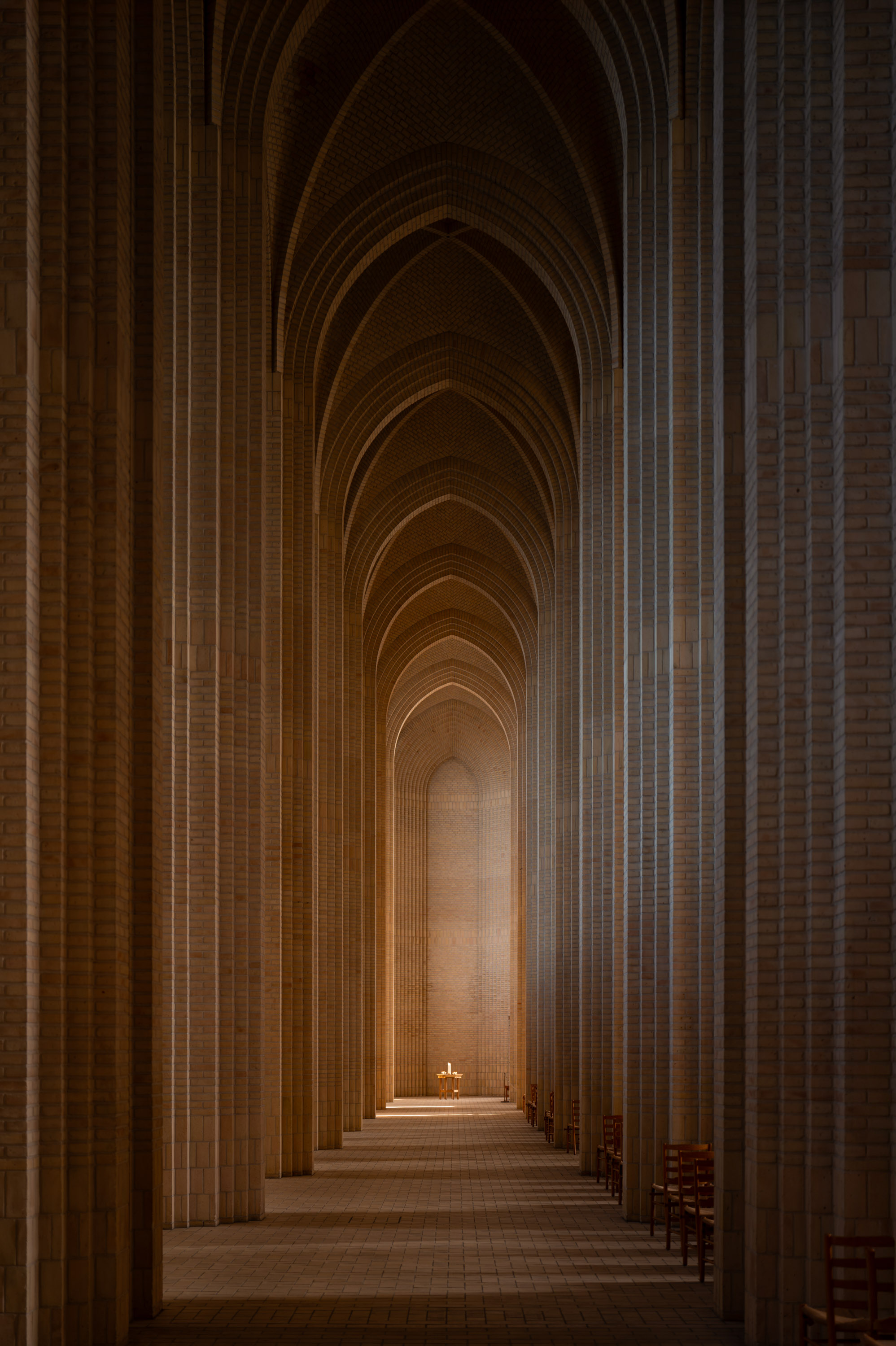
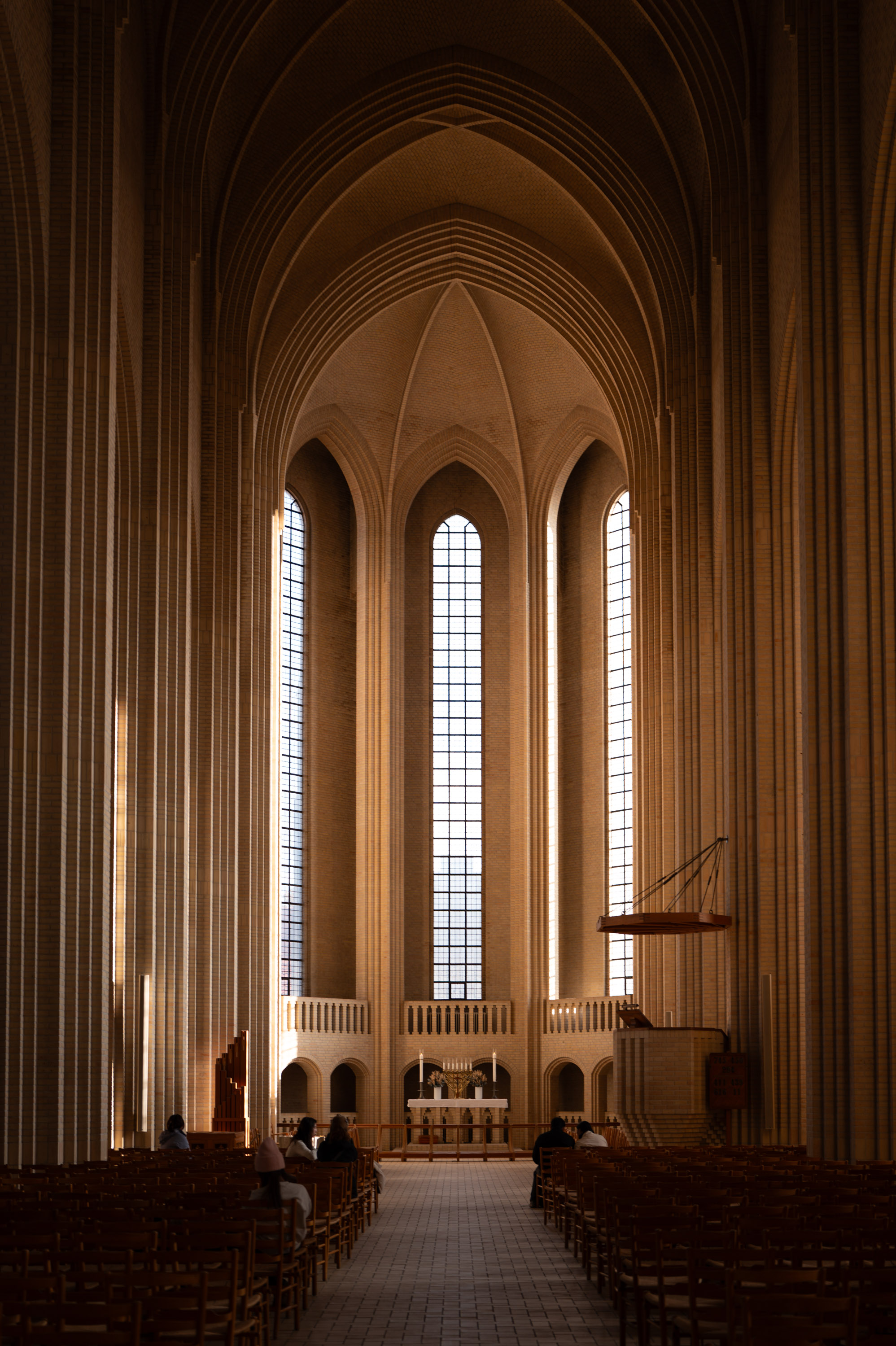
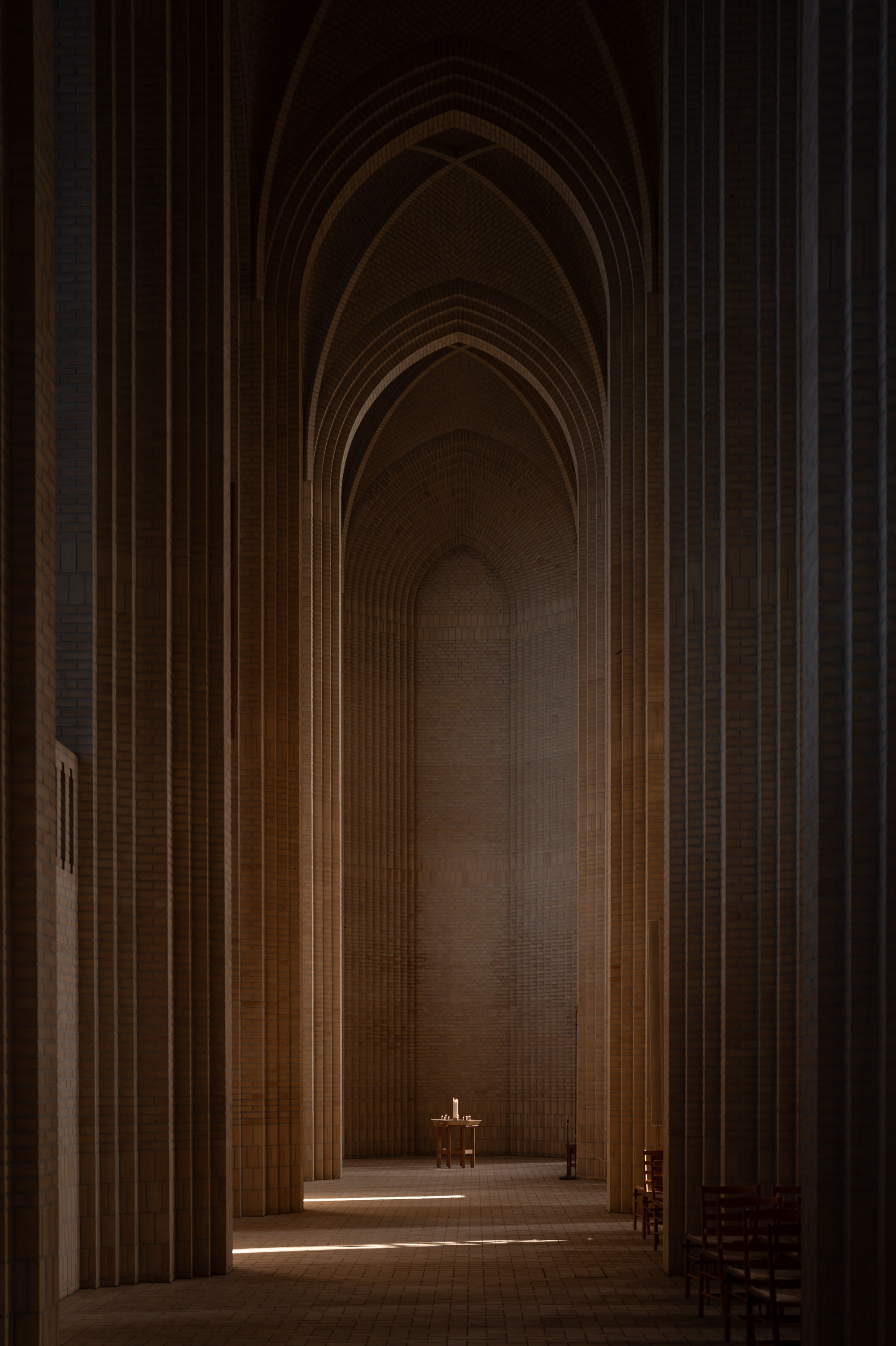
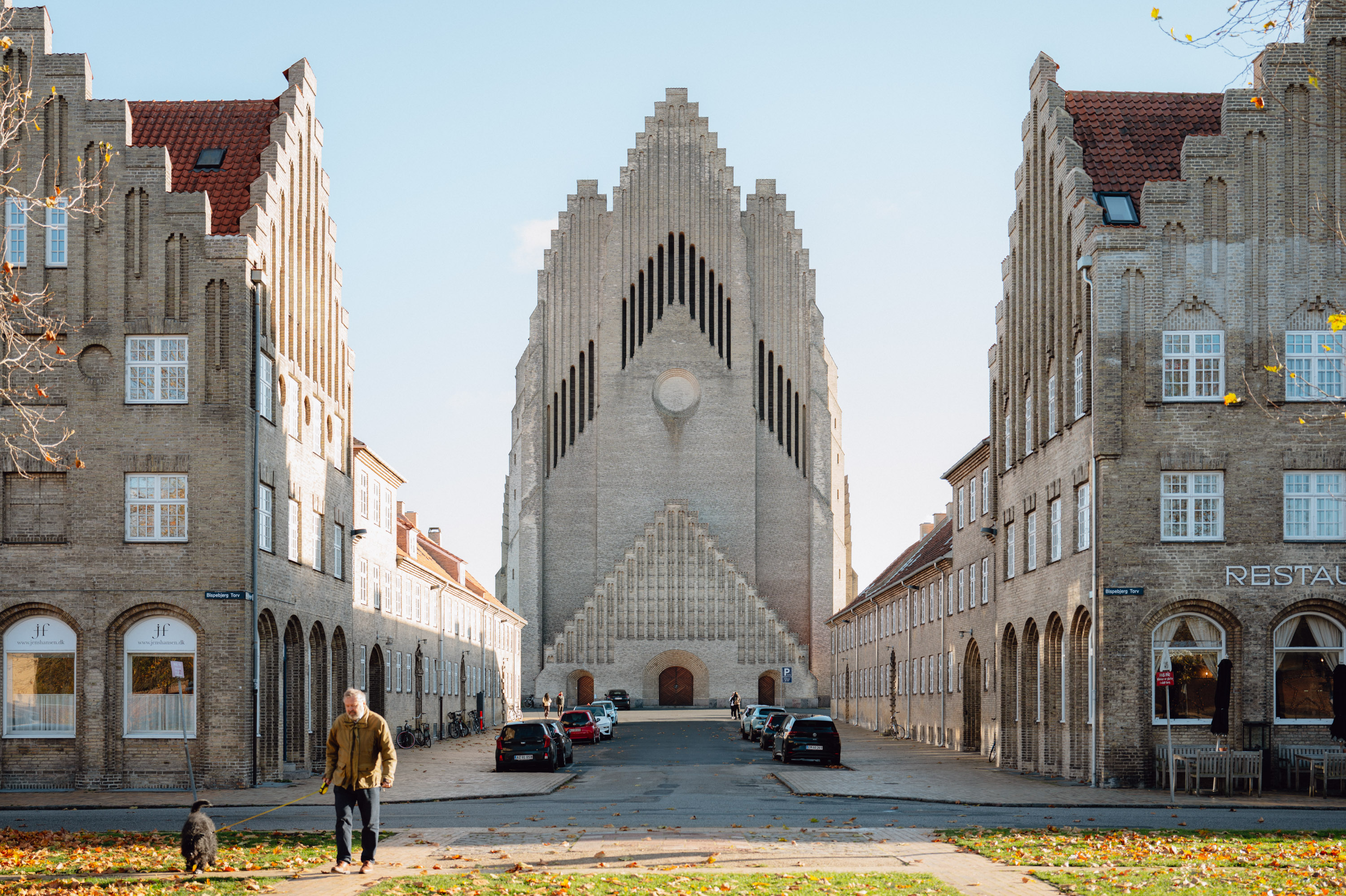
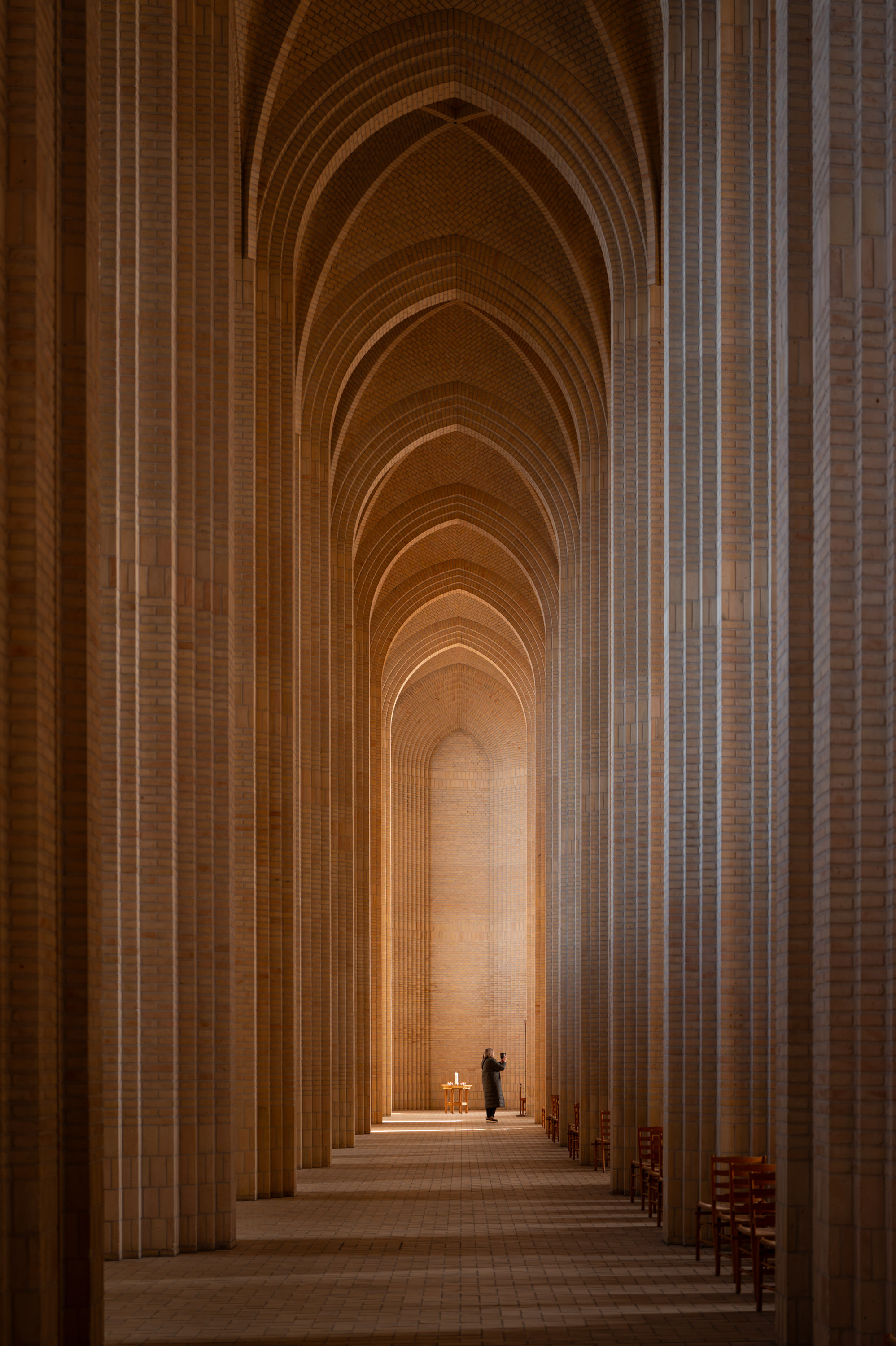
Grundtvigs Kirke is a short walk north of Superkilen and genuinely one of the most extraordinary buildings I’ve walked into in years. From the outside it reads as a giant brick expressionist cathedral; from the inside, as a hangar of silence — six and a half million pale yellow bricks drawn up into a vaulted nave that is somewhere between Gothic cathedral and factory shed, with no stone and no decoration anywhere, just the brick itself doing all the work. The first frame I made on walking in was of the Klint baptismal font, sunlight ribboning down the piers behind it. I ended up spending close to an hour in there. There was almost no one else inside, the late morning sun was raking across the piers, and the whole building was very quietly singing.
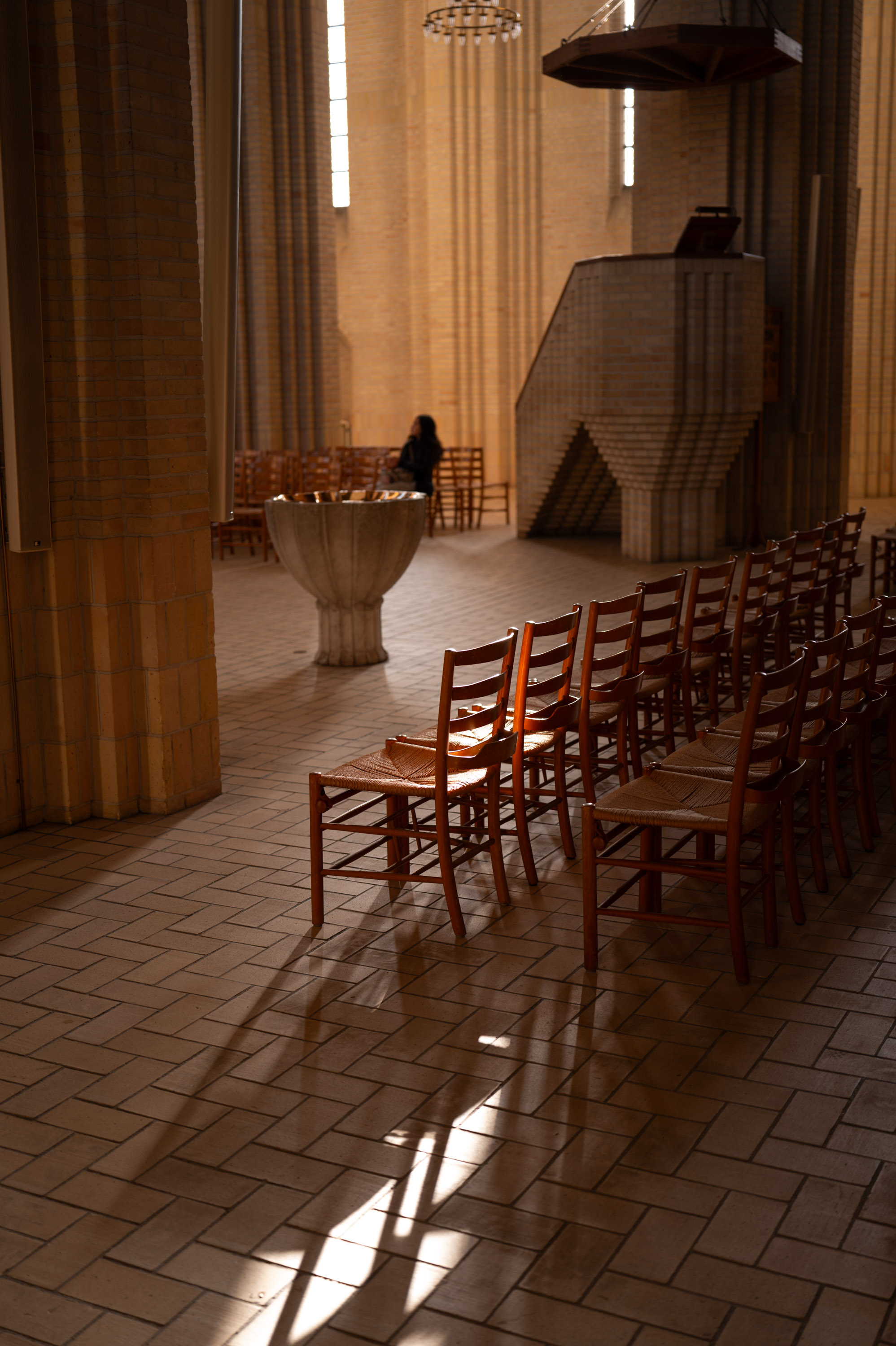
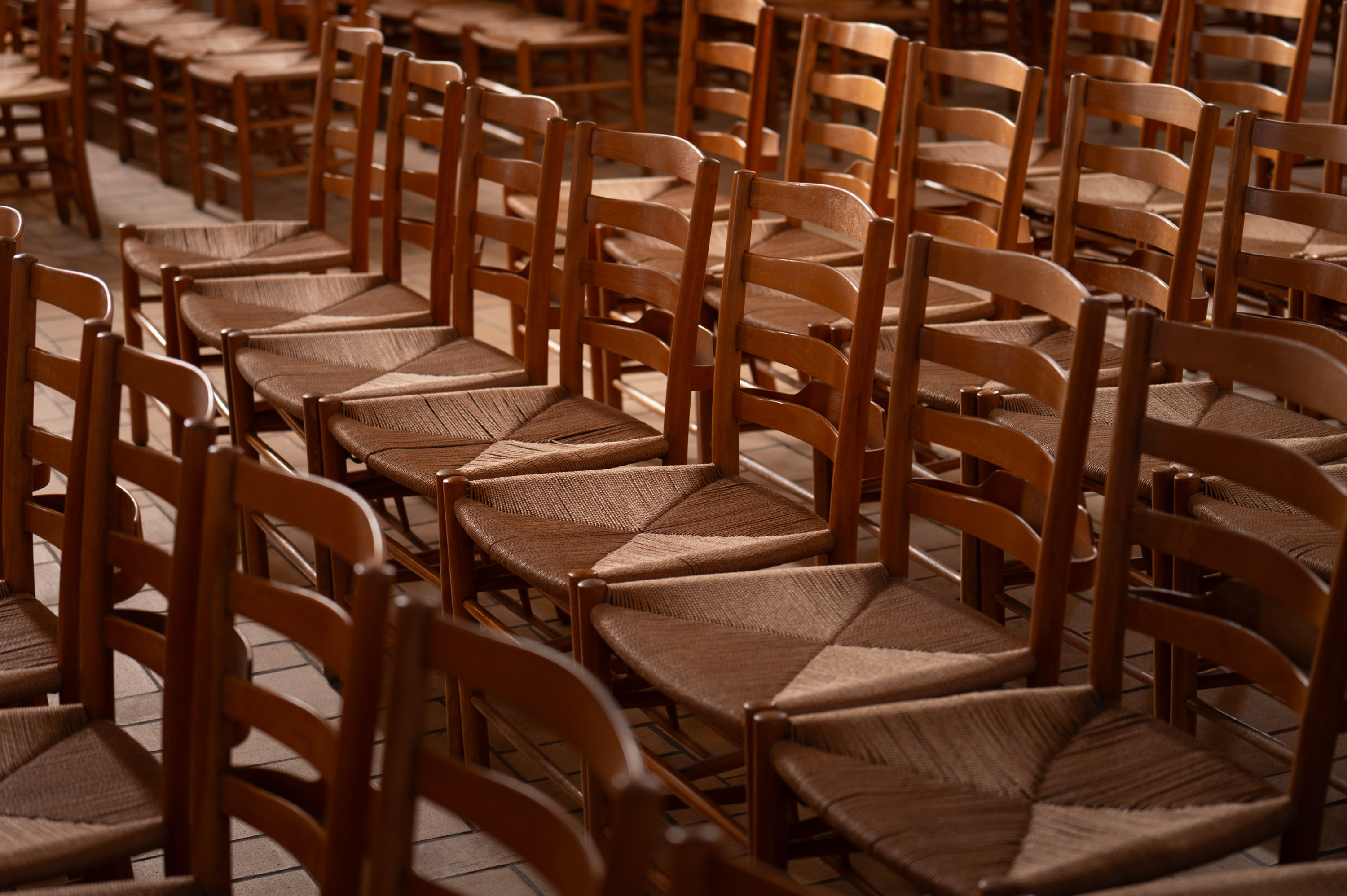
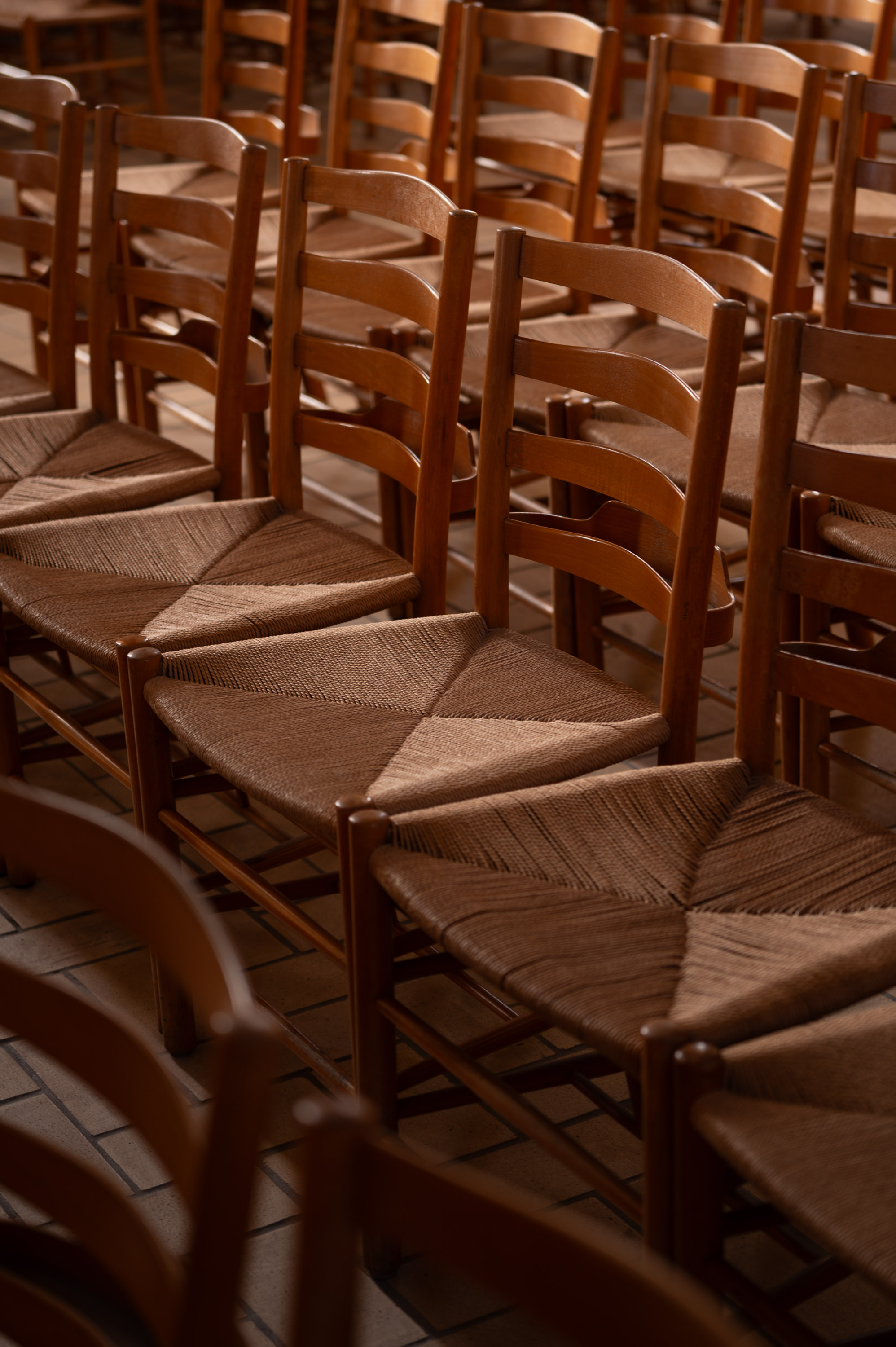
The building is Peder Vilhelm Jensen-Klint’s 1921 masterpiece, finished after his death by his son Kaare Klint, who also designed the papercord church chairs that march in perfect rows down the nave. The chairs alone are a whole Danish design history lesson — a quiet, practical, beautifully proportioned object that would hold its own in any contemporary interiors shoot. I worked my way down the nave photographing them first, then the long view to the altar.
The side aisles are, if anything, more photographable than the nave itself. The brick piers are cantilevered out into repeating pointed arches, and when the sun drops behind them in the late morning, the whole aisle reads as a kind of Louis Kahn-before-Louis-Kahn exercise in natural light hitting modulated brick. Looking straight up into the vaults is an exercise in pure repetition; walking the aisle gives you the longer frame — a tiny lit altar candle at the vanishing point.
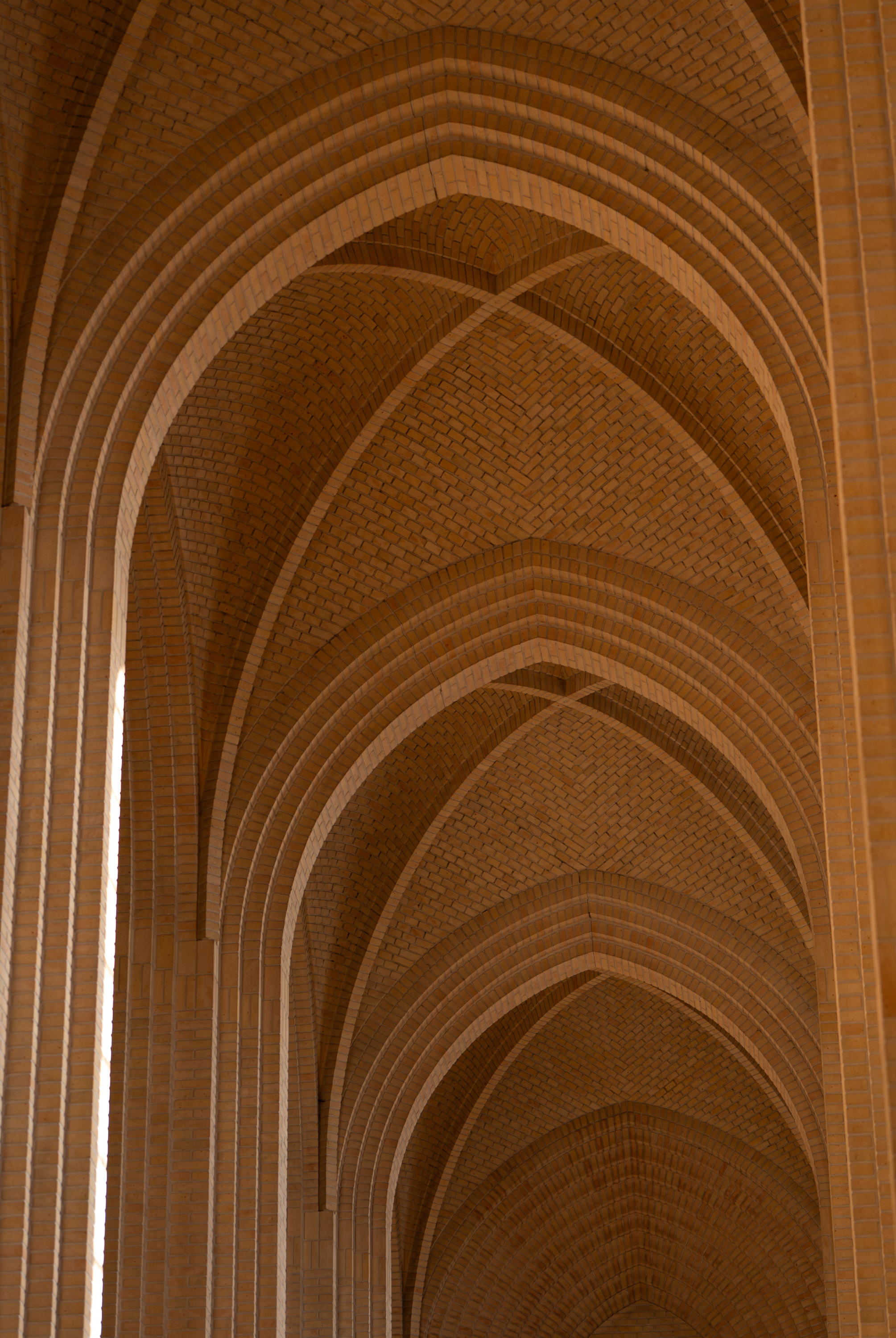
By the time I left, the last frame I made was of the chairs again — rows of pale papercord seats in the warm brick light. It’s the frame that captures what the building actually feels like to be inside: scale, silence, warm brick, two or three people in the whole nave. For a London commercial photographer who mostly spends November shooting hotel and lifestyle interiors on tight deadlines, it was a privilege just to stand there and work slowly.
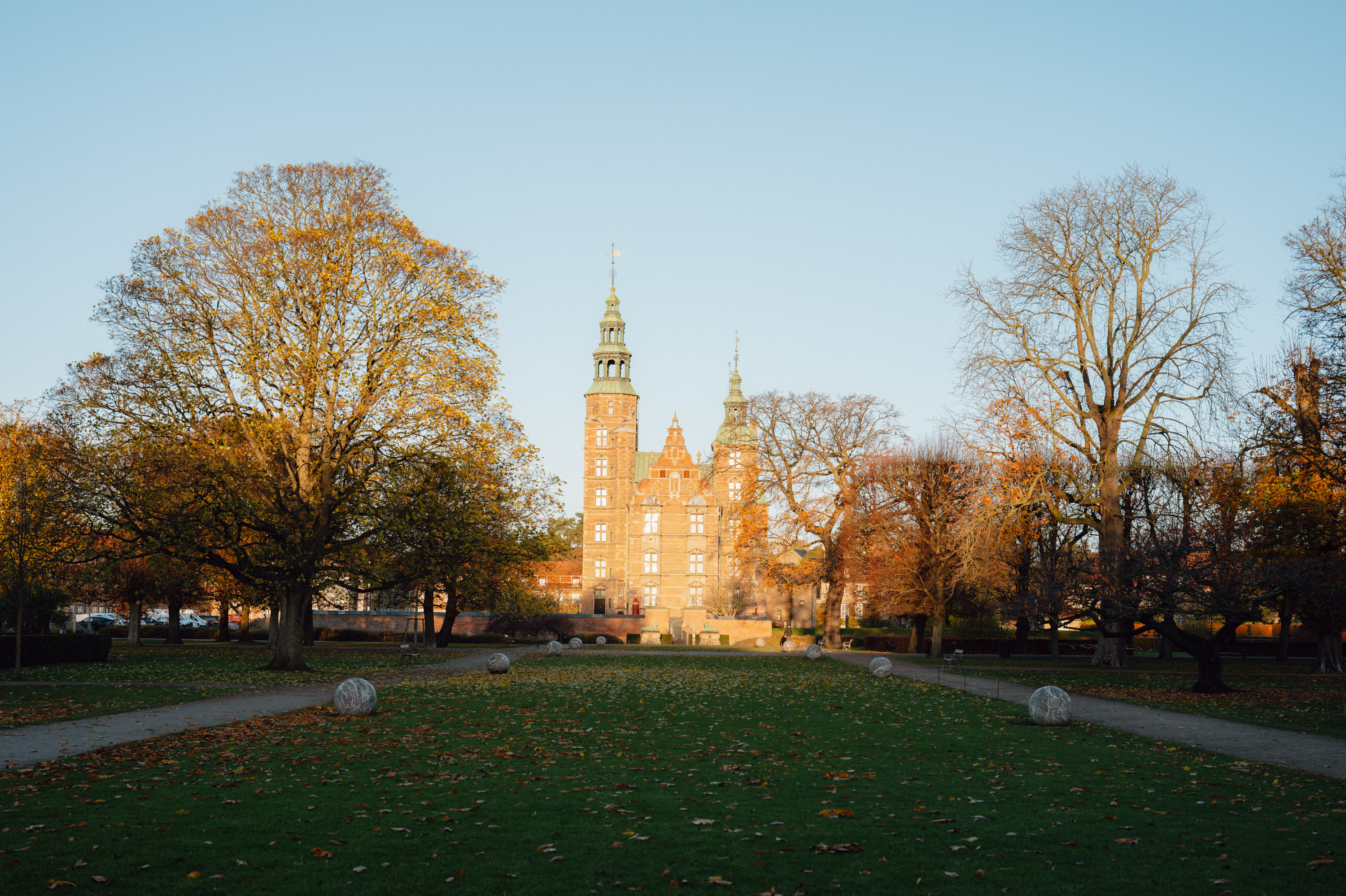
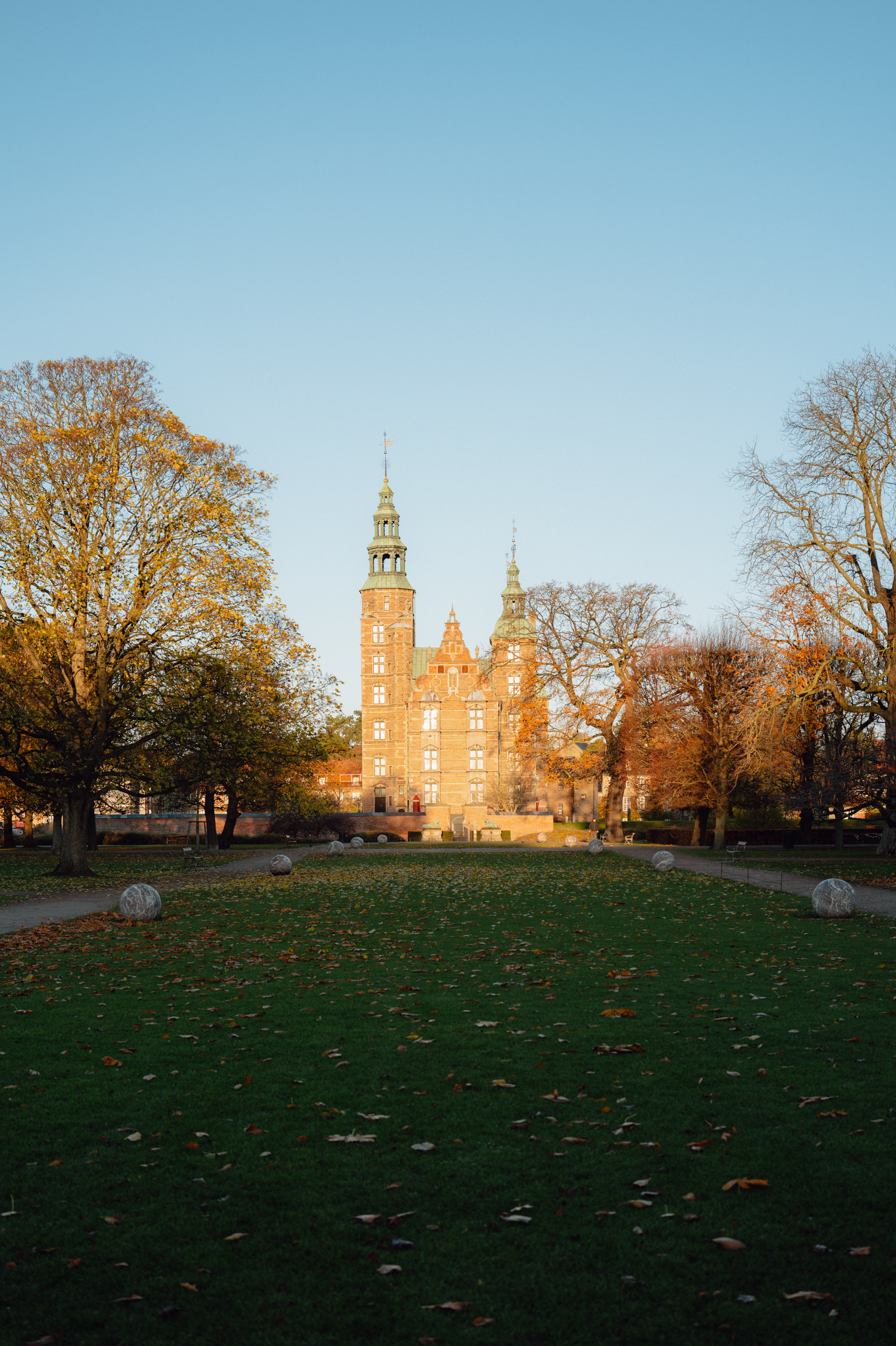
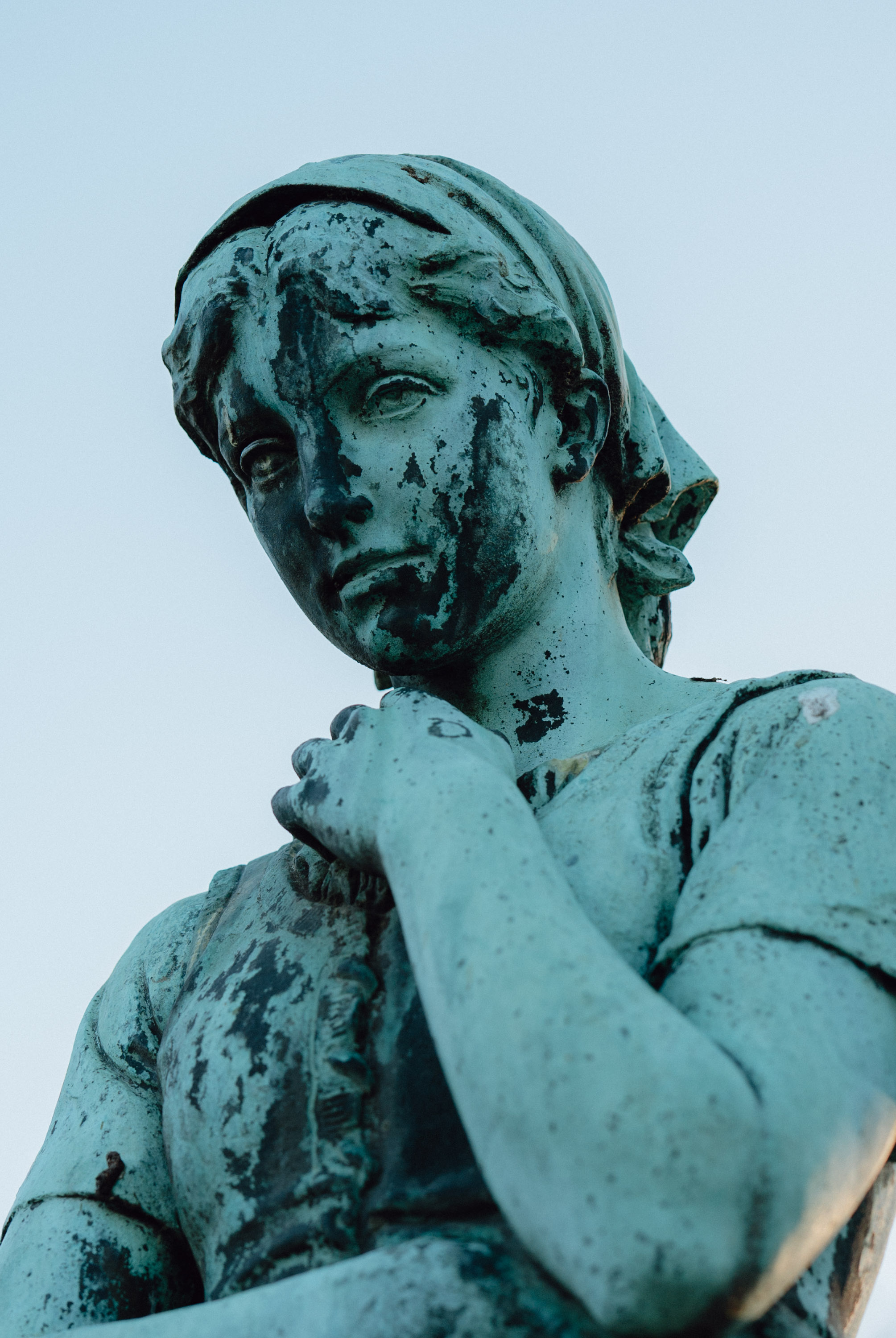
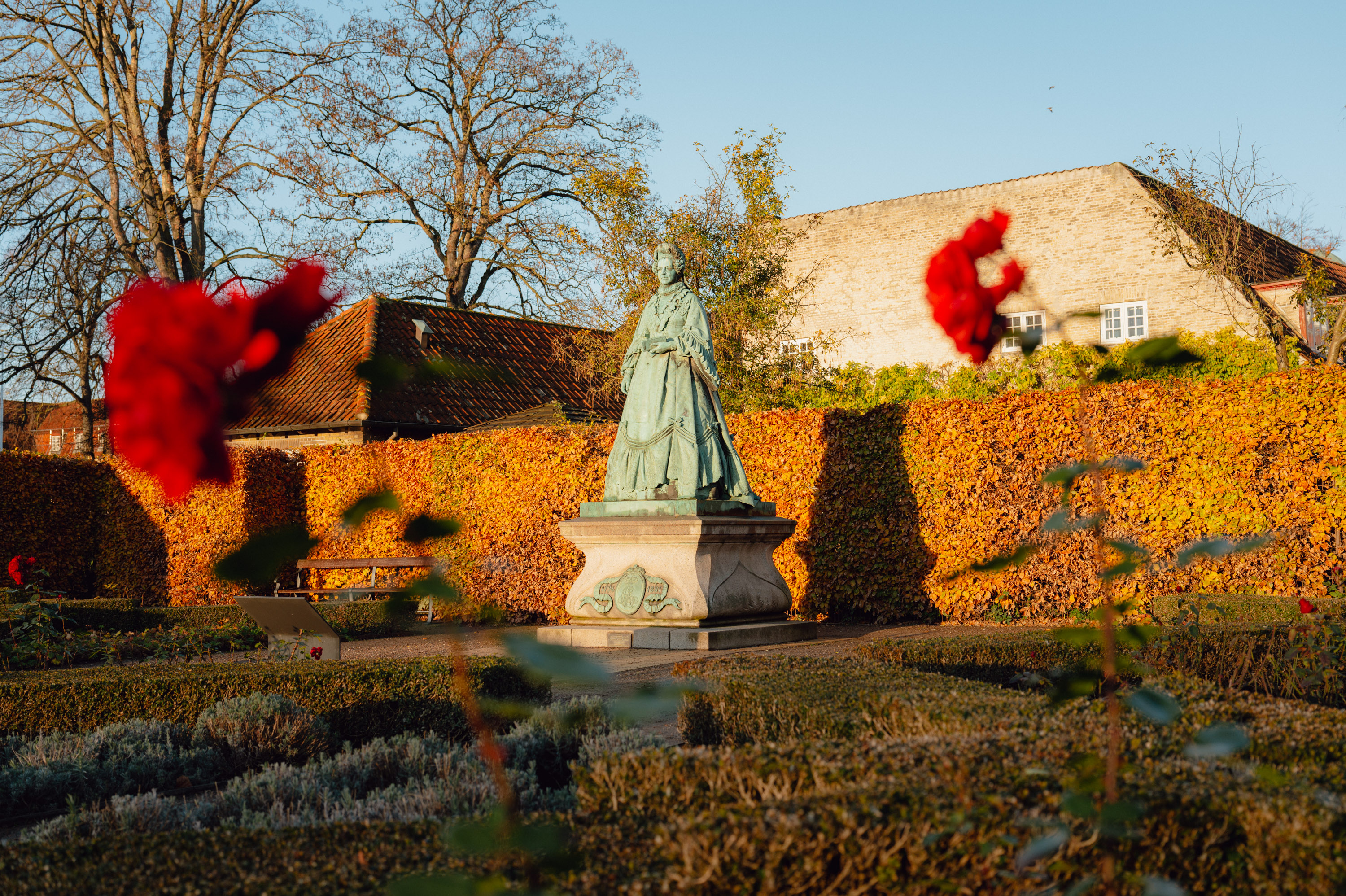
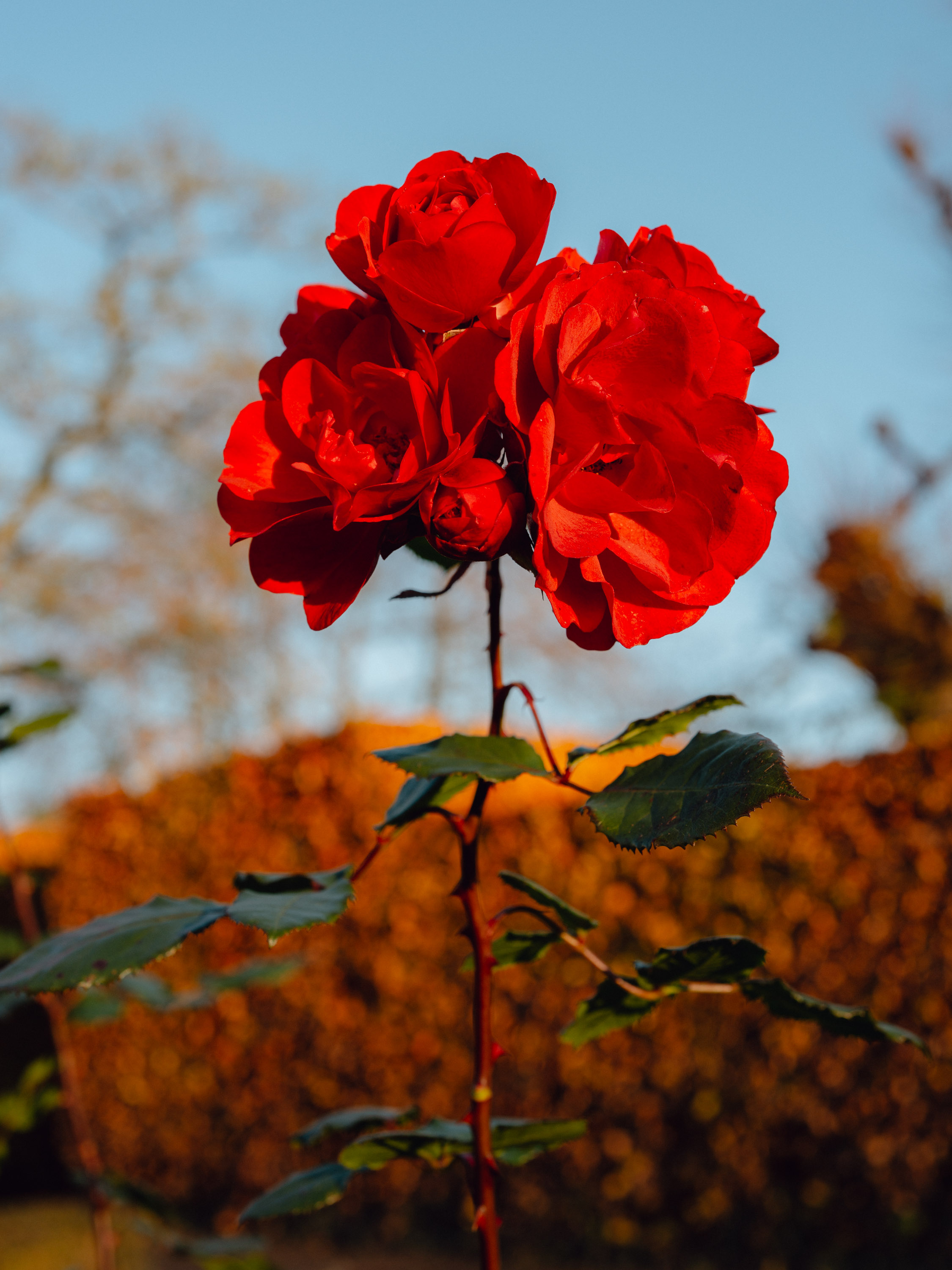
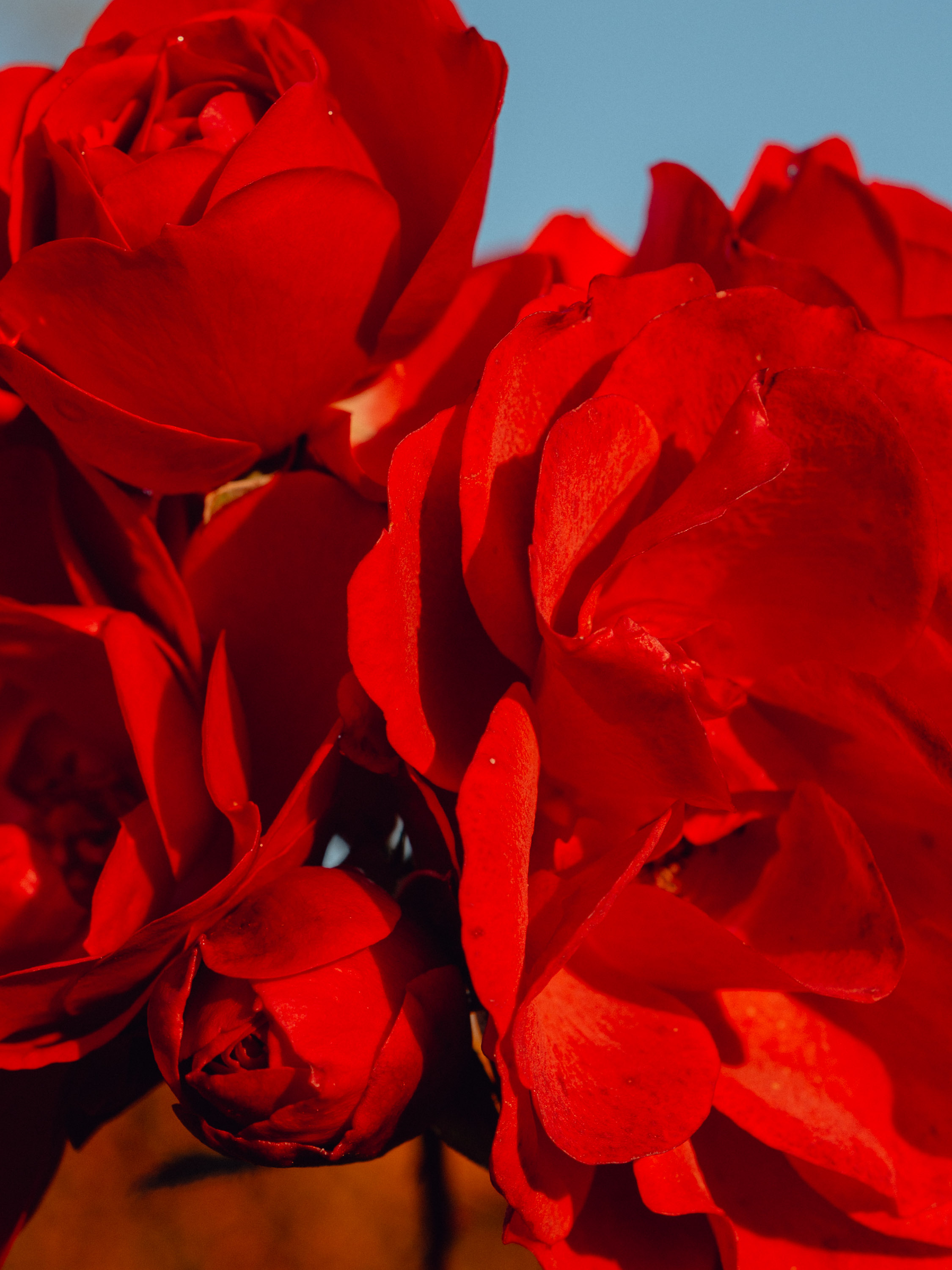
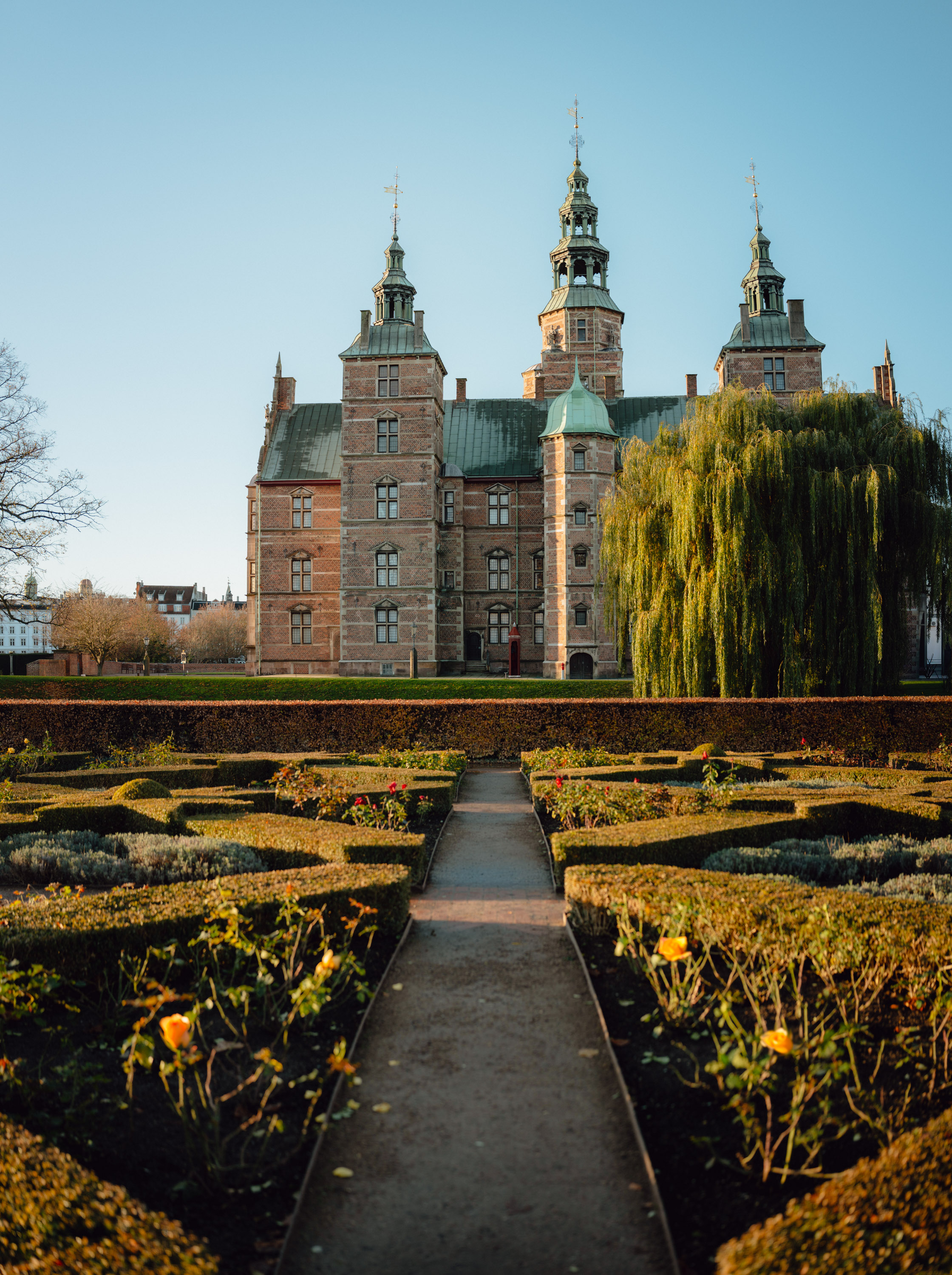
Back towards the centre through Østerbro, I stopped at Rosenborg Castle gardens, which was still in full late-autumn colour — the beech hedges a deep orange, the Fermob chairs left out between the rose bushes, and Queen Caroline Mathilde’s statue catching the last of the sun with roses out of focus in the foreground. It was the quietest and most cinematic quarter-hour of the trip, and the kind of frame I’d book a day in the diary for if a hotel or lifestyle brand asked me to make it.
Marble Church & Amalienborg
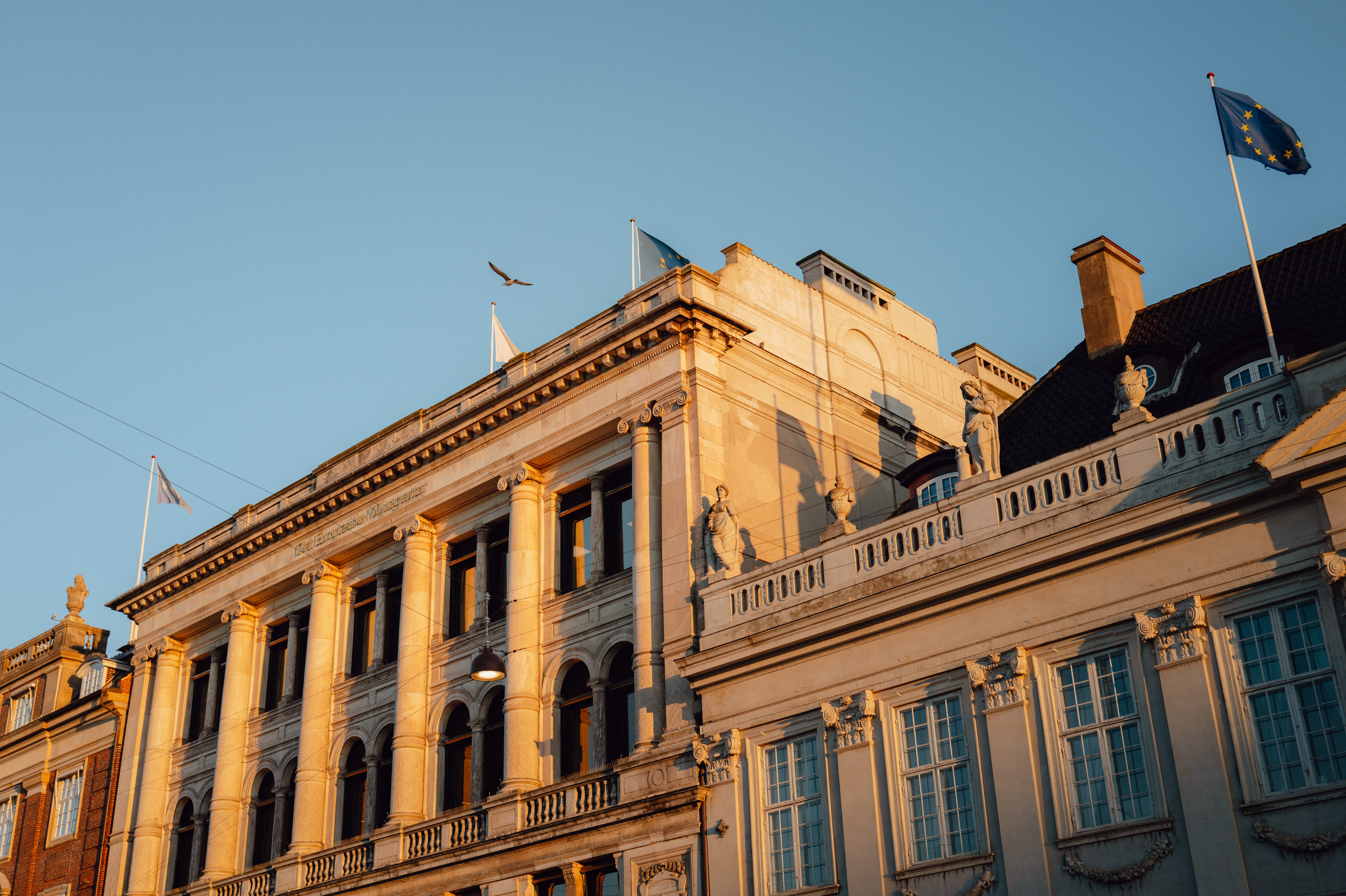
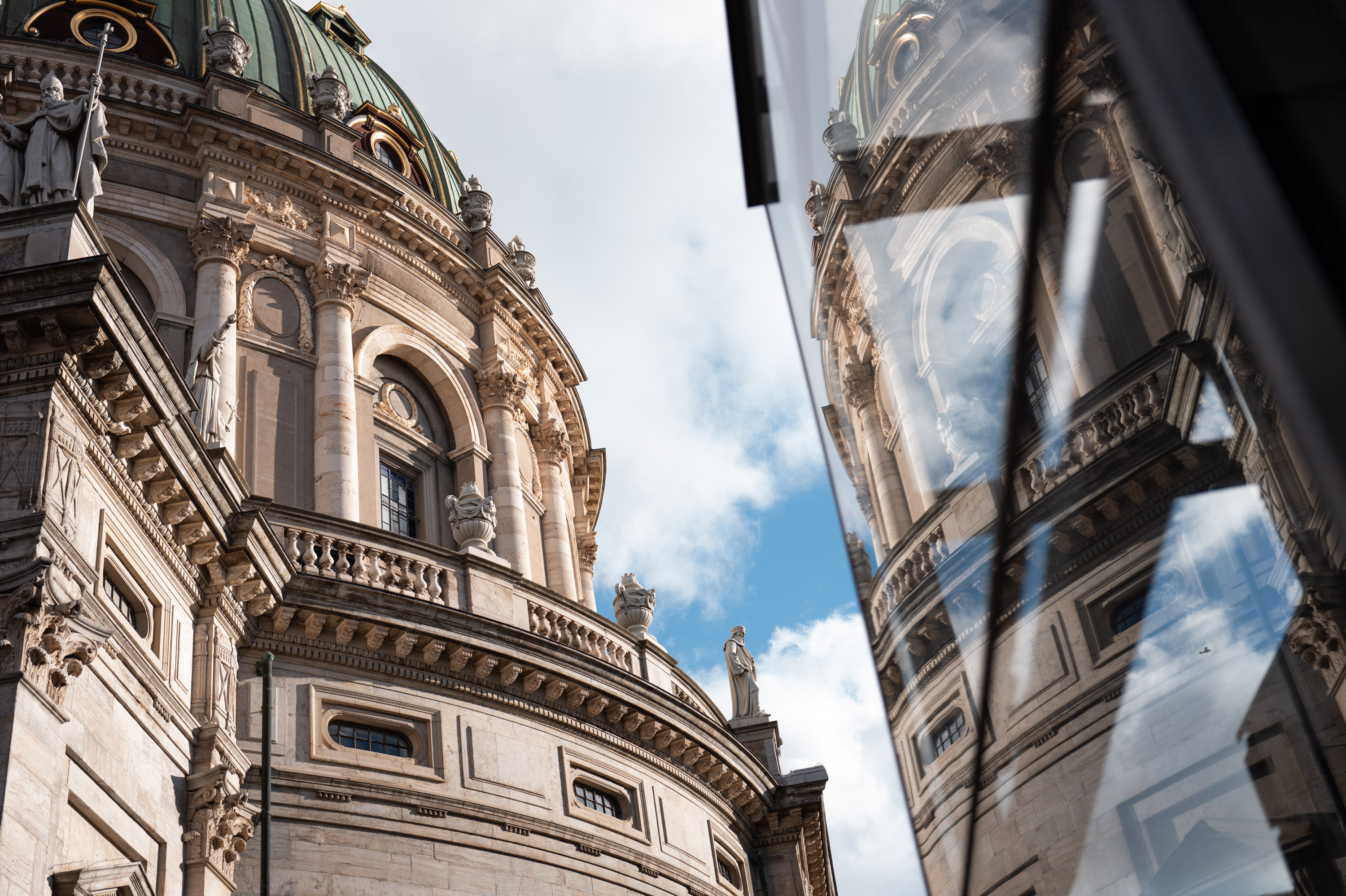
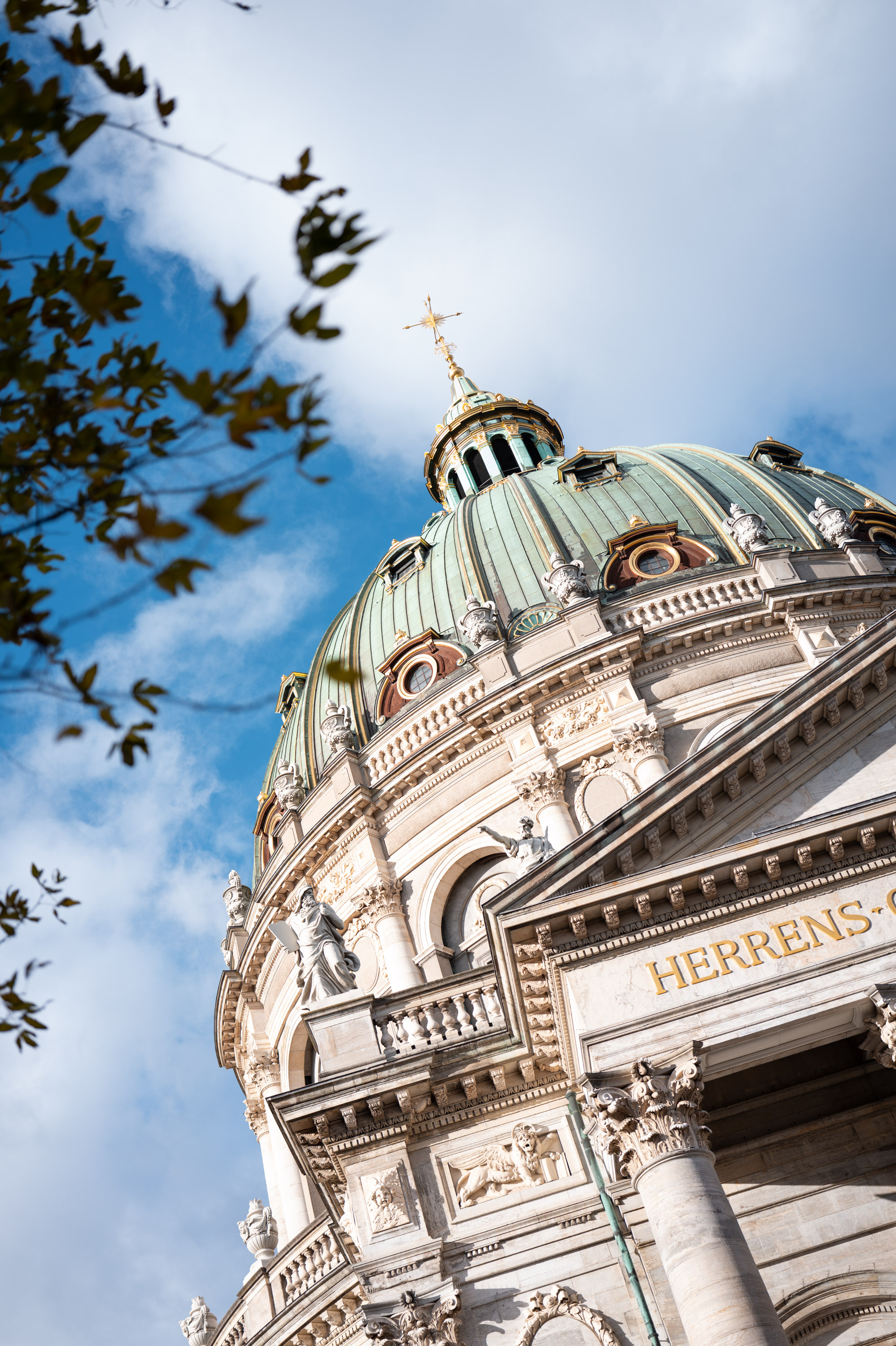
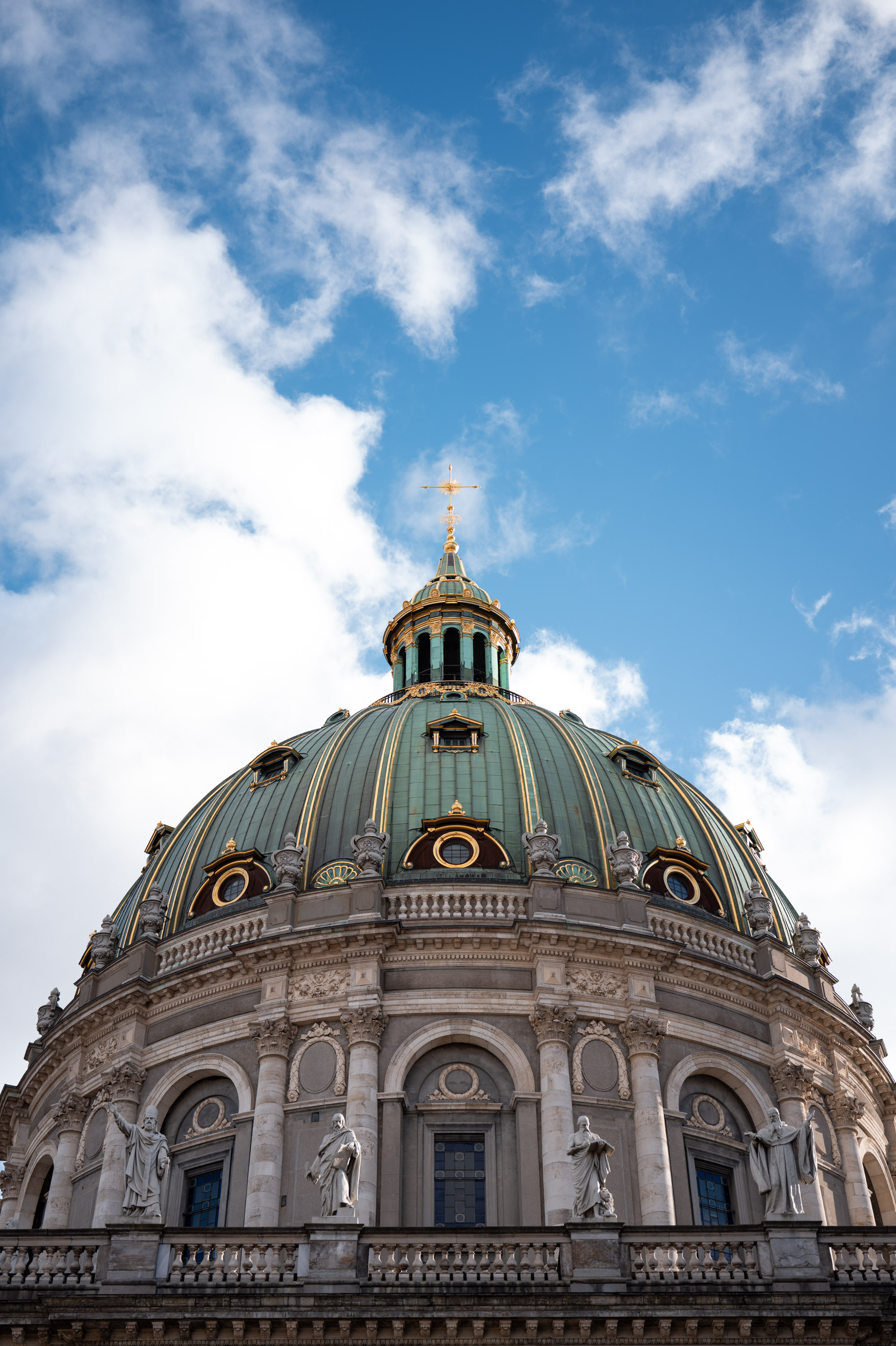
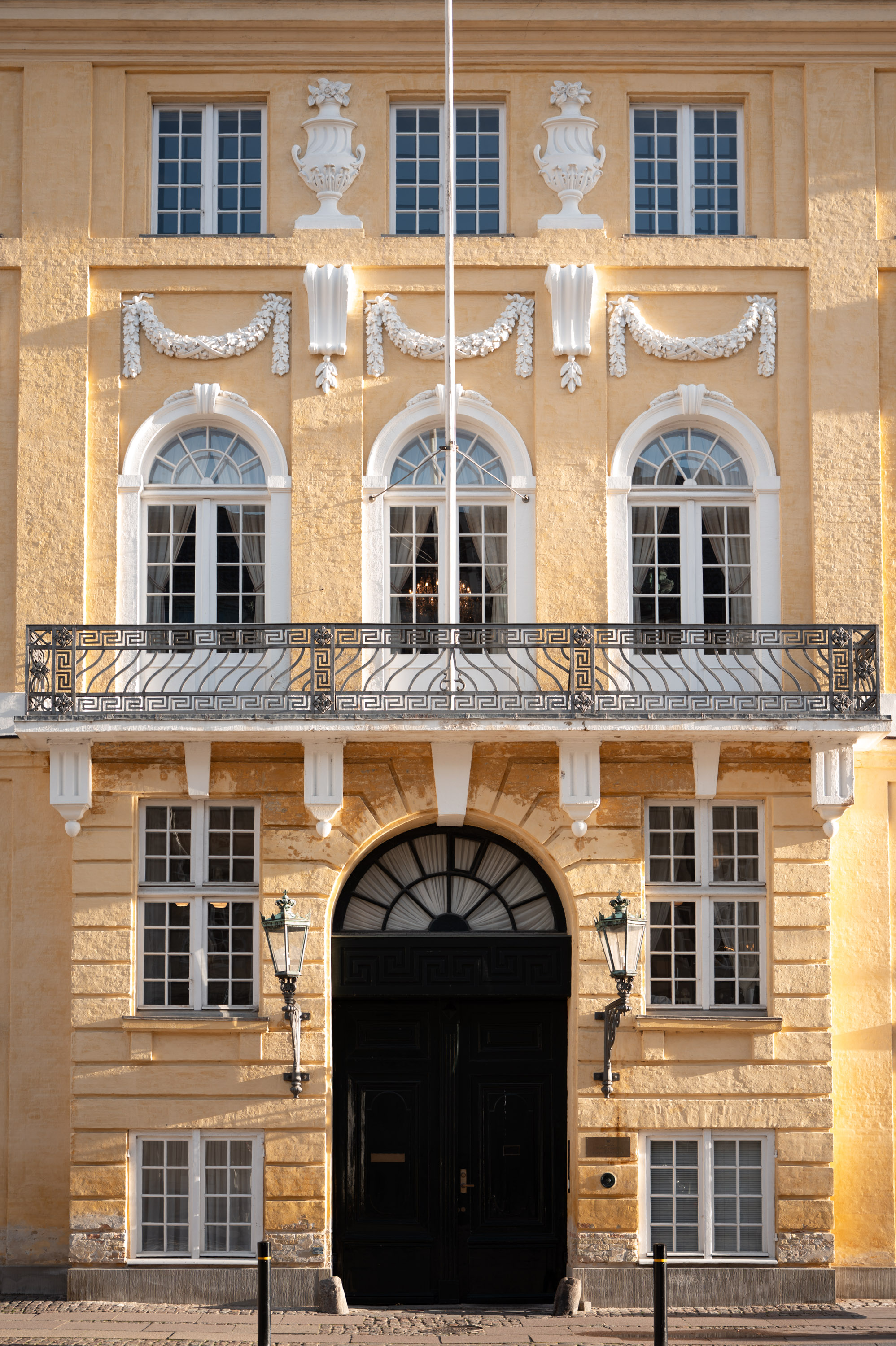
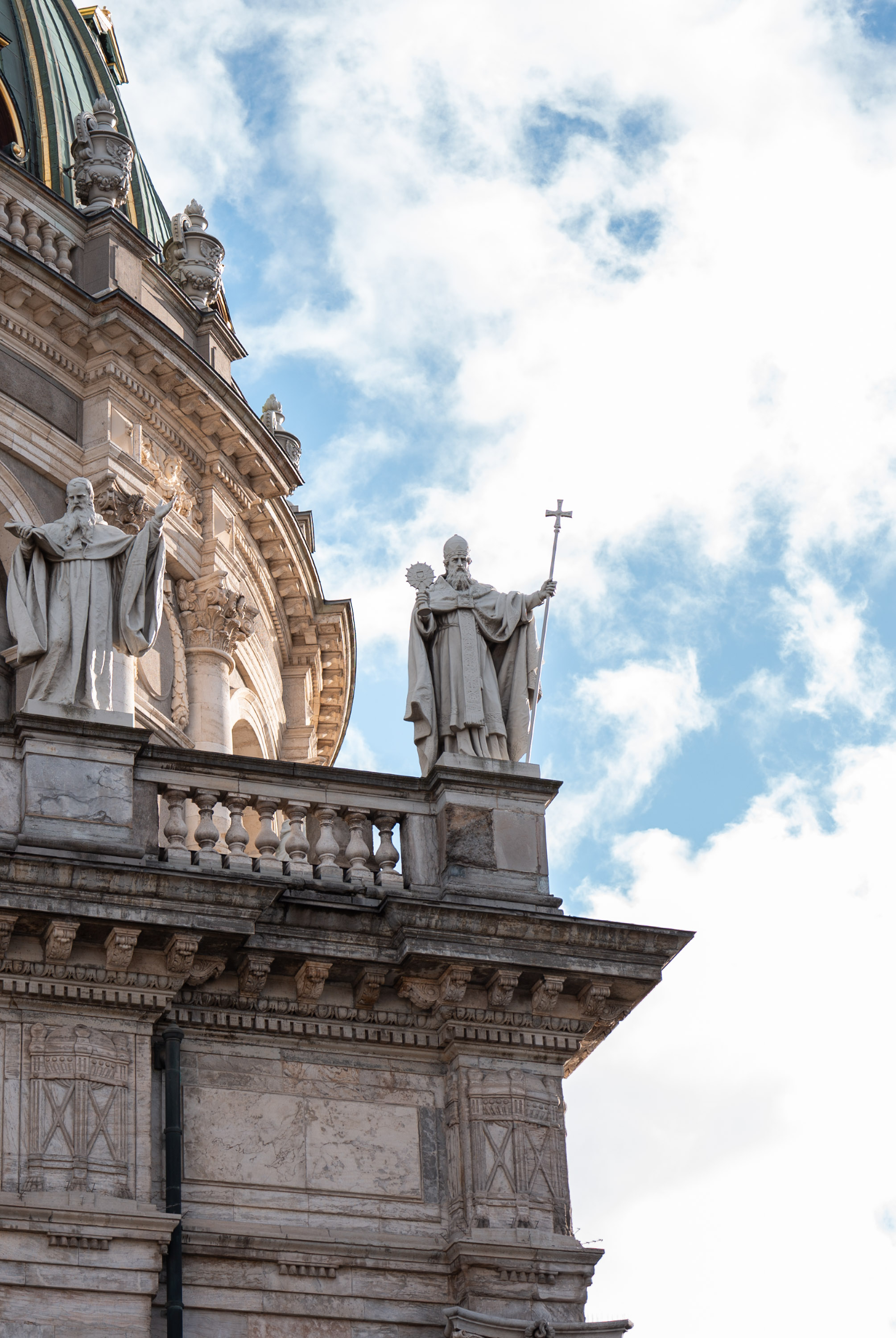
The axis between Marmorkirken (the Marble Church) and Amalienborg Palace is one of the great set-piece pieces of European urbanism — a cannonball-straight visual line from Frederik’s giant copper dome, across the octagonal palace square and Christian V’s equestrian statue, straight down the water to the Opera House on the Dokøen side of the harbour. You can shoot in either direction and get a textbook example of baroque axial planning. On a bright late-November afternoon with a low sun catching the sandstone columns, the detail you can pull from the facades alone is ridiculous.
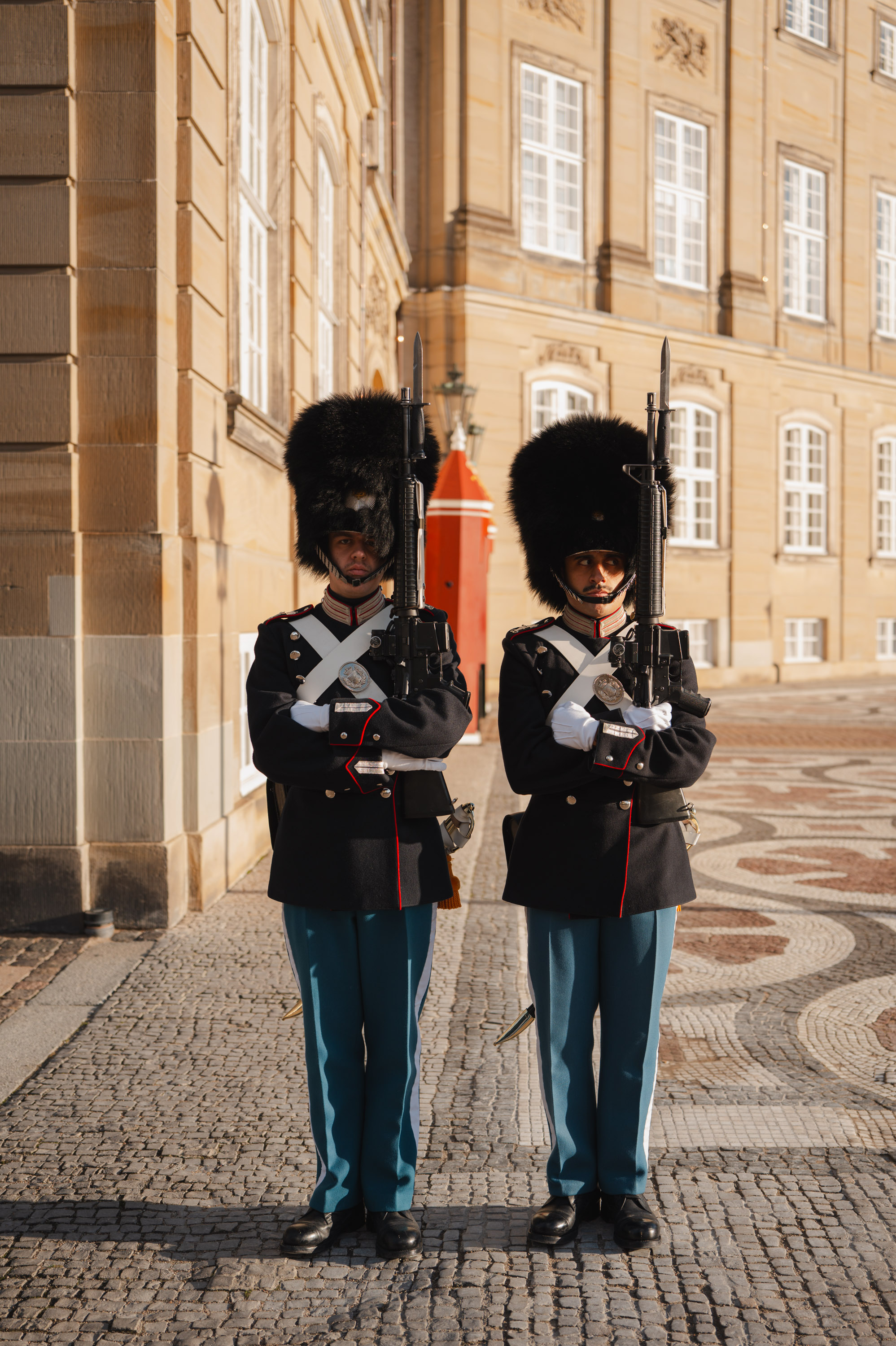
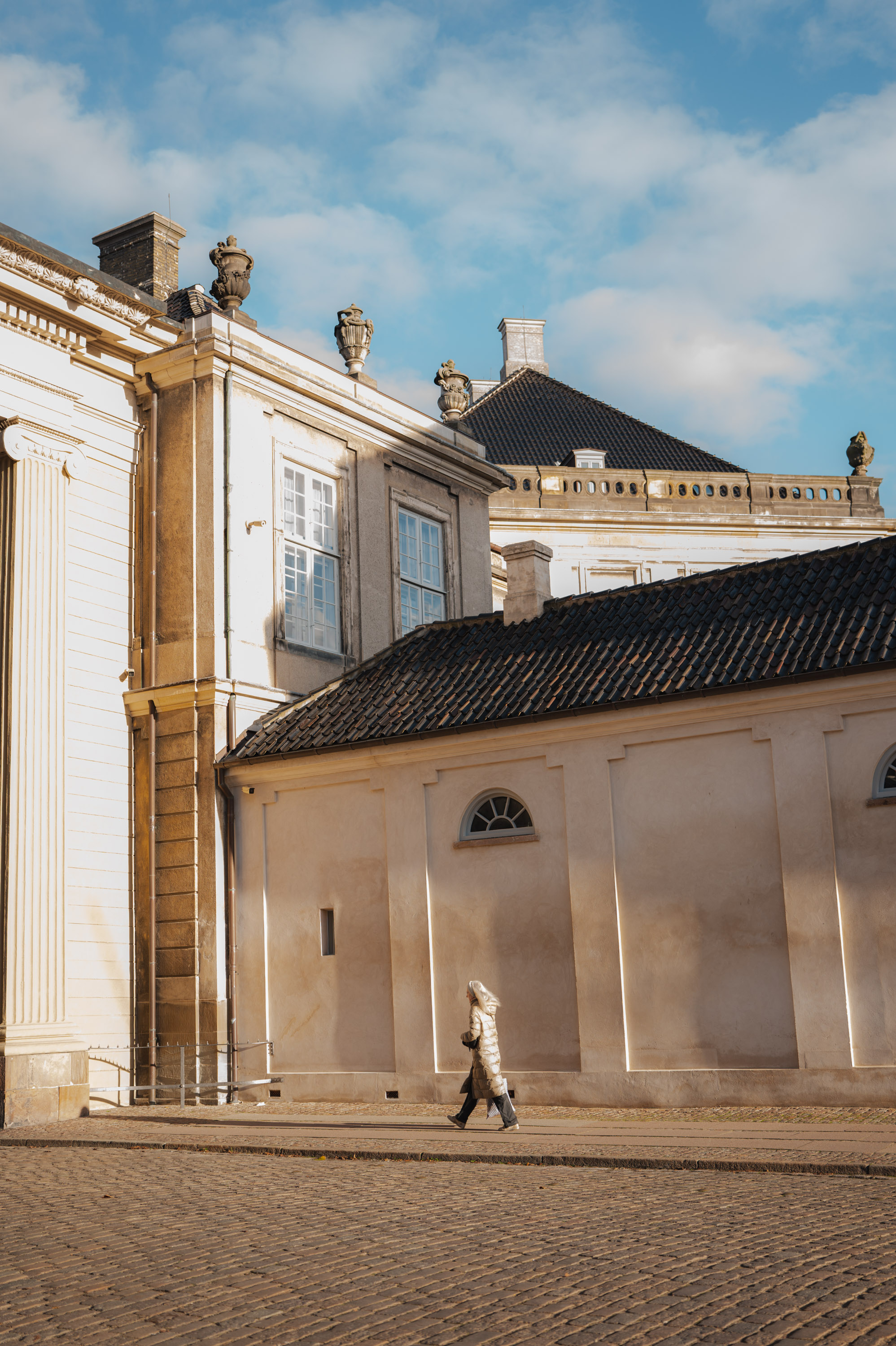
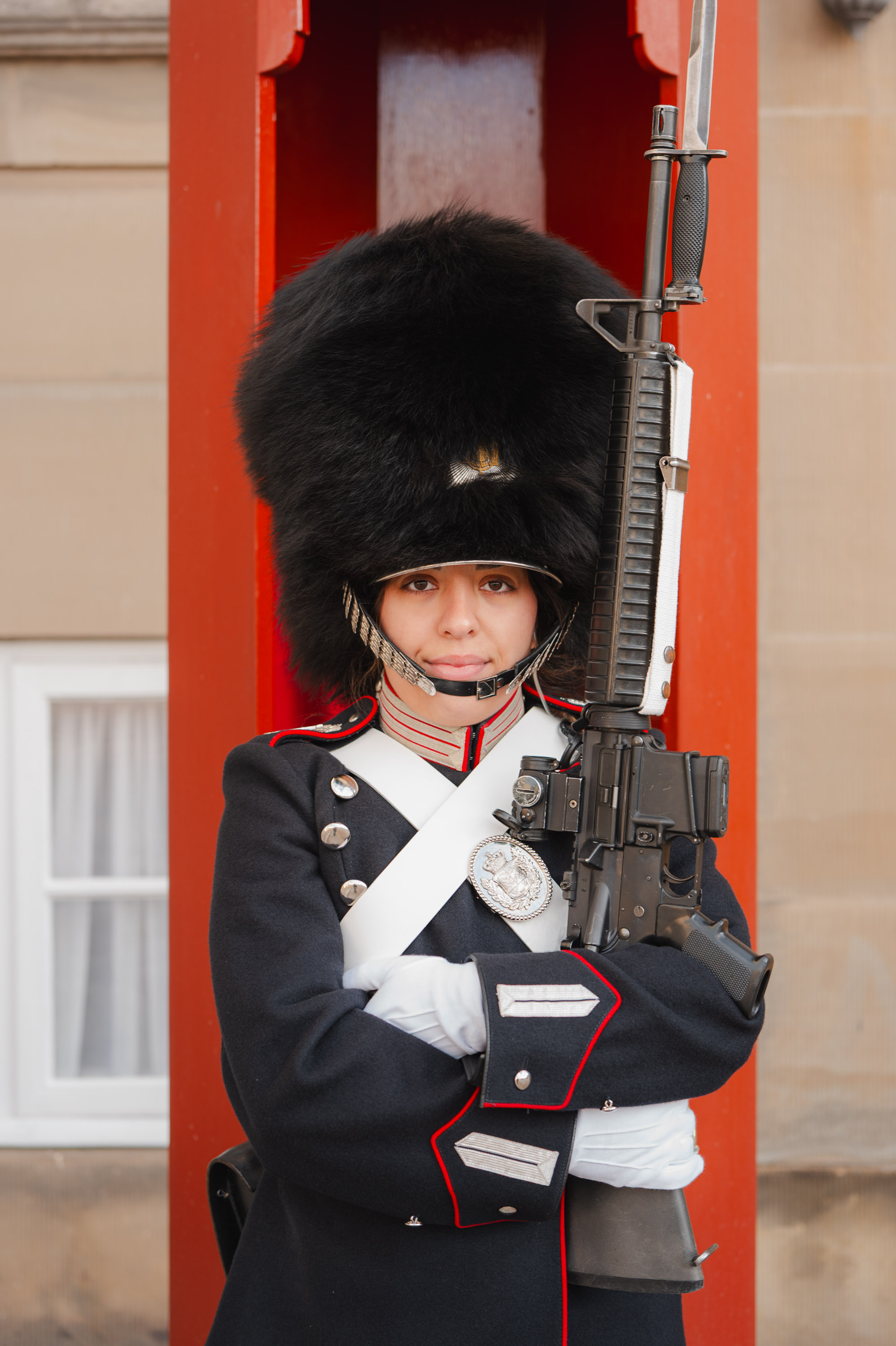
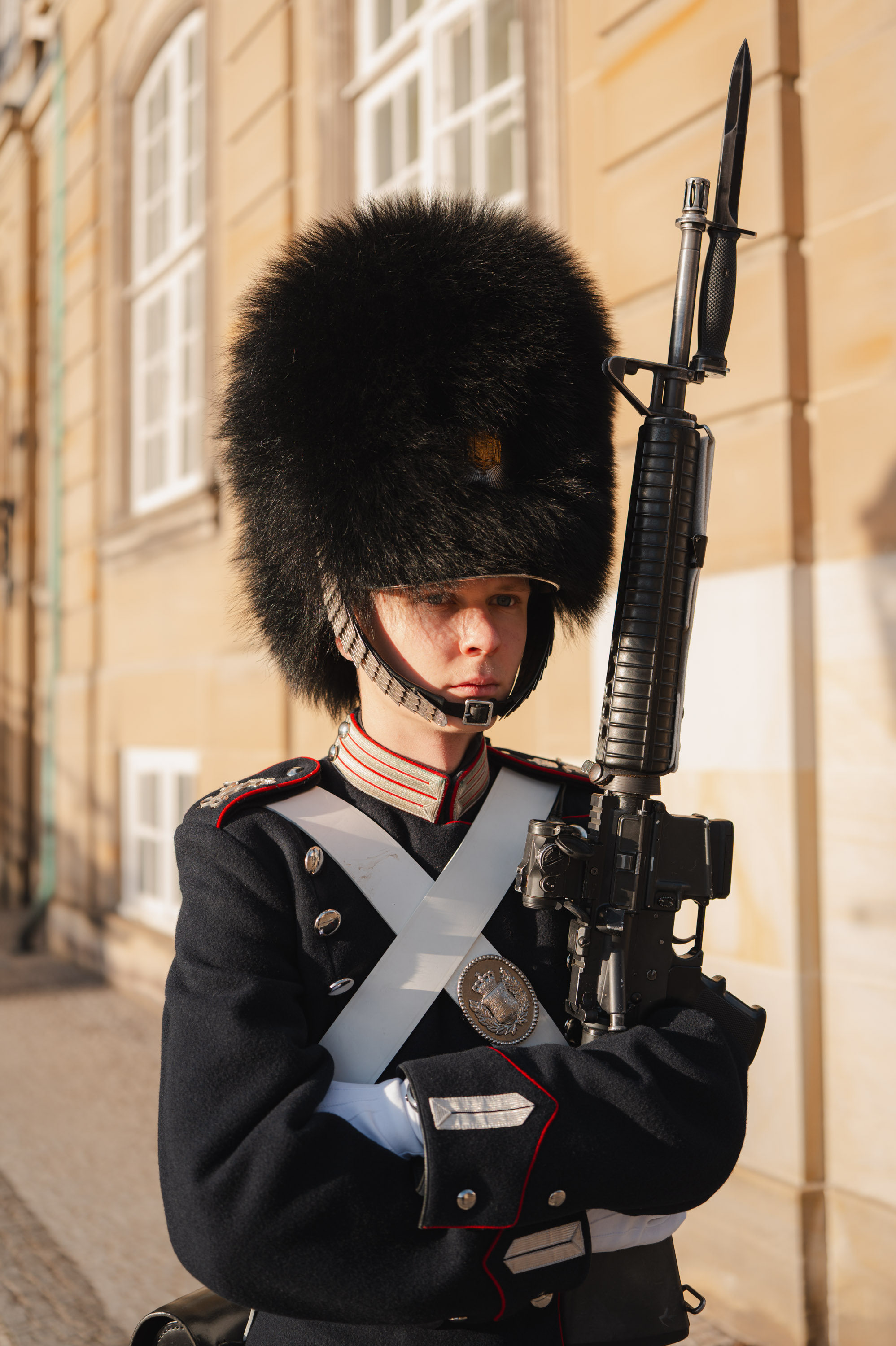
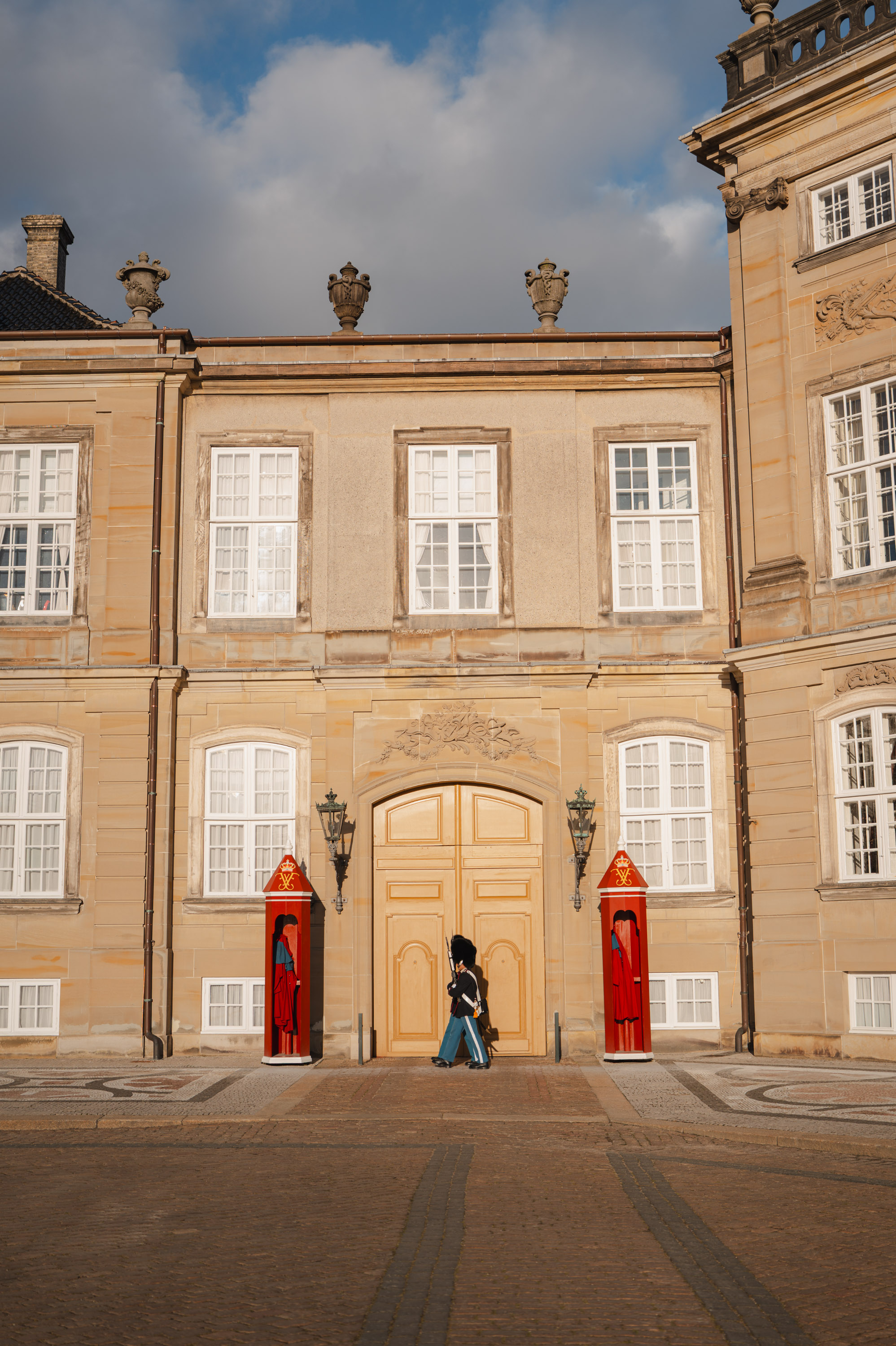
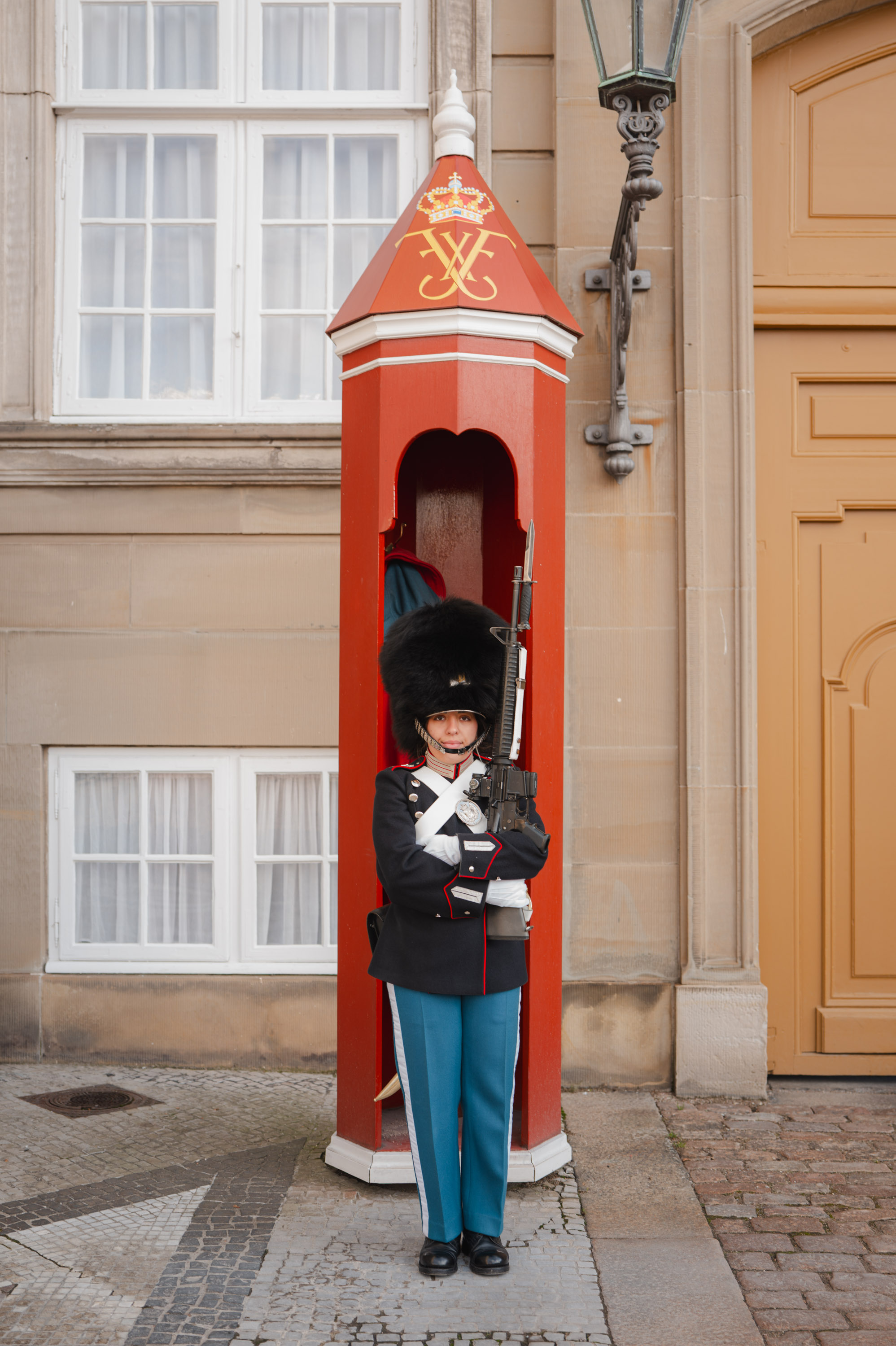
From the Marble Church I crossed Bredgade and down into Amalienborg Palace itself — four identical neoclassical palaces around an octagonal courtyard, with a Life Guard on sentry duty at each entrance. By a very lucky accident I arrived minutes before the daily guard change, so the one proper portrait of the trip — a female Royal Life Guard in bearskin and full ceremonial dress — was a frame I had five minutes to find and make.
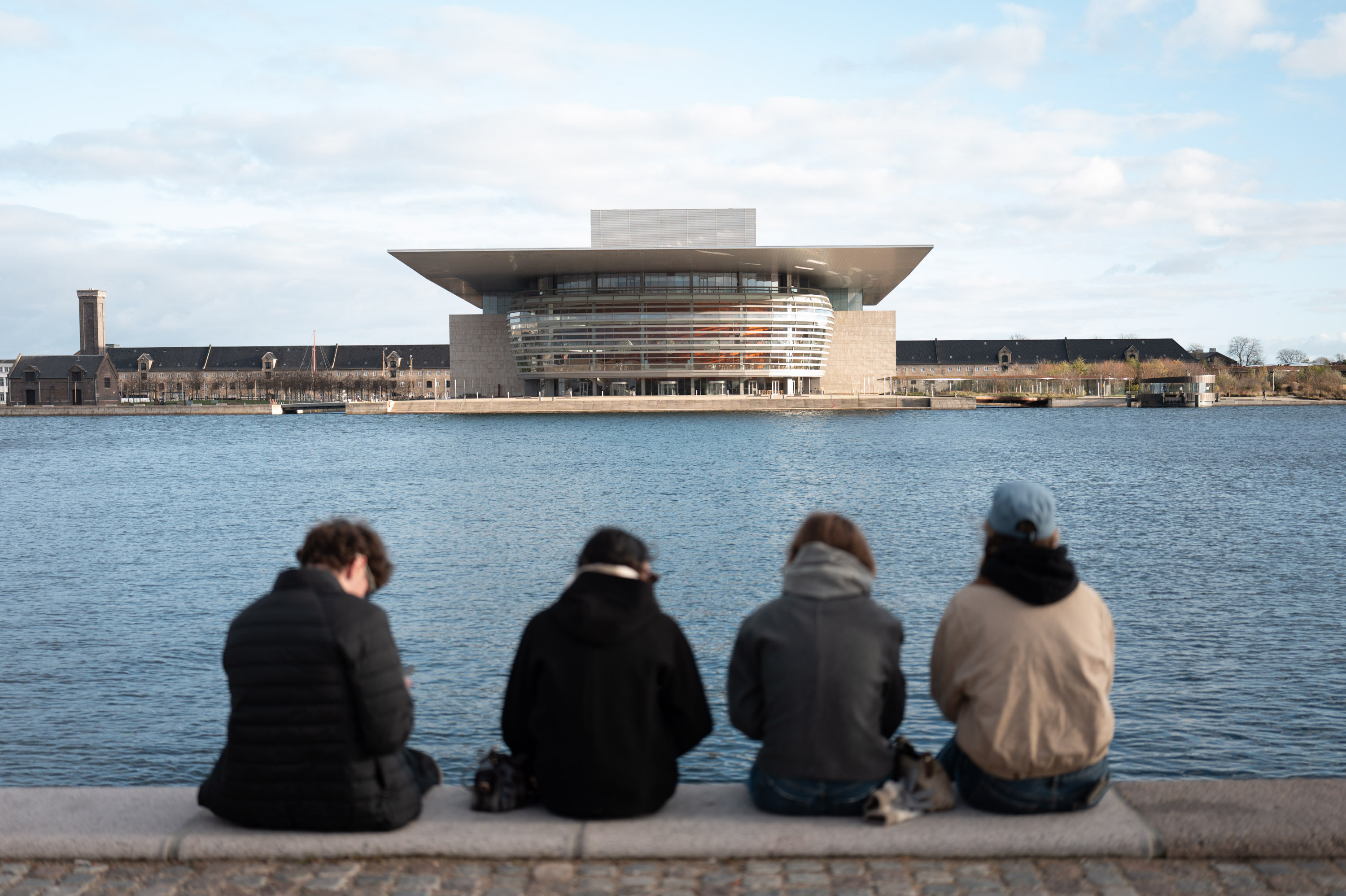
Behind Amalienborg, down the gentle descent of Amaliehaven gardens to the water, the axis continues — across the inner harbour to the Opera House on Dokøen, Henning Larsen’s controversial black-and-glass box that sits like a slab of polished obsidian on the water. The late-afternoon light coming off the harbour is extraordinary, and on a still day the whole building doubles cleanly in the water.
Nyboder Orange & Kastellet at Sunset
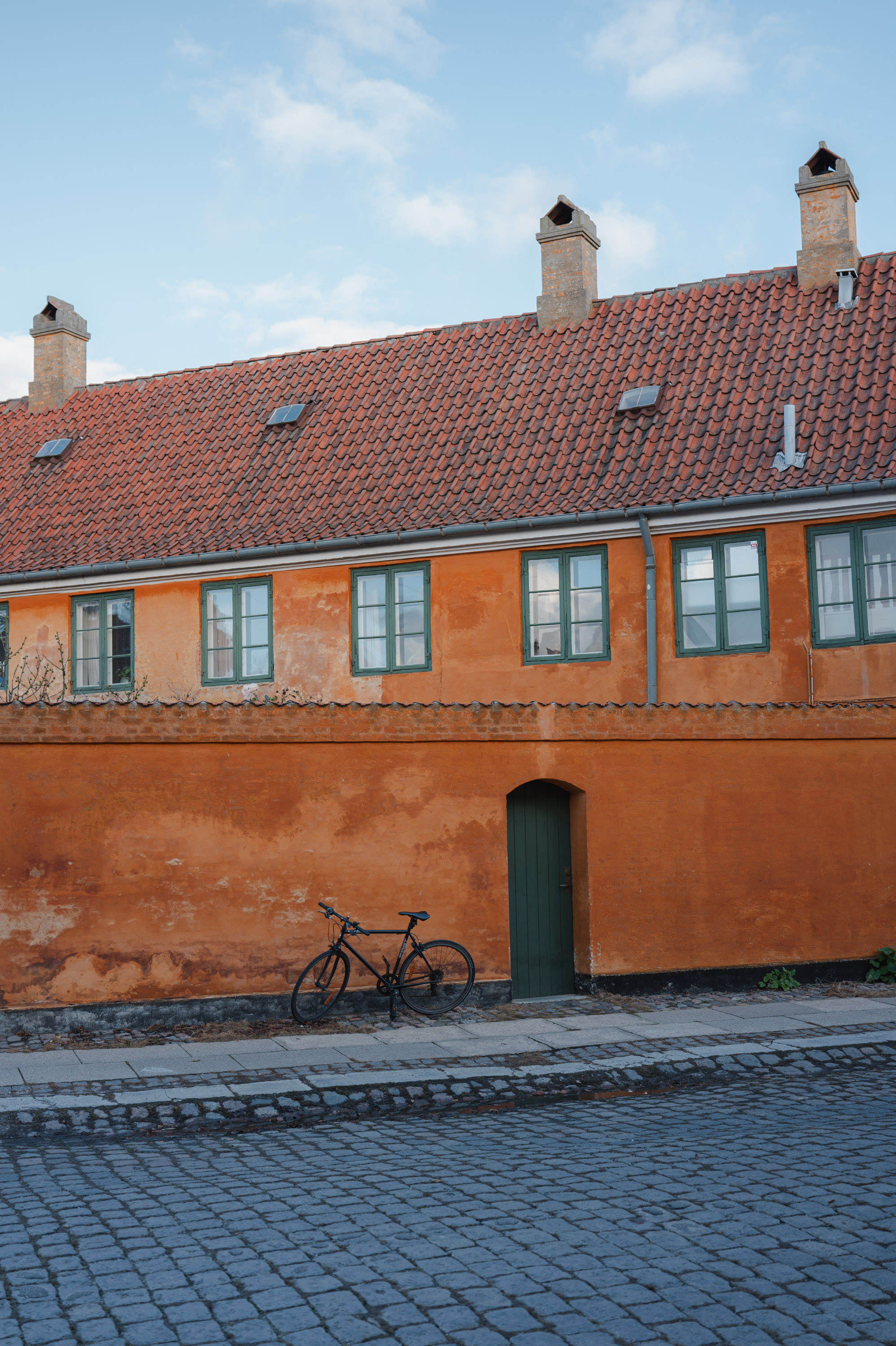
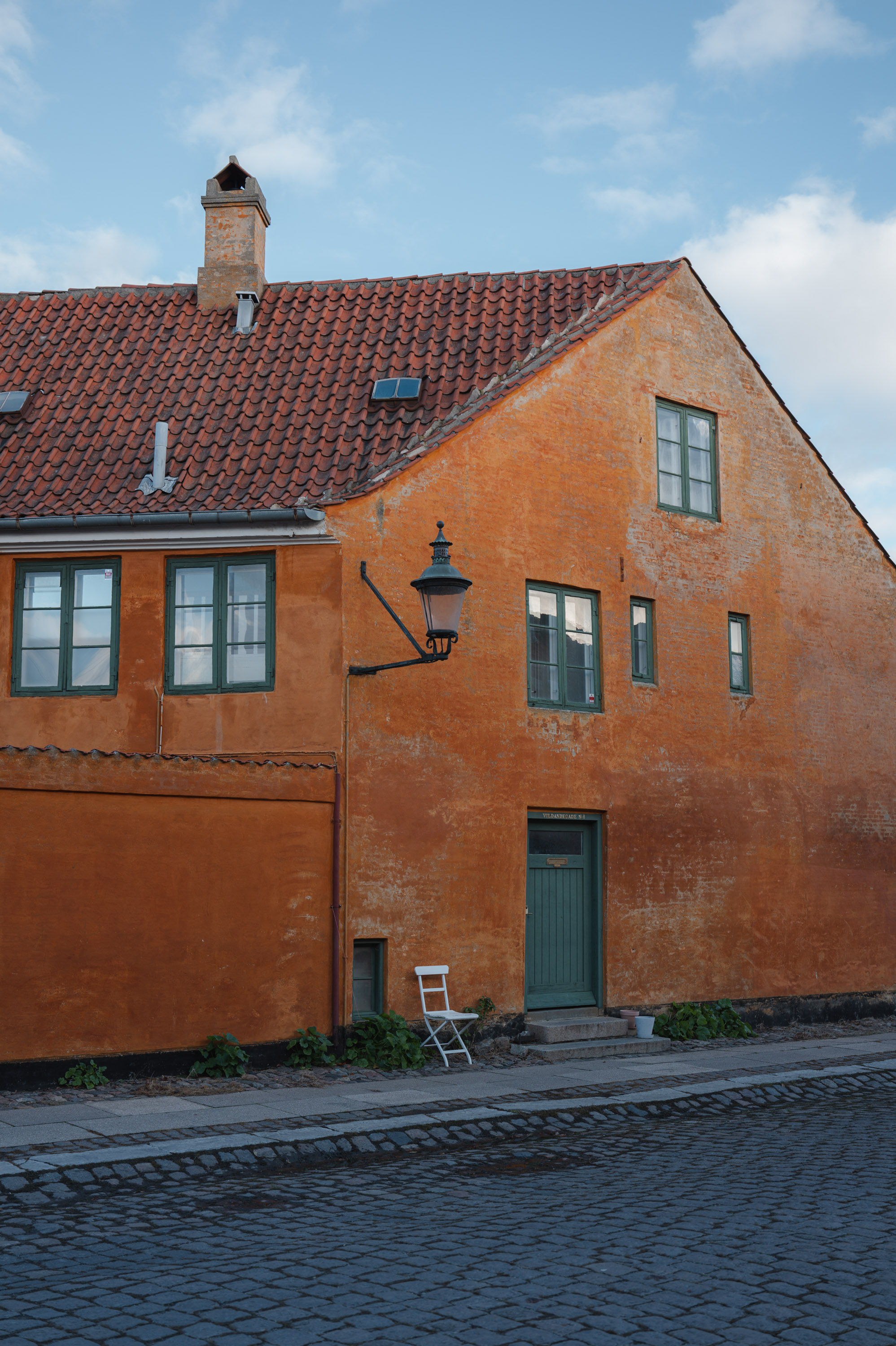
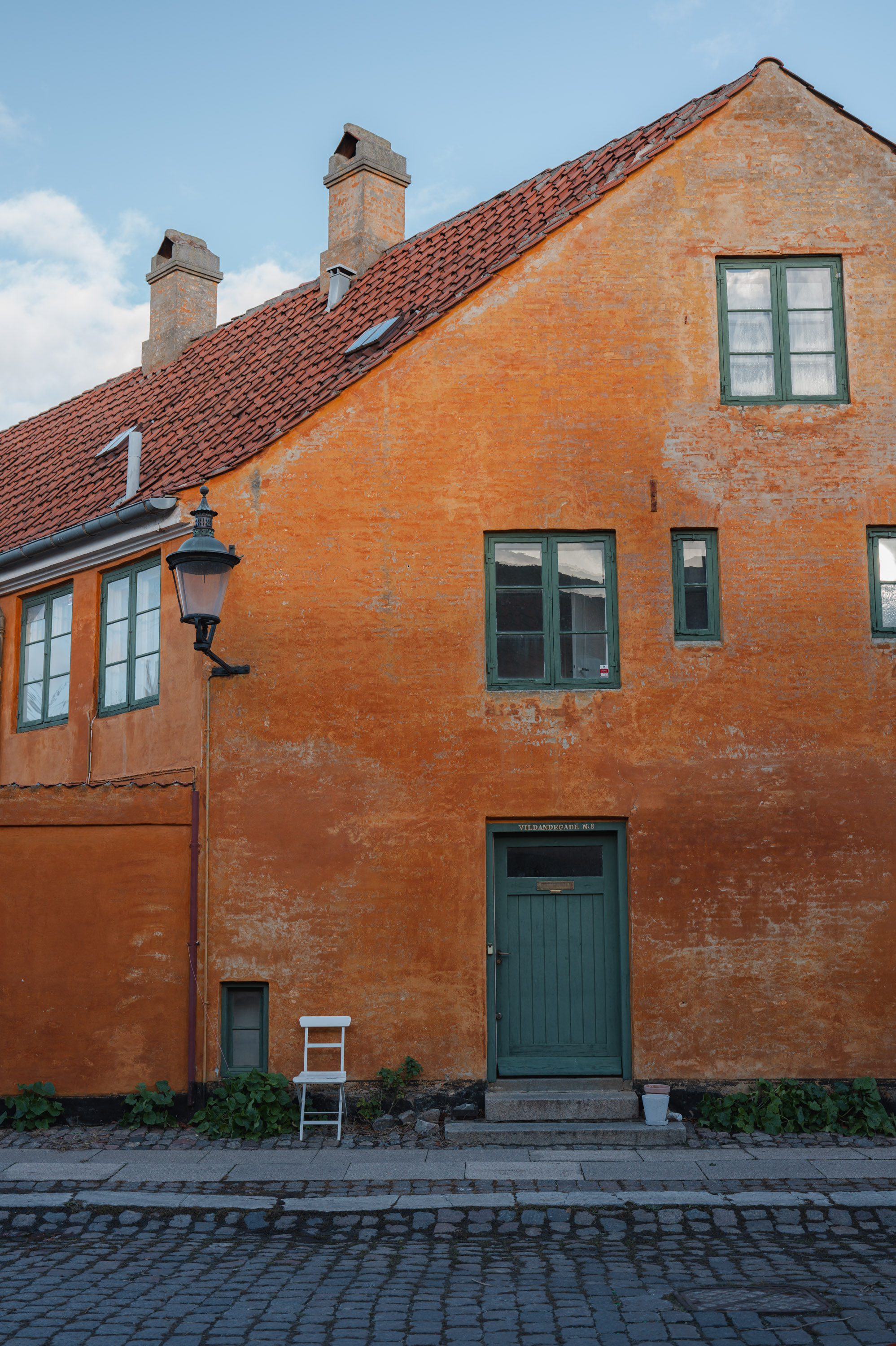
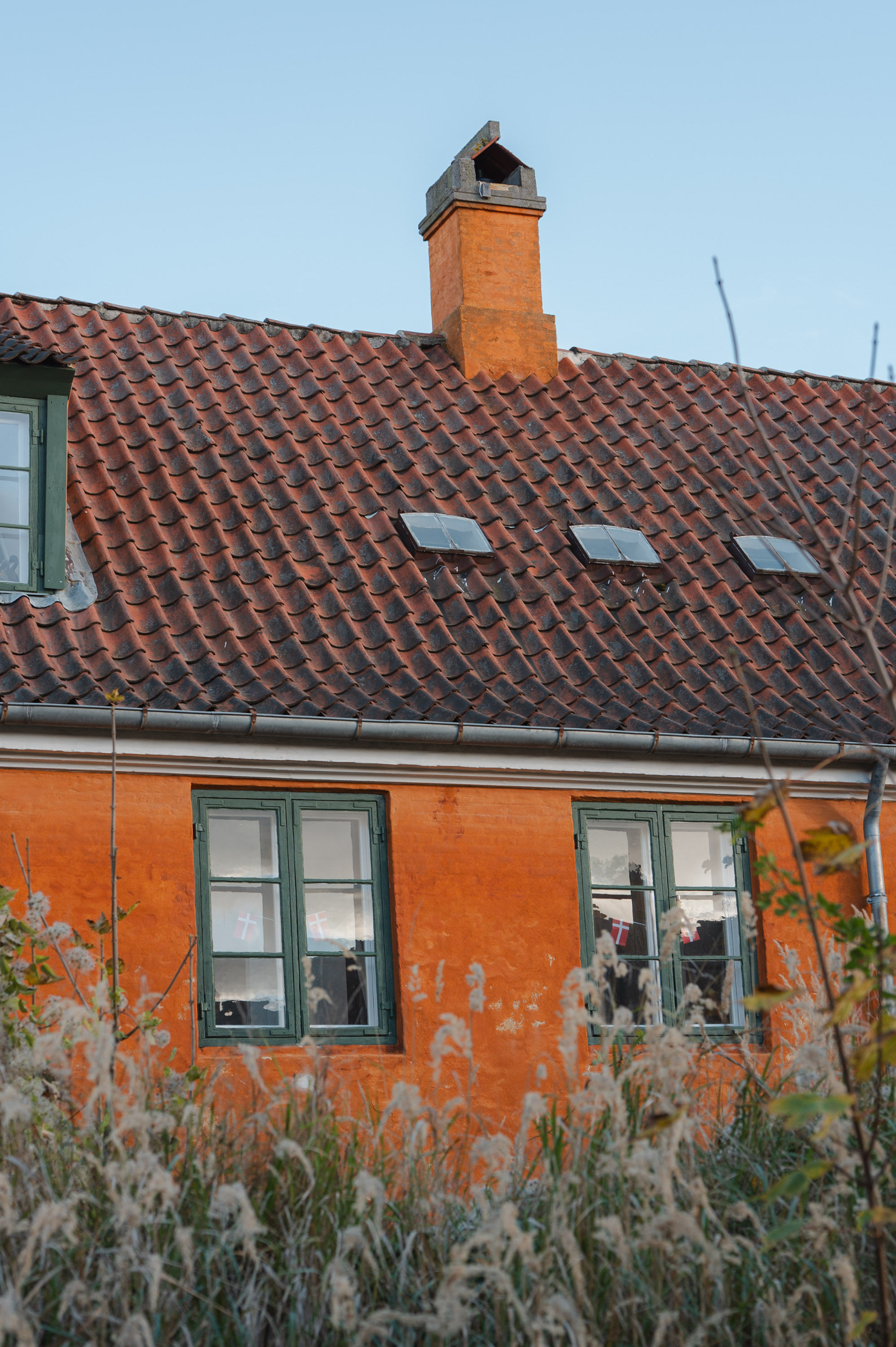
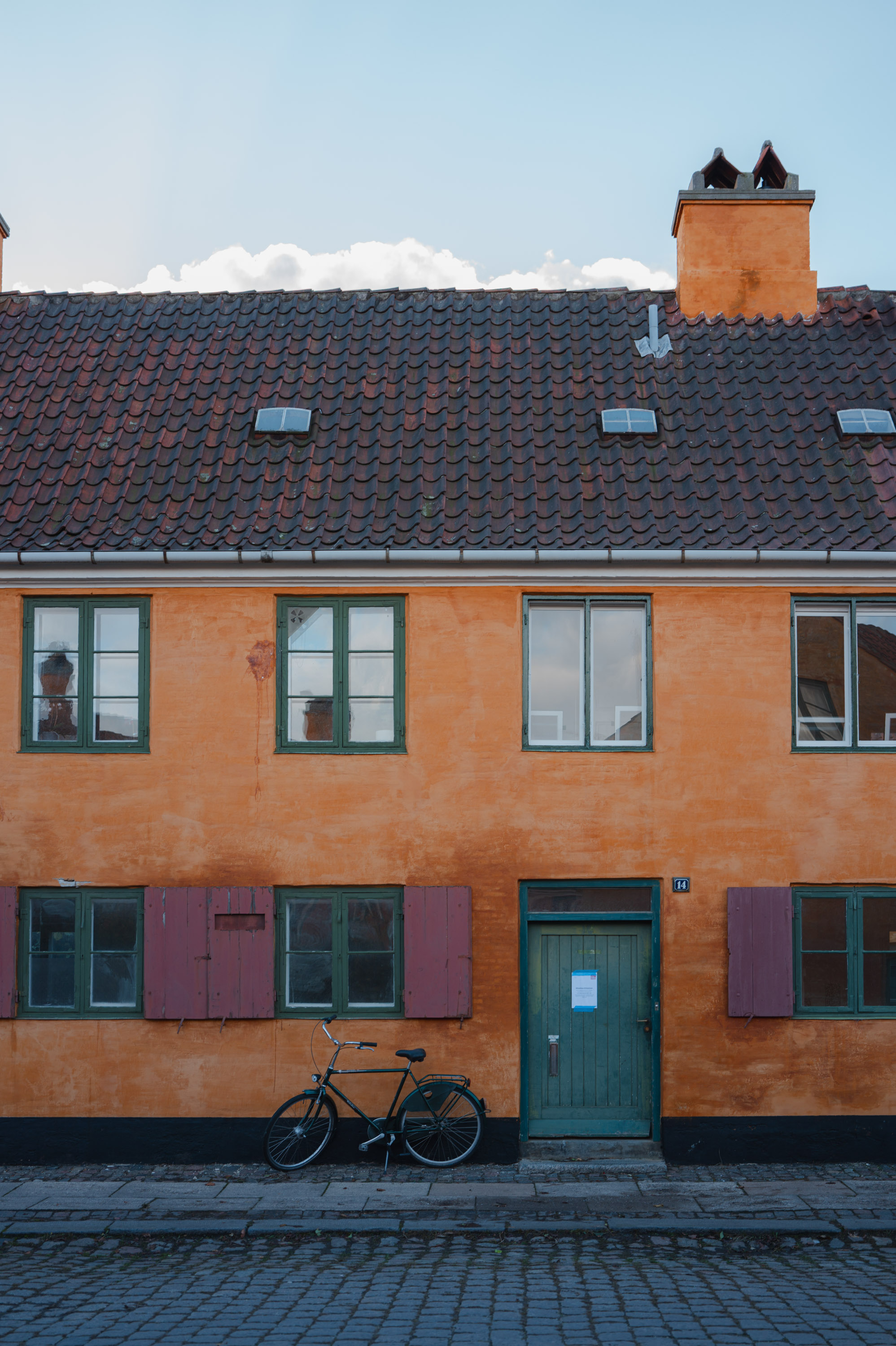
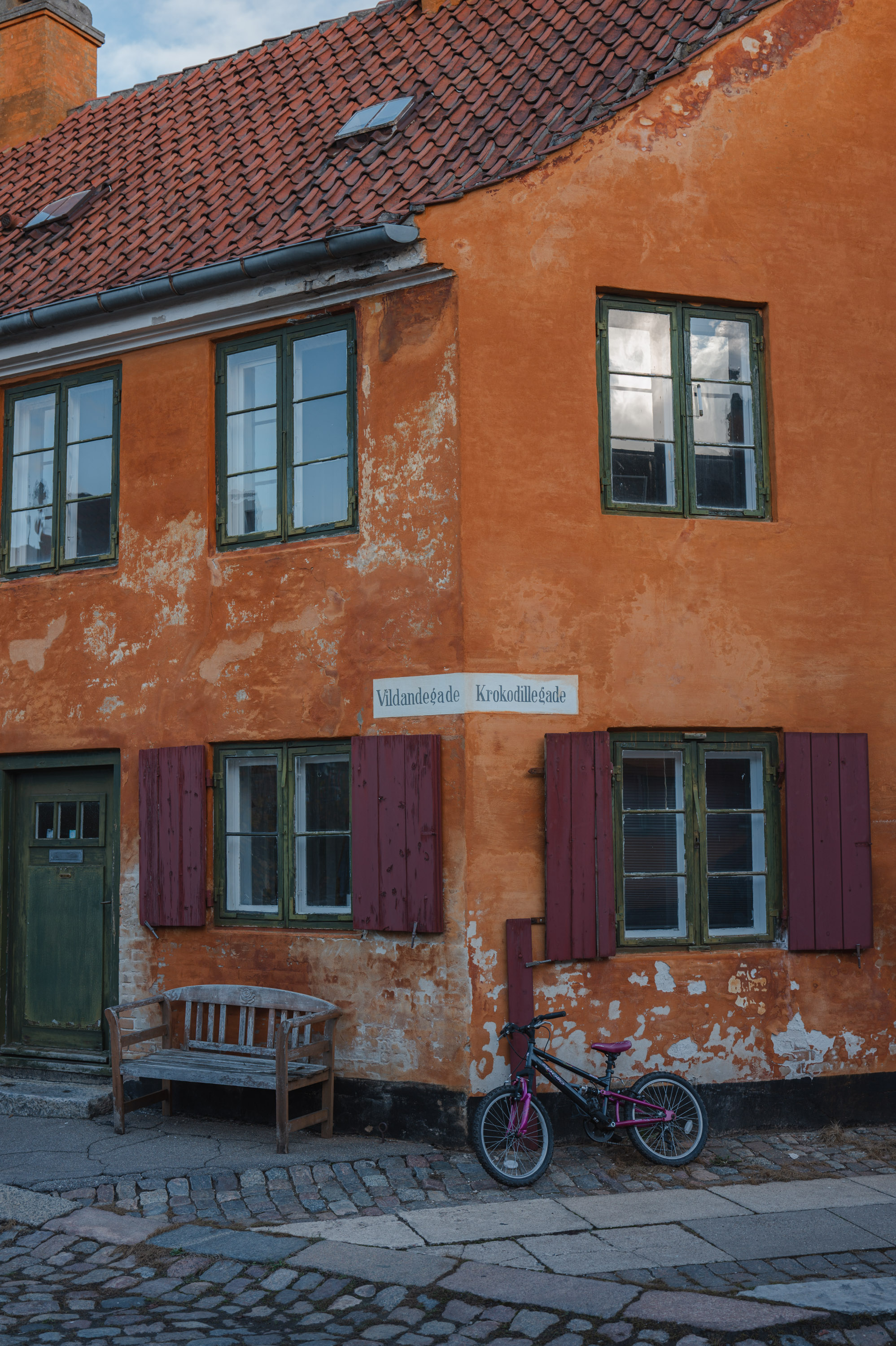
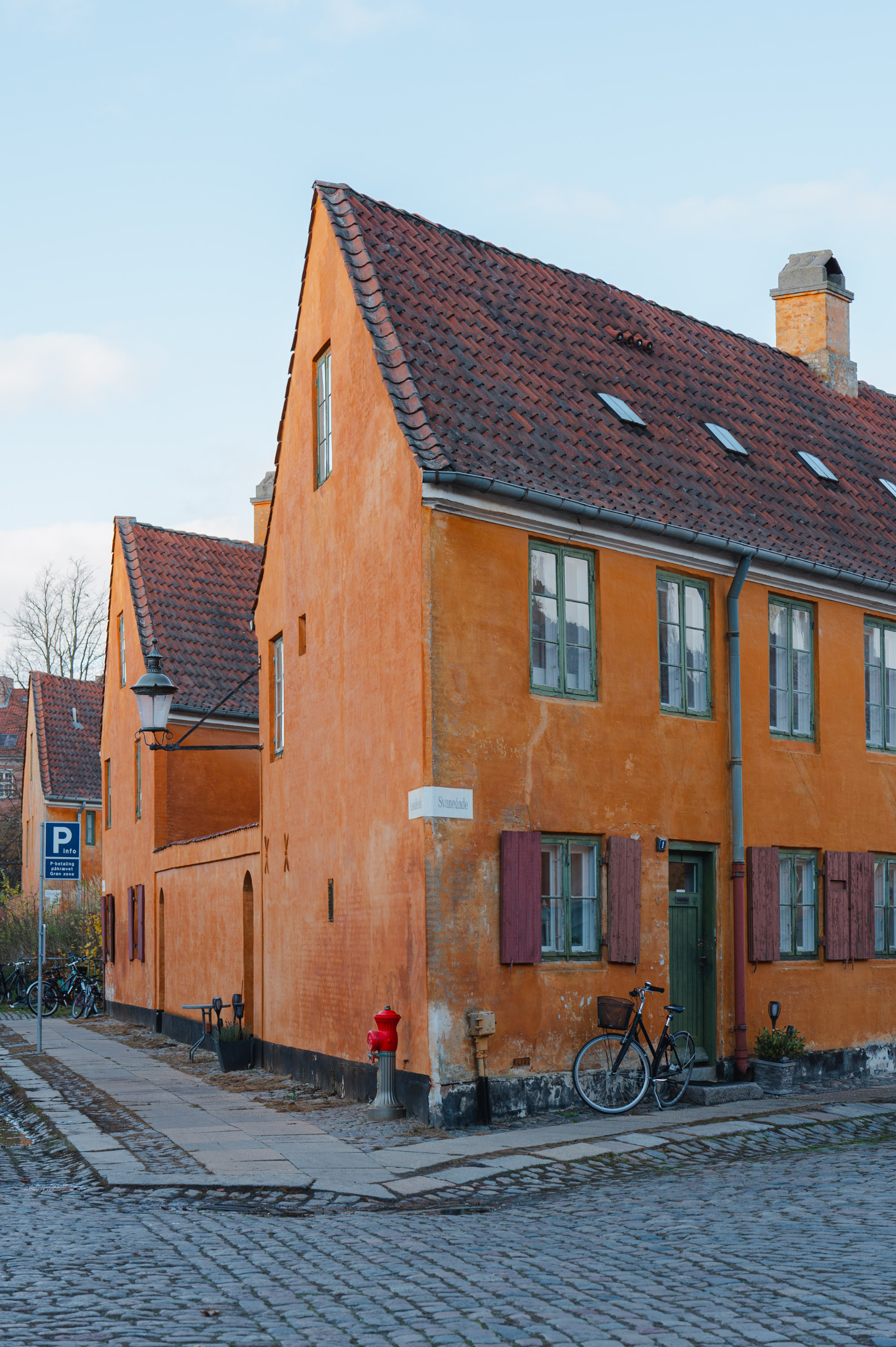
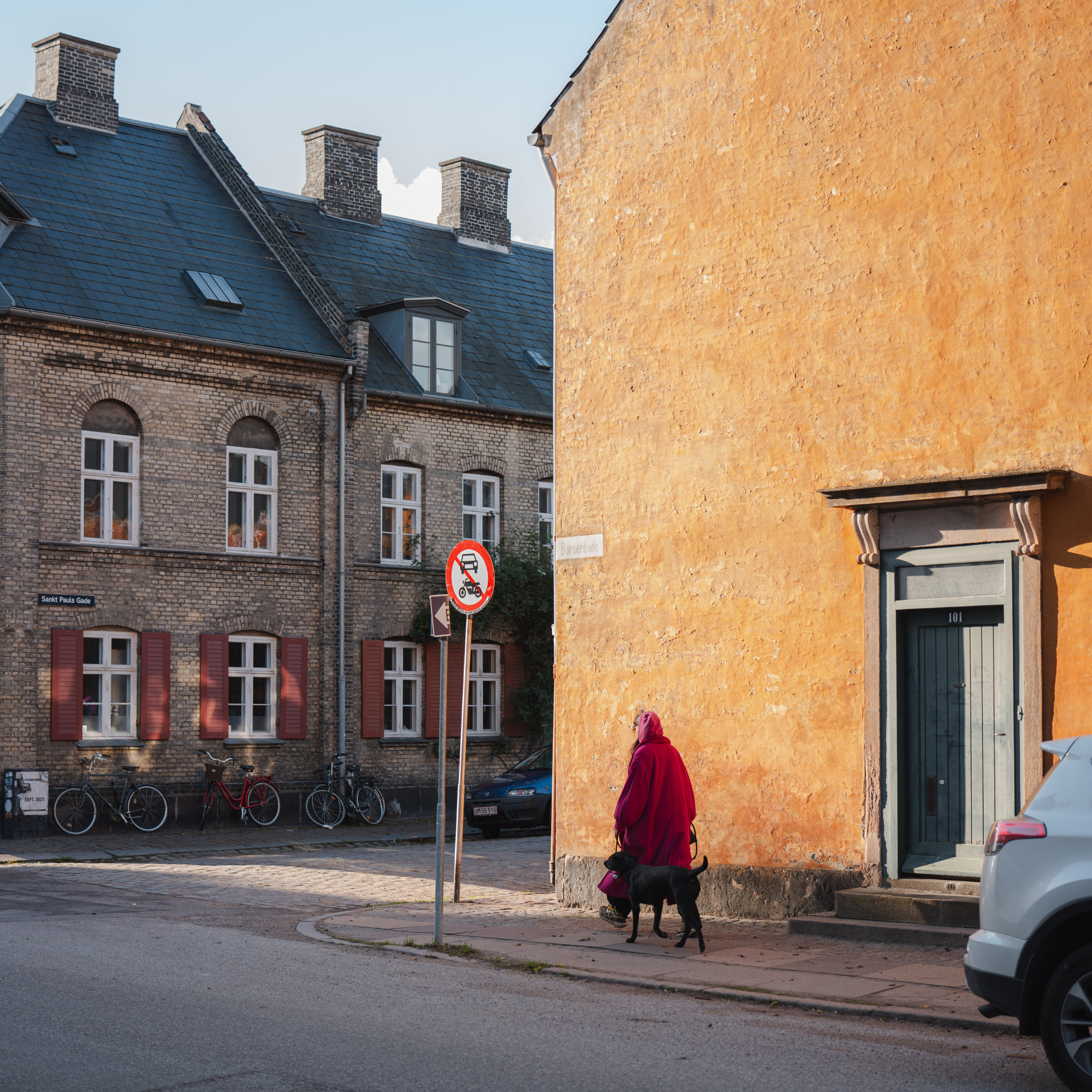
A short loop north of Amalienborg took me through the long ochre rows of Nyboder — the 17th-century naval terraced houses commissioned by Christian IV for the sailors of the Royal Danish Navy, all painted in a single very specific earthy yellow. Nyboder’s paint colour against a cobalt winter sky is one of the great European buildings-in-colour combinations, and the quality of light on those walls at four o’clock in November is almost absurd.
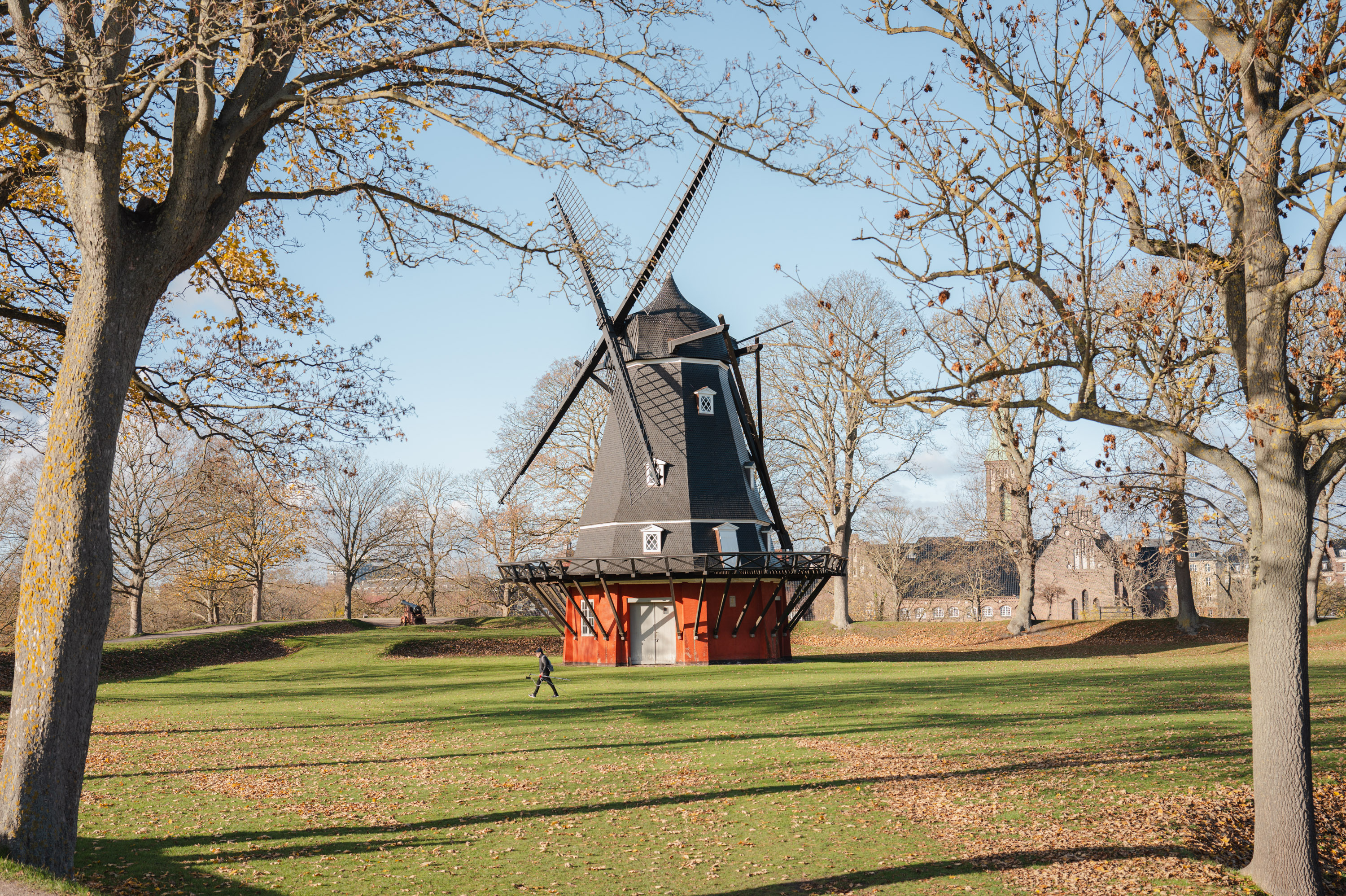
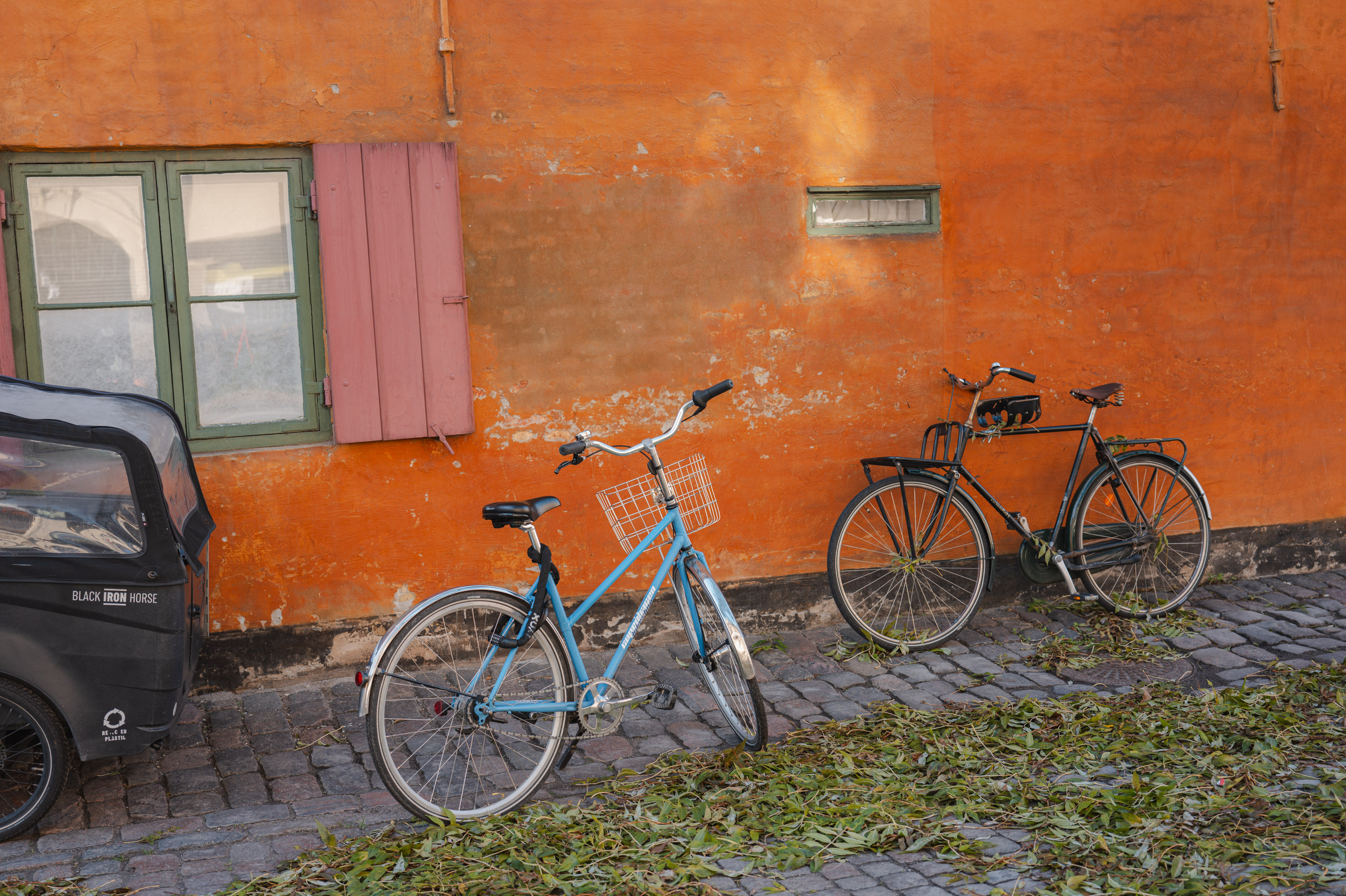
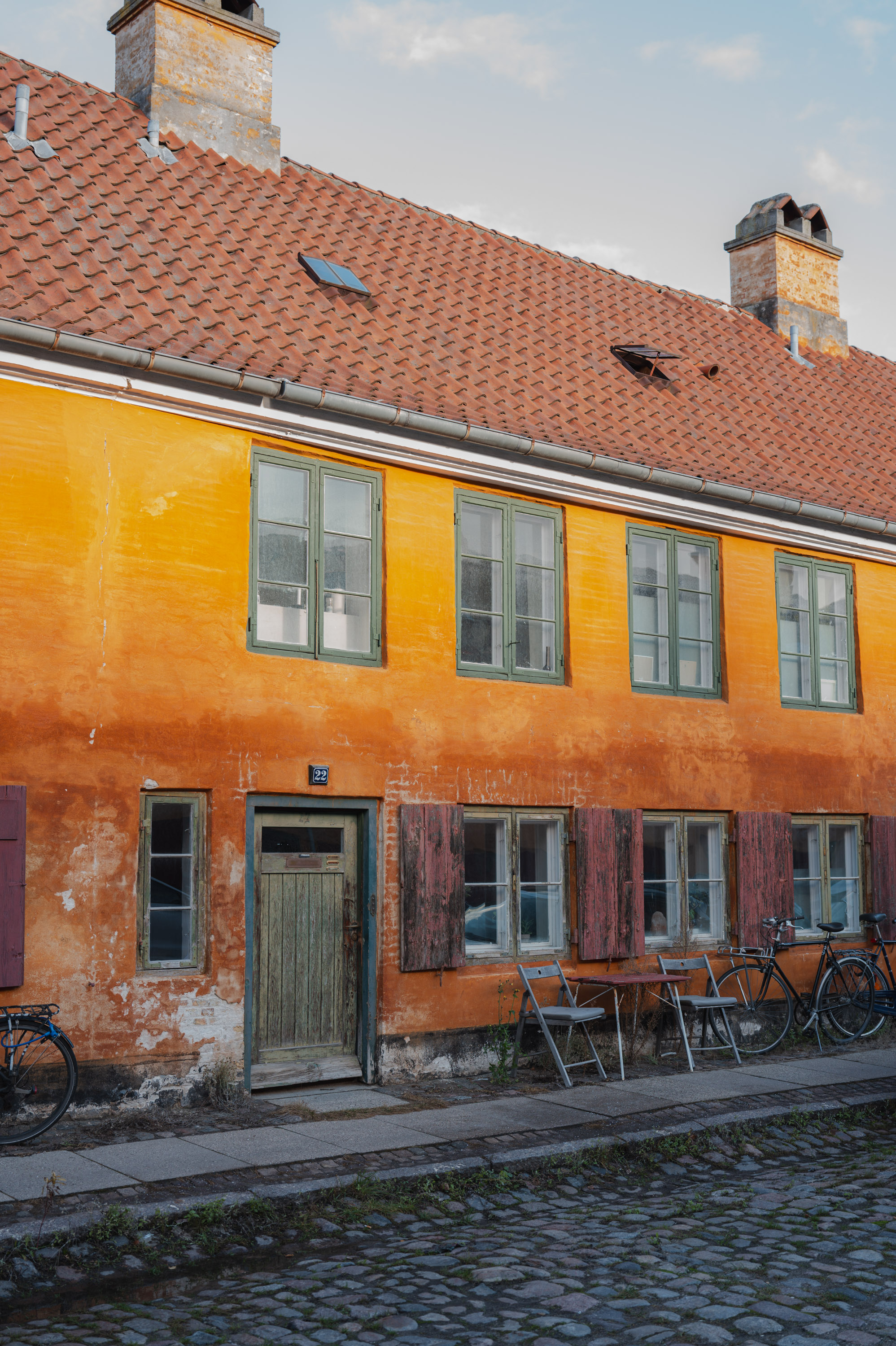
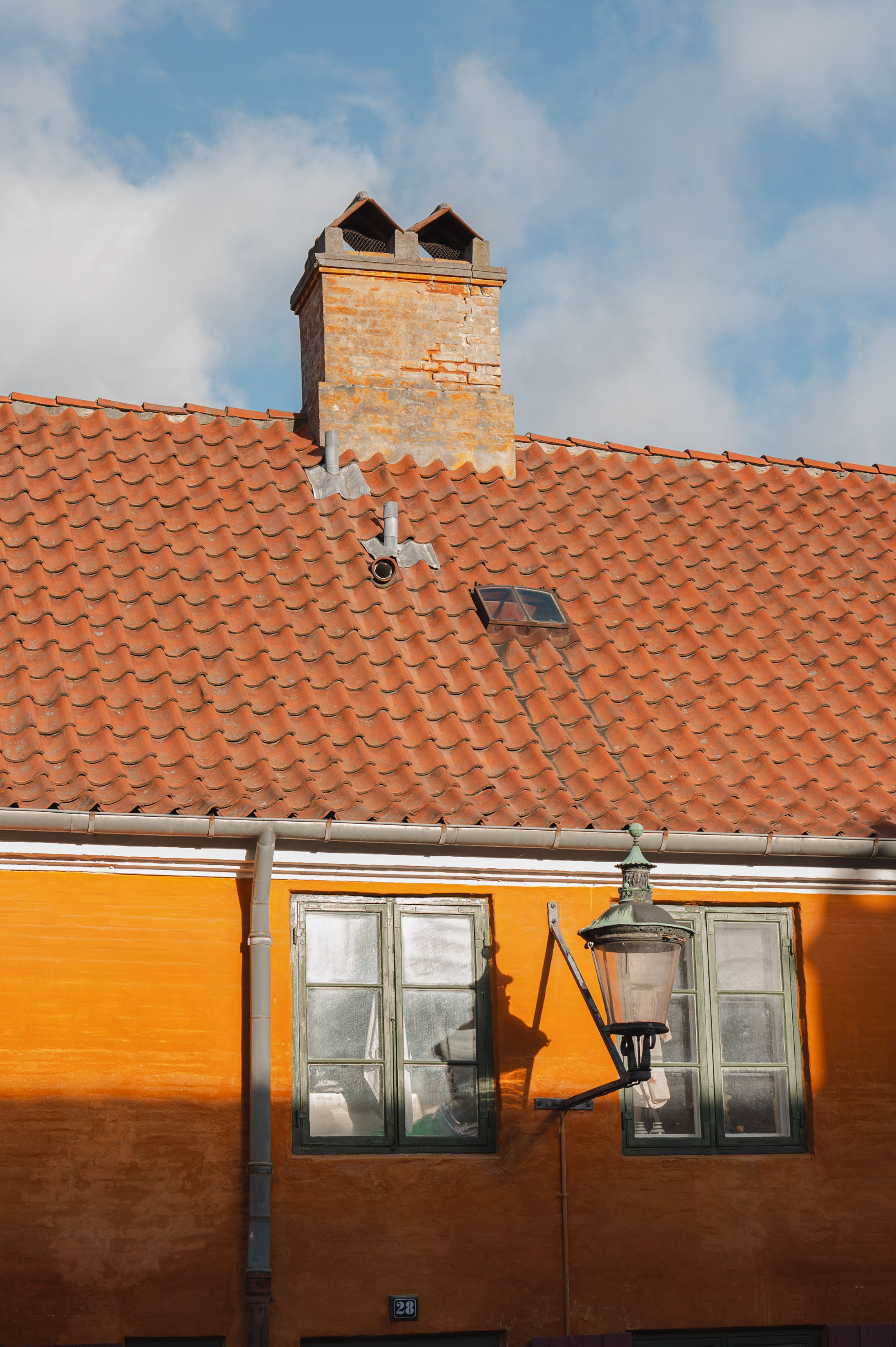
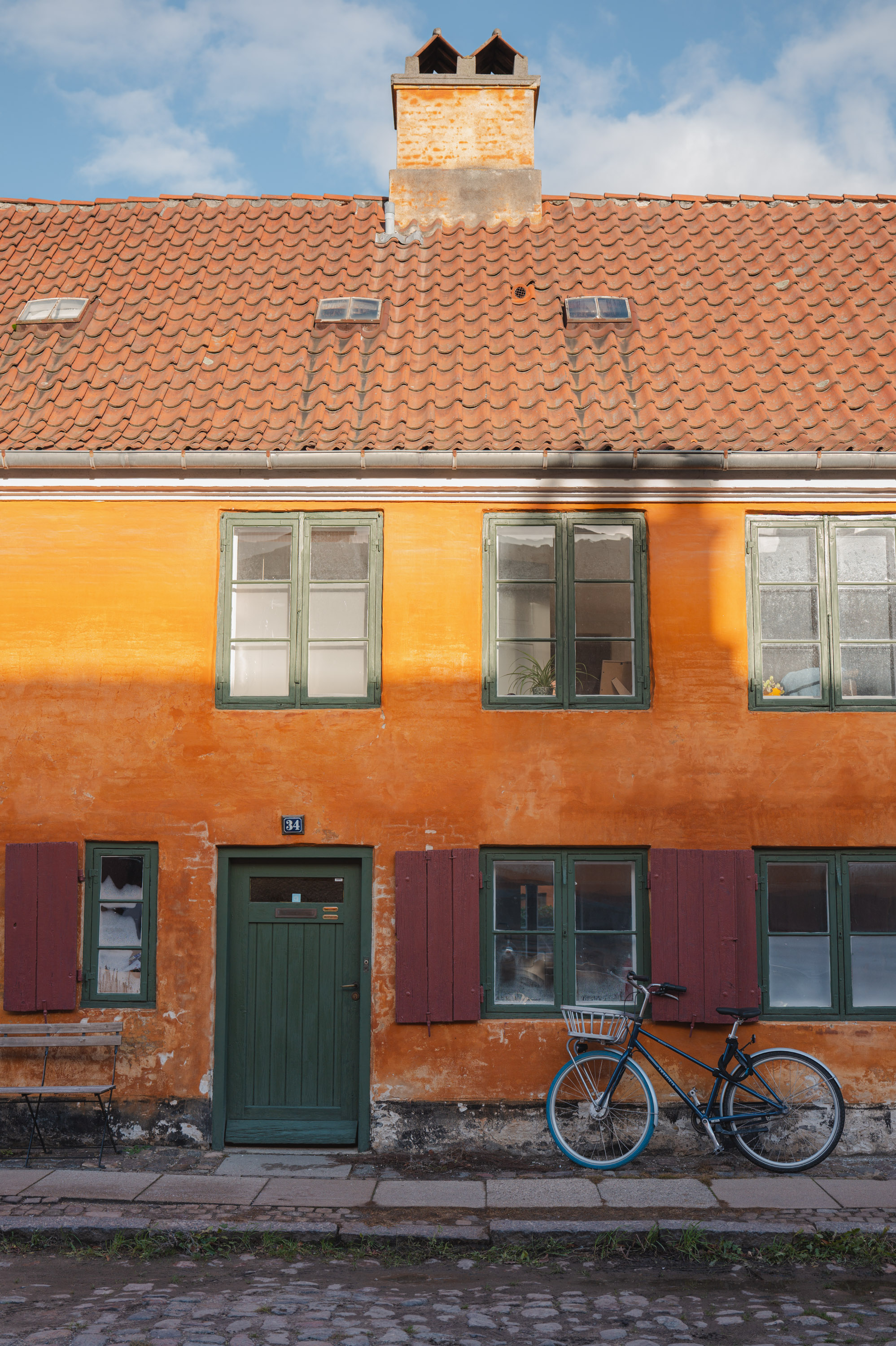
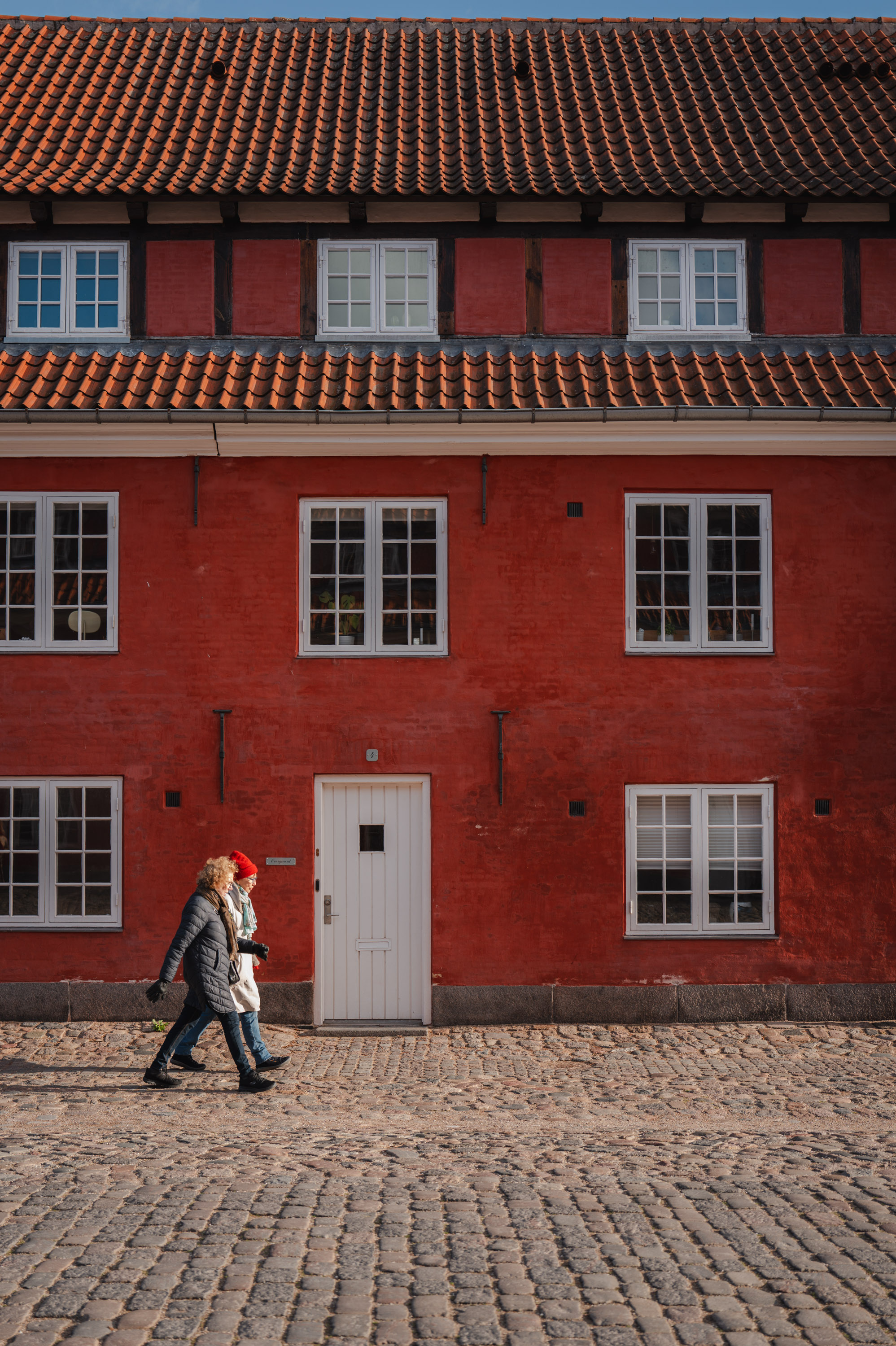
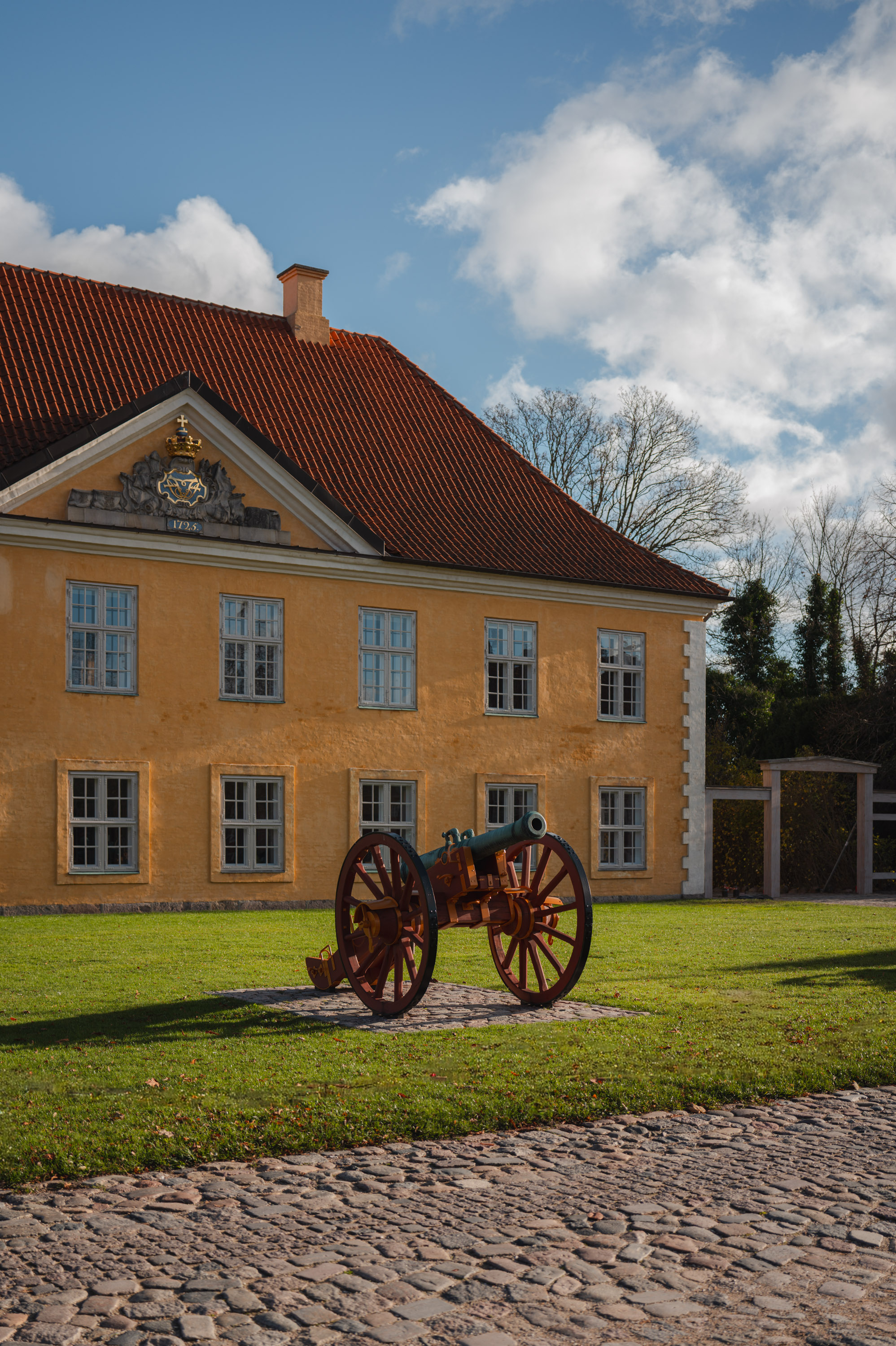
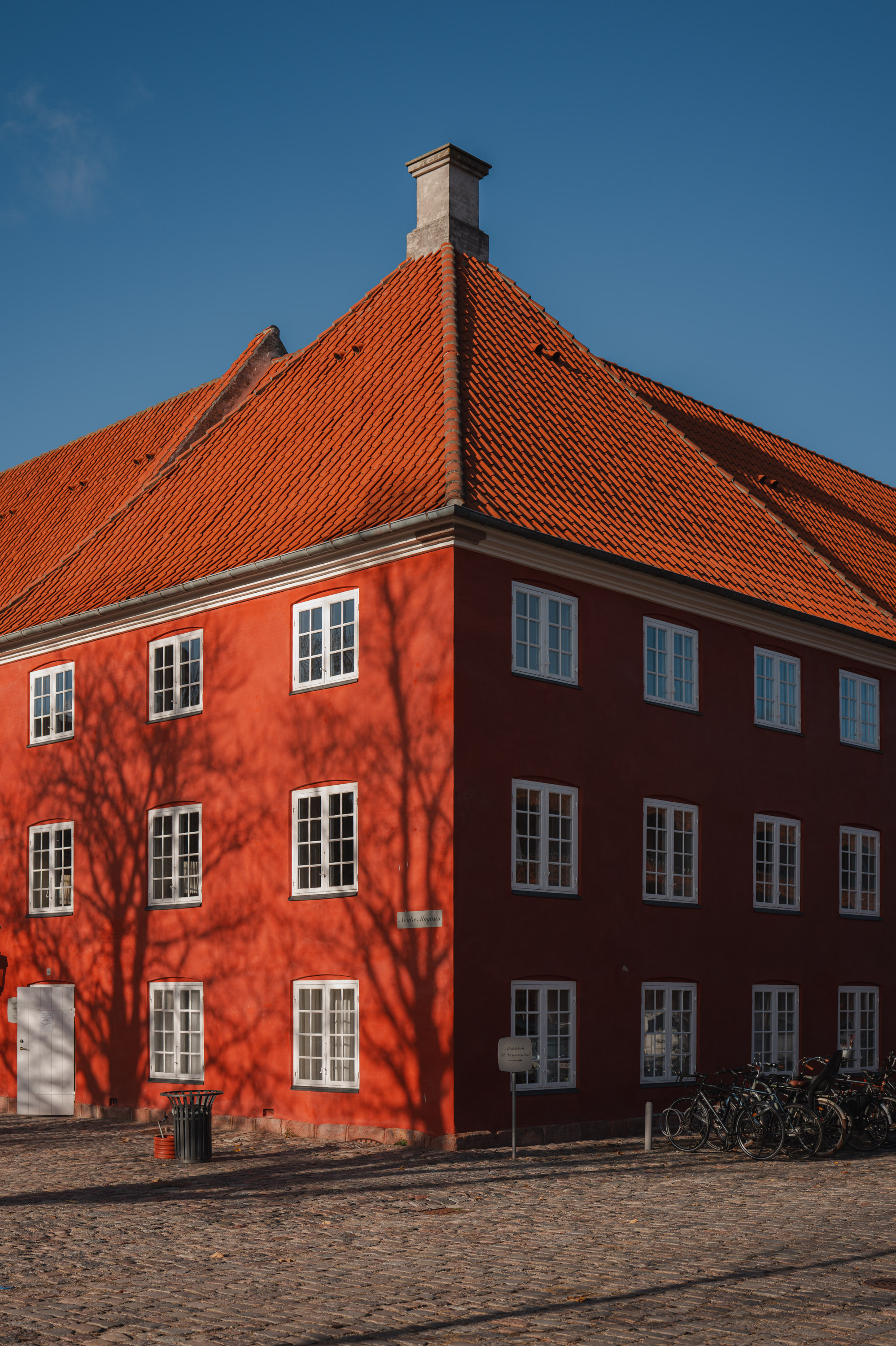
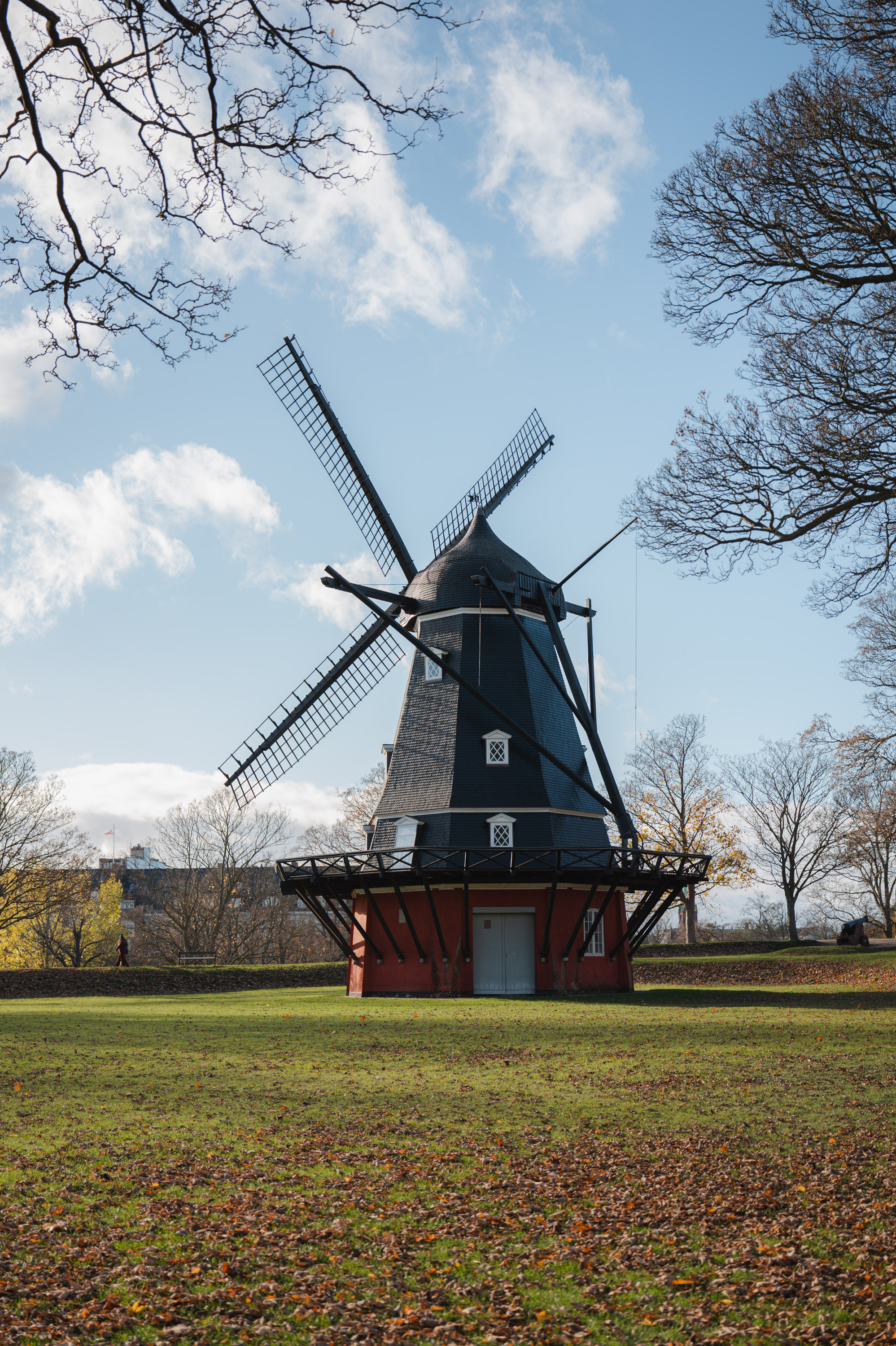
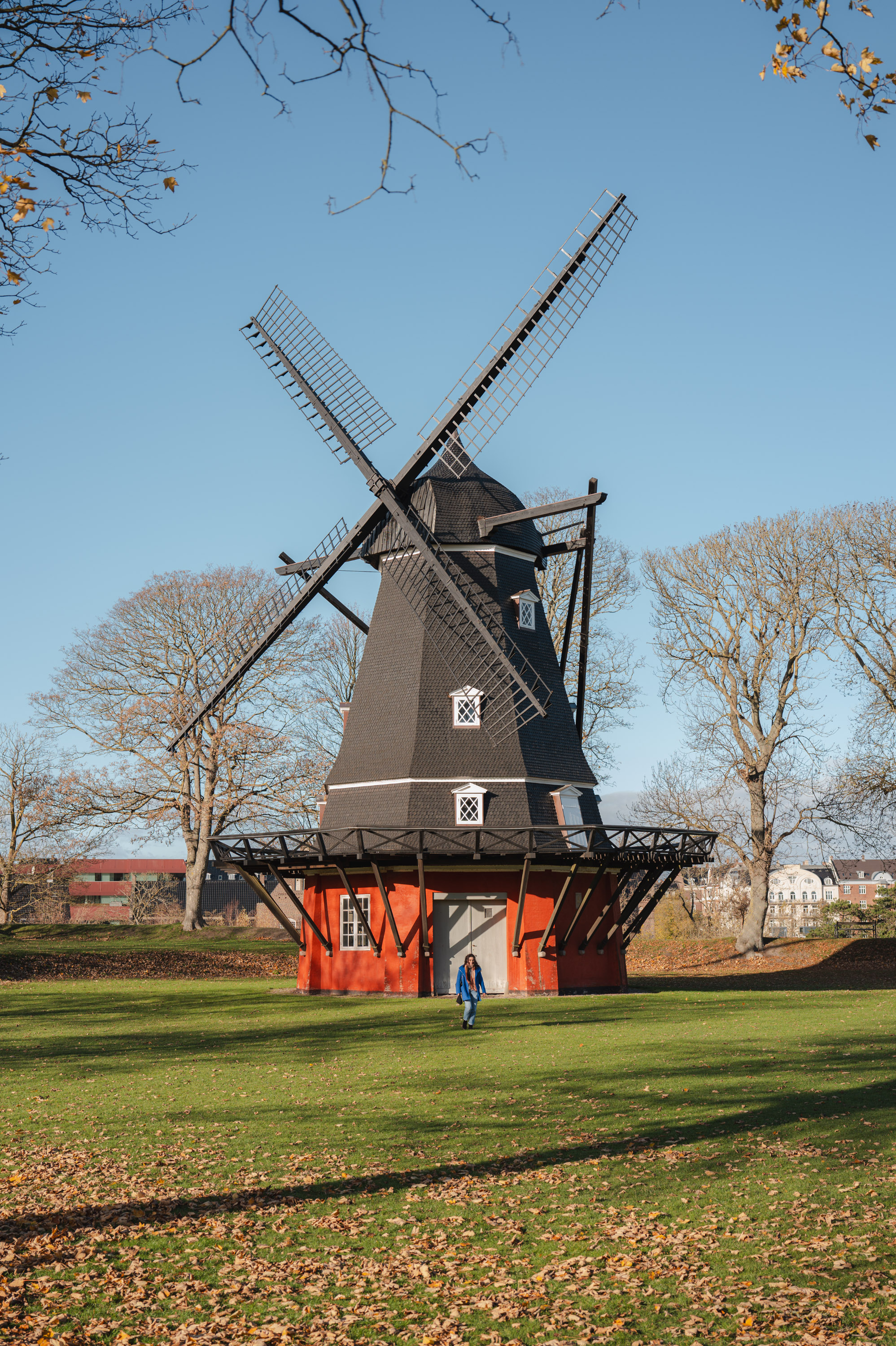
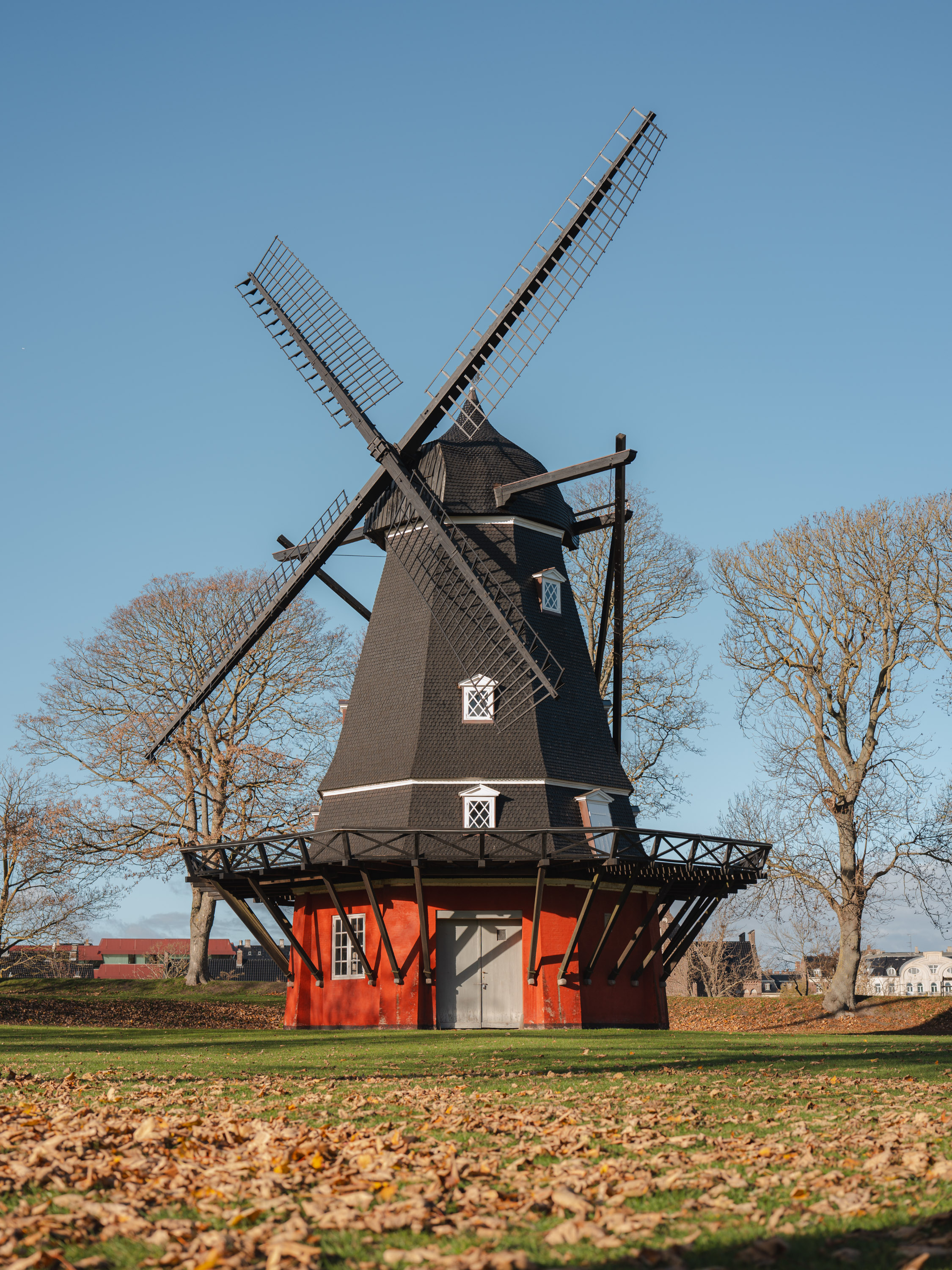
From Nyboder it is a short walk east to Kastellet — Copenhagen’s 17th-century star-shaped citadel, still owned by the Danish military but open as a park. The combination of grass ramparts, red-ochre wooden barracks, a working windmill, a moat full of autumn leaves and a wide quiet sky makes it one of the most underrated photographic stops in the city. I got there at the exact right hour — the sun dropping behind the ramparts, moat reflections going gold, nobody around.
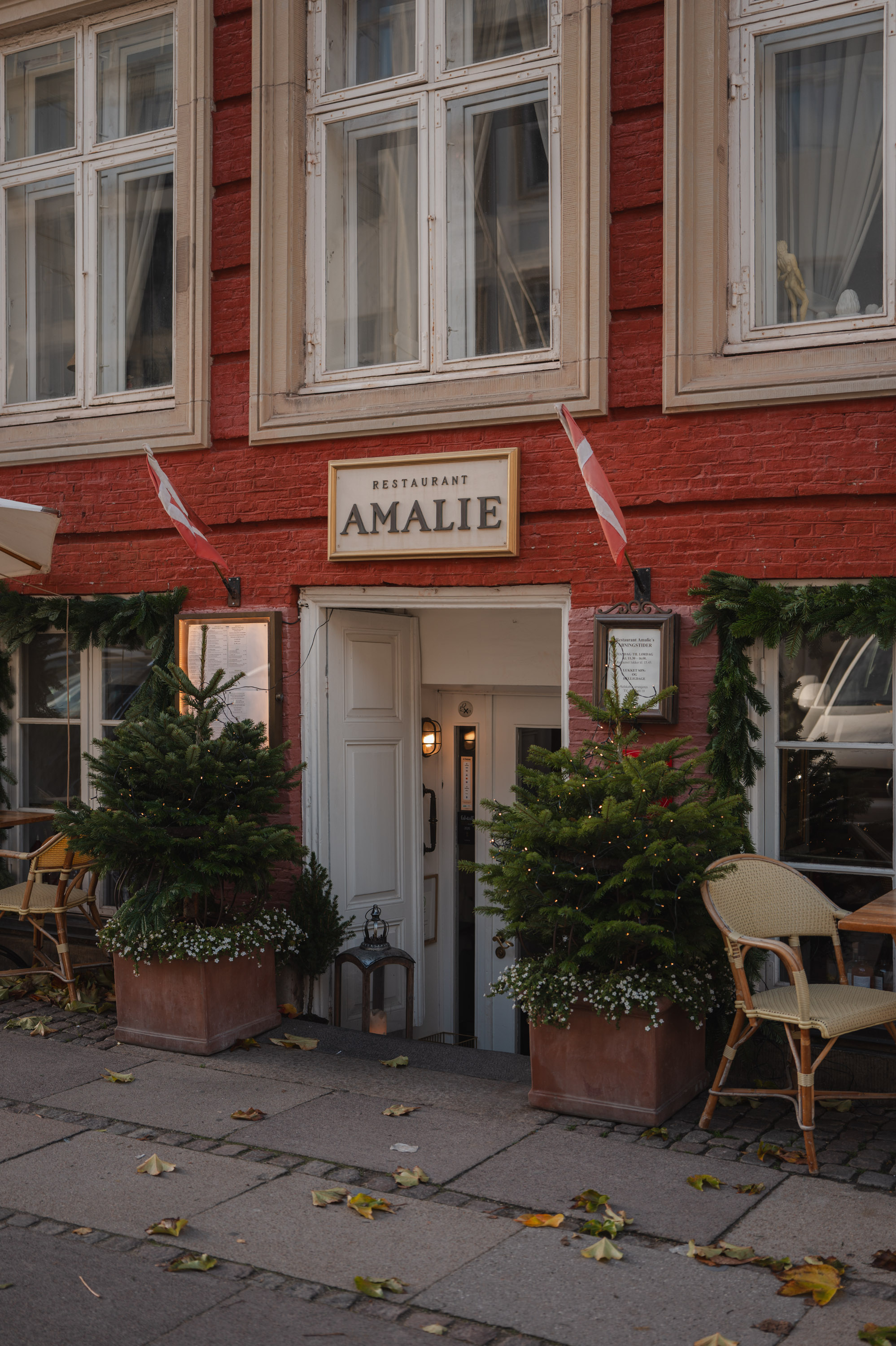
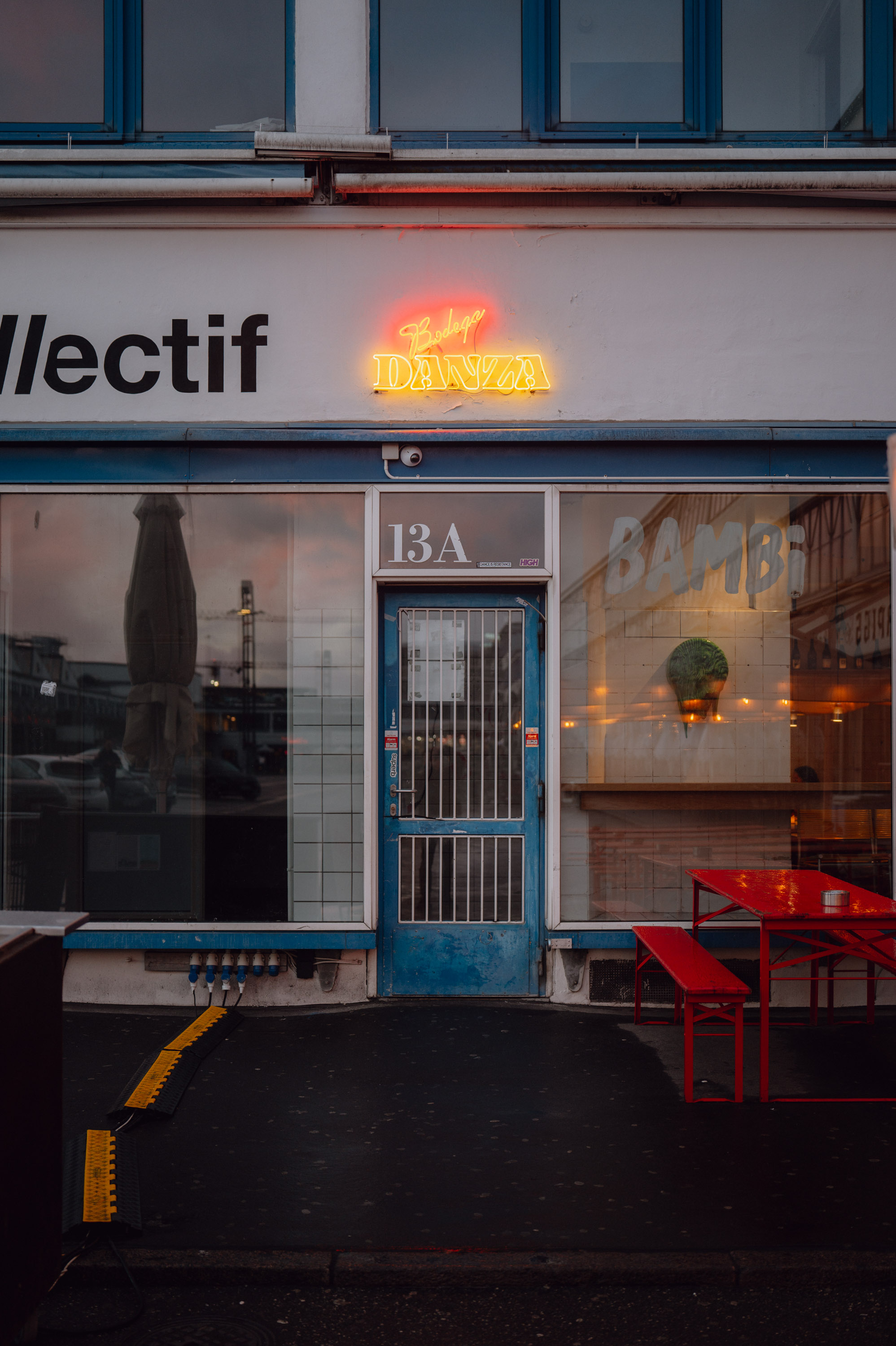
Christianshavn at Last Light
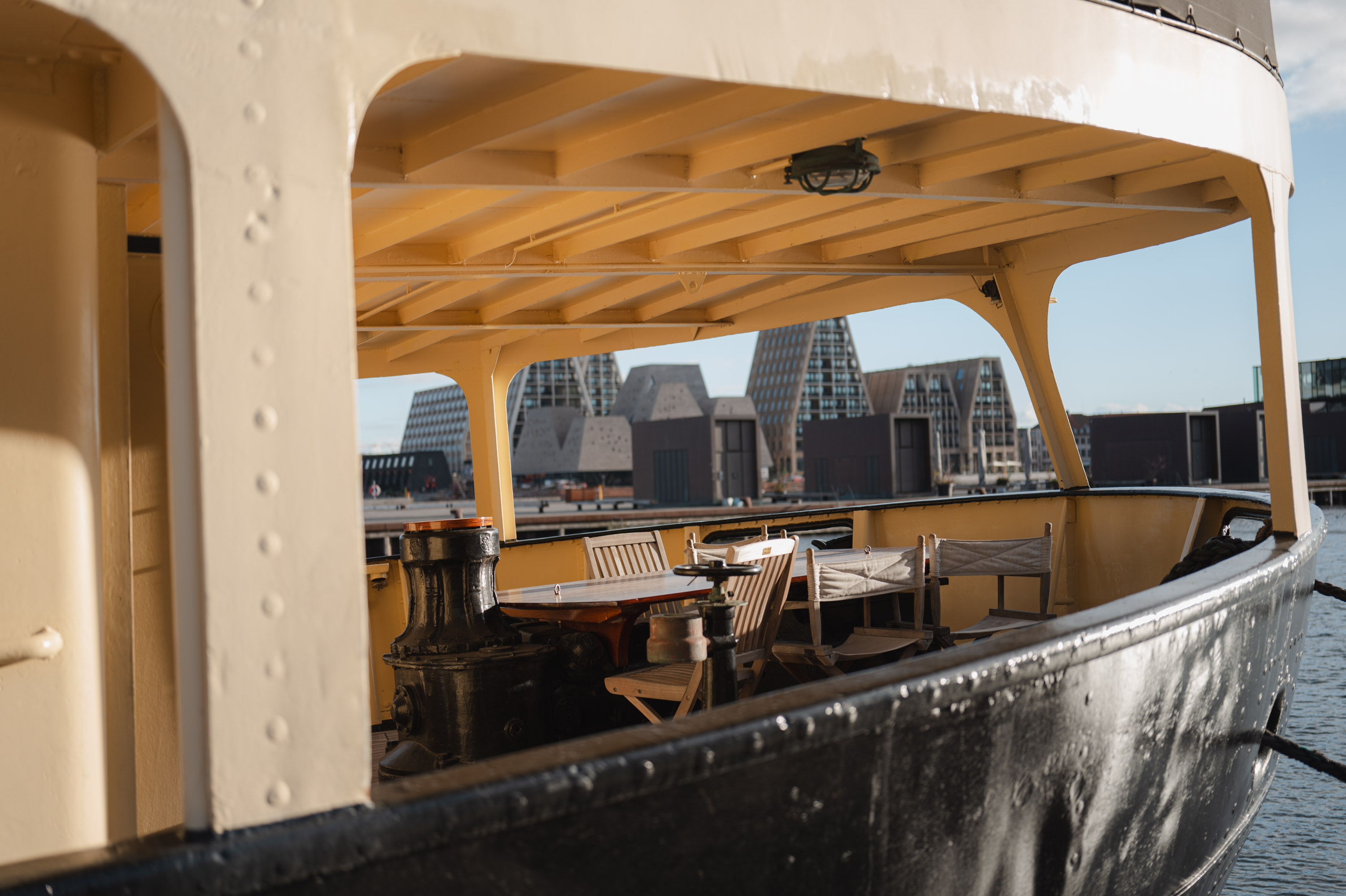
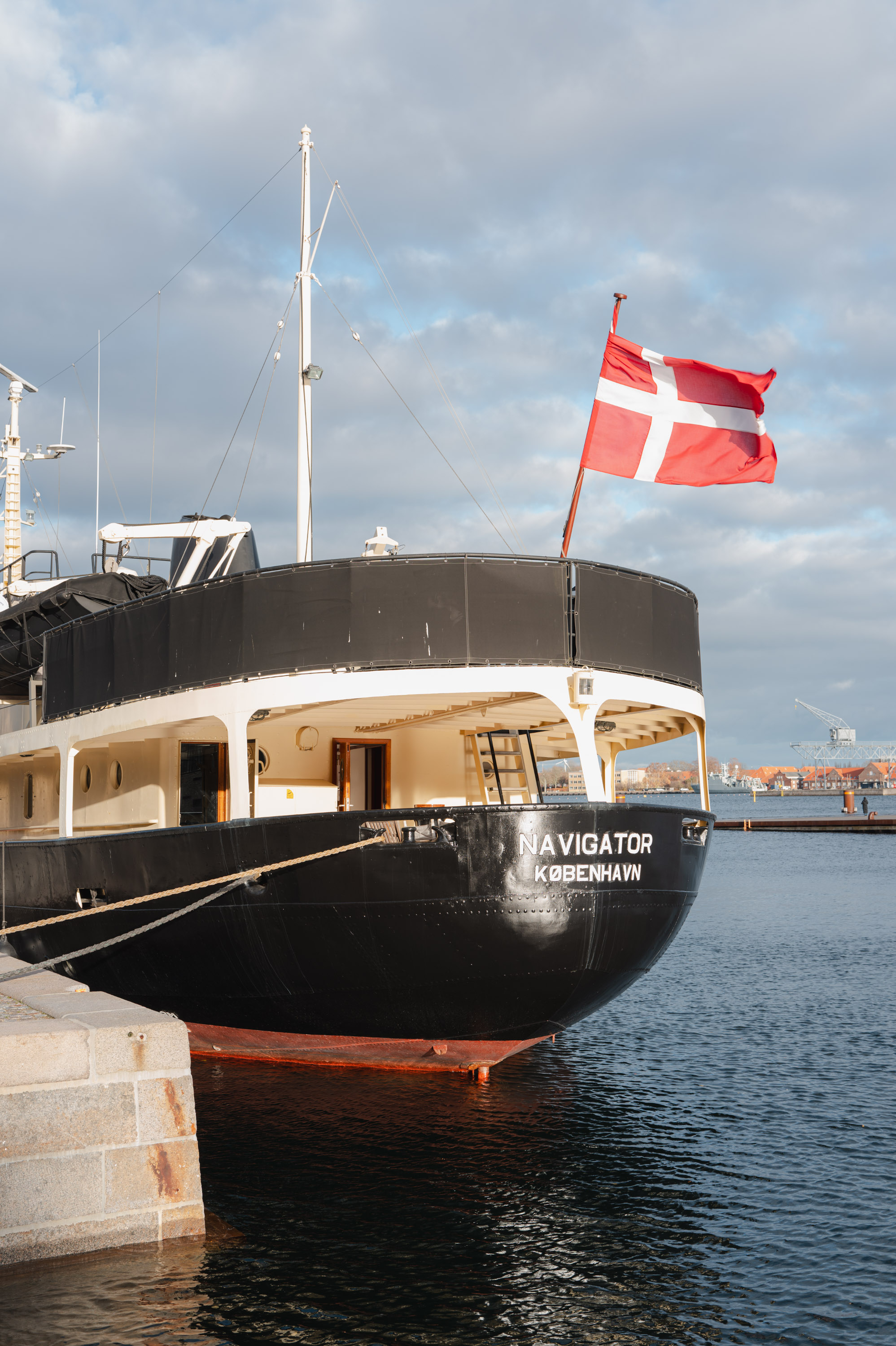
Across the Inderhavnsbroen pedestrian bridge from Nyhavn to the Christianshavn side is maybe my favourite single walk in Copenhagen. Houseboats, 17th-century canals, the twisted copper spire of Vor Frelsers Kirke and a slightly more relaxed, slightly less polished version of the city — all within half a mile of where the cruise ships moor. The afternoon light hitting the row of candy-painted houseboats on the Christianshavn Kanal is a frame I’d book a whole day for.
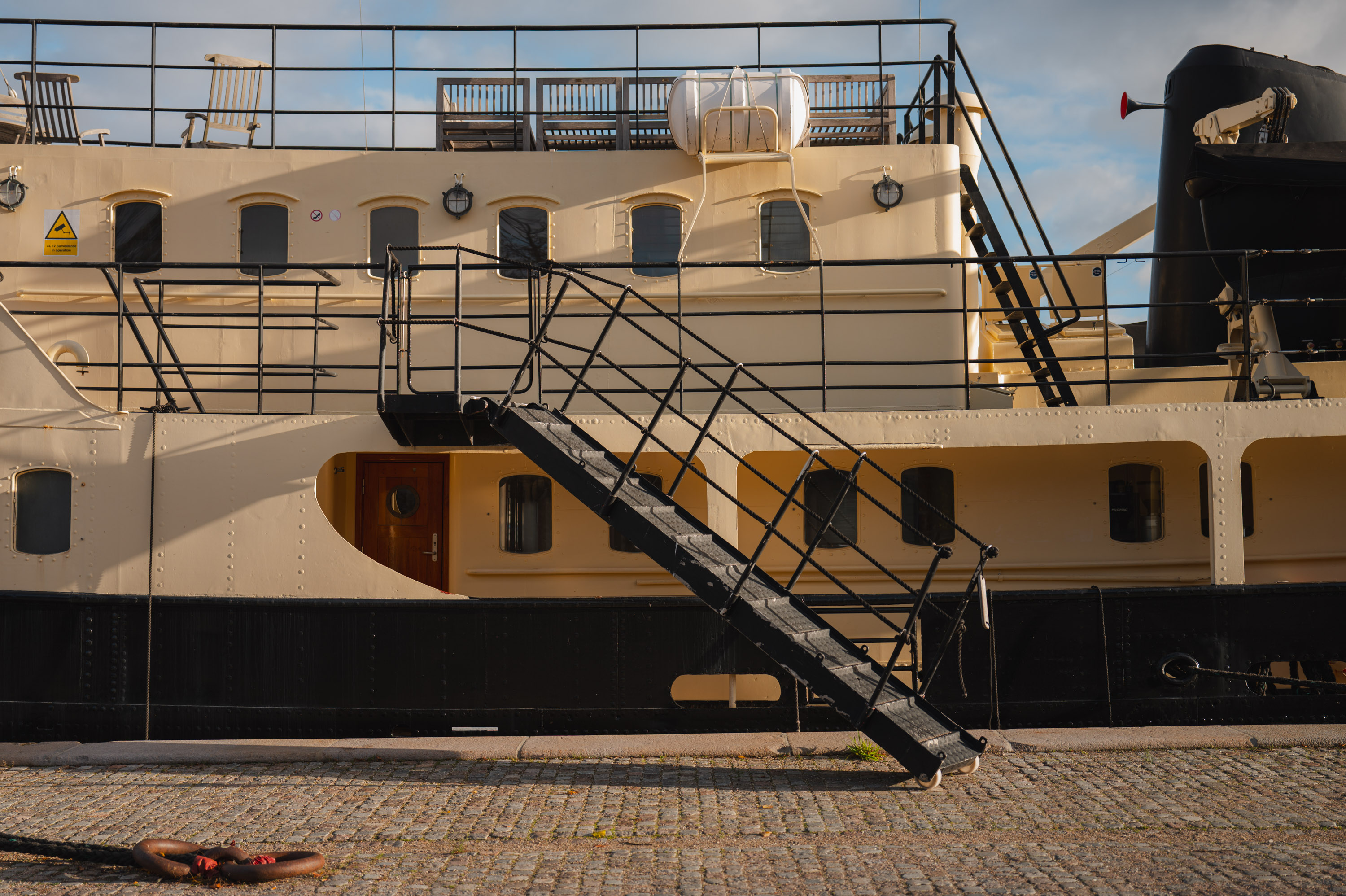
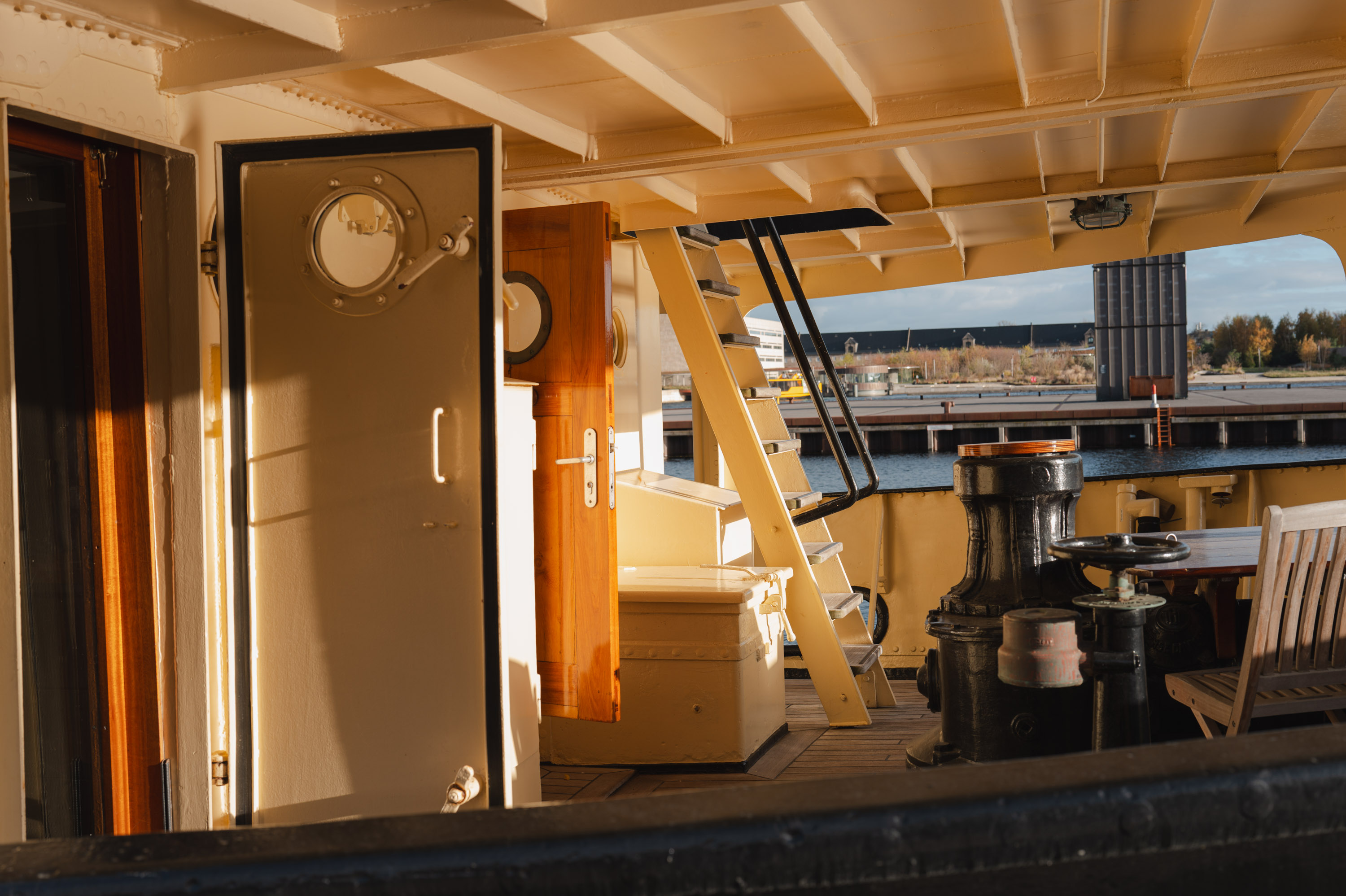
Blue Hour, Encore
I ended Friday where I’d started it — back at the water — this time with the twisted copper spire of Vor Frelsers Kirke rising over the rooflines of Christianshavn, and the last of the gold catching the colourful row along the canal. By five, the Christmas lights were on in earnest, and Nyhavn had turned from a postcard into a film set.
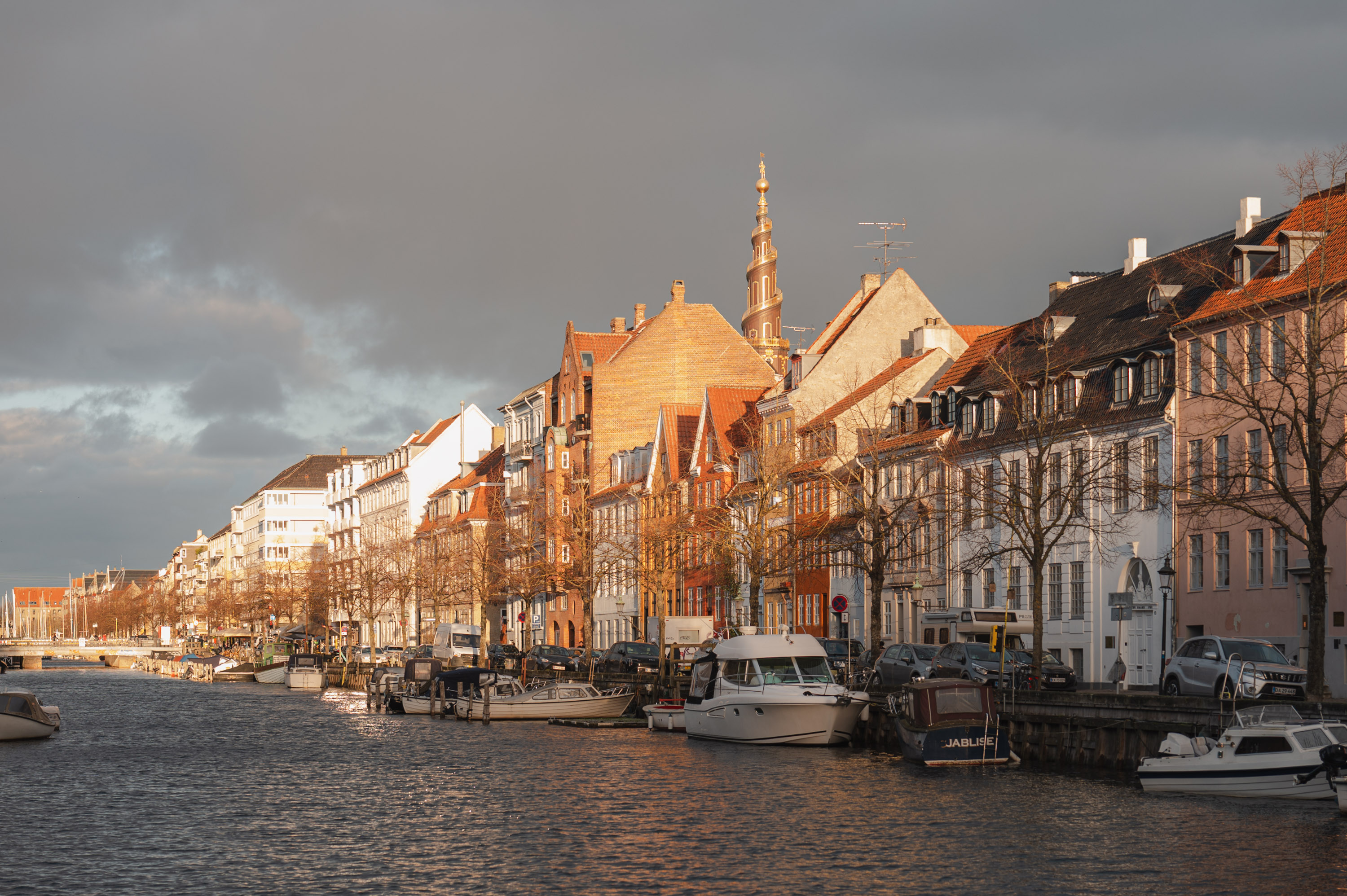
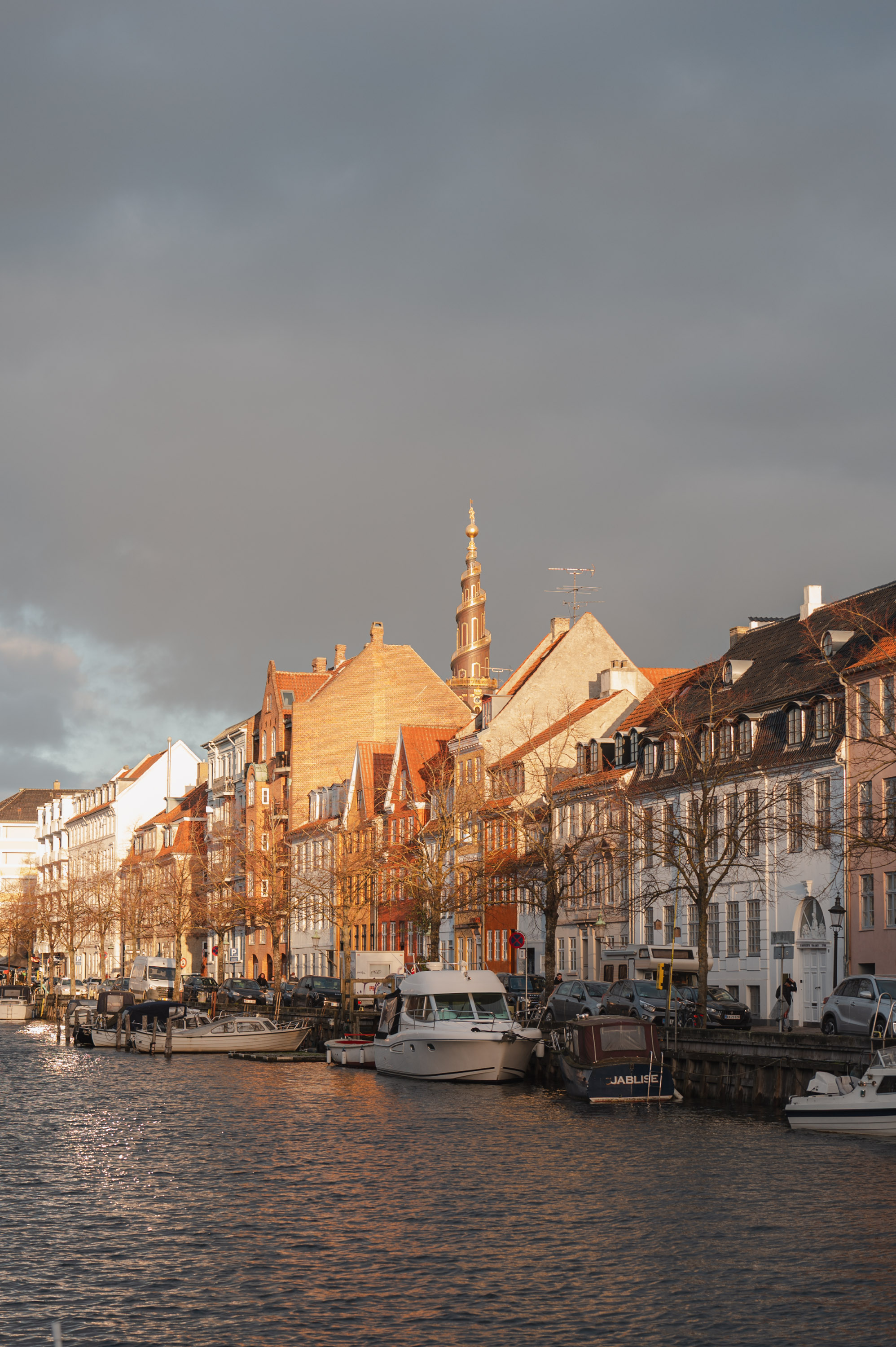
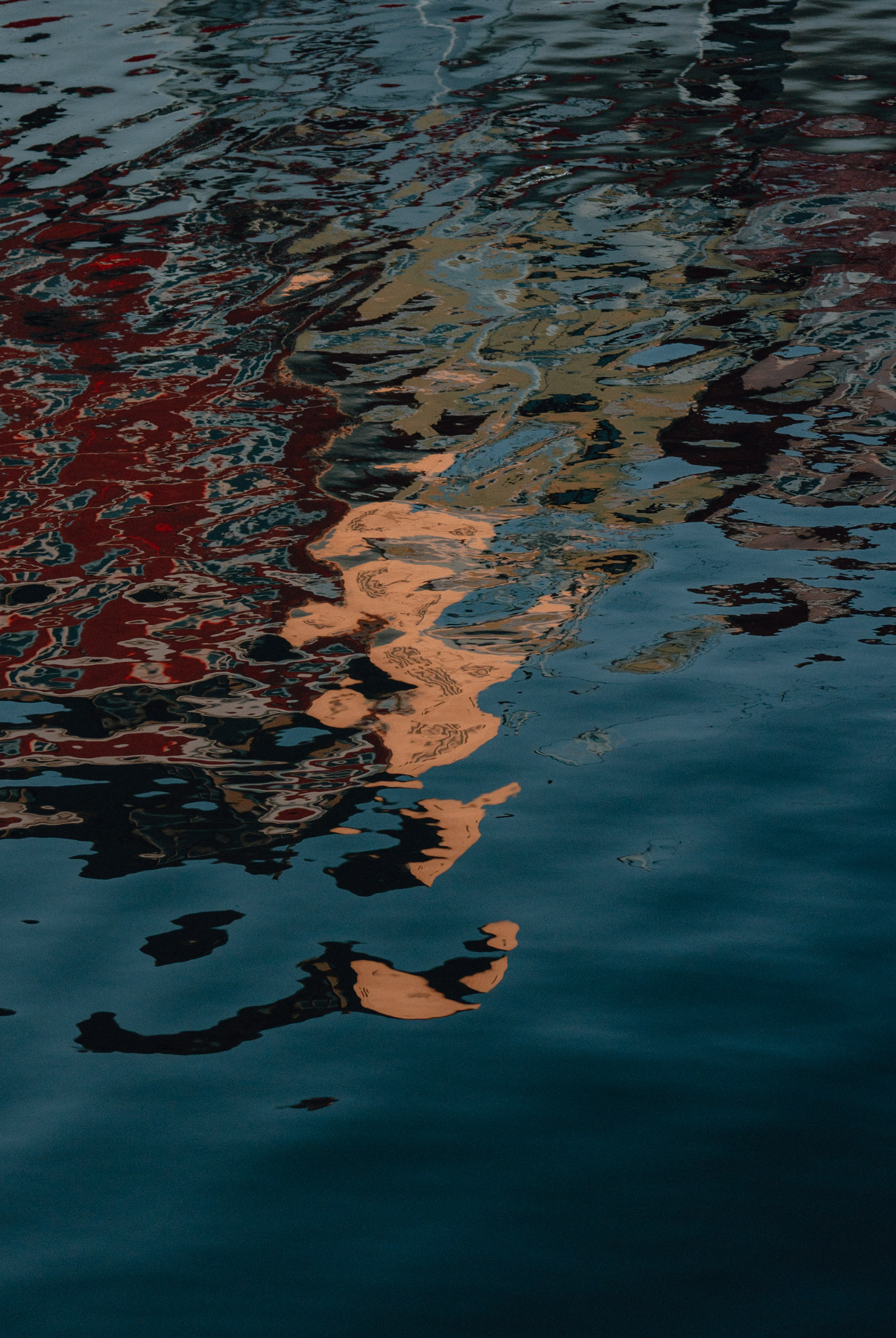
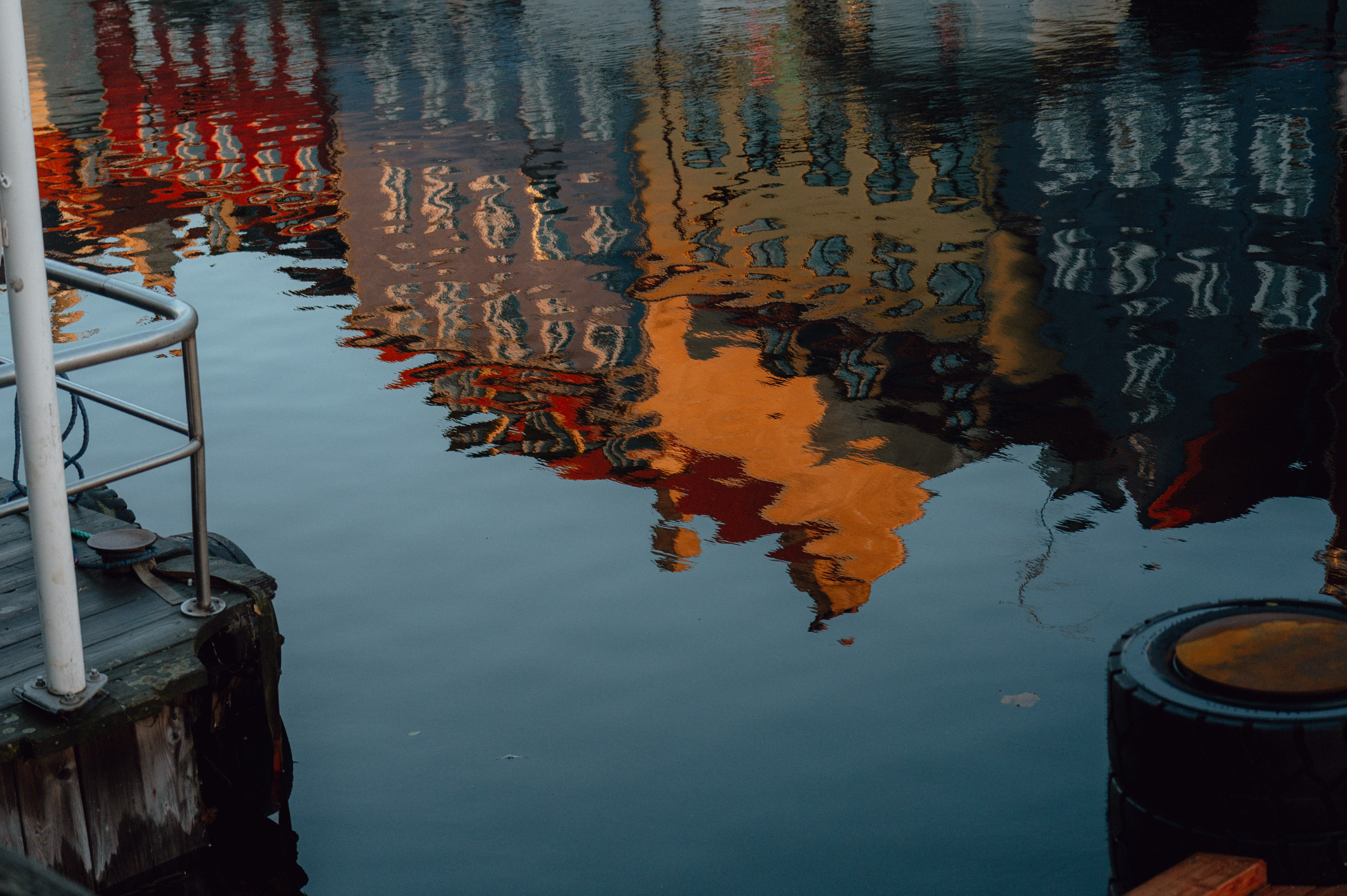
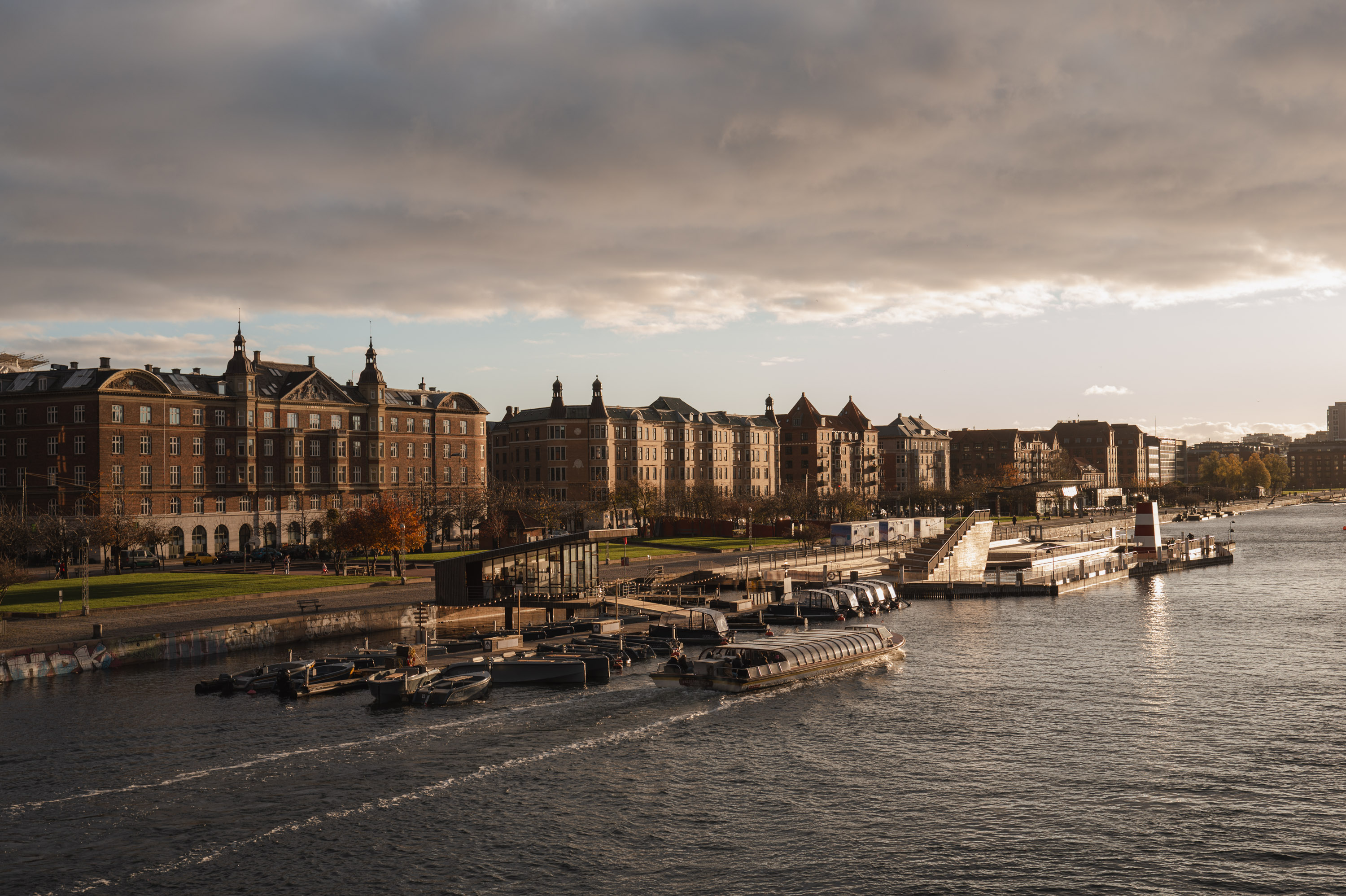
Back at the Nyhavn end of the harbour, the blue-hour build-up is like watching a stage set come on cue. The Christmas lights get their first proper glow, the market stalls open, the restaurant terraces light candles on the outside tables, and the water starts to work as a second mirror of everything above it. I spent an hour and a half there, moving ten metres along the quay every few minutes.
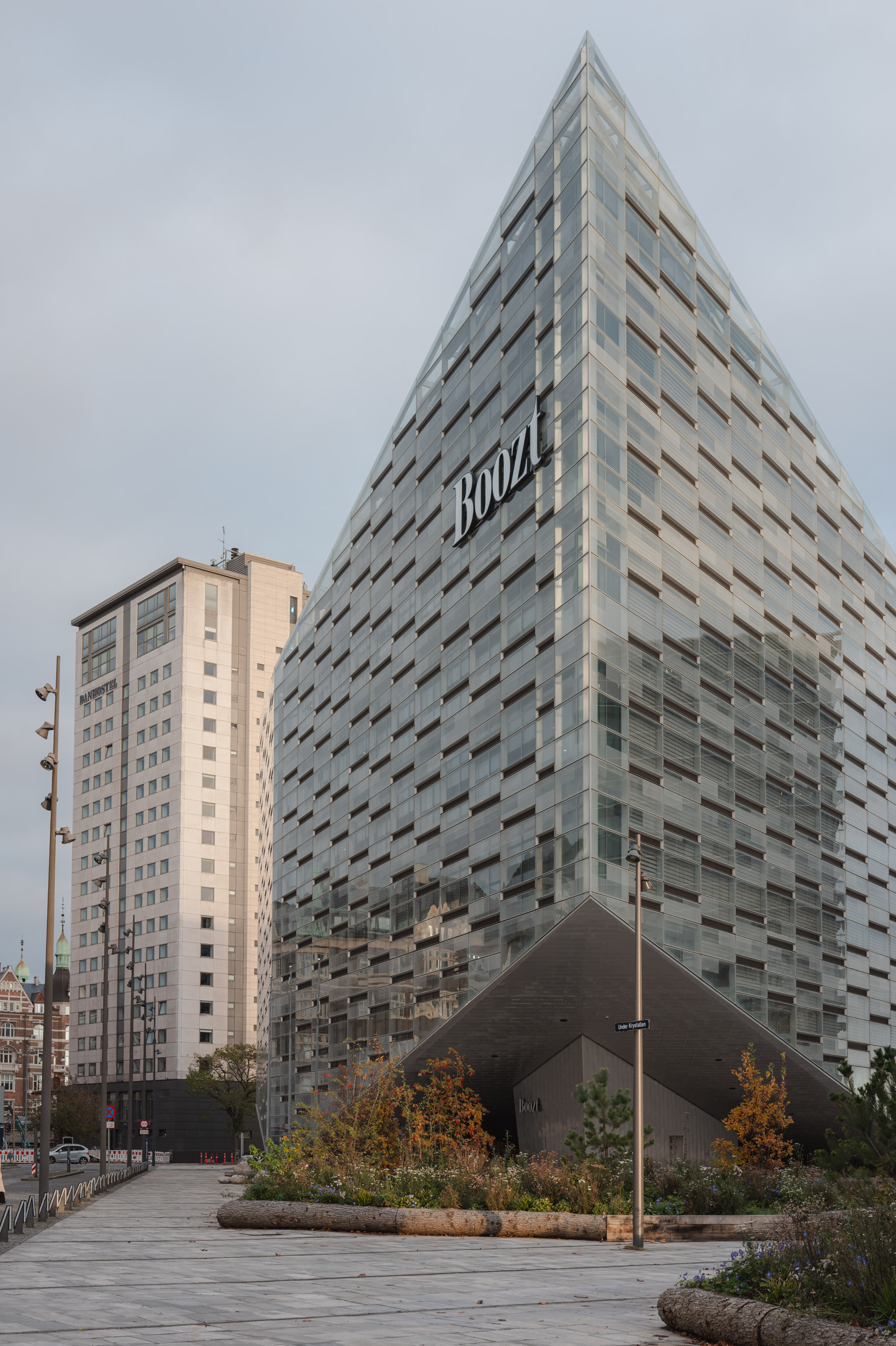
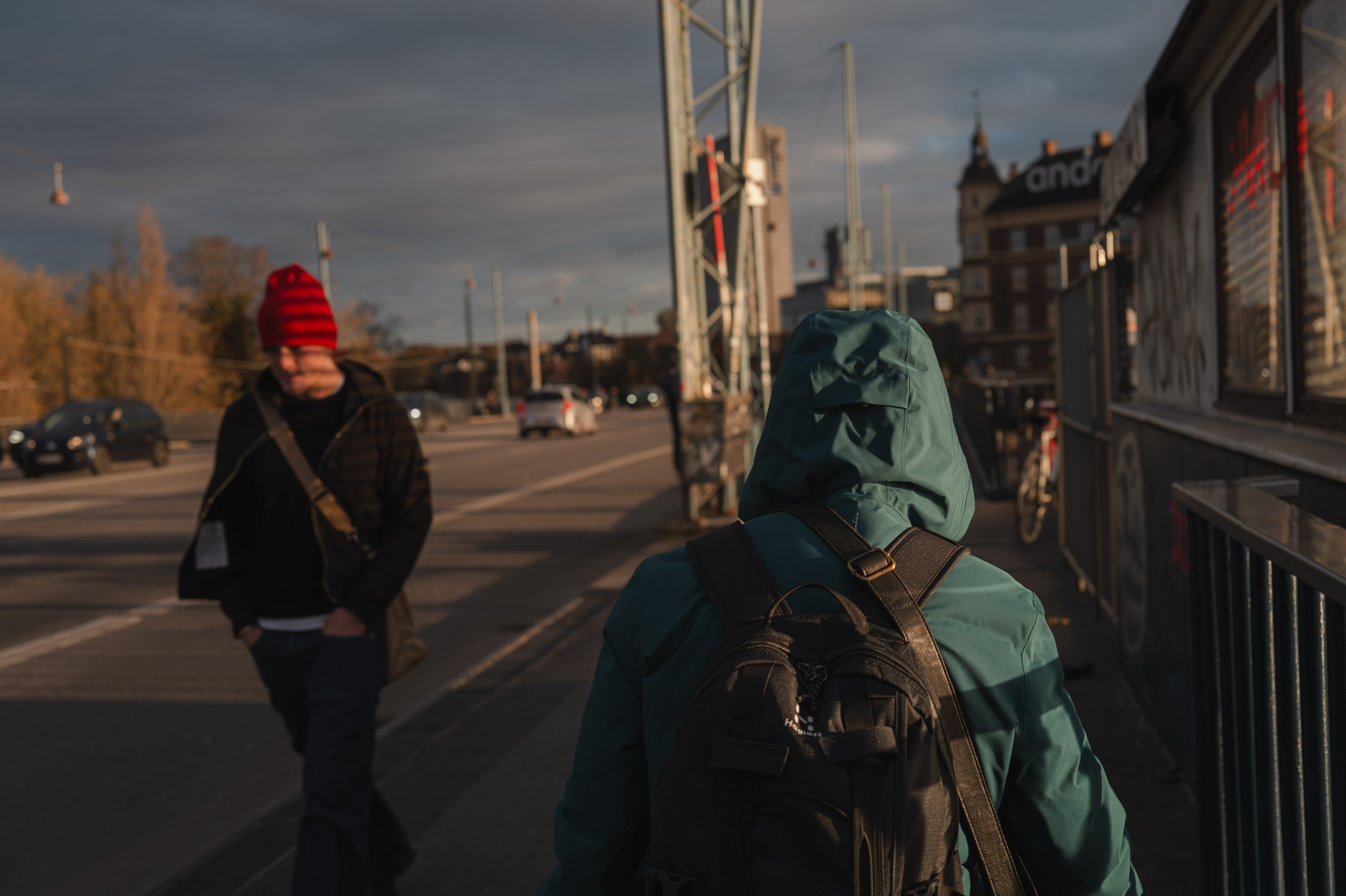
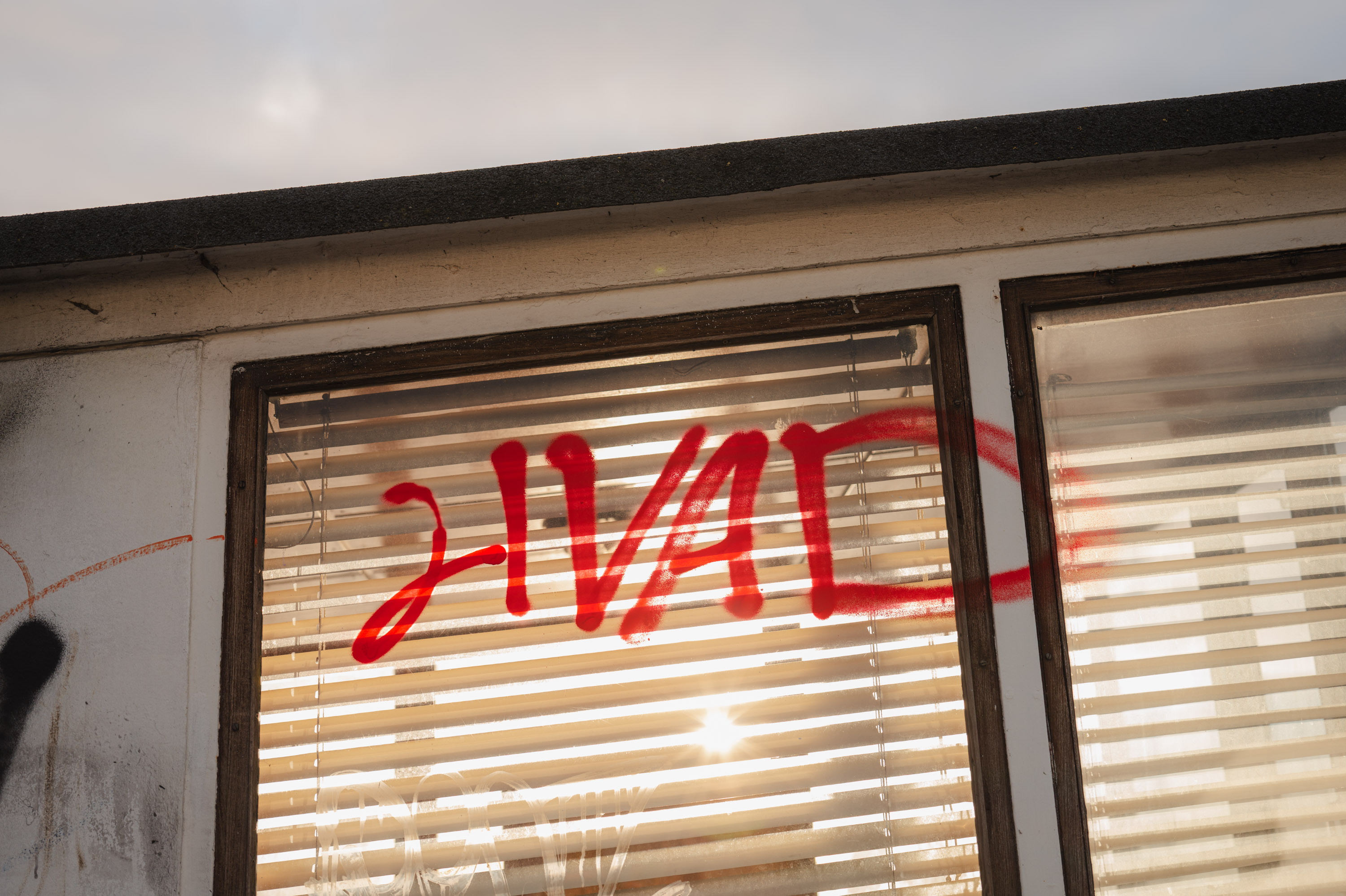
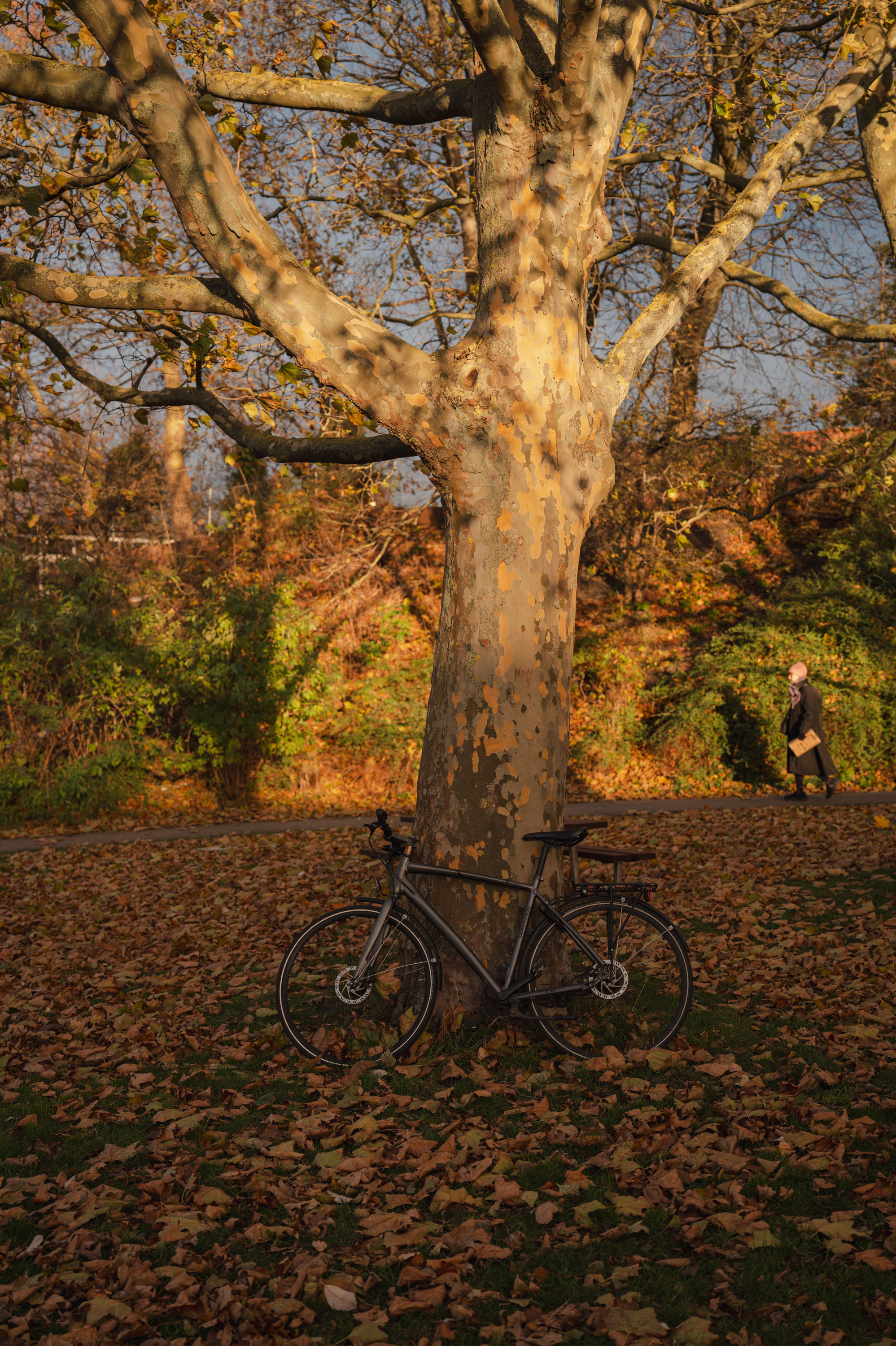
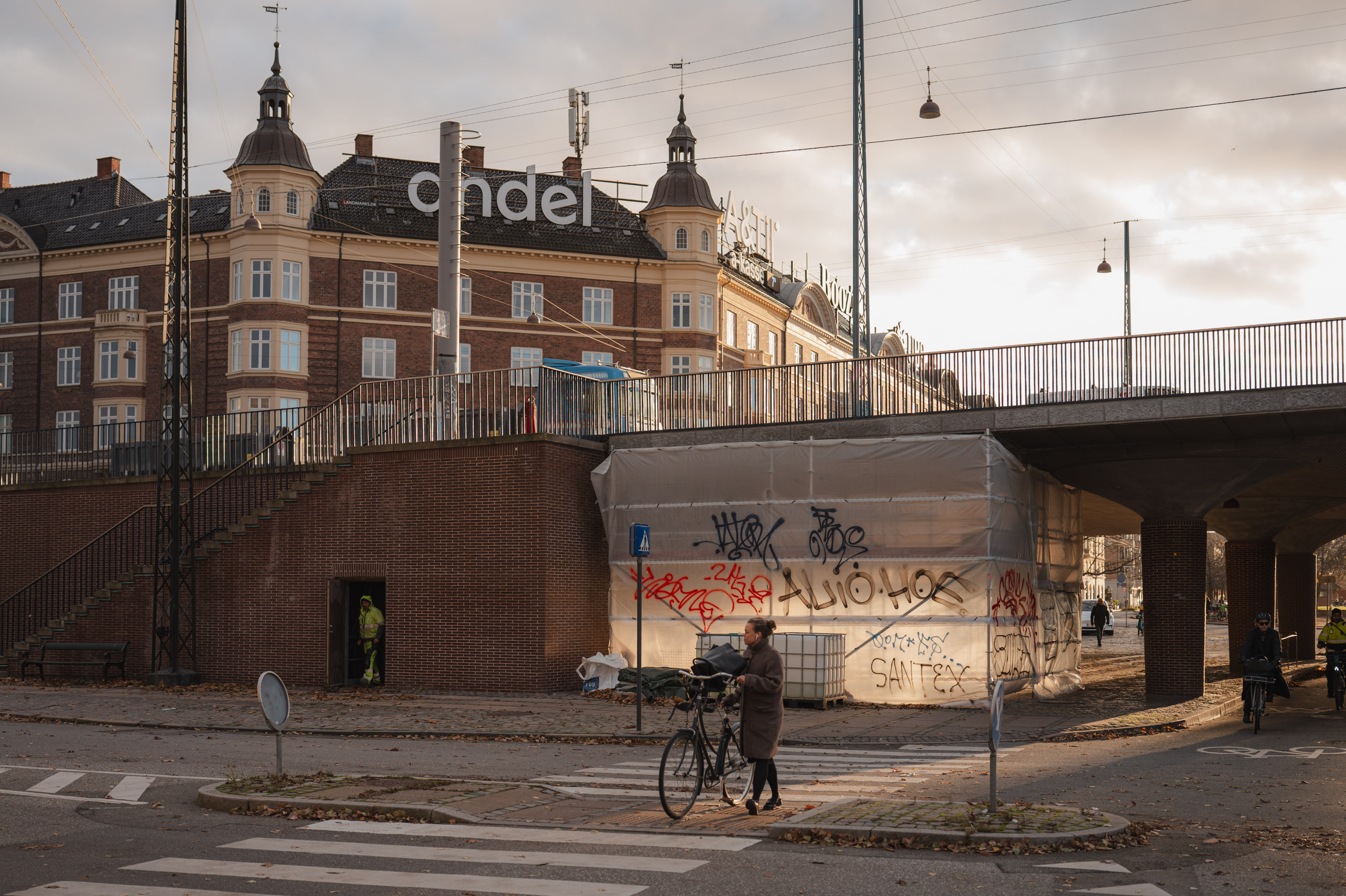
Back through the city on foot one last time — past Lagkagehuset, through Strøget with the Christmas garlands fully lit, past Amagertorv and the cathedral plaza to Rådhuspladsen and the giant lit Christmas tree on City Hall Square, the one that properly marks the start of Danish Christmas. It was a nice note to end on — a city dressed quietly for its best season, mostly empty, the one London commercial photographer with a Q3 43 slowly walking home.
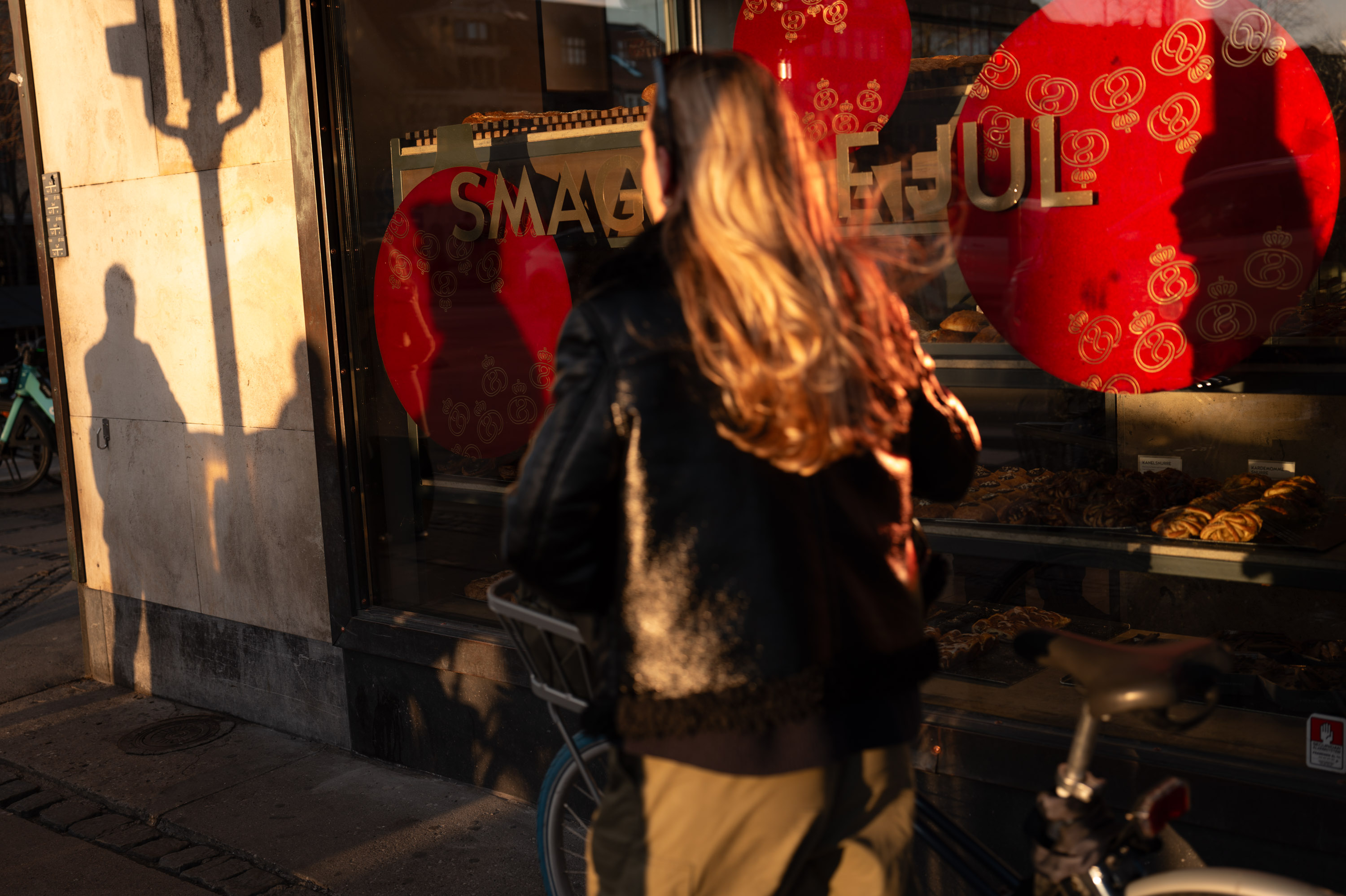
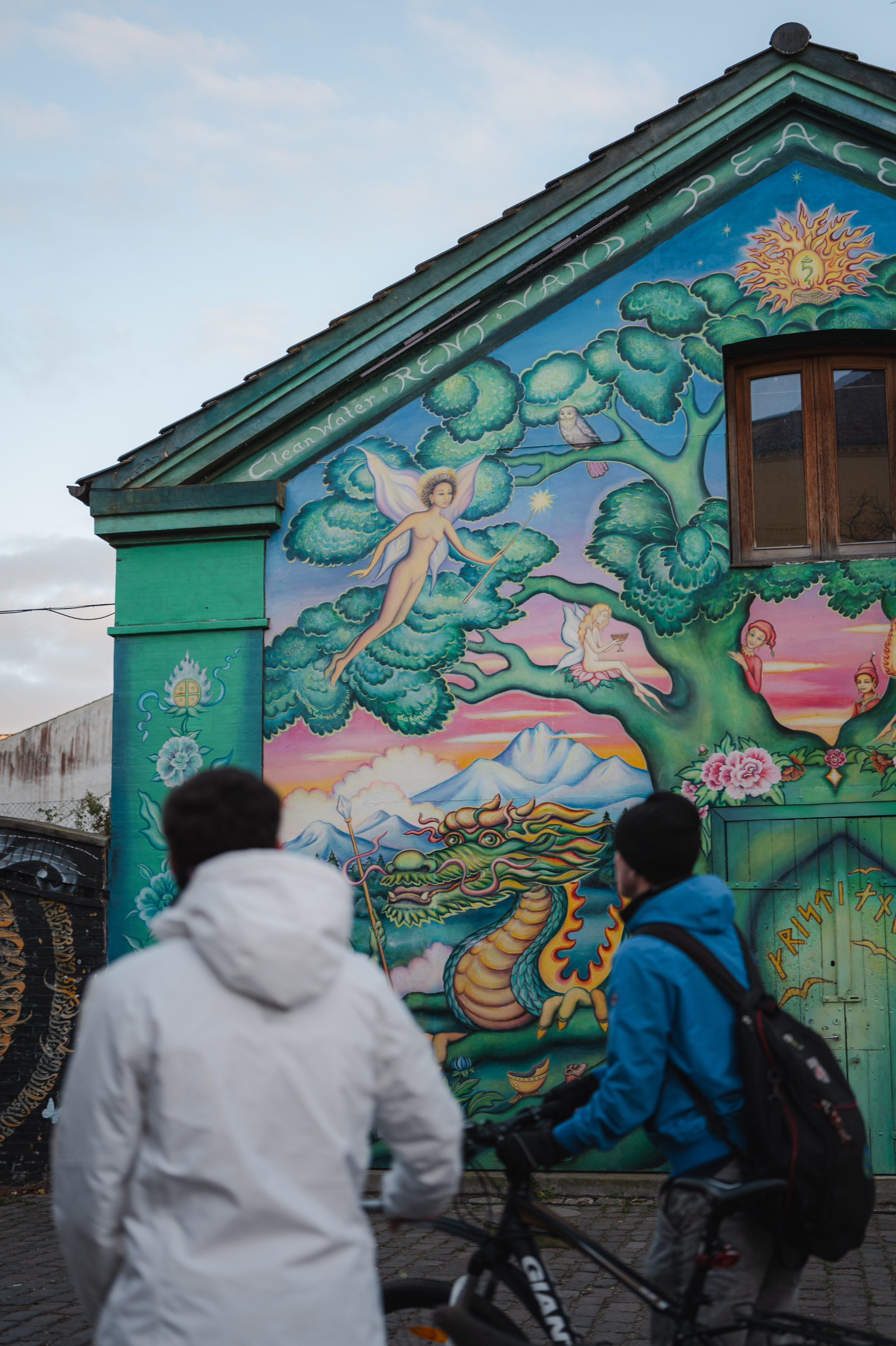
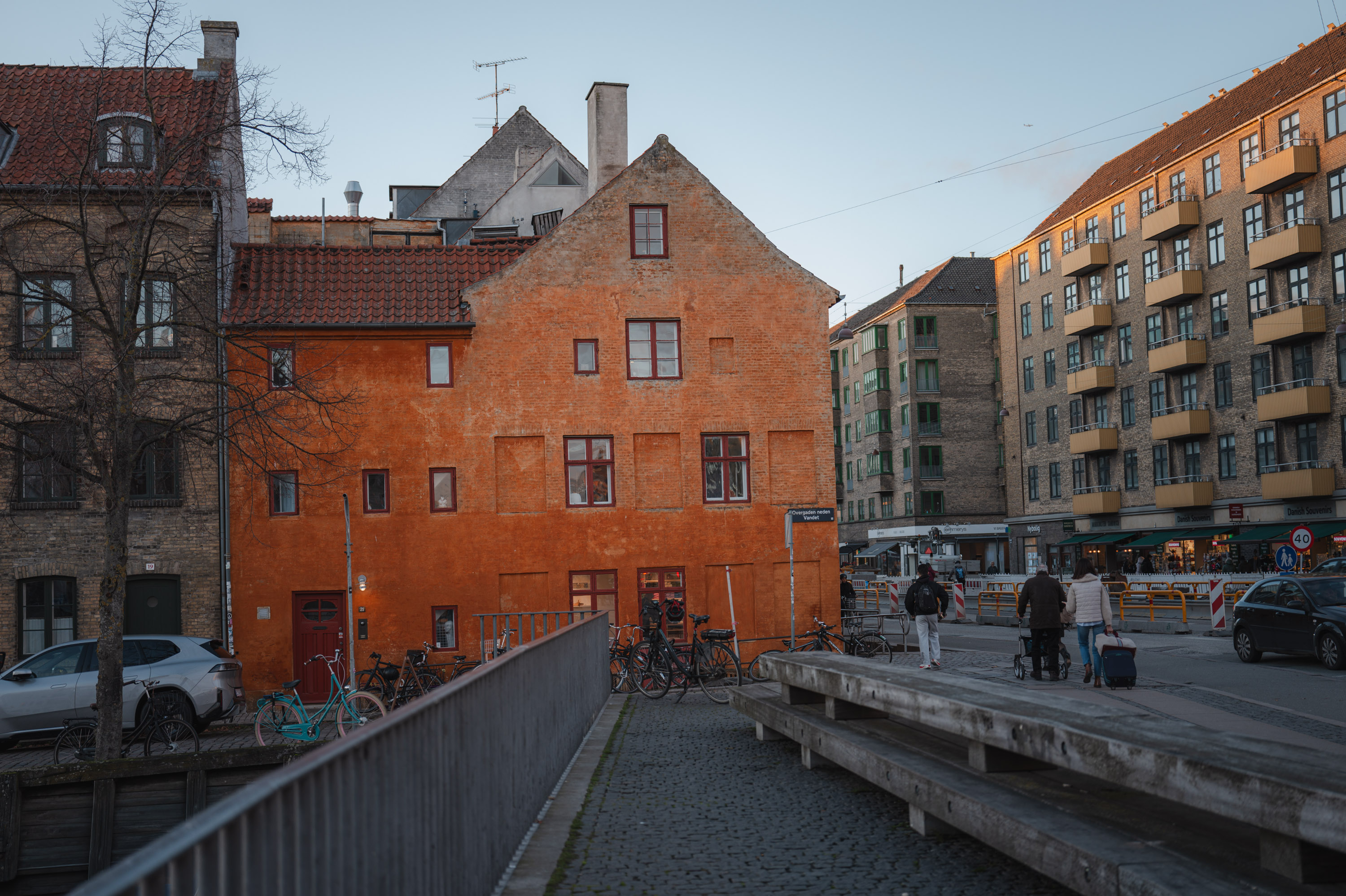
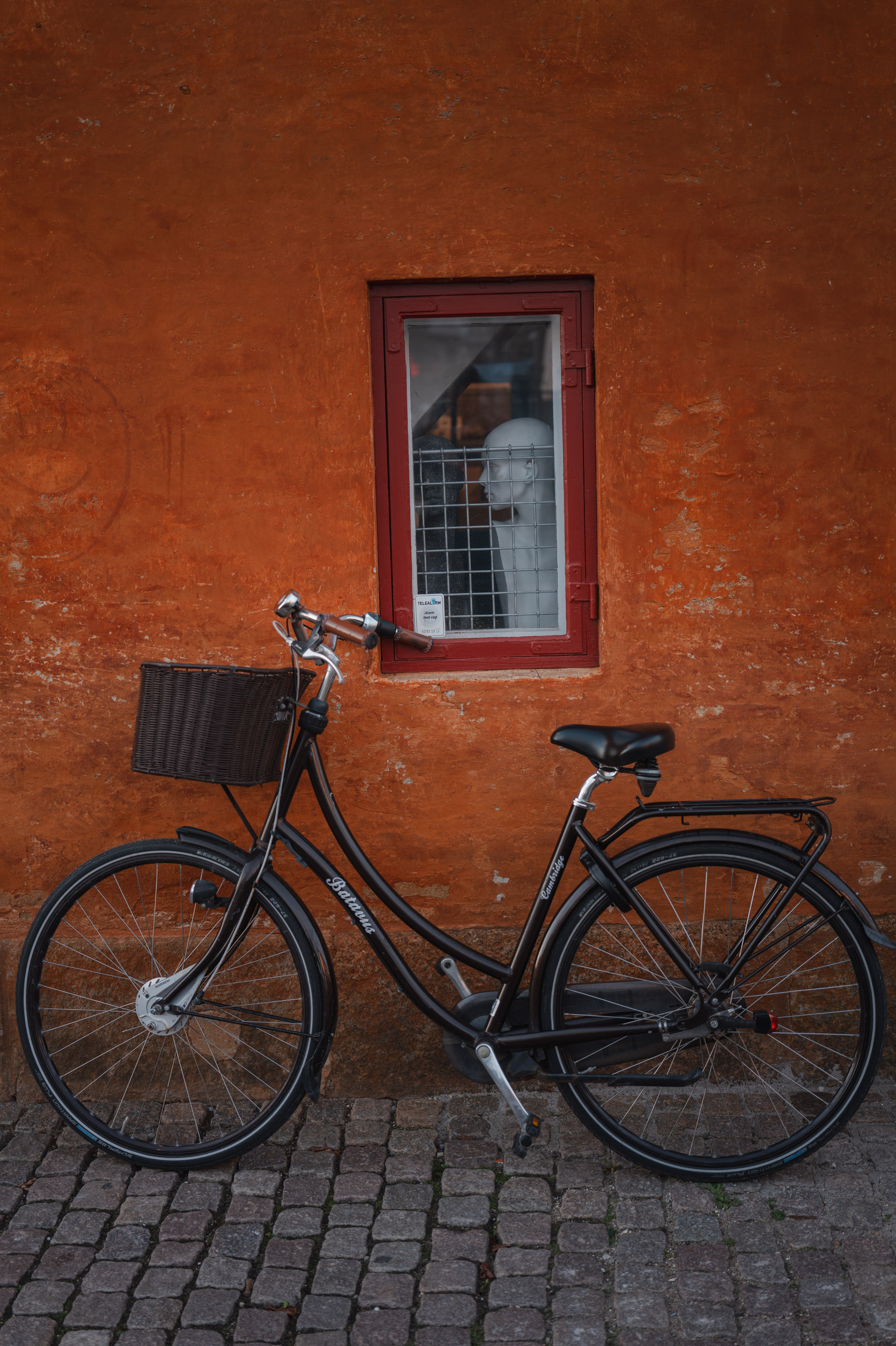
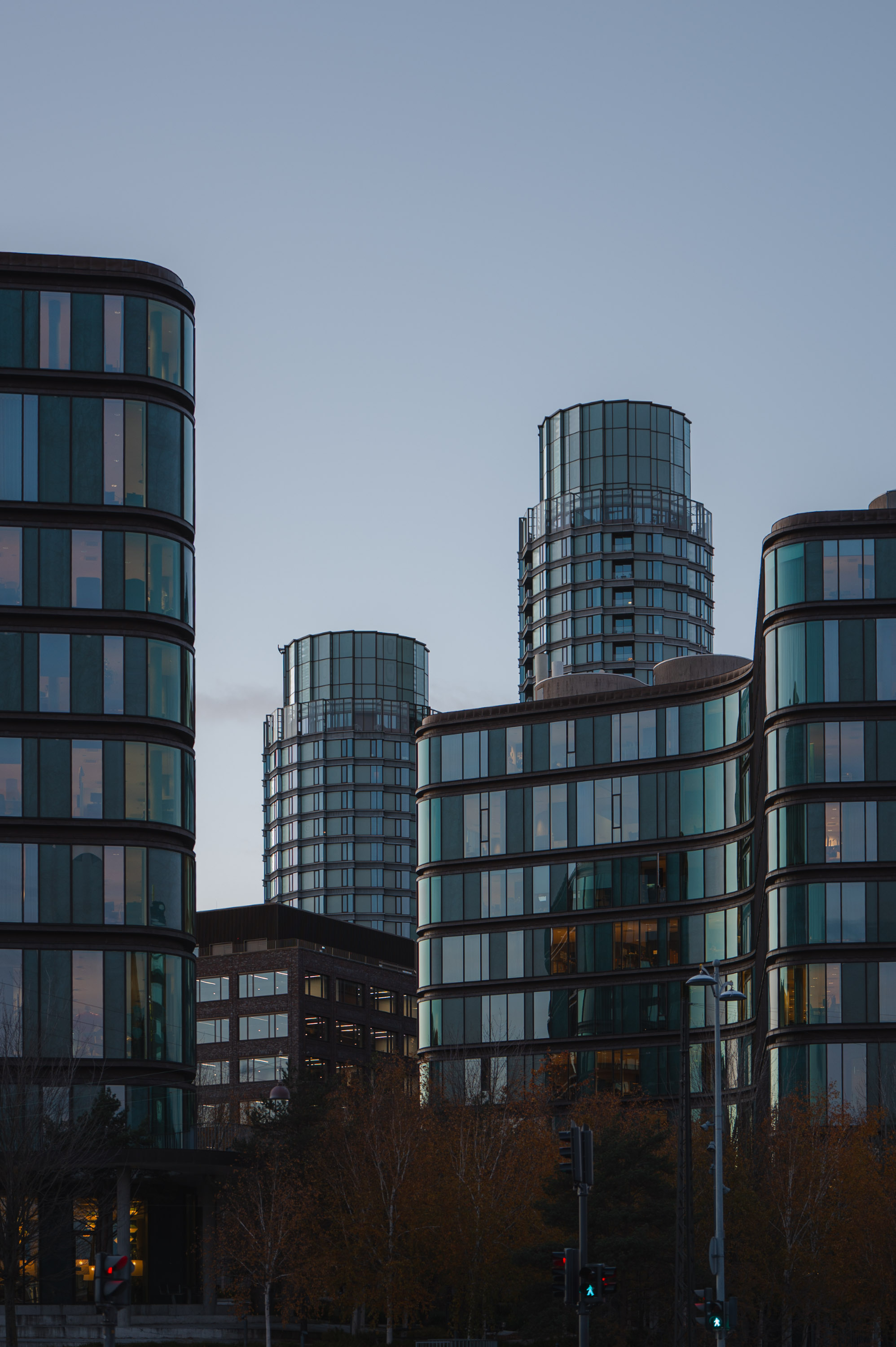
My Friday step count rolled past forty thousand somewhere between Christianshavn and the last Nyhavn blue-hour frames. Forty-eight hours, one city, one body, one lens. The kind of solo trip where you actually remember what your eyes are for.
Why I’m Keeping the Q3 43
Two days in, honestly, is enough. I shot the original Leica Q for years, and I loved almost everything about it — the ergonomics, the size, the way it disappears into your hand — but the one thing I never fully settled with was the 28mm lens. For street and travel work, 28mm always felt a touch too wide for me; my natural go-to primes have always been 35mm and 50mm. The 43mm APO-Summicron on the Q3 43 sits exactly where I want a documentary lens to sit. Close enough to 50 that portraits and quiet details compose the way I see them; close enough to 35 that a canal view or a street scene still reads generously. It’s the first time a Q has felt like my focal length.
Everything else about the camera is a bonus. The colour rendering, straight out of camera, is incredible — and the Leica Looks are properly good, not a gimmick. I kept coming back to the Brass and Teal profiles in particular; the warmth-and-cool split in those two seems almost built for low-November northern European light. The 60MP sensor gives you so much room to crop into a file after the fact that the 43mm field of view effectively doubles as a modest 60mm or 75mm whenever you want it to, with no real quality cost — which is why these are not test images in the usual lab sense, just forty frames from two real days of walking, but they hold up on close inspection. The in-camera digital zoom crops are genuinely usable, and crucially, the camera remembers the crop when you open the file in Lightroom — a small detail that makes editing on the plane home a pleasure.
I came back more impressed than I expected, honestly. The Q3 43 is going to be my go-to camera for personal travel work and, increasingly, for some commercial commissions where the big system would be the wrong tool for the job. The kind of job where a hotel or a brand wants reportage-style lifestyle photography and the subjects relax noticeably when the camera at the next table is small, quiet, and clearly not a video rig — the Q3 43 is almost over-qualified for that.
Forty-eight hours, one body, one lens, one city. One of the easier recommendations I’ve made in a while — for the camera, and for Copenhagen in November. If you’re a brand, hotel or tourism board considering a travel, destination or lifestyle photography commission, you can find the rest of my work on the commercial page, with hospitality covered on the hotel photography page, and the easiest way to get in touch is here.
Shot on Leica Q3 43 — 43mm APO-Summicron f/2 ASPH — Solo, Two Days, One Camera — 65,000 Steps — Copenhagen, November 2026